
Why Alcohol Addiction Treatment in Tennessee Gives You a Real Path Forward
Alcohol addiction treatment Tennessee offers a full range of proven options — from medical detox to outpatient care — that help people break free from alcohol dependence and rebuild their lives.
Here is a quick look at what is available:
| Treatment Level | What It Involves | Best For |
|---|---|---|
| Medical Detox | 24/7 supervised withdrawal management | Heavy or daily drinkers |
| Residential/Inpatient | Full-time structured care on-site | Severe addiction, unstable home environment |
| Partial Hospitalization (PHP) | Daily treatment, return home evenings | Step-down from inpatient, strong home support |
| Intensive Outpatient (IOP) | Several sessions per week, flexible schedule | Mild to moderate addiction, work/family commitments |
| Sober Living | Supported housing post-treatment | Building independence after formal treatment |
| State-Funded Programs | ADAT, SPOT, Community Treatment Collaborative | Those without insurance or financial means |
Alcohol use disorder (AUD) is not a character flaw. It is a medical condition that changes brain chemistry — and it responds to treatment. Research shows that nearly 3 in 4 adults who have struggled with substance use report being in recovery after getting help. That is not a small number. That is a signal that treatment works.
Tennessee has a strong network of accredited treatment centers, evidence-based therapies, and state-funded resources — meaning help is within reach regardless of your financial situation.
At Kingdom Recovery Center, located in Morristown, TN, we have spent years helping individuals across East Tennessee navigate alcohol addiction treatment Tennessee through compassionate, holistic, and evidence-based care. Our team is here to walk alongside you — from your first call through every step of your recovery journey.
Alcohol addiction treatment Tennessee further reading:
- Knoxville alcohol addiction treatment
- Knoxville alcohol treatment centers
- alcohol treatment Knoxville TN
Comprehensive Levels of Care for Alcohol Addiction Treatment Tennessee
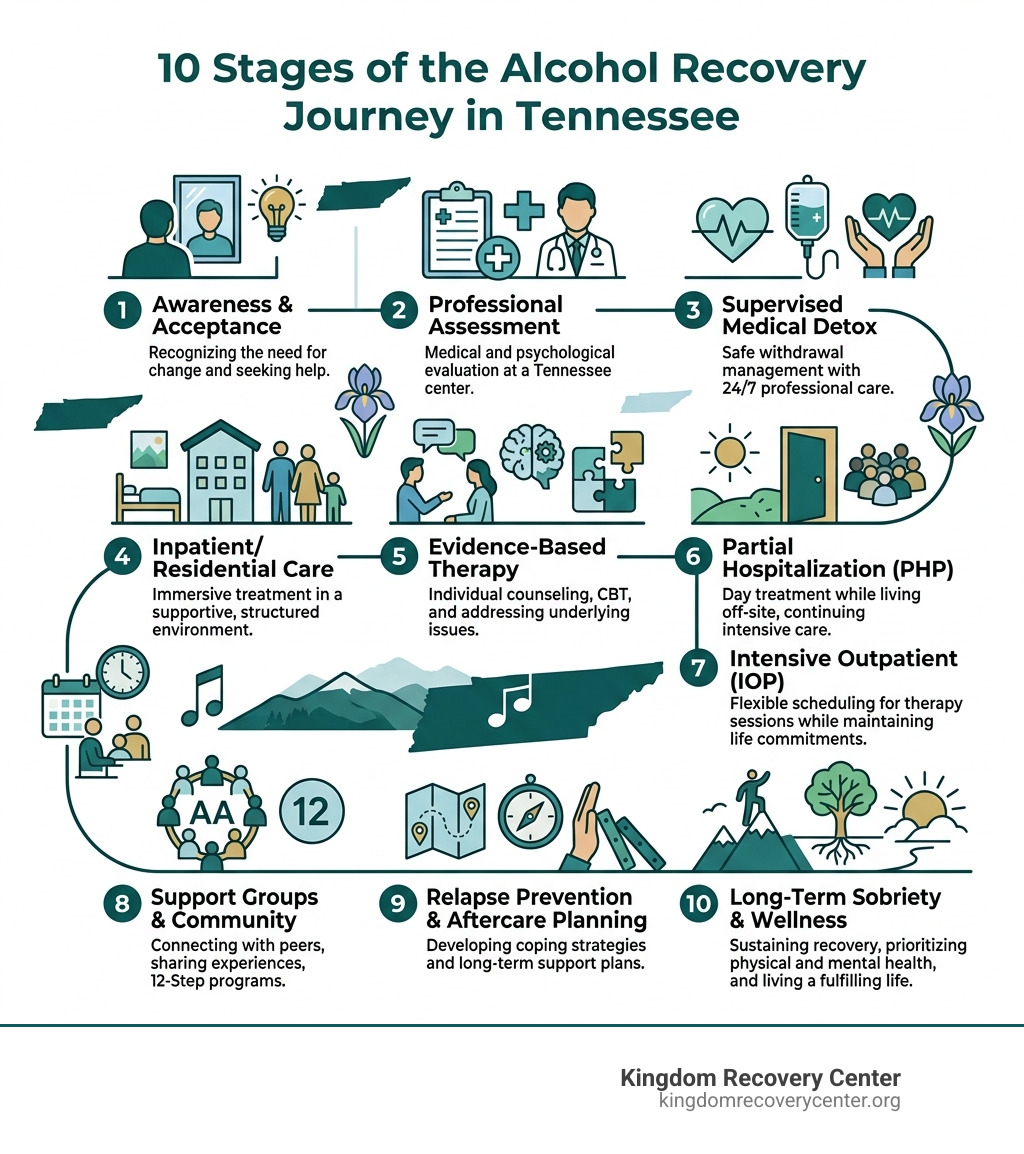
When we look at the landscape of recovery in April 2026, one thing is clear: a “one-size-fits-all” approach simply doesn’t work. Tennessee has become a national leader in providing a continuum of care that meets you exactly where you are. Whether you are in Morristown, Knoxville, or Johnson City, the goal is to provide a seamless transition from intensive medical supervision to independent sober living.
Medical Detox
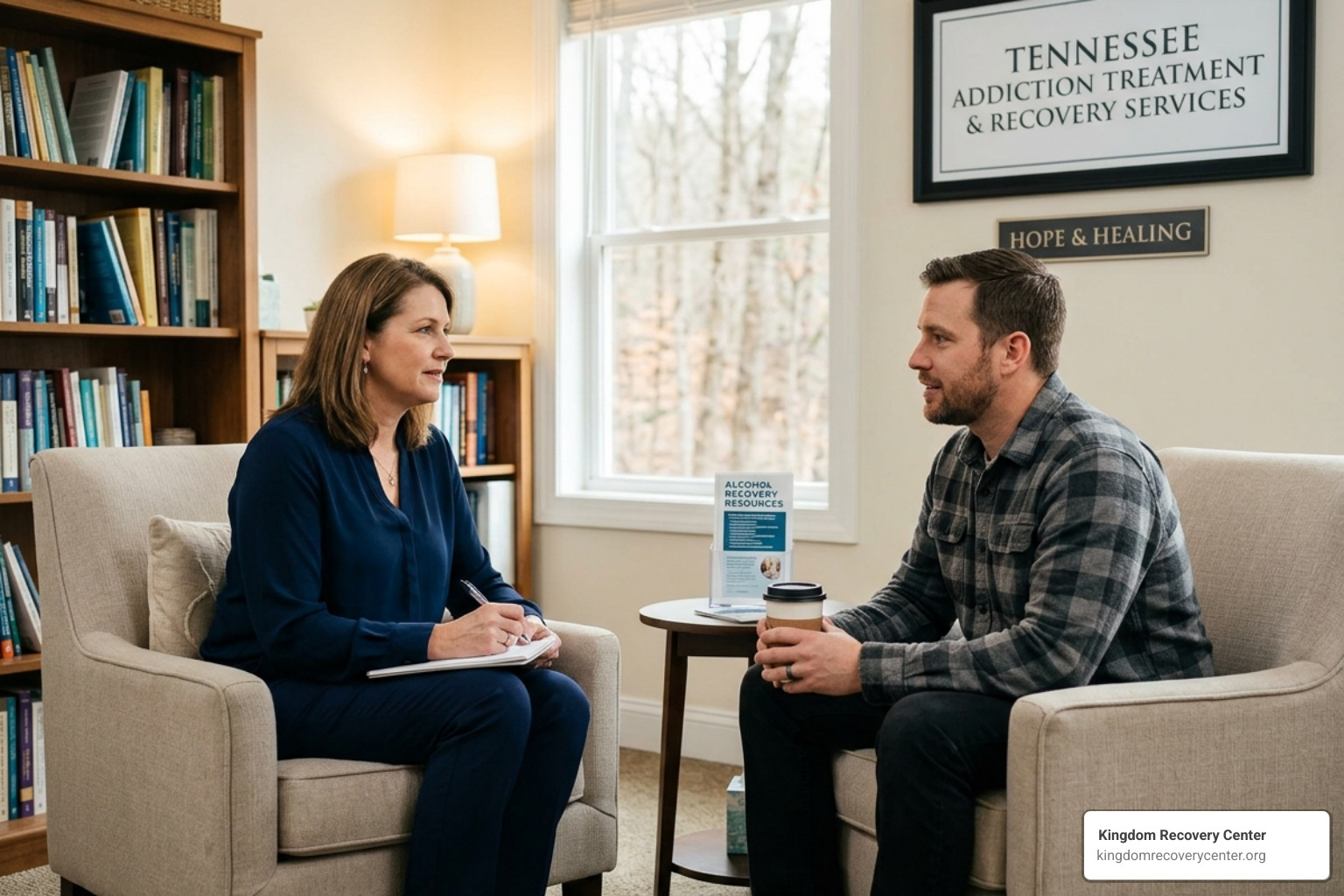
For many, the first step is Alcohol Detox Knoxville. This is a medically supervised process where doctors and nurses monitor your vitals 24/7. Alcohol withdrawal is unique because it can be physically dangerous—even life-threatening—if attempted “cold turkey” at home. Medical detox uses specific medications to manage tremors, anxiety, and the risk of seizures, ensuring you are stable enough to begin the psychological work of rehab.
Residential Treatment
Once detox is complete, residential treatment offers a “secluded safe haven.” In East Tennessee, many facilities are situated on serene acreage that allows the mind and body to reset away from the triggers of daily life. This level of care involves living at the facility full-time, typically for 30 to 90 days, participating in 8 hours of daily programming that includes individual therapy, group sessions, and wellness activities.
Partial Hospitalization and Intensive Outpatient
Not everyone can step away from their life for months at a time. This is where Intensive Outpatient Program (IOP) and Partial Hospitalization Programs (PHP) come in. These levels of care provide high-intensity clinical support while allowing you to maintain some connection to your home or work life.
| Feature | Partial Hospitalization (PHP) | Intensive Outpatient (IOP) |
|---|---|---|
| Hours per Day | 5–8 hours | 3 hours |
| Days per Week | 5–7 days | 3–5 days |
| Clinical Focus | Stabilization & Intensive Therapy | Skill Building & Relapse Prevention |
| Housing | Often paired with Sober Living | Usually live at home |
Identifying Signs and Symptoms for Alcohol Addiction Treatment Tennessee
Knowing when to seek help is half the battle. Alcohol Use Disorder often sneaks up on people because drinking is so socially acceptable in our culture. However, there are undeniable red flags. If you or a loved one are experiencing physical tremors (the “shakes”) in the morning, cognitive impairment such as memory “blackouts,” or if you find yourself hiding the amount you drink from family, it is time to look into Your Guide To Alcohol And Drug Rehab In Knoxville Tn.
Withdrawal timelines usually follow a specific pattern:
- 6–12 hours: Anxiety, headaches, and tremors begin.
- 12–48 hours: Symptoms intensify; potential for hallucinations.
- 48–72 hours: Peak risk for severe symptoms like seizures or delirium tremens (DTs).
- 5 days+: Physical symptoms fade, but emotional disturbances like insomnia may linger.
High Success Rates and Quality of Life Outcomes
The data from 2025 and 2026 is incredibly encouraging. Research shows that nearly 8 in 10 people were successful after completing an outpatient program in Tennessee. Furthermore, more than half of those who complete an inpatient program report a significantly better quality of life just six months later. These aren’t just numbers; they represent families reunited and careers saved across Hamblen County and the surrounding areas.
Evidence-Based Therapies and Holistic Healing Approaches
In Tennessee, we believe in treating the “whole person”—mind, body, and spirit. This means moving beyond just “talking about problems” and into active, experiential healing.
Cognitive and Dialectical Behavioral Therapy
At the core of What We Treat/Addictions/Alcohol Abuse/ are evidence-based modalities like Cognitive Behavioral Therapy (CBT). CBT helps you identify the “stinking thinking” that leads to the first drink. Dialectical Behavior Therapy (DBT) is equally vital, teaching emotional regulation and distress tolerance—skills you need when life gets stressful and your old instinct is to reach for a bottle.
12-Step Immersion and Community
Many programs in Alcohol Treatment In Chattanooga Tn and East Tennessee utilize 12-Step Immersion. This isn’t just about attending meetings; it’s about deep self-reflection, making amends, and finding a spiritual foundation that works for you. The communal aspect of the 12 steps provides a ready-made support network that lasts long after you leave the rehab facility.
Specialized Support for Dual Diagnosis and Diverse Populations
Did you know that approximately 50% of people with substance use disorders also have a co-occurring mental health disorder? This is known as a dual diagnosis. At Kingdom Recovery Center, we emphasize What We Treat/Addictions/ by treating anxiety, depression, or PTSD alongside the addiction. If you only treat the drinking but ignore the underlying trauma, the risk of relapse is much higher.
Specialized tracks also exist for:
- Veterans: Addressing the unique stressors of service and combat-related PTSD.
- Professionals: High-accountability programs for doctors, lawyers, and executives.
- Gender-Specific Care: Separate tracks for men and women to foster safety and vulnerability.
Christian-Based and Holistic Recovery Options
For many in the South, faith is a cornerstone of recovery. Programs like “ReNew” or Christian-based tracks incorporate prayer and scripture into the clinical process. Beyond faith, holistic options in Alcohol Rehab Franklin Tn often include:
- Yoga and Meditation: To reconnect the mind with the body.
- Expressive Arts: Using music and painting to process emotions that words can’t reach.
- Vocational Rehabilitation: Helping you gain the skills needed to re-enter the workforce with confidence.
Navigating Insurance and State-Funded Treatment Options
One of the biggest hurdles to starting alcohol addiction treatment Tennessee is the fear of the bill. However, insurance coverage for addiction has never been more robust.
Private Insurance and PPO Plans
Most major insurance providers now offer “in-network” benefits for addiction treatment. This can often cover up to 100% of the cost of detox and residential care. We always recommend starting with a free insurance verification. Centers across East Tennessee work with plans like BlueCross BlueShield, Cigna, and Aetna to ensure you maximize your benefits. Check out Top Tn Inpatient Drug Rehabs Covered By Insurance for more details on how this works.
State-Funded Programs for those in Need
Tennessee is unique in its commitment to providing care for those without insurance or private means. If you are struggling financially, there are several state-administered funds:
- ADAT (Alcohol and Drug Addiction Treatment): Specifically for those convicted of a DUI who cannot afford court-ordered treatment.
- SPOT (Specialized Programs for Outcomes in Treatment): Targeted funding for specific high-risk populations.
- Community Treatment Collaborative: This program serves indigent individuals involved in the criminal justice system.
Eligibility for Community Treatment Collaborative
To qualify for these treatment funds, participants generally must:
- Be 18 years or older.
- Meet 133% of the federal poverty guidelines.
- Be on state probation or parole with a substance use diagnosis.
- Have no active TennCare or private insurance benefits.
Even if you don’t fit these specific criteria, The Best Rehabs In Tennessee On A Budget can help you find sliding-scale fees or flexible payment plans.
The Path to Long-Term Recovery and Aftercare
The day you leave rehab is not the end of your journey; it’s the beginning of your new life. Successful alcohol addiction treatment Tennessee depends heavily on what happens next.
Sober Living and Transitional Care
For many, going straight from a highly structured rehab back to their old neighborhood is too much too soon. Sober living homes offer a middle ground. You live in a drug-and-alcohol-free environment with other people in recovery, attend house meetings, and often have a curfew. This structure helps you practice your new coping skills in the “real world” while still having a safety net.
Alumni Networks and Relapse Prevention
The best centers in Drug Rehab East Tennessee have active alumni networks. These groups host sober events—like hikes in the Smoky Mountains or bowling nights—to prove that life in recovery is actually fun. Staying connected to an alumni group is one of the strongest predictors of long-term sobriety.
Choosing the Right Center for Alcohol Addiction Treatment Tennessee
When you are ready to take the step, look for these “Gold Standards”:
- Joint Commission or CARF Accreditation: These are voluntary “stamp of approval” processes that prove a facility meets the highest safety and clinical standards.
- Low Client-to-Staff Ratio: You want to ensure you aren’t just a number.
- Individualized Care Plans: Avoid “cookie-cutter” programs. Your treatment should be tailored to your specific history and goals.
If you are looking for The Best Inpatient Drug Treatment Options In Tennessee, start by calling the admissions team. A good center will offer a free, confidential assessment to see if they are the right fit for your needs. You can Start your recovery at Kingdom Recovery Center by speaking with our compassionate specialists who understand the local landscape.
Frequently Asked Questions about Alcohol Treatment
How much does alcohol rehab cost in Tennessee?
The cost varies wildly depending on the level of care. State-funded programs can be $0 for those who qualify. Private residential treatment can range from $10,000 to $30,000 per month, but most of this is typically covered by PPO insurance plans. Outpatient programs are significantly more affordable and are often the best choice for those paying out-of-pocket.
Does Tennessee insurance cover dual diagnosis treatment?
Yes. Under the Mental Health Parity and Addiction Equity Act, insurance providers are required to cover mental health and substance use disorders at the same level they cover physical health. This means your treatment for depression or anxiety alongside alcohol addiction is covered.
What is the difference between inpatient and outpatient care?
Inpatient care means you live at the facility 24/7. It is best for those with severe addictions or high withdrawal risks. Outpatient care allows you to live at home while attending therapy sessions several times a week. It is ideal for those who have completed inpatient care or those with a strong, supportive home environment.
Conclusion
As we move through April 2026, the stigma surrounding alcohol addiction is fading, replaced by a culture of support and medical excellence. Alcohol addiction treatment Tennessee has evolved to become more accessible, more scientific, and more compassionate than ever before.
Whether you are seeking help for yourself or a loved one in Knoxville, Morristown, or Johnson City, 3 out of 4 people who seek help find their way to recovery. You are not a statistic; you are a person with a story that is still being written.
At Kingdom Recovery Center, we believe that every individual deserves a life of dignity and joy. Our evidence-based programs and dedicated staff are ready to help you write your next chapter. Don’t wait for “tomorrow”—tomorrow has a way of never coming. Start your journey today and take the first step toward the life you were meant to live.