
Why 90 Day Treatment Plans Are the Gold Standard for Lasting Recovery
90 day treatment plans are structured addiction recovery programs that provide three full months of medical care, therapy, and skill-building to help people overcome substance use disorders.
Here is what a 90-day treatment plan typically includes:
- Medical detox – safely managing withdrawal under clinical supervision
- Residential or inpatient care – 24/7 support in a structured environment
- Individual and group therapy – evidence-based sessions to address root causes
- Dual diagnosis treatment – care for co-occurring mental health conditions
- Relapse prevention planning – building coping skills for long-term sobriety
- Aftercare coordination – connecting to outpatient support before discharge
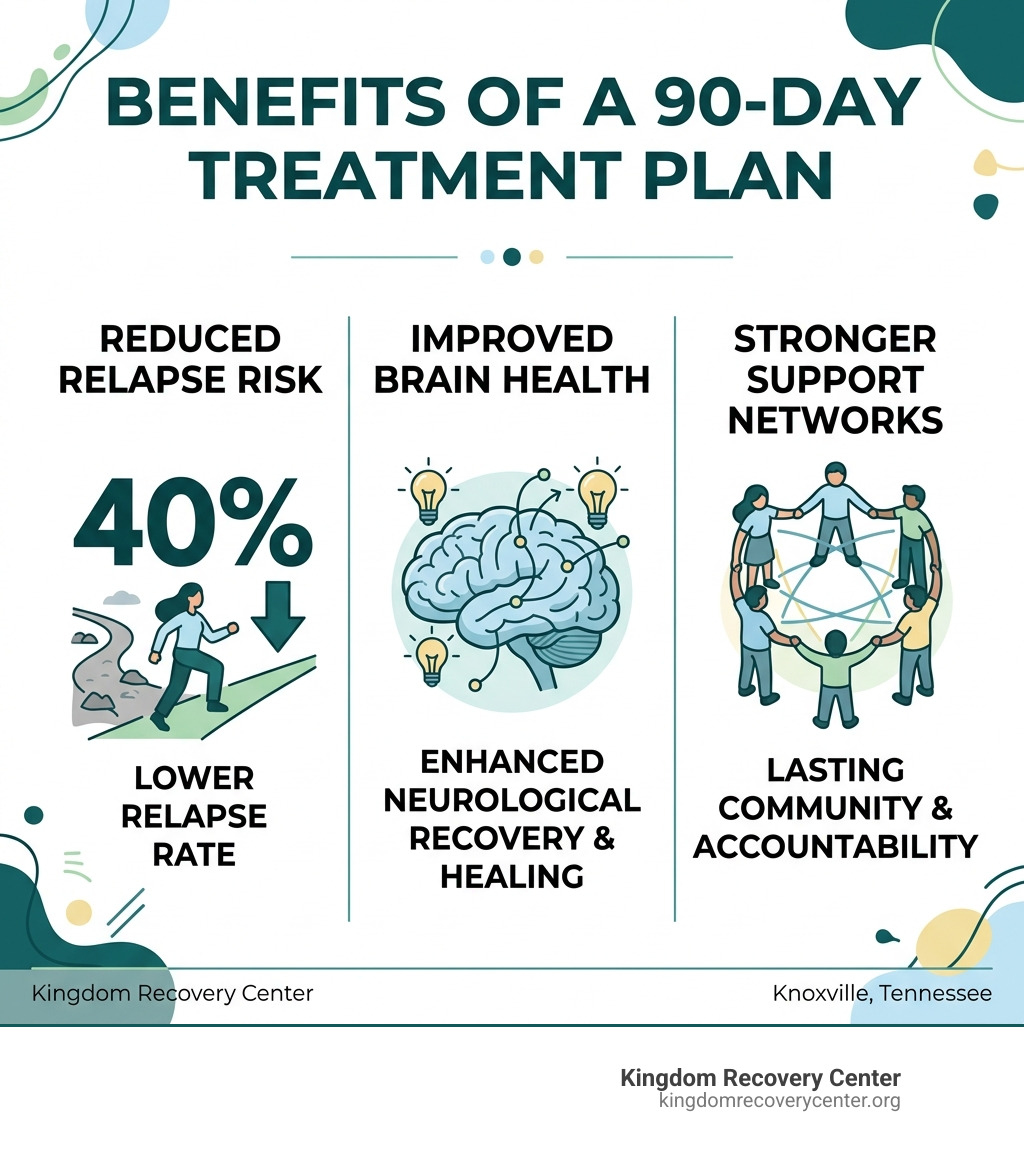
Research from the National Institute on Drug Abuse (NIDA) shows that programs lasting at least 90 days produce higher rates of sustained sobriety than shorter stays. In fact, a minimum of three months in treatment is widely considered the threshold at which most people begin to see meaningful, lasting changes in their substance use.
And the need is real. According to the 2023 National Survey on Drug Use and Health, roughly 54.2 million Americans needed substance use treatment — but only 12.8 million actually received it.
If you or someone you love is ready to commit to recovery, understanding what a 90-day program looks like is the right place to start.
At Kingdom Recovery Center in Morristown, TN, we specialize in personalized, evidence-based 90 day treatment plans that blend addiction recovery with mental health support — meeting each person exactly where they are. Our holistic approach guides clients from detox through aftercare, giving them every tool they need to build a lasting, fulfilling life in sobriety.
Understanding the Structure of 90 Day Treatment Plans
Entering a 90-day program is a significant commitment, but it is structured to ensure that no one feels overwhelmed. Think of it as a marathon, not a sprint; we pace the work so that the progress sticks. The structure is designed to move a person from the physical crisis of addiction into a state of emotional and psychological resilience.
The journey begins with a comprehensive treatment evaluation to determine your specific medical and psychological needs. This isn’t just a checklist; it’s the blueprint for your entire stay. For those currently in crisis, the National Helpline for Mental Health and Addiction is a vital resource for immediate guidance.

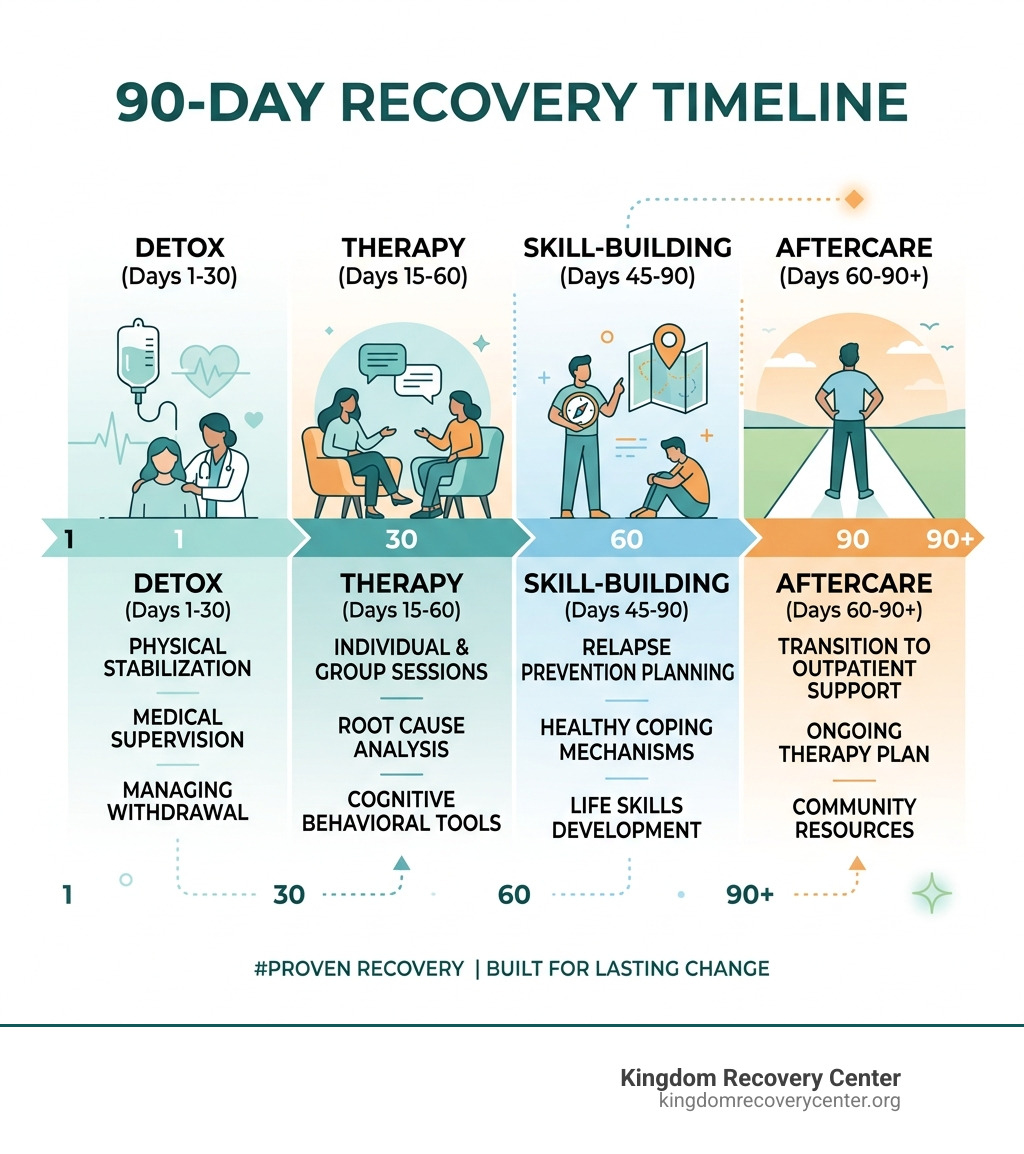
A typical 90-day journey follows these essential stages:
- Intake and Assessment: A thorough review of medical history, substance use patterns, and mental health status.
- Medical Detox: Safely clearing the body of toxins under professional supervision. This phase can last from a few days to two weeks depending on the substance.
- Active Rehabilitation: The “meat” of the program, involving intensive daily therapy, education, and skill-building.
- Transition Planning: Preparing for the next level of care, whether that is a step-down program or a return home with robust support.
Typical Daily Routine in Residential Care
Recovery thrives on routine. For many of our clients in East Tennessee, addiction has created a life of chaos. A structured schedule helps “rewire” the brain to appreciate stability.
A day in our residential program often looks like this:
- Morning: Mindfulness practice or yoga followed by a nutritious breakfast.
- Mid-Morning: Intensive group therapy sessions focusing on processing emotions and shared experiences.
- Afternoon: Individual counseling (like CBT or DBT) and educational workshops on the science of addiction.
- Evening: Peer support meetings (such as 12-step or SMART Recovery) and reflection time.
This routine isn’t just about keeping busy; it’s about building healthy habits that replace the old patterns of substance use.
Transitioning Through Levels of Care
One of the greatest strengths of 90 day treatment plans is the ability to “step down” care. You don’t just finish 90 days and get “thrown back into the wild.” Instead, as you gain clinical stability, you might move from residential care into Partial Hospitalization Programs.
In a PHP, you still receive high-level clinical support during the day but may begin to practice more independence. Choosing between IOP and PHP depends on your progress and the level of accountability you still require to prevent relapse. This gradual transition is key to ensuring that the skills learned in the bubble of rehab translate to the real world.
Why Science Backs 90-Day Rehab for Long-Term Sobriety
As we move into April 2026, the clinical data is clearer than ever: time is a healer. Research indicates that the brain needs significant time to heal from the chemical changes caused by chronic substance use. This process, known as neuroplasticity, allows the brain to form new, healthy neural pathways, but it doesn’t happen in 28 days.
NIDA research consistently highlights that treatment stays of 90 days or longer result in significantly better patient outcomes. When you give the brain three months to reset, the “pravings” (physical and psychological urges) begin to lose their power.

The Benefits of 90 Day Treatment Plans vs. Shorter Stays
While a 30-day program can be a great “reset,” it often only scratches the surface. By the time the fog of detox clears, the 30 days are almost up. In contrast, 90 day treatment plans offer:
- Habit Formation: It takes an average of 66 days for a new behavior to become automatic. A 90-day stay ensures these habits are locked in.
- Emotional Regulation: You have time to work through the “why” behind the addiction, including trauma or grief.
- Deep Healing: Long-term programs allow for family therapy sessions that can actually repair broken relationships.
Addressing Chronic Addiction and Relapse History
For individuals with a long history of substance abuse or multiple past attempts at rehab, a shorter stay is often insufficient. Chronic addiction requires a complete lifestyle overhaul. Our inpatient options in Tennessee provide the necessary immersion to break the cycle of relapse. By staying in a supportive environment for 90 days, you remove the immediate triggers of your home environment while you are at your most vulnerable.
| Feature | 30-Day Program | 90-Day Program |
|---|---|---|
| Focus | Stabilization & Detox | Root Cause Resolution |
| Relapse Risk | Higher in early months | Significantly Lower |
| Brain Healing | Initial physical recovery | Cognitive & Emotional Restoration |
| Skill Building | Introductory | Mastery & Application |
Comprehensive Therapies and Dual Diagnosis Support
At Kingdom Recovery Center, we don’t believe in a one-size-fits-all approach. Your 90-day plan is as unique as your fingerprint. We utilize a variety of evidence-based modalities to treat the whole person. This is especially important for those requiring Mental Health PHP support, where addiction and mental health are treated as two sides of the same coin.
Evidence-Based Modalities in 90 Day Treatment Plans
We rely on therapies that have been proven to work. In a 90-day window, we can deeply integrate these methods:
- Cognitive Behavioral Therapy (CBT): Identifying and changing the thought patterns that lead to substance use.
- Dialectical Behavior Therapy (DBT): Learning distress tolerance and emotional regulation.
- Motivational Interviewing (MI): Helping you find your own internal drive to stay sober.
- Trauma-Informed Care: Addressing past experiences that may be fueling current behaviors.
Integrated Care for Co-occurring Disorders
It is incredibly common for addiction to coexist with depression, anxiety, or PTSD. In fact, 2023 statistics showed that nearly 50 million Americans struggled with a substance use disorder, many of whom also had a mental health diagnosis.
Treating only the addiction while ignoring the underlying mental health issue is a recipe for relapse. Our IOP vs PHP care levels allow us to dial the intensity of mental health support up or down based on your specific needs throughout the 90 days.
Navigating Costs and Insurance Coverage in 2026
We know that “How much is this going to cost?” is one of the first questions families ask. In 2026, the landscape of healthcare coverage for addiction is more robust than ever, thanks to ongoing mandates that treat behavioral health as an essential benefit.
Factors Influencing Program Pricing
The cost of 90 day treatment plans can vary widely based on several factors:
- Level of Care: Residential care is typically more expensive than outpatient options due to 24/7 staffing and housing.
- Amenities: Facilities with specialized experiential therapies (like equine therapy or art programs) may have higher costs.
- Staff-to-Patient Ratio: Higher ratios generally lead to better outcomes but increase the price point.
- Location: Programs in East Tennessee, like those in Morristown or Johnson City, often provide a high standard of care at a more accessible price point than major metropolitan hubs.
Research indicates that 60-to-90-day programs can range from $12,000 to $60,000, with an average around $36,000. While that sounds like a lot, it is an investment in a lifetime of health—and many of these costs are covered by insurance.
Verifying Your 2026 Insurance Benefits
Under the Affordable Care Act (ACA), most private insurance plans, as well as Medicaid and Medicare, are required to cover substance use treatment. However, the extent of that coverage varies.
You should look into:
- Essential Health Benefits: Does your plan cover detox and residential stays?
- Out-of-Pocket Maximums: Once you hit this limit, your insurance may cover 100% of the remaining costs.
- In-Network vs. Out-of-Network: Staying in-network with providers like Kingdom Recovery Center can drastically reduce your personal costs.
If you are curious about the differences in investment, you can read our guide on Outpatient vs Inpatient costs. Our Intensive Outpatient Program is often a more budget-friendly way to maintain high-level care after an initial residential stay.
Life After Rehab: The 90-Day Aftercare Roadmap
The end of your 90-day program is actually the beginning of your new life. We call the first 90 days post-rehab the “critical window.” This is when the new skills are tested. A solid path to recovery through PHP and IOP ensures you have a safety net as you reintegrate into society.
Building a Relapse Prevention Strategy
Before you leave Kingdom Recovery Center, you will have a written relapse prevention plan. This isn’t just a piece of paper; it’s your survival guide. It includes:
- Trigger Identification: Recognizing the people, places, or feelings that make you want to use.
- Coping Mechanisms: Specific “if/then” plans. “If I feel a craving, then I will call my sponsor and go for a run.”
- Emergency Planning: Who to call if a slip happens to prevent it from becoming a full-blown relapse.
If you are looking for support in the area, we can help you find a 90-day rehab center in Knoxville, Tennessee or surrounding counties to continue your journey.
The Role of Ongoing Outpatient Support
Ongoing support is what separates “getting sober” from “staying sober.” Our Outpatient Program (OP) services provide weekly check-ins and counseling sessions that offer long-term accountability. Many of our alumni find that staying connected to the community in Hamblen County helps them maintain their focus and gives them the opportunity to mentor others just starting their journey.
Frequently Asked Questions about 90-Day Rehab
Is 90 days long enough for effective drug or alcohol rehab?
Yes, for most people, 90 days is the “sweet spot.” While some may require even longer stays, 90 days provides the minimum time necessary for physical detox, psychological breakthrough, and habit solidification. Research consistently shows that staying in treatment for at least three months leads to a substantial decrease in substance use and better long-term health.
Who is a good candidate for 90 day treatment plans?
A 90-day plan is ideal for individuals who:
- Have a severe or long-standing addiction.
- Are struggling with a dual diagnosis (mental health + addiction).
- Have relapsed after attending shorter 30-day programs.
- Have an unstable home environment that makes early recovery difficult.
How do I find a quality 90-day rehab program near me?
Look for facilities that are accredited (such as by The Joint Commission) and use evidence-based practices. Ensure they offer specialized tracks for your specific needs—such as dual diagnosis or trauma-informed care. Finally, choose a facility that will help you verify your insurance and provides a clear aftercare roadmap.
Conclusion
Recovery is a journey of a thousand miles, and the first 90 days are the most important miles you will ever travel. At Kingdom Recovery Center, we are dedicated to providing the clinical excellence and compassionate care needed to make those miles count. Whether you are in Knoxville, Morristown, or anywhere in East Tennessee, we are here to help you navigate the complexities of 90 day treatment plans and build a foundation that lasts.
Don’t let another day slip away in the cycle of addiction. Your transformation is possible, and it begins with a single choice. Start your journey today and discover the lasting change you deserve.