
Understanding the Dual Diagnosis Challenge in Tennessee
Co Occuring Treatment Programs Tennessee are specialized services for individuals with both a mental health disorder and a substance use disorder. This dual diagnosis requires integrated care that addresses both conditions at once.
Quick Overview: What You Need to Know About Co-Occurring Treatment in Tennessee
- Definition: Co-occurring disorders (also called dual diagnosis) occur when someone has both a substance use disorder and a mental health condition like depression, anxiety, PTSD, or bipolar disorder
- Common Combinations: Depression and alcohol, anxiety and benzodiazepines, PTSD and opioids, bipolar disorder and cocaine
- Treatment Approach: Integrated treatment programs treat both conditions at the same time for better outcomes
- Available Programs: Residential/inpatient, Partial Hospitalization (PHP), Intensive Outpatient (IOP), and standard Outpatient (OP)
- How to Find Programs: Use the SAMHSA treatment locator, Tennessee state resources, or contact facilities directly
- Insurance Coverage: Most major insurance plans cover dual diagnosis treatment under the Mental Health Parity and Addiction Equity Act
Statistics paint a sobering picture: 7.7 million people in the U.S. have co-occurring disorders, yet more than half receive no care for either condition. Furthermore, up to 45% of individuals with a substance use disorder also have a mental health condition.
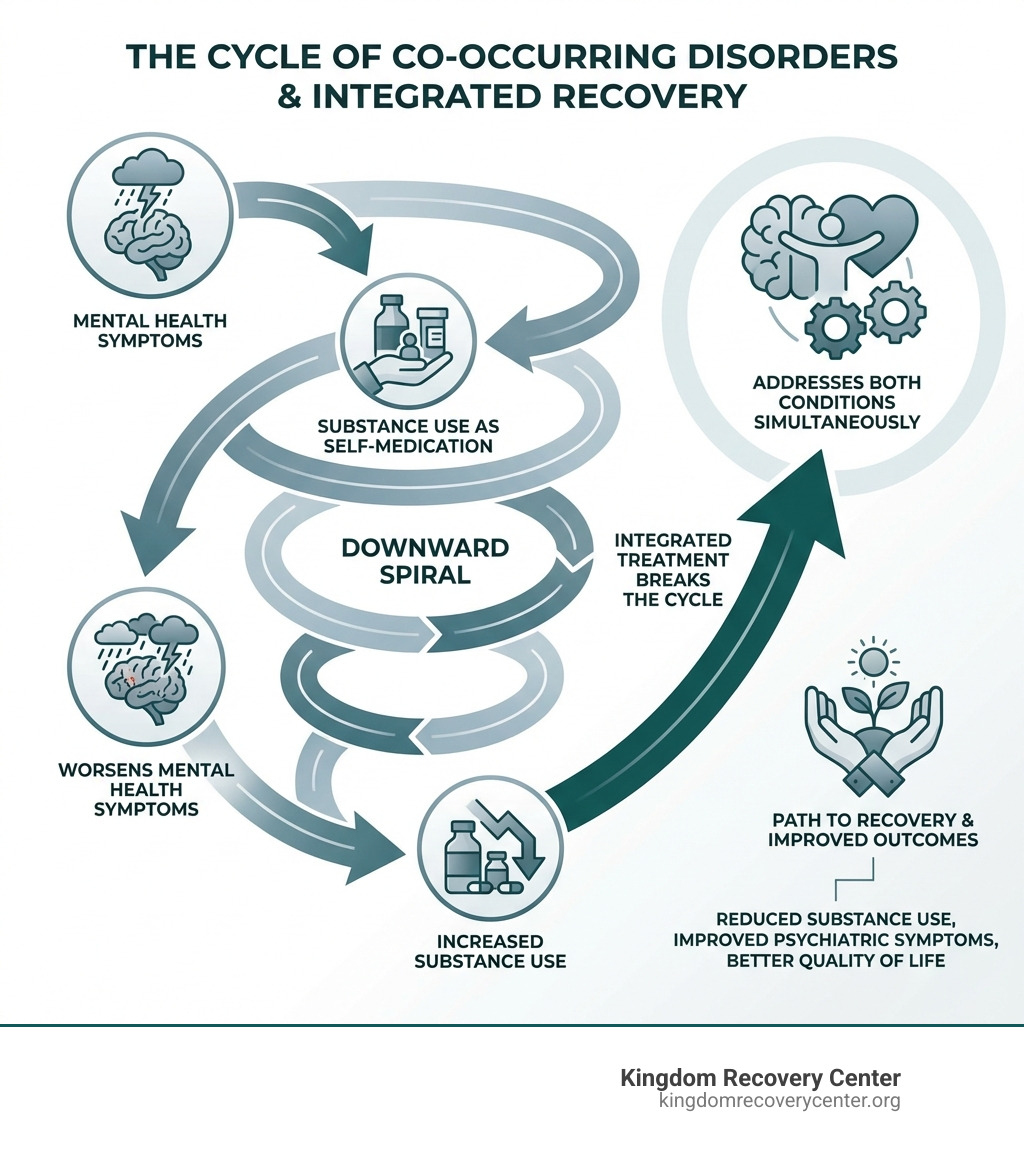
Co-occurring disorders create a vicious cycle where each condition worsens the other. Someone with depression might use alcohol to cope, which then deepens their depression. A person with PTSD might turn to opioids to numb their trauma, only to develop a physical dependence that adds new layers of suffering.
In Tennessee, an average of 3,359 deaths are attributed to excess alcohol use each year, and there are 390 dual diagnosis treatment centers across the state working to break these cycles. The good news? Research by SAMHSA shows that treating addiction and mental conditions simultaneously provides the best outcomes—leading to reduced substance use, improved psychiatric symptoms, better quality of life, and decreased hospitalization.
At Kingdom Recovery Center in Morristown, TN, we specialize in Co Occuring Treatment Programs Tennessee, offering integrated care that addresses both addiction and mental health through evidence-based therapies and personalized treatment plans. Our holistic approach has helped countless individuals break free from the dual challenges of substance use and mental health disorders, restoring hope and rebuilding lives.
What Are Co-Occurring Disorders?
The journey to recovery often begins with understanding the challenge. A co-occurring disorder is when an individual has both a substance use disorder (SUD) and a mental health condition simultaneously. The terms “dual diagnosis” or “co-morbidity” are often used interchangeably, though “co-occurring disorders” is preferred by many, including the Tennessee Department of Mental Health and Substance Abuse Services (TDMHSAS), for its precision.
This terminology reflects a growing understanding that these conditions are deeply intertwined, actively influencing and exacerbating one another. Imagine trying to fix a leaky roof while the foundation of your house is crumbling – you need to address both. That’s the essence of why integrated treatment is so crucial. It’s about recognizing the whole person, not just isolated symptoms. For a deeper dive, explore our guide, Dual Diagnosis Demystified: Finding Your Path to Integrated Recovery.
Common Co-Occurring Conditions
Many mental health conditions frequently co-occur with substance use disorders. It’s often unclear which came first, but the two become a tangled issue requiring specialized care.
Some of the most common pairings we see in Co Occuring Treatment Programs Tennessee include:
- Depression and Alcohol Use Disorder: Individuals with depression may turn to alcohol to numb sadness. However, alcohol is a depressant and often worsens depressive symptoms. About 20% of the general population with a SUD also have one or more mood disorders.
- Anxiety and Benzodiazepine Dependence: Anxiety disorders are highly prevalent, and individuals with anxiety are twice as likely to develop a substance abuse disorder. The calming effects of benzodiazepines (like Xanax) can be alluring, but dependence can form quickly. We understand the intricate relationship between Addiction and Panic Disorders and offer specialized support.
- PTSD and Opioid Use Disorder: People with PTSD are up to 4 times more likely to also have a substance use disorder. Opioids might offer temporary relief from intense emotional pain but pave the way for addiction. Our programs specifically address What We Treat: Mental Health: PTSD alongside substance use.
- Bipolar Disorder and Stimulant Abuse: The extreme mood swings of bipolar disorder can drive individuals to use substances like cocaine or methamphetamine to either prolong euphoria or alleviate depression.
- Personality Disorders and Substance Use: About 10-15% of the general population has a personality disorder, but this rate jumps to 35-73% in patients treated for addiction. These disorders can create challenges in managing emotions, leading to substance use as a maladaptive coping strategy.
These are just a few examples, but the principle remains: when mental health and substance use disorders are present, they must be treated together for lasting recovery. Learn more about the connection between Mental Health Disorders and Substance Abuse on our website.
Signs and Symptoms to Watch For
Recognizing the signs of co-occurring disorders is the first step toward getting help. Symptoms can overlap, making diagnosis tricky, but common indicators of a dual diagnosis include:
- Difficulty with Relationships: Consistent conflict, isolation, or breakdown in family and friendships.
- Extreme Mood Swings: Rapid or unpredictable shifts in mood that are out of character.
- Using Substances to Cope: Relying on alcohol or drugs to manage stress, anxiety, depression, or trauma. This “self-medication” is a strong red flag.
- Social Withdrawal: Pulling away from social activities, hobbies, or loved ones.
- Neglecting Responsibilities: Failing to meet obligations at work, school, or home.
- Increased Tolerance: Needing more of a substance to achieve the desired effect.
- Legal or Financial Problems: Experiencing arrests, debt, or job loss related to substance use or mental health issues.
- Inability to Concentrate: Persistent difficulty focusing, remembering things, or making decisions.
- Angry, Violent, or Risky Behavior: Engaging in actions that are dangerous or harmful to oneself or others.
If you or a loved one in Tennessee are experiencing any of these signs, it’s crucial to seek professional help. Recognizing these patterns is often the turning point. Our article on Understanding Signs Its Time to Seek Help for Substance Use Disorder provides further guidance.
The Integrated Treatment Model: A Holistic Path to Recovery

For co-occurring disorders, the gold standard is an integrated treatment model. This means both the mental health condition and the substance use disorder are treated simultaneously by a coordinated team, often in the same program. This contrasts with older models where individuals received fragmented care in separate facilities.
Why is integrated treatment so vital? Because the conditions are intertwined, treating one without the other rarely works. Research consistently shows integrated treatment leads to better outcomes, including reduced substance use, improved psychiatric symptoms, better quality of life, and decreased hospitalization. It’s about healing the whole person. The Key Benefits of Therapy in Addiction Rehabilitation are truly transformative.
Key Components of an Integrated Treatment Plan
An effective integrated treatment plan is comprehensive and customized to the individual. At Kingdom Recovery Center, our client-centered approach includes several crucial elements:
- Comprehensive Assessment: A thorough assessment by a multidisciplinary team identifies all co-occurring conditions and underlying factors to build a treatment plan that addresses your specific challenges.
- Medically-Supervised Detox: For those with significant substance dependence, a safe detox managed by medical professionals is often the first step to manage withdrawal and prepare for therapy.
- Individual Psychotherapy: One-on-one sessions with a therapist are central to exploring root causes, developing coping strategies, and processing trauma related to both mental health and substance use.
- Group Therapy: Sharing experiences with peers fosters a sense of community, reduces isolation, and provides a space to practice new social and coping skills.
- Family Involvement: Addiction and mental health affect the entire family. Family therapy helps heal relationships, improve communication, and educate loved ones on supporting the recovery process.
- Holistic Therapies: We incorporate holistic approaches like mindfulness, yoga, and nutrition to support the healing of mind, body, and spirit, as highlighted in Holistic Therapies for Addiction Treatment.
- Medication Management: For many mental health conditions, medication is vital for stability. Our integrated approach ensures psychiatric care is seamlessly coordinated with addiction treatment.
- Aftercare Planning: Recovery is a lifelong journey. A robust aftercare plan, including ongoing therapy and support groups, is essential for long-term success. Our focus on Relapse Prevention is a cornerstone of this planning.
Evidence-Based Therapies Used in Dual Diagnosis Care
Successful Co Occuring Treatment Programs Tennessee rely on evidence-based therapies—approaches rigorously tested and proven effective through scientific research. At Kingdom Recovery Center, we use a variety of these modalities:
- Cognitive Behavioral Therapy (CBT): This therapy helps individuals identify and change negative thought patterns and behaviors contributing to both substance use and mental health symptoms. It teaches practical skills for managing triggers and stress. Learn more about Understanding CBT for Mental Health and Its Effectiveness.
- Dialectical Behavior Therapy (DBT): Often used for intense emotional dysregulation, DBT teaches skills in mindfulness, distress tolerance, emotion regulation, and interpersonal effectiveness. It’s particularly effective for those with co-occurring borderline personality disorder or PTSD. Our article on Effective Emotional Regulation Through DBT Therapy Explained digs deeper.
- Trauma-Informed Care: Given the high correlation between trauma and co-occurring disorders, our programs are designed to recognize the impact of trauma and integrate this knowledge into all aspects of treatment, creating a safe environment for healing.
- Motivational Interviewing (MI): This client-centered approach helps individuals explore and resolve their ambivalence about change, strengthening their motivation to pursue recovery.
- Experiential Therapies: Beyond traditional talk therapy, we incorporate experiential modalities like art therapy, music therapy, and adventure-based counseling. These hands-on experiences provide alternative ways to express emotions, build self-esteem, and develop coping skills.
Comparing Co Occuring Treatment Programs Tennessee: Levels of Care

To find the right help for co-occurring disorders in Tennessee, it’s important to understand the different levels of care available. Recovery isn’t one-size-fits-all. The continuum of care model allows individuals to move between levels of treatment intensity as their needs change. Our article, Outpatient vs Inpatient Rehab: Which is Best For You?, offers a comprehensive comparison.
Residential and Inpatient Treatment
Residential or inpatient treatment is often the most effective starting point for individuals with severe co-occurring disorders or an unstable home environment. These programs offer:
- 24/7 Medical and Clinical Support: Patients reside at the facility, receiving around-the-clock supervision and immediate access to staff. This is crucial during medically-supervised detox.
- Structured Environment: A highly structured schedule helps individuals focus on recovery and minimize external triggers.
- Immersive Therapy: Patients participate in intensive individual and group therapy, educational workshops, and holistic activities, allowing for deep therapeutic work.
Residential care provides a safe bubble where both conditions can be addressed without daily life stressors. For those in our region, a program like Knoxville Inpatient Drug Rehab can offer this crucial stabilization.
Partial Hospitalization Programs (PHP)
Partial Hospitalization Programs (PHP), or “day treatment,” bridge the gap between inpatient and outpatient care. PHPs offer:
- Intensive, Structured Day Treatment: Participants attend therapy for several hours a day, 5-7 days a week, but return home or to a sober living environment in the evenings.
- Transition from Residential Care: PHPs are excellent for those transitioning out of residential treatment who still need significant support but are ready for more independence.
- More Support Than IOP: PHPs generally involve more therapy hours per week than Intensive Outpatient Programs, providing a higher level of clinical intensity.
Our What to Expect from Tennessee’s Mental Health PHP Program outlines the benefits of this vital level of care. It’s ideal for those needing substantial clinical intervention without 24-hour residential oversight.
Outpatient Co Occuring Treatment Programs Tennessee: IOP and OP
Outpatient programs offer flexibility, allowing individuals to receive treatment while living at home and maintaining daily responsibilities. There are two main types:
- Intensive Outpatient Programs (IOP): IOPs are a step down from PHP or a starting point for those with less severe conditions. They involve several hours of therapy per week, focusing on individual and group sessions, skill-building, and relapse prevention. The flexibility of IOPs makes them highly accessible. Learn more in our Intensive Outpatient Program Explained for Mental Health Support.
- Standard Outpatient Programs (OP): OPs offer the least intensive level of care, typically one or two therapy sessions per week. These are ideal for individuals who have completed higher levels of care and need ongoing support to maintain recovery.
At Kingdom Recovery Center, our Outpatient Addiction Treatment Center East Tennessee provides comprehensive care that allows individuals to integrate recovery into their daily lives.
Finding and Choosing the Right Dual Diagnosis Program in Tennessee
Finding the right Co Occuring Treatment Programs Tennessee can feel daunting, but resources and guidance are available. We believe in a “no wrong door” policy: no matter where you initially seek help for a mental health crisis or substance use issue, you should be assessed and receive appropriate treatment or a referral. This ensures individuals aren’t turned away due to the complexity of their conditions. For comprehensive guidance, our Your Guide to Finding the Right Mental Health Treatment in Tennessee is an excellent resource.
What to Look for in a Treatment Center
When evaluating dual diagnosis treatment centers in Tennessee, consider these critical factors to find the best fit:
- Accreditation and Licensing: Look for facilities accredited by reputable organizations like The Joint Commission. Accreditation signifies high standards of quality and safety.
- Individualized Treatment Plans: The best programs offer personalized plans custom to your specific diagnoses and goals. At Kingdom Recovery Center, we pride ourselves on Client-Centered Treatment that addresses your unique journey.
- Qualified Staff: Ensure the team includes licensed therapists, psychiatrists, and medical doctors experienced in treating both mental health and substance use disorders.
- Evidence-Based Practices: The center should use scientifically proven therapies like CBT, DBT, and trauma-informed care.
- Full Continuum of Care: A good program offers a pathway from detox through residential, PHP, IOP, and outpatient care, with robust aftercare planning.
How to Find Co Occuring Treatment Programs Tennessee
Several resources can help you locate suitable programs:
- SAMHSA Behavioral Health Treatment Services Locator: The Substance Abuse and Mental Health Services Administration (SAMHSA) offers a powerful online tool to find a facility with SAMHSA’s locator. You can search by location and filter by services and payment options.
- Tennessee State Resources: The Tennessee Department of Mental Health and Substance Abuse Services (TDMHSAS) provides directories on their TN Adult Substance Abuse Treatment services page. You can also call or text the Tennessee REDLINE at 800-889-9789 for assistance.
- Online Research and Referrals: A search for “dual diagnosis treatment Tennessee” can yield many results. You can also ask your primary care physician or mental health professional for referrals.
Navigating the Cost and Insurance Coverage
The cost of treatment is a common concern, but it shouldn’t be a barrier. Many insurance plans now cover dual diagnosis treatment:
- Mental Health Parity and Addiction Equity Act (MHPAEA): This federal law requires most health plans to cover mental health and substance use services at the same level as medical benefits.
- Affordable Care Act (ACA): The ACA designates mental health and substance use disorder treatment as essential health benefits, expanding coverage.
While these laws help, coverage varies. It’s essential to find an in-network provider, which has an agreement with your insurance company, typically resulting in lower out-of-pocket costs. For detailed information, read our guide on Using Insurance to Cover the Costs of Rehab. We also offer an Insurance Verification service to help you understand your benefits.
Payment Options and Financial Assistance
Even without insurance or with a high-deductible plan, you can still access quality dual diagnosis treatment in Tennessee:
- Private Pay Rates: Many facilities offer self-pay options, sometimes with discounts.
- Sliding Scale Fees: Some centers offer fees based on your income and ability to pay.
- Payment Plans: Facilities may work with you to create a manageable payment schedule.
- State-Funded Programs: Tennessee offers programs for those who meet specific eligibility criteria, such as federal poverty guidelines.
- Scholarships or Grants: Various non-profits and foundations offer grants to help cover treatment costs.
Don’t let financial concerns stop you from seeking help. Our article, The Best Drug Rehabs in Tennessee on a Budget, offers further insights.
Frequently Asked Questions about Dual Diagnosis Treatment
How long does dual diagnosis treatment last?
The length of dual diagnosis treatment varies based on individual needs, condition severity, and the level of care. Residential programs may last 30, 60, or 90+ days, but the journey often extends beyond that. PHP and IOP can last for several weeks to months, followed by ongoing outpatient therapy. The goal is sustained recovery, so treatment continues as long as it is beneficial.
What is the difference between co-occurring disorders and comorbidity?
Though often used interchangeably, there’s a subtle distinction. “Co-occurring disorders” specifically refers to having both a mental health disorder and a substance use disorder. “Comorbidity” is a broader medical term for any two or more conditions in a patient at the same time. The Tennessee Department of Mental Health and Substance Abuse Services (TDMHSAS) prefers the term “co-occurring disorders.”
Can I be forced into a dual diagnosis treatment program?
Dual diagnosis treatment is typically voluntary. However, Tennessee has involuntary commitment laws for specific circumstances, such as when an individual is an immediate danger to themselves or others due to their mental health or substance use. While this can be a necessary crisis intervention, lasting recovery often comes from a voluntary commitment to treatment.
Conclusion: Take the First Step Towards Integrated Recovery in Tennessee
Healing from co-occurring disorders can seem complex, but with the right integrated approach, lasting recovery is a tangible reality. We’ve explored what co-occurring disorders are, the importance of integrated treatment, the levels of care in Co Occuring Treatment Programs Tennessee, and how to find and fund your journey.
At Kingdom Recovery Center, we understand the challenges faced by individuals in Morristown, Knoxville, Johnson City, East Tennessee, and Hamblen County. We are dedicated to providing comprehensive, client-centered dual diagnosis treatment that empowers you to reclaim your life. Our team is here to offer the compassionate, expert care you deserve, guiding you through every step of your recovery.
Don’t let the intertwined challenges of mental health and substance use define your future. Hope and healing are within reach. Take that courageous first step today. Learn more about our Dual Diagnosis treatment programs and find out how we can help you build a foundation for lasting change.