Why Finding the Right Outpatient Addiction Treatment Center East Tennessee Matters
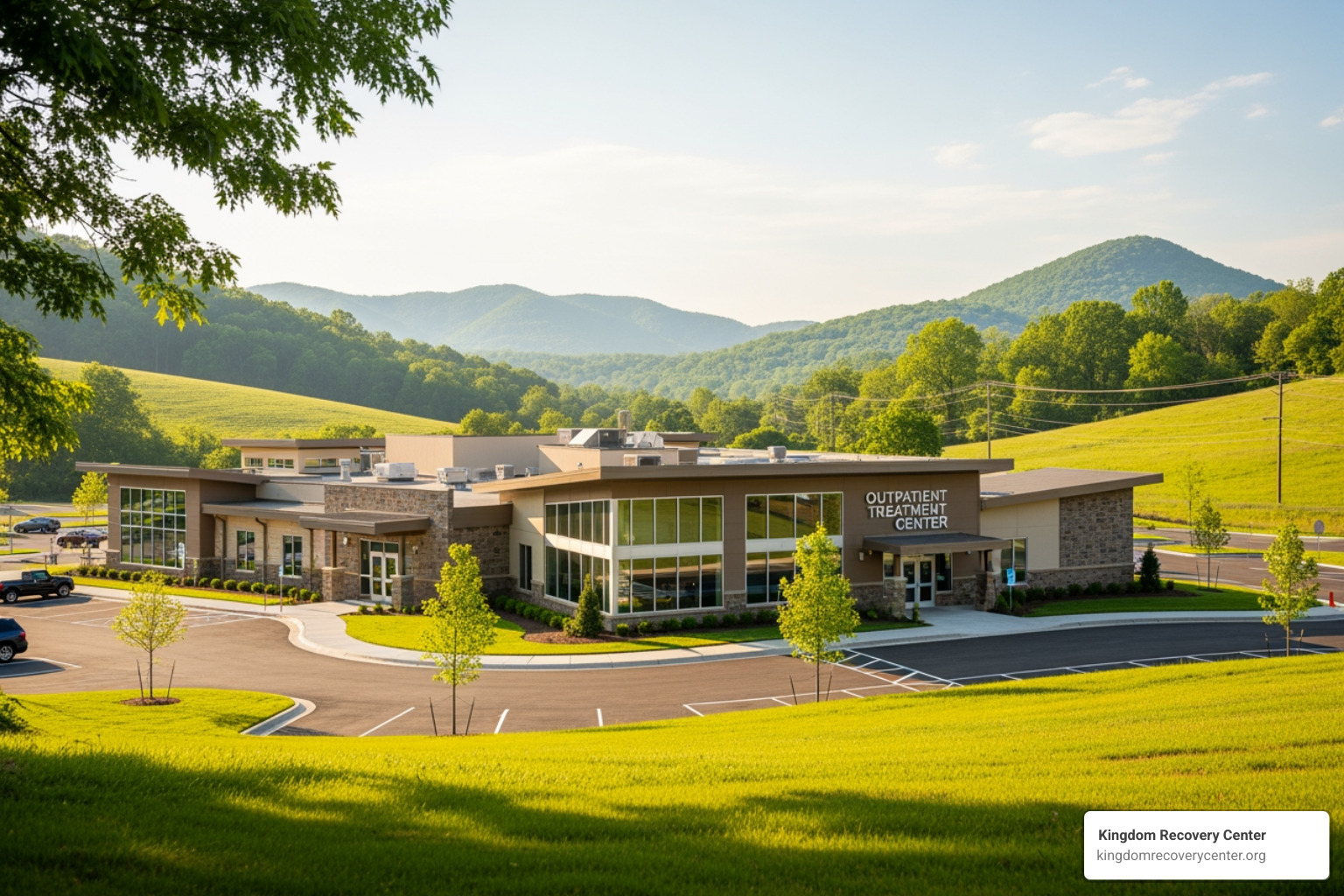
Outpatient addiction treatment center East Tennessee options provide a lifeline for individuals struggling with substance use disorders who need effective care without putting their entire life on hold. If you’re searching for treatment in the region, here’s what you need to know:
Key Benefits of Outpatient Treatment in East Tennessee:
- Flexibility – Attend therapy while maintaining work, school, or family commitments
- Multiple levels of care – From Partial Hospitalization (PHP) to Intensive Outpatient (IOP) to Standard Outpatient
- Evidence-based therapies – Including CBT, DBT, EMDR, and trauma-informed care
- Medication-Assisted Treatment (MAT) – FDA-approved medications combined with counseling
- Dual diagnosis support – Integrated treatment for co-occurring mental health conditions
- Insurance accepted – Most programs work with TennCare, Medicaid, Medicare, and private insurance
- Community support – Case management, family therapy, and aftercare programs
Addiction is a disease, not a moral failing. The brain can recover from the damage caused by substance use, though it requires time, support, and the right treatment approach. Traditional models that focus only on abstinence are often insufficient—sustainable recovery requires treating the whole person: mind, body, and spirit.
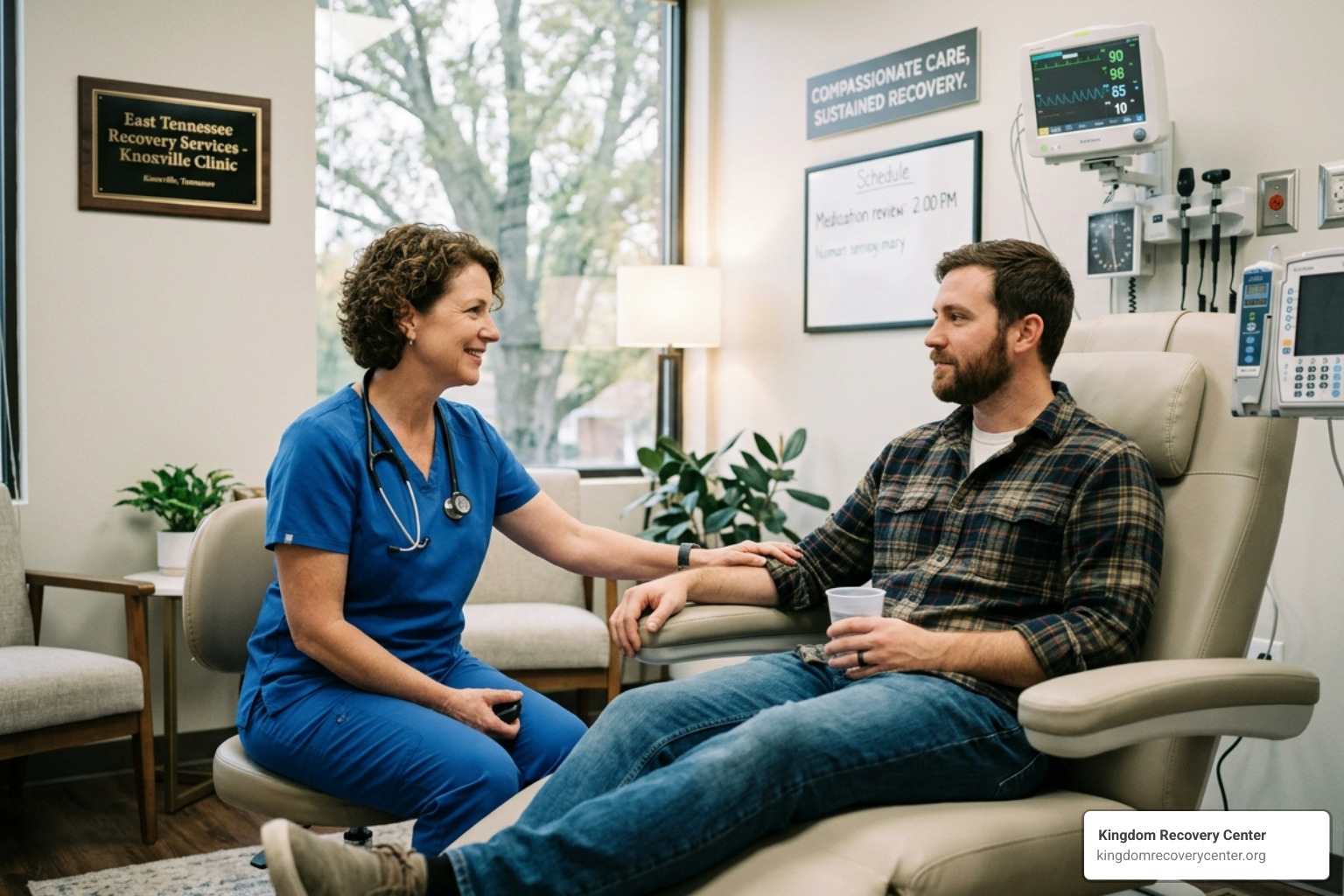
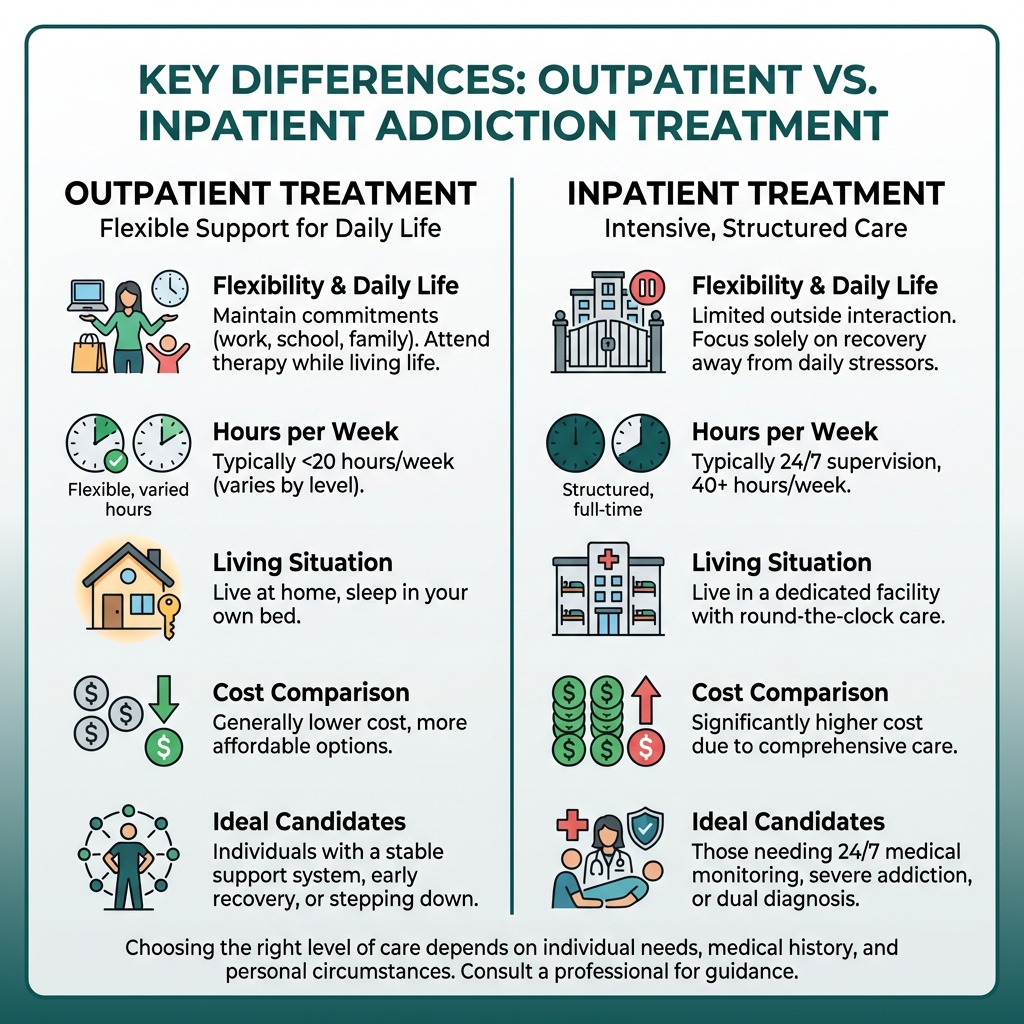
Outpatient treatment offers a proven path forward. Whether you’re transitioning from residential care or just beginning your recovery journey, outpatient programs in East Tennessee provide structured support while allowing you to continue living at home. You can attend medical visits, individual counseling, group therapy, and case management sessions—then return to your own bed each night.
Multiple centers across the region offer comprehensive care. The McNabb Center provides a full continuum from detoxification to Medication Assisted Therapy. Cumberland Heights operates locations in Knoxville-Papermill and Knoxville-Farragut with flexible morning and evening programs. East Tennessee Recovery takes a holistic approach combining MAT, counseling, and community support. Bradford’s Knoxville office offers intensive outpatient programs alongside family support and alumni services.
As Lao Tzu wisely said, “A journey of a thousand miles begins with a single step.”
At Kingdom Recovery Center in Morristown, TN, we specialize in providing compassionate, evidence-based outpatient addiction treatment center East Tennessee services that address addiction and mental health through a holistic, personalized approach. Our experienced team has helped countless individuals in East Tennessee transform their lives and achieve lasting recovery.
Understanding Outpatient Program Levels in East Tennessee
When seeking an outpatient addiction treatment center East Tennessee, it’s crucial to understand the different levels of care available. These levels are often guided by the American Society of Addiction Medicine (ASAM) criteria, which ensure individuals receive the most appropriate and effective treatment for their needs. Our team at Kingdom Recovery Center uses these guidelines to tailor individualized treatment plans.
Outpatient programs offer a continuum of care, providing varying intensities of support. For some, it serves as a crucial stepping stone after completing residential care, allowing for a gradual reintegration into daily life with continued clinical support. For others, it’s the ideal starting point for recovery, offering structured therapy without the need for an inpatient stay. This flexibility is a significant advantage, enabling individuals to maintain their work, school, or family commitments while actively engaging in their healing journey.
Here’s a comparison of the primary outpatient levels of care:
| Program Type | Hours Per Week | Session Frequency | Ideal Candidate Profile |
|---|---|---|---|
| Partial Hospitalization Programs (PHP) | 20-30+ hours | 5+ days/week, several hours per day | Stepping down from residential, or needs intensive support but can live at home; requires medical/psychiatric oversight. |
| Intensive Outpatient Programs (IOP) | 9-19 hours | 3-5 days/week, 3 hours per session | Needs structured therapy but can manage daily responsibilities; strong support system at home. |
| Standard Outpatient Services | 1-8 hours | 1-2 days/week, 1-2 hours per session | Stable in recovery, needs ongoing support for relapse prevention; transitioning from higher levels of care. |
Partial Hospitalization Programs (PHP)
Often considered the highest level of outpatient care, Partial Hospitalization Programs (PHP) provide comprehensive treatment that can serve as an alternative to inpatient or residential treatment. At this level, individuals engage in structured, full-day programming, typically five or more days a week, for several hours each day. The intensity of PHP is designed for those who require significant clinical support and monitoring, including medical and psychiatric oversight, but who have a stable home environment to return to in the evenings. This allows for intensive therapy and education while still offering the comfort and continuity of living at home.
Intensive Outpatient Programs (IOP)
Intensive Outpatient Programs (IOP) offer a structured yet flexible approach to addiction treatment. These programs typically involve 9-19 hours of therapy per week, spread across three to five days, with sessions lasting around three hours each. IOPs primarily consist of group and individual counseling, focusing on developing coping skills, understanding triggers, and preventing relapse. A key benefit of IOPs is their adaptability; many centers, including those in East Tennessee, offer morning, afternoon, and evening options. This flexibility allows individuals to continue with their work, school, or family responsibilities while receiving crucial support for their recovery. The McNabb Center, for instance, offers IOPs for adults and adolescents with 9-12 hours of structured therapy and education per week, including gender-specific and youth groups.
Standard Outpatient Services
Standard Outpatient Services represent the lowest intensity level within the continuum of care. This level is suitable for individuals who have achieved a degree of stability in their recovery or who are transitioning from higher levels of care like PHP or IOP. Typically, standard outpatient treatment involves one to two sessions per week, lasting one to two hours each. These sessions can include individual therapy, group therapy, or family therapy, or a combination thereof. The focus is on providing continued support, addressing ongoing challenges, and reinforcing relapse prevention strategies. This flexible scheduling allows individuals to integrate therapy seamlessly into their daily lives, ensuring long-term recovery is supported without overwhelming their existing commitments.
Core Components of an Outpatient Addiction Treatment Center in East Tennessee
At Kingdom Recovery Center, we believe in a whole-person approach to healing. This means treating not just the addiction, but the entire individual—mind, body, and spirit. Our programs are built on individualized treatment plans, carefully crafted to meet each person’s unique needs and experiences. We integrate evidence-based practices that have been proven effective in fostering lasting recovery.

Evidence-Based Therapeutic Approaches
Effective addiction treatment relies on therapeutic approaches backed by scientific research. In East Tennessee, many outpatient centers, including ours, use a variety of these methods to address the complex nature of addiction and co-occurring mental health disorders.
- Cognitive Behavioral Therapy (CBT): This widely used therapy helps individuals identify and change negative thought patterns and behaviors that contribute to substance use. It teaches coping skills to manage triggers and high-risk situations.
- Dialectical Behavior Therapy (DBT): Often used for individuals with co-occurring mental health disorders, DBT focuses on teaching skills in four key areas: mindfulness, distress tolerance, emotion regulation, and interpersonal effectiveness.
- Eye Movement Desensitization and Reprocessing (EMDR): Specifically offered for patients with a PTSD diagnosis, EMDR is a powerful therapy designed to help process traumatic memories and reduce their emotional impact. East Tennessee Recovery, for example, offers EMDR trauma therapy.
- Trauma-Informed Care: Recognizing the pervasive impact of trauma, this approach integrates an understanding of trauma into all aspects of treatment, creating a safe and supportive environment for healing.
- SMART Recovery Model: Used in group counseling settings, SMART (Self-Management And Recovery Training) Recovery is a science-based program that helps individuals empower themselves to achieve abstinence from addictive behaviors. East Tennessee Recovery uses this model in its group counseling.
- 12-Step Facilitation: While not a therapy itself, this approach encourages engagement with 12-Step programs like Alcoholics Anonymous (AA) and Narcotics Anonymous (NA), which provide peer support and a spiritual framework for recovery.
- Motivational Interviewing (MI): A client-centered counseling style for eliciting behavior change by helping clients explore and resolve ambivalence.
These approaches, often combined, empower individuals to develop healthier coping mechanisms, manage cravings, and build a strong foundation for long-term sobriety.
Medication-Assisted Treatment (MAT) for Sustainable Recovery
Medication-Assisted Treatment (MAT) is a highly effective, evidence-based approach that combines FDA-approved medications with counseling and behavioral therapies. This “whole-patient” approach addresses both the physical and psychological aspects of addiction, leading to more sustainable recovery outcomes.
MAT plays a crucial role in managing withdrawal symptoms and reducing cravings, which are significant barriers to recovery. For opioid addiction, common medications include buprenorphine (often found in Suboxone®) and naltrexone (Vivitrol®). These medications help stabilize brain chemistry, allowing individuals to engage more fully in therapy and focus on their long-term recovery goals. The McNabb Center, Bradford, East Tennessee Recovery, and Overmountain Recovery all emphasize MAT as a core component of their treatment services, recognizing its effectiveness in helping individuals regain control over their lives. At Kingdom Recovery Center, our MAT programs are overseen by experienced addictionologists who carefully monitor progress and adjust prescriptions as needed.
Treating Co-Occurring Disorders (Dual Diagnosis)
It’s common for individuals struggling with addiction to also experience co-occurring mental health disorders, often referred to as a “dual diagnosis.” Conditions like anxiety, depression, PTSD, and bipolar disorder can significantly impact an individual’s substance use and overall well-being. Effective treatment for addiction must, therefore, address these underlying mental health issues simultaneously.
Many outpatient addiction treatment center East Tennessee facilities are equipped to provide integrated treatment for dual diagnosis. The McNabb Center, for example, is designated by the state as a Co-Occurring Disorders Improved facility, indicating a higher level of integration for substance abuse and mental health treatment. Our clinicians at Kingdom Recovery Center are highly trained in treating patients with co-occurring disorders, utilizing psychological assessments and evidence-based practices (such as CBT/DBT/ACT/trauma-focused interventions) to address both conditions concurrently. This integrated approach is vital because treating only one disorder often leads to relapse in the other, making comprehensive care essential for lasting healing.
Holistic Support and Aftercare: The Keys to Long-Term Sobriety
Recovery is a lifelong journey that extends far beyond therapy sessions. At Kingdom Recovery Center, we understand that building a strong foundation for a new life free from chemical dependency requires holistic support and active community integration. We’re not just interested in helping you “survive” your addiction; we want to see you thriving in a supportive community.

Comprehensive Support Services for Patients and Families
To support this holistic recovery, outpatient addiction treatment center East Tennessee facilities offer a range of comprehensive services for both patients and their families.
- Case Management: Our case managers are often trained social workers or certified chemical dependency assistants who play a crucial role in helping individuals steer practical needs. This can include assistance with housing, transportation, food stamps, job training, child support, and connecting with other essential community resources. East Tennessee Recovery, for instance, provides case management that includes linkages to community supports like Narcan trainings and even an on-site food and hygiene pantry.
- Family Education and Therapy: Addiction impacts the entire family system. Family therapy and education groups help family members understand addiction, heal relationships, and learn how to best support their loved one’s recovery journey. Bradford and Cumberland Heights both offer family support and education.
- Peer Support Specialists: These individuals have lived experience with substance abuse and are now sober. They serve as invaluable mentors, offering guidance, empathy, and hope, demonstrating that recovery is truly possible. East Tennessee Recovery highlights the role of these community supporters.
- Linkages to Community Resources: Beyond direct therapy, successful recovery often depends on access to broader community support. This includes connecting individuals with local support groups, educational programs, and other services that foster a healthy, sober lifestyle. We ensure our patients have access to these vital connections.
The Importance of Aftercare and Community in East Tennessee
Aftercare is not an option; it’s a necessity for long-term sobriety. Completing an outpatient program is a significant achievement, but the journey continues. Effective aftercare planning helps individuals maintain their progress and prevent relapse.
- Relapse Prevention Planning: This involves identifying potential triggers, developing coping strategies, and creating a detailed plan to steer challenging situations.
- Alumni Programs: Many centers, including Cumberland Heights and Bradford, offer robust alumni programs with regular events. These programs foster a sense of community, provide ongoing support, and allow individuals to connect with others who understand their experiences.
- Ongoing Support Groups: Participation in groups like AA, NA, or SMART Recovery is often a cornerstone of aftercare. These groups offer a safe space for sharing, mutual support, and continued growth.
- Sober Living Connections: For some, transitioning to a sober living environment provides an extra layer of support and structure during early recovery.
- Viewing Relapse as a Growth Opportunity: At Kingdom Recovery Center, we view relapse not as a failure, but as an opportunity for further growth and learning. If a patient relapses, we support them in getting back on the right path, adjusting their treatment plan to address new insights and strengthen their recovery foundation.
The robust network of support services and aftercare options in East Tennessee is designed to empower individuals to build a fulfilling, addiction-free life. We are committed to helping you find the right drug rehab in East Tennessee for you and ensuring you have the tools and community to sustain your recovery. Find the right drug rehab in East Tennessee for you.
Navigating Access to Care: Costs, Insurance, and Finding the Right Fit
Understanding the financial aspects of addiction treatment is often a significant concern for individuals and families. At Kingdom Recovery Center, we believe that cost should not be a barrier to accessing life-changing care. We are dedicated to making treatment accessible and transparent, helping you steer the options available for an outpatient addiction treatment center East Tennessee.
Understanding Costs and Insurance for an outpatient addiction treatment center East Tennessee
The cost of outpatient treatment varies depending on the intensity and length of the program. However, many options are available to help cover these expenses:
- Most Insurance Accepted: Many outpatient addiction treatment center East Tennessee facilities, including ours, accept a wide range of insurance providers. This often includes major private insurance companies like Blue Cross Blue Shield, Aetna, Cigna, and Humana.
- TennCare, Medicaid, and Medicare: For those with government-sponsored health insurance, many programs accept TennCare plans, Medicaid, and Medicare. East Tennessee Recovery explicitly states they accept patients with no health insurance and will help apply for Medicaid or Medicare if needed.
- State-Funded Services: The Tennessee Department of Mental Health and Substance Abuse Services (TDMHSAS) contracts with community-based organizations to provide substance use treatment services. These services are specifically intended for Tennesseans with the greatest needs and the least ability to pay. Eligibility often includes those not eligible for TennCare or other insurance, or who have exhausted their benefits, and meet specific federal poverty guidelines. You can learn more about eligibility criteria here: Eligibility based on federal poverty guidelines.
- Flexible Private Payment Options: For individuals without insurance or those whose insurance doesn’t cover the full cost, many centers offer flexible private payment options to make sobriety a reality for any budget.
We understand that verifying insurance can be complex, which is why many centers offer free, confidential insurance verification services to help you understand your benefits and potential out-of-pocket costs upfront.
How to Choose the Best outpatient addiction treatment center East Tennessee for You
Selecting the right outpatient addiction treatment center East Tennessee is a deeply personal decision. Here are key factors to consider to ensure you find a program that best suits your needs:
- Confidential Assessment: A thorough, confidential assessment is the first step. This evaluation helps determine the most appropriate level of care and treatment plan based on your unique history, challenges, and goals. We offer these assessments to ensure a personalized approach.
- Verifying Insurance: Always confirm your insurance coverage with the treatment center’s admissions team. They can provide a clear understanding of what your plan covers and any financial responsibilities you may have.
- Asking About Therapies Offered: Inquire about the specific evidence-based therapeutic approaches used (e.g., CBT, DBT, EMDR, SMART Recovery). A center that offers a diverse range of therapies can better tailor treatment to your individual needs.
- Inquiring About Dual Diagnosis Capabilities: If you suspect or know you have a co-occurring mental health disorder, ensure the center has specialized programs and trained professionals to treat both conditions simultaneously.
- Checking for Licensed Professionals: Confirm that the clinical staff—therapists, counselors, medical professionals—are licensed and experienced in addiction treatment. Their expertise is paramount to effective care.
- Considering Location and Schedule Flexibility: Outpatient treatment is designed to fit into your life. Look for a center that offers convenient locations (like our facilities in East Tennessee) and flexible scheduling options (morning, afternoon, or evening sessions) that accommodate your work, school, or family commitments.
Choosing the right center can feel overwhelming, but we are here to guide you. Our team at Kingdom Recovery Center is ready to answer your questions and help you take this crucial step toward recovery.
Frequently Asked Questions about Outpatient Treatment in East Tennessee
We often hear similar questions from individuals and families considering an outpatient addiction treatment center East Tennessee. Here, we address some of the most common inquiries to help clarify what you can expect from these programs.
How long does an outpatient rehab program last?
The length of an outpatient rehab program is highly individualized and not based on a fixed calendar. While some programs may have general guidelines, the actual duration of treatment varies significantly from person to person. It is primarily determined by a clinical assessment of your specific needs, the severity of your addiction, the presence of any co-occurring disorders, and your progress in treatment. At Kingdom Recovery Center, our clinical team works closely with you to determine the appropriate intensity and duration. The goal is always sustainable recovery, meaning treatment continues as long as it is clinically beneficial to help you achieve and maintain sobriety.
Can I keep my job while attending an outpatient program?
Yes, this is one of the primary benefits and distinguishing features of an outpatient program! Outpatient addiction treatment centers are specifically designed to provide effective care while allowing individuals to continue with their daily responsibilities, including work, school, and family commitments. Many centers in East Tennessee, including ours, offer flexible scheduling options with sessions available in the mornings, afternoons, and evenings. This allows you to integrate your treatment seamlessly into your existing schedule, ensuring you receive the support you need without putting your life on hold.
What happens if I relapse during treatment?
Relapse is a common, though challenging, part of the recovery process for many individuals. At Kingdom Recovery Center, we do not view relapse as a failure; instead, we see it as an opportunity for further growth and learning. If a relapse occurs during treatment, your clinical team will provide immediate support and compassion. We will work with you to understand the triggers and circumstances that led to the relapse, adjust your treatment plan as needed, and strengthen your coping skills to prevent future occurrences. The focus is always on getting you back on track and continuing your journey toward lasting recovery, reinforcing that you are not alone and support is always available.
Your Path to Recovery Starts Today
Choosing an outpatient addiction treatment center East Tennessee offers a flexible, effective, and supportive path to recovery. You don’t have to put your entire life on hold to heal. With evidence-based therapies, Medication-Assisted Treatment, comprehensive support for co-occurring disorders, and a strong focus on aftercare and community, you can build a foundation for a fulfilling, addiction-free life.
At Kingdom Recovery Center, we are dedicated to providing client-centered, evidence-based care that empowers lasting change. We believe that recovery is possible, and we are here to walk alongside you every step of the way. If you are ready for an addiction-free life, we invite you to take that first step with us. Begin your journey to an addiction-free life.