Understanding the Complexity of Co-Occurring Mental Health and Addiction

Dual diagnosis support is specialized care for individuals experiencing both a mental health disorder and a substance use disorder. These co-occurring conditions are complex and interconnected, making integrated treatment essential for lasting recovery.
Key aspects of dual diagnosis support include:
- Integrated treatment addressing both conditions simultaneously.
- Comprehensive assessment to accurately identify all disorders.
- Multidisciplinary care teams of psychiatrists, therapists, and addiction specialists.
- Evidence-based therapies like CBT and DBT.
- Careful medication management when appropriate.
- Peer support groups for co-occurring disorders.
- Continuity of care across all treatment levels.
The statistics are sobering: in 2019, 9.5 million U.S. adults had both a mental illness and a substance use disorder, yet only 7.8% received treatment for both. This often forces a choice between treating addiction or mental health, which rarely leads to lasting recovery.
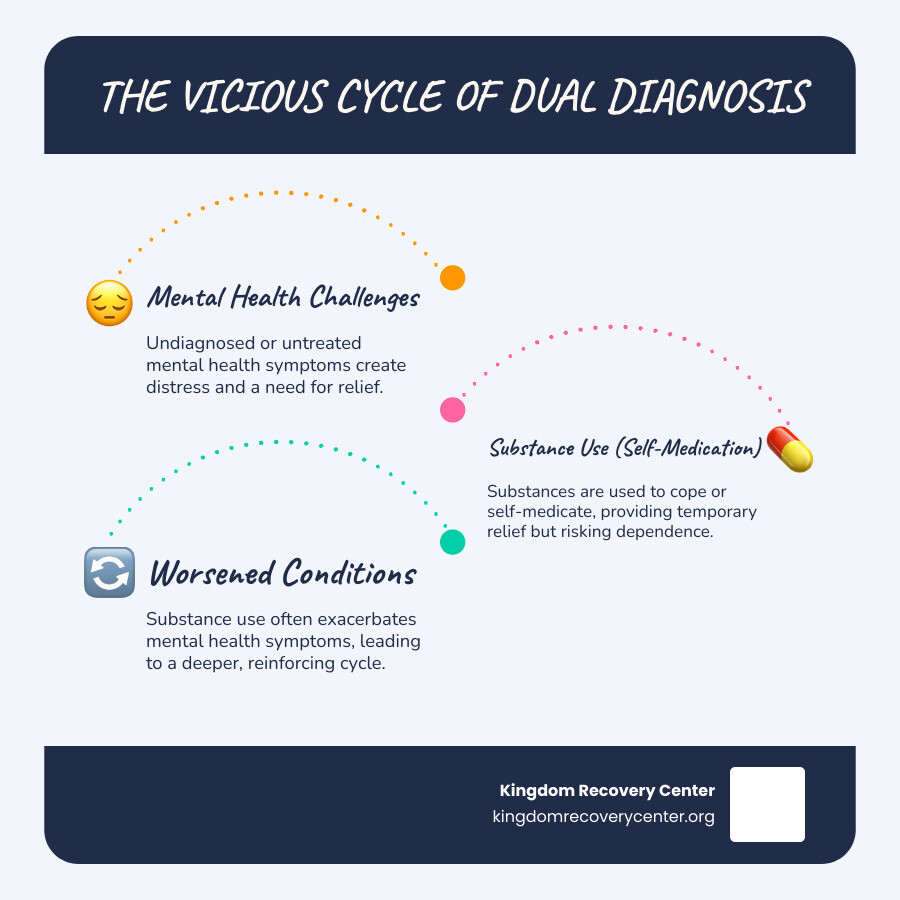
The relationship between mental health and addiction creates a vicious cycle. For example, someone might drink to cope with depression, only to find that alcohol worsens their symptoms. Each condition feeds the other, creating a downward spiral that’s hard to escape without proper support.
But there’s hope. Research shows that integrated treatment—addressing both conditions at the same time—leads to better outcomes than treating them separately. A coordinated approach leads to reduced relapse rates, improved quality of life, and a real path to recovery.
At Kingdom Recovery Center in Morristown, Tennessee, we specialize in dual diagnosis support through evidence-based, integrated treatment programs. Our compassionate team understands the unique challenges of co-occurring disorders and provides personalized care that treats the whole person.
What is Dual Diagnosis? Understanding Co-Occurring Disorders
Dual diagnosis support addresses a situation where an individual has both a mental health condition and a Substance Use Disorder (SUD) concurrently, also known as a co-occurring disorder. The two conditions often create a painful cycle of self-medication. For instance, someone might use alcohol to calm anxiety, but this can worsen anxiety symptoms in the long run, making it hard to tell where one problem ends and the other begins. This challenge is widespread: in 2019, 9.5 million adults had a co-occurring mental illness and SUD. You can learn more about this interconnected relationship by exploring our insights on Unraveling the Mental Health and Addiction Relationship.
Common Examples of Dual Diagnosis
Dual diagnoses appear in many forms. Some common pairings include:
- Depression and Alcohol Use Disorder: Alcohol is used to numb sadness but, as a depressant, it worsens depressive symptoms.
- Anxiety and Prescription Drug Misuse: Benzodiazepines may be misused to manage panic, leading to dependence and increased anxiety.
- Addiction and Panic Disorders: Substances are used to seek relief from panic attacks, which can fuel both the addiction and the frequency of panic episodes. We explore this in our article on Addiction and Panic Disorders.
- Bipolar Disorder and Cocaine Addiction: Stimulants like cocaine are used to counteract depressive phases or improve manic ones, ultimately destabilizing mood.
- PTSD and Opioid Use Disorder: Opioids may be used to dull the emotional pain of trauma, leading to severe addiction.
- Schizophrenia and Cannabis Use: Cannabis is sometimes used to cope with symptoms, but it can worsen psychosis and interfere with medication.
Potential Risk Factors
The development of a dual diagnosis is complex, often involving several risk factors:
- Shared Risk Factors: Genetic predispositions can make individuals more vulnerable to both mental health and substance use disorders.
- Environmental Factors: Chronic stress, trauma, neglect, or a lack of social support can contribute to both disorders.
- Trauma: Past trauma is a potent risk factor, as it can alter brain development and lead to self-medication with substances.
- Brain Changes: Mental health disorders can alter brain chemistry, making substances feel more rewarding. Conversely, substance use can cause brain changes that worsen mental health. This relationship is a focus of scientific research on co-occurring disorders.
At Kingdom Recovery Center, we understand these complex interactions and explore them further in our insights on Exploring Mental Health Addiction: Common Factors. Understanding these risk factors is the first step toward effective prevention and intervention.
The Power of Integrated Treatment: Why Both Conditions Need Care
Treating a dual diagnosis is like trying to fix a tangled knot; pulling on only one end makes it tighter. When mental health and substance use disorders are treated separately, they create a vicious cycle. Mental health symptoms can drive substance use, which in turn worsens those symptoms. This leads to incomplete recovery and a high risk of relapse, as the untreated condition triggers the other.
This is why integrated treatment is so powerful. It recognizes that these conditions are deeply intertwined and offers a holistic approach where both are addressed simultaneously by a coordinated team. By tackling both sides at once, we interrupt the cycle and achieve significantly better outcomes. Our article on Mental Health Disorders and Substance Abuse further highlights this interplay.

Benefits of an Integrated Approach
The advantages of integrated treatment are profound. Treating both conditions together leads to outcomes far superior to treating them separately.
Here’s a comparison of sequential vs. integrated treatment:
| Feature | Sequential Treatment | Integrated Treatment |
|---|---|---|
| Approach | Treats one disorder, then the other (e.g., detox first). | Treats both disorders simultaneously and holistically. |
| Coordination | Often disjointed, requiring separate providers and systems. | Coordinated care team, often within the same facility or team. |
| Relapse Risk | Higher, as untreated condition can trigger relapse. | Significantly reduced, by addressing root causes concurrently. |
| Patient Experience | Can feel fragmented, frustrating, and less effective. | More comprehensive, supportive, and effective. |
| Long-Term Outcomes | Often less stable, higher rates of readmission. | Improved quality of life, better treatment adherence, lasting recovery. |
The benefits of integrated care extend beyond reduced relapse rates. It fosters:
- Improved Quality of Life: Addressing both conditions brings greater stability and well-being.
- Coordinated Care Team: A multidisciplinary team ensures a unified, personalized treatment plan.
- Better Treatment Adherence: Patients are more likely to stick with a plan that addresses all their concerns.
- Cost-Effectiveness: Effective integrated care can reduce long-term costs by preventing relapse and hospitalizations.
At Kingdom Recovery Center, our specialized programs for Dual Diagnosis are built upon these principles, ensuring our clients receive the most effective and compassionate care.
Overcoming Challenges in Diagnosis and Treatment
Diagnosing and treating co-occurring disorders has unique challenges. A major one is symptom overlap, where symptoms of mental illness and substance use are similar, leading to potential misdiagnosis. Is it anxiety or withdrawal? Depression or the effects of substance use?
Another barrier is stigma, which can prevent people from seeking help. To combat these issues, a ‘No Wrong Door’ policy is a crucial best practice. Championed by organizations like SAMHSA, it means that no matter where a person seeks help, they should be assessed for both conditions. This ensures no one falls through the cracks.
The cornerstone of effective treatment is a comprehensive assessment by providers experienced in both fields. This evaluation must explore an individual’s history and the interplay between their conditions to create a truly integrated plan. You can learn more about SAMHSA’s approach to co-occurring disorders and their emphasis on integrated care.
Comprehensive Dual Diagnosis Support and Treatment Options
Effective dual diagnosis support requires individualized care plans delivered by a multidisciplinary team. There is no one-size-fits-all solution. At Kingdom Recovery Center, our Behavioral Health Services and Comprehensive Addiction Treatment are person-centered and recovery-oriented to address all aspects of an individual’s health.

The Role of Therapy in Dual Diagnosis Support
Therapy is the bedrock of dual diagnosis support, providing tools for recovery. Behavioral therapies are effective for developing coping skills, identifying triggers, and changing harmful patterns. Learn more in our article, Understanding the Role of Therapy in Addiction Recovery.
Two key modalities include:
- Cognitive Behavioral Therapy (CBT): Helps individuals challenge negative thought patterns and behaviors contributing to both conditions, allowing them to break destructive cycles. Our page on Cognitive Behavioral Therapy offers more insights.
- Dialectical Behavioral Therapy (DBT): Teaches skills in mindfulness, distress tolerance, and emotional regulation, which are invaluable for managing the complex emotions common in dual diagnosis. Learn more about Dialectical Behavioral Therapy.
Other valuable therapies include Motivational Interviewing, Seeking Safety, and family therapy.
Medication Management
Medication management is a vital component that complements therapy by stabilizing mental health symptoms and reducing cravings.
- Managing Mental Health Symptoms: Antidepressants, mood stabilizers, and antipsychotics can create a stable emotional foundation for recovery.
- Reducing Cravings and Preventing Relapse: Medications for Substance Use Disorders (part of Medication-Assisted Treatment, or MAT) can reduce cravings for opioids and alcohol, making it easier to maintain abstinence. The FDA provides Information about Medications for Opioid Use Disorder (FDA).
A multidisciplinary team carefully tailors medication plans for safety and effectiveness.
Levels of Care: From PHP to Outpatient
Dual diagnosis support involves a stepped approach to care with varying levels of intensity.
- Partial Hospitalization Programs (PHP): Offer intensive, structured treatment several hours a day, multiple days a week, while clients return home at night. Learn more about What to Know About Partial Hospitalization Programs for Treatment.
- Intensive Outpatient Programs (IOP): A flexible option with fewer hours than PHP, IOP provides robust therapy for those who need significant support while managing daily responsibilities. Read about Intensive Outpatient Programs: A Path to Mental Health Recovery.
- Outpatient Mental Health: Involves weekly or bi-weekly therapy sessions for individuals who have achieved stability and need ongoing support. Learn about our Outpatient Mental Health services.
Finding a Dual Diagnosis Support Group
Support groups offer community, shared experience, and accountability, reducing feelings of isolation.
Several types of groups cater to co-occurring disorders:
- Alcoholics Anonymous (AA) and Narcotics Anonymous (NA): These 12-step programs provide a structured path to sobriety that many with dual diagnosis find beneficial.
- Dual Recovery Anonymous (DRA): A 12-step program specifically for people with a dual diagnosis, addressing both chemical dependency and psychiatric illness.
- SMART Recovery: A science-based, self-empowering approach focusing on motivation, coping with urges, and managing thoughts and behaviors.
Participation in these groups complements professional treatment and offers ongoing encouragement.
Finding Help and Supporting a Loved One
Navigating the path to recovery for a dual diagnosis can feel overwhelming for individuals and their loved ones. However, guidance, empathy, and open communication make all the difference. Understanding when and how to seek help is crucial. We encourage you to explore our insights on Mental Health Awareness: Its Role in Overcoming Addiction and Signs Indicating It’s Time to Seek Help for Substance Use Disorder.
Effective Strategies for Family and Friends
Supporting a loved one requires a balance of compassion, education, and self-preservation.
- Educate Yourself: Learn about your loved one’s specific dual diagnosis to respond with empathy.
- Encourage Professional Help: Gently suggest seeking professional help, emphasizing that effective dual diagnosis support is available.
- Communicate Openly: Foster a safe, non-judgmental environment for them to share their struggles.
- Set Healthy Boundaries: Support is vital, but enabling harmful behaviors is not. Set clear boundaries to protect your own well-being and encourage their accountability.
- Be Patient: Recovery is a journey with potential setbacks. Patience and persistence are essential.
- Practice Self-Care: Supporting someone is emotionally draining. Seek your own support through therapy or groups like Al-Anon and Nar-Anon. NAMI also offers valuable Resources for Families.
How to Find Professional Help
Finding the right professional help is a critical step. Here’s how to steer the process:
- Start with a Primary Care Provider: A family doctor can provide initial assessments and referrals.
- Consult Mental Health Professionals: Seek out psychiatrists or therapists who specialize in co-occurring disorders for comprehensive assessments.
- Use National and Local Resources:
- SAMHSA National Helpline: Call 1-800-662-HELP (4357) for free, confidential treatment referrals.
- SAMHSA’s Treatment Locator: Use this online tool to locate treatment facilities in your area.
- 988 Suicide & Crisis Lifeline: For immediate crisis, call or text 988 for free, confidential support. More information is at 988 Suicide & Crisis Lifeline.
- Kingdom Recovery Center: As a leading provider of dual diagnosis support in Tennessee, we offer specialized, integrated treatment.
- Check with Your Insurance Provider: Understand your coverage for mental health and substance use treatment.
For specific guidance within our region, our article Your Guide to Finding the Right Mental Health Treatment in Tennessee offers valuable local insights.
Frequently Asked Questions about Dual Diagnosis
We understand that navigating dual diagnosis support can bring up many questions. Here are some of the most common ones:
What makes dual diagnosis treatment different from treating a single disorder?
The key difference is integration. Instead of treating two separate issues, dual diagnosis treatment focuses on the interplay between a mental health condition and a Substance Use Disorder (SUD). It involves:
- Simultaneous Treatment: Addressing both the mental illness and the SUD concurrently to prevent one from triggering a relapse in the other.
- Specialized Providers: Clinicians are trained to understand the complexities of both conditions.
- Addressing Interplay: Treatment focuses on breaking the cycle where mental health symptoms lead to substance use and vice versa.
Can a person fully recover from a dual diagnosis?
Yes, lasting recovery is achievable. While not a “cure,” recovery means managing symptoms for both conditions, sustaining abstinence, and living a fulfilling life. With effective integrated dual diagnosis support, individuals can improve their quality of life and develop robust relapse prevention strategies. Recovery is a lifelong journey, but a meaningful life free from the grip of co-occurring disorders is absolutely possible.
How do I know if a treatment center is qualified to treat dual diagnosis?
Choosing the right center is crucial. Look for a facility that offers:
- Integrated Programs: They should explicitly state they treat co-occurring disorders simultaneously.
- Experienced Staff: The clinical team (psychiatrists, therapists) should have credentials and experience in both mental health and addiction.
- Multidisciplinary Team: A diverse team of professionals should collaborate on your care plan.
- On-Site Treatment for Both: The facility should treat both conditions within the same program, not refer out for one.
- Comprehensive Assessment: They must conduct a thorough assessment to diagnose all co-occurring conditions accurately.
- Evidence-Based Therapies: The center should use proven therapies like CBT and DBT.
At Kingdom Recovery Center, we meet these criteria, offering a comprehensive, integrated approach to dual diagnosis support in Tennessee.
Your Path to Integrated Recovery Starts Here
A dual diagnosis is a complex journey, but it is treatable. Integrated dual diagnosis support is the key to lasting recovery and a fulfilling life. Hope and healing are realities for those who receive comprehensive care that addresses both mental health and substance use disorders simultaneously.
You are not alone. The team at Kingdom Recovery Center understands the intricacies of co-occurring disorders and is dedicated to providing the specialized, evidence-based treatment you deserve. Our programs across Tennessee, including Morristown, Knoxville, and Johnson City, are designed to empower lasting change.
Taking the first step is a courageous act toward a healthier future. If you’re ready to find the specialized dual diagnosis support that works, we invite you to connect with us. Your path to integrated recovery starts here.
Find specialized dual diagnosis care in Knoxville, Tennessee