Alcohol Treatment in Chattanooga TN: What You Need to Know
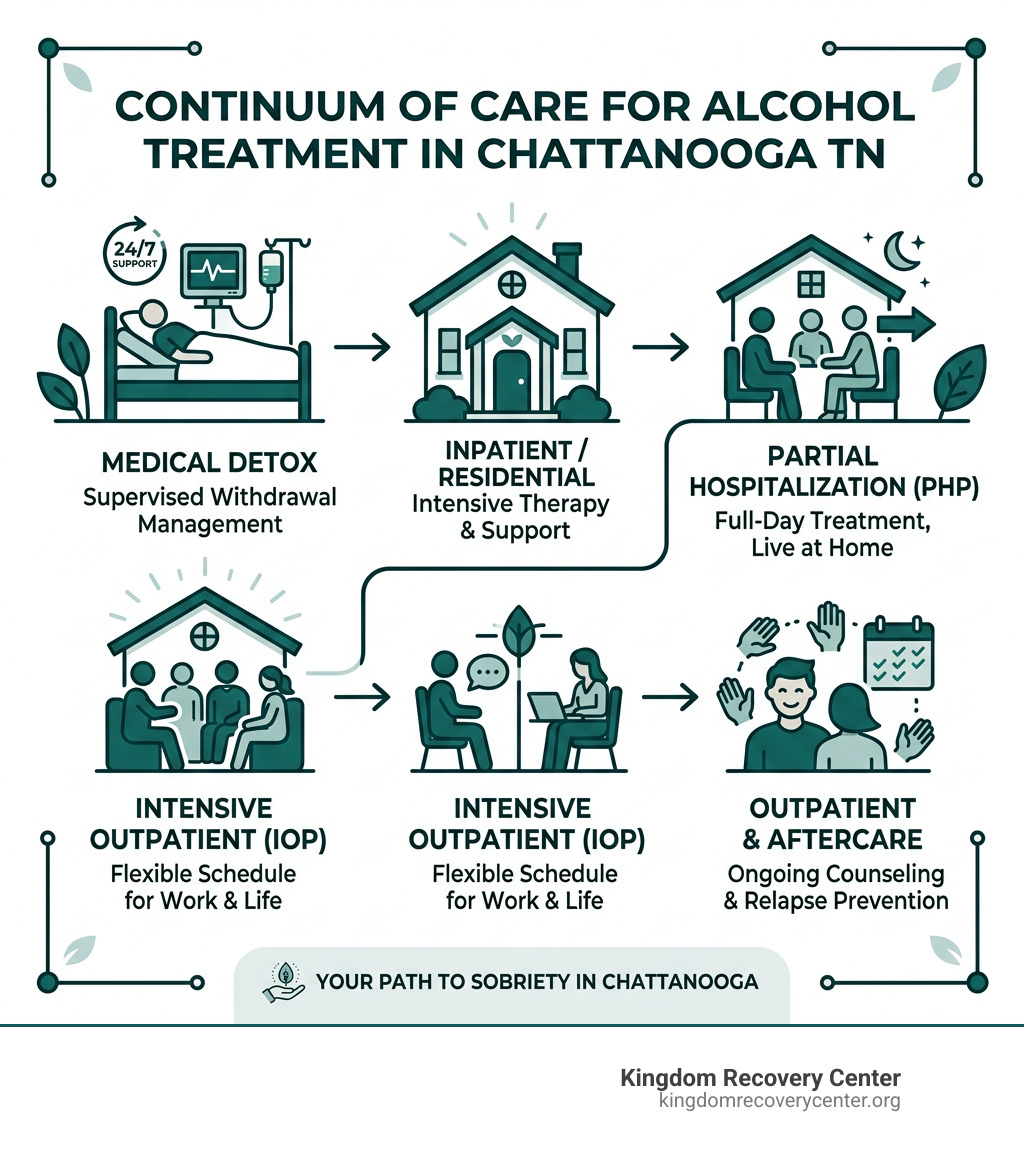
Alcohol treatment Chattanooga TN residents can access spans several levels of care, from medical detox to long-term outpatient support. Here is a quick overview of your main options:
| Level of Care | What It Involves | Best For |
|---|---|---|
| Medical Detox | 24/7 supervised withdrawal management | First step for physical dependence |
| Inpatient / Residential | Live-in treatment, intensive therapy | Severe addiction, unstable home environment |
| Partial Hospitalization (PHP) | Full days of treatment, sleep at home | Step-down from inpatient or high-need cases |
| Intensive Outpatient (IOP) | Several hours of therapy per week | Balancing recovery with work or family |
| Outpatient / Aftercare | Ongoing therapy, relapse prevention | Long-term maintenance and accountability |
Chattanooga is facing a real crisis. Drug overdoses in the city increased 28% between 2021 and 2022, and alcohol-related deaths in Hamilton County rose 20% between 2018 and 2020 — faster than the state average. If you or someone you love is struggling, you are not alone, and help is closer than you think.
Local resources include TennCare-accepting facilities, Medicare-approved programs, private insurance options, and free community meetings — so cost does not have to be a barrier.
At Kingdom Recovery Center, based in Morristown, TN, we specialize in compassionate, evidence-based addiction recovery and mental health services, including support for those navigating alcohol treatment Chattanooga TN and the surrounding region. Our holistic, personalized approach covers everything from detox to aftercare, and we are here to help you find the right path forward.
Quick alcohol treatment Chattanooga TN terms:
Understanding Alcohol Addiction and the Local Crisis
When we look at the beautiful skyline of the “Scenic City,” it is easy to forget that many of our neighbors are fighting a silent battle. The statistics for Hamilton County paint a sobering picture. Between 2021 and 2022, drug overdoses in Chattanooga spiked by 28%. Perhaps even more startling is the long-term trend: overdose deaths across Tennessee have surged by a staggering 1,015% over the last two decades.
Alcohol remains a primary driver of this crisis. According to the Tennessee Health Data Dashboard, alcohol-related overdose deaths rose by nearly 35% statewide in recent years. In Hamilton County specifically, the rate of drug-related overdoses is 6% higher than the state average. These aren’t just numbers; they represent friends, family members, and coworkers.
Recognizing the signs of addiction is the first step toward intervention. Alcohol Use Disorder (AUD) often manifests through:
- Physical Symptoms: High tolerance (needing more to feel the same effect), withdrawal tremors (the “shakes”), unexplained weight loss or gain, and poor hygiene.
- Behavioral Changes: Neglecting responsibilities at work or home, social isolation, and continued use despite clear negative consequences in relationships or health.
- Safety Risks: Increased legal issues or dangerous behaviors like driving under the influence.
If you are witnessing an emergency, Tennessee’s Good Samaritan Law protects you when calling 911 to report an overdose, ensuring you can seek life-saving help without fear of certain drug possession charges. For more detailed insights into how dependency forms, you can explore our alcohol abuse information page. Data from CDC Wonder statistics further emphasizes that early intervention is the most effective way to prevent alcohol-related mortality.
The Importance of Professional Alcohol Detox
We cannot stress this enough: detoxing from alcohol at home is not just difficult; it can be life-threatening. Alcohol is one of the few substances where withdrawal can actually lead to death if not managed by medical professionals.
When someone stops drinking after long-term heavy use, the brain—which has been suppressed by alcohol—goes into a state of hyper-excitability. This leads to a predictable but dangerous withdrawal timeline:
- 6–12 Hours: Minor symptoms like anxiety, insomnia, and nausea begin.
- 24–72 Hours: Symptoms peak. This is the “danger zone” where seizures can occur.
- 48–96 Hours: A small percentage of people experience Delirium Tremens (DTs), characterized by hallucinations, severe confusion, and dangerous spikes in blood pressure or heart rate.
Scientific research on the necessity of supervised detox shows that 24/7 medical monitoring significantly improves completion rates and safety. In a professional setting, doctors can use Medication-Assisted Treatment (MAT) to ease the brain back into balance, preventing the most severe symptoms.
If you are looking for the right environment to start this process, we provide guidance on finding detox centers in Chattanooga and offer specialized alcohol detox resources for those in the broader East Tennessee area. Professional care ensures that the “first step” isn’t your last.
Types of Alcohol Treatment Programs in Chattanooga TN
Once detox is complete, the real work of recovery begins. Alcohol treatment Chattanooga TN offers a variety of paths depending on your needs, budget, and life commitments.
| Program Type | Duration | Setting |
|---|---|---|
| Residential/Inpatient | 30–90 Days | 24/7 Facility |
| Partial Hospitalization (PHP) | 20–30 Hours/Week | Day Treatment |
| Intensive Outpatient (IOP) | 9–15 Hours/Week | Flexible Schedules |
For many, a partial hospitalization program offers the perfect middle ground—intensive clinical care during the day while allowing you to return home or to a sober living environment at night. If you have work or family obligations that you simply cannot leave, an intensive outpatient program provides structured therapy sessions (usually in the evenings or mornings) to keep you on track.
We also see a rising demand for specialized care. This includes:
- Veterans Services: Addressing the unique traumas and experiences of those who served.
- Adolescent Care: Tailored for younger individuals whose brains are still developing.
- Women’s Programs: Focusing on gender-specific issues in a safe, supportive environment.
For a deeper dive into which level of care fits your current situation, check out our outpatient rehab guide or view our comprehensive treatment options.
Specialized Alcohol Treatment Chattanooga TN for Dual Diagnosis
It is very rare for addiction to exist in a vacuum. Most people struggling with alcohol are also dealing with “co-occurring disorders”—mental health issues like depression, anxiety, or PTSD that they may have been “self-medicating” with alcohol.
At Kingdom Recovery Center, we believe in behavioral health services that treat the whole person. If you only treat the drinking but ignore the underlying trauma, the risk of relapse is incredibly high. Our what we treat philosophy integrates mental health care into every stage of recovery, ensuring you have the tools to manage your mental health without reaching for a bottle.
Navigating Insurance and Affordable Alcohol Treatment Chattanooga TN
We know that the question “How am I going to pay for this?” is often the biggest hurdle to seeking help. The good news is that insurance coverage for addiction has expanded significantly.
Private Insurance and Marketplace Plans
Most major private insurance providers—including Aetna, Cigna, and Blue Cross Blue Shield (BCBS)—are in-network with various Chattanooga facilities. If you don’t have employer-sponsored insurance, you can explore the Healthcare.gov marketplace to find plans that cover substance use disorder (SUD) treatment.
Government Programs
- TennCare (Medicaid): Many local facilities accept TennCare Medicaid benefits. While benefits can sometimes be limited, they are a vital resource for low-income individuals.
- Medicare: While Medicare is excellent for hospital-based detox and some outpatient services, it’s important to verify which specific rehab centers are Medicare-approved for longer-term care.
- FMLA: Don’t forget that the Family and Medical Leave Act (FMLA) provides employee protections that allow you to take up to 12 weeks of unpaid leave for addiction treatment without losing your job.
Accessing Alcohol Treatment Chattanooga TN Without Insurance
If you are currently uninsured, do not lose hope. The FindTreatment.gov locator allows you to filter for facilities that offer “sliding scale fees.” This means the cost of your treatment is adjusted based on your income. There are also state-funded grants and community health centers designed specifically to catch those who fall through the cracks.
If you’re feeling overwhelmed by the financial side of things, please reach out to us for a confidential contact for help. We can help you navigate your options and find a path that fits your financial reality.
Evidence-Based Therapies and Long-Term Recovery
What actually happens during a day in rehab? It’s more than just sitting in a circle. Modern alcohol treatment Chattanooga TN utilizes evidence-based therapies that are proven to rewire the brain and change behavior.
- Cognitive Behavioral Therapy (CBT): Helping you identify “trigger” thoughts and replace them with healthy coping mechanisms.
- Dialectical Behavior Therapy (DBT): Focusing on emotional regulation and mindfulness—essential for staying calm during stressful moments.
- Medication-Assisted Treatment (MAT): Using FDA-approved medications to reduce cravings and block the “buzz” of alcohol.
- Family Therapy: Healing the relationships that addiction has strained.
Recovery doesn’t end when you leave the facility. Long-term success often depends on a strong support network. Chattanooga has a vibrant recovery community, including:
- Alcoholics Anonymous (AA) Chattanooga
- Narcotics Anonymous (NA) meetings
- Celebrate Recovery locator (for those seeking a faith-based approach)
For many, moving into a sober living home like an Oxford House provides the necessary accountability during the first year of sobriety. These environments offer a drug-free space to live with others who share your goals. You can find more about our addiction treatment services and how we bridge the gap between treatment and everyday life.
Frequently Asked Questions about Alcohol Rehab
What are the first signs that I need alcohol treatment?
If you find yourself lying about how much you drink, experiencing “blackouts,” or feeling like you need a drink to start your day or stop your hands from shaking, it is time to seek a professional assessment. If alcohol is causing problems in your life (legal, financial, or relational) and you still can’t stop, that is the definition of addiction.
How long does the typical alcohol withdrawal process last?
The acute phase of withdrawal usually lasts between 5 and 7 days. However, “Post-Acute Withdrawal Syndrome” (PAWS) can cause lingering symptoms like anxiety, irritability, and sleep disturbances for several weeks or months. This is why ongoing therapy is so important.
Does TennCare or private insurance cover the full cost of rehab?
In many cases, yes! While “full cost” depends on your specific plan’s deductible and out-of-pocket maximums, the Affordable Care Act requires most insurance plans to treat addiction services as an essential health benefit.
Conclusion
At Kingdom Recovery Center, we know that the road to recovery can feel like an uphill climb, especially when you’re starting from the bottom. But with the right alcohol treatment Chattanooga TN resources and a dedicated team by your side, lasting change isn’t just a dream—it’s a reality.
We are proud to serve the East Tennessee community with evidence-based care and a personalized touch. Whether you are in Chattanooga, Knoxville, or Morristown, we are here to help you rediscover a life worth living.
Ready to take the first step? Start your journey today by reaching out for a confidential assessment. Let us help you find your way back to the person you were meant to be.