
Finding Hope and Healing in the Scenic City
Outpatient rehab Chattanooga offers a flexible path to recovery that allows you to heal while maintaining your daily responsibilities. If you’re searching for treatment options in the Chattanooga area, here’s what you need to know:
Top Outpatient Rehab Options in Chattanooga:
- Intensive Outpatient Programs (IOP) – 3-5 days per week, 3 hours per day
- Partial Hospitalization Programs (PHP) – More structured than IOP, allows you to return home evenings
- Standard Outpatient Programs – Weekly sessions for ongoing support
- Medication-Assisted Treatment (MAT) – Combines FDA-approved medications with therapy
What Outpatient Rehab Addresses:
- Alcohol and drug addiction
- Co-occurring mental health disorders (anxiety, depression, trauma)
- Relapse prevention
- Family dynamics and support
The Chattanooga community faces significant substance use challenges. Hamilton County doctors filled more than 250,000 opioid prescriptions in just one year—a rate of 673 prescriptions per 1,000 residents. This staggering number reflects a broader crisis affecting families throughout the Scenic City.
Outpatient treatment offers hope. Unlike inpatient programs, outpatient rehab lets you continue working, caring for your family, and attending school while receiving professional addiction treatment. You’ll immediately apply recovery skills in real-world settings, building a sustainable foundation for long-term sobriety.
Most outpatient programs in Chattanooga offer evidence-based therapies like Cognitive Behavioral Therapy (CBT) and Dialectical Behavior Therapy (DBT), combined with group counseling and individualized care. Many centers accept major insurance providers including Blue Cross Blue Shield, UnitedHealthcare, Aetna, and Cigna.
Clinical studies show that as much as 70% of those who attend alcohol or substance abuse treatment are affected by past trauma. Additionally, 1 in 4 adults with a mental illness also struggles with substance abuse. This is why effective outpatient rehab Chattanooga programs address both addiction and underlying mental health conditions through dual diagnosis treatment.
At Kingdom Recovery Center, we understand the challenges facing Tennesseans seeking recovery. While our facility is in Morristown, we provide comprehensive guidance on outpatient rehab Chattanooga options to help you find the right path. Our 24/7 support team connects individuals with evidence-based treatment resources throughout the region.
Understanding the Landscape of Outpatient Rehab in Chattanooga
When considering addiction treatment, one of the first decisions you’ll face is choosing between inpatient and outpatient care. Both are vital components of the recovery journey, but they cater to different needs and circumstances.
Inpatient rehab, also known as residential treatment, requires you to live at a facility for the duration of your program. This provides a highly structured and immersive environment, offering 24/7 medical supervision and support. It’s often recommended for individuals with severe addictions, unstable home environments, or those requiring medical detoxification.
Outpatient rehab, on the other hand, allows you to attend scheduled therapy sessions and programs while continuing to live at home. This flexibility means you can maintain your work, school, and family responsibilities, integrating your recovery into your daily life. It’s an excellent option for individuals with mild to moderate addictions, strong support systems, or those transitioning from inpatient care.
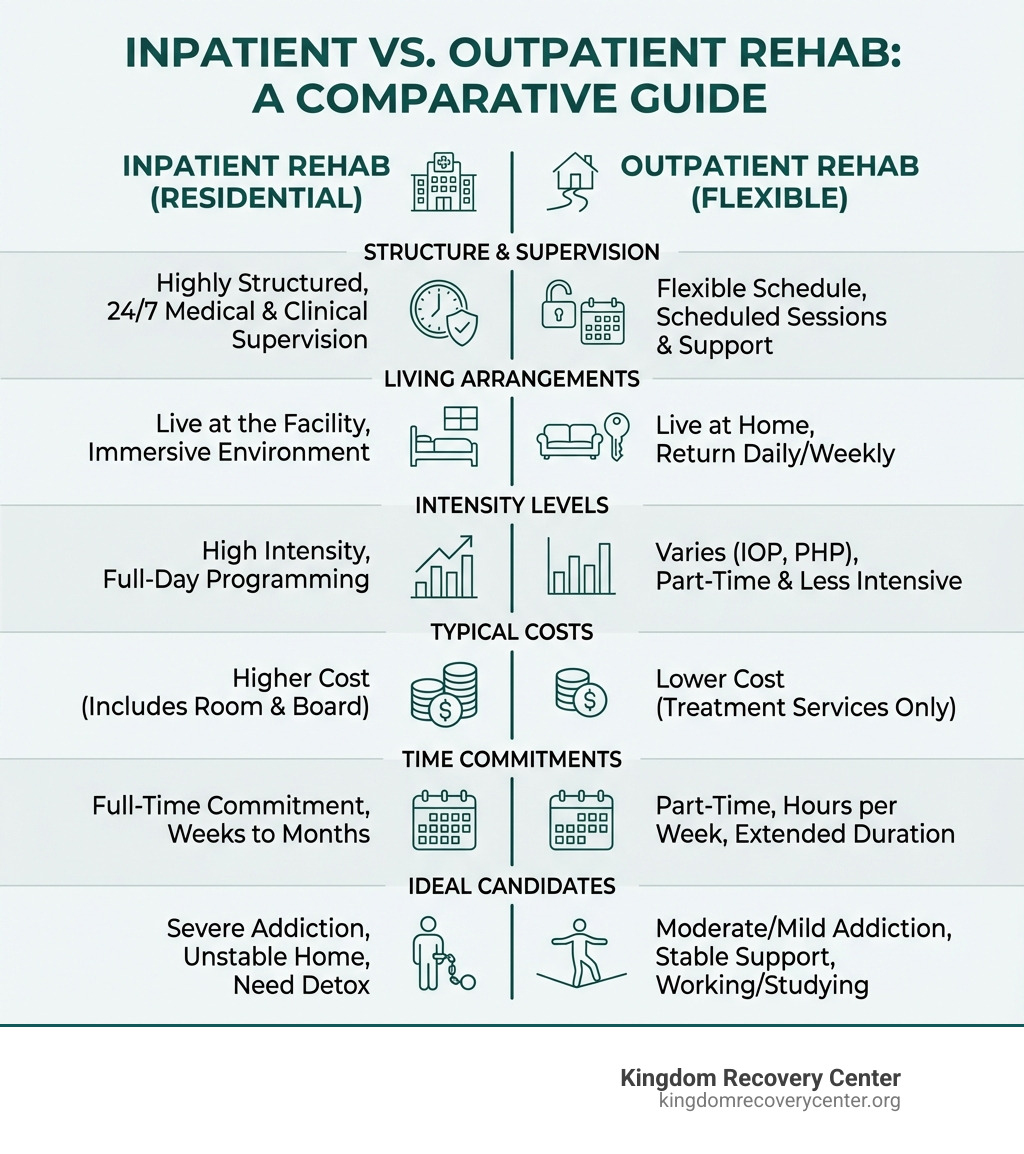
Here’s a quick comparison to help clarify the differences:
| Feature | Inpatient Rehab | Outpatient Rehab |
|---|---|---|
| Structure | Highly structured, 24/7 supervision | Structured sessions, flexible around daily life |
| Living Situation | Reside at the treatment facility | Live at home, attend sessions at the center |
| Intensity | High-intensity, immersive care | Varies (PHP, IOP, OP) from high to moderate intensity |
| Cost | Generally higher, includes room and board | Generally lower, no overnight stay costs |
| Ideal Candidate | Severe addiction, unstable home, medical detox | Mild-moderate addiction, strong support, stable home |
The “continuum of care” in addiction treatment refers to the various levels of support available, from medical detox to long-term aftercare. Outpatient programs play a crucial role in this continuum, often serving as a “step-down” option for individuals who have completed a more intensive residential program. This transition allows you to gradually re-enter daily life with continued therapeutic support, applying new coping skills in real-world situations.
What are the Different Types of Outpatient Programs?
The world of outpatient rehab Chattanooga is not a one-size-fits-all solution; it offers a spectrum of programs designed to meet varying needs for intensity and flexibility. Understanding these different types can help you identify the best fit for your recovery journey.
-
Partial Hospitalization Program (PHP): This is the most intensive form of outpatient care, often referred to as “day treatment.” In a PHP, you’ll typically attend therapy sessions for several hours a day, five days a week, similar to a full-time job. The key difference from inpatient care is that you return home each evening. PHP provides a high level of structure and support, making it ideal for individuals stepping down from residential treatment or those who need intensive care but have a stable home environment. It often includes individual and group therapy, skill-building workshops, and medical evaluations.
-
Intensive Outpatient Program (IOP): An IOP offers a step down in intensity from PHP. You’ll typically attend sessions for a few hours a day, three to five days a week. This level of care is designed for those who need significant support but also have work, school, or family commitments they need to maintain. IOPs focus on managing symptoms, developing life skills, and applying recovery strategies in real-time. We have a detailed guide on our site that explains what an Intensive Outpatient Program is and how it can support mental health. For a deeper dive into the differences between these two, explore our article on PHP and IOP Programs: A Path to Recovery and another that clarifies IOP vs PHP: Which Care Level Supports Your Healing Process?.
-
Standard Outpatient Program (OP): This is the least intensive level of outpatient care. Standard OPs typically involve one or two therapy sessions per week, offering ongoing support and relapse prevention strategies. It’s often used as a long-term maintenance program after completing a PHP or IOP, or for individuals with very mild substance use issues. Our general Outpatient Program (OP) page provides more information on this flexible option.
How Long Does Outpatient Rehab Typically Last?
One common question we hear is, “How long will this take?” The duration of an outpatient rehab Chattanooga program is not fixed; it’s highly individualized. While some programs may have an average duration, such as 30 to 90 days, your personal journey will dictate the actual length of your treatment.
Several factors influence how long you might spend in an outpatient program:
- Severity of Addiction: Individuals with more severe or long-standing addictions may require a longer period of structured support to build a solid foundation for recovery.
- Progress in Therapy: Your clinical team will continuously assess your progress. As you meet therapeutic goals, demonstrate stable sobriety, and develop strong coping mechanisms, your treatment plan may be adjusted, potentially allowing for a step-down to a less intensive program or completion.
- Co-occurring Disorders: If you’re managing a dual diagnosis (addiction alongside a mental health condition like anxiety or depression), treatment might extend to ensure both conditions are adequately addressed.
- Life Circumstances: External factors such as your home environment, employment stability, and social support network can also play a role in determining the appropriate length of care.
The goal is always to provide enough support to empower lasting change, not to keep you in treatment longer than necessary. Your clinical team will work with you to create a personalized plan that evolves with your needs, ensuring you receive the right level of care for as long as you need it.
Core Services and Therapies in Chattanooga Outpatient Programs
Starting on an outpatient rehab Chattanooga journey means engaging in a variety of services and therapies designed to heal the whole person—mind, body, and spirit. We believe that true recovery addresses not just the symptoms of addiction, but its underlying causes, fostering a holistic approach to well-being.

Individualized treatment plans are the cornerstone of effective recovery. No two paths to sobriety are identical, and successful programs recognize this by tailoring therapies and interventions to your unique history, challenges, and goals. This personalized approach ensures that the care you receive is relevant and impactful.
Many programs in the Chattanooga area, including those we guide our clients towards, emphasize evidence-based practices. This means the therapies offered are backed by scientific research, demonstrating their effectiveness in treating addiction and co-occurring mental health conditions. We are committed to providing and connecting you with resources that use these proven methods to achieve sustainable recovery. You can learn more about what makes treatment effective by exploring the evidence-based practices recommended by SAMHSA.
Evidence-Based Therapies for Effective Recovery
When you participate in an outpatient rehab Chattanooga program, you can expect to engage in a range of therapeutic modalities designed to equip you with the tools for lasting sobriety. These therapies are grounded in scientific research and custom to address various aspects of addiction and mental health.
- Cognitive Behavioral Therapy (CBT): This widely used therapy helps you identify and change negative thought patterns and behaviors that contribute to substance use. By learning to challenge distorted thinking, you can develop healthier coping mechanisms.
- Dialectical Behavior Therapy (DBT): Often used for individuals with intense emotional dysregulation, DBT focuses on mindfulness, distress tolerance, emotion regulation, and interpersonal effectiveness. It helps you manage difficult emotions without resorting to substance use.
- Group Therapy: A fundamental component of most outpatient programs, group therapy provides a safe and supportive environment where you can connect with peers facing similar challenges. It fosters a sense of community, reduces isolation, and allows for shared experiences and mutual support. Studies show that group therapy is a powerful and effective treatment approach.
- Individual Counseling: One-on-one sessions with a therapist offer a private space to explore personal issues, develop coping strategies, and work through trauma. This personalized attention is crucial for addressing specific needs and developing an individualized recovery plan.
- Family Therapy: Addiction impacts the entire family system. Family therapy involves loved ones in the recovery process, helping to heal relationships, improve communication, and establish healthy boundaries.
- Dual Diagnosis Treatment: As we mentioned, 1 in 4 adults with a mental illness also have a substance abuse disorder. Many programs in the Chattanooga area specialize in dual diagnosis, recognizing that addiction and mental health challenges often co-exist. Treating both simultaneously is critical for comprehensive and lasting recovery. We offer dedicated support for Dual Diagnosis to address these complex needs.
- Trauma-Informed Care: Research indicates that as much as 70% of those in addiction treatment have been affected by past trauma. Trauma-informed care acknowledges the pervasive impact of trauma and integrates this understanding into all aspects of treatment, creating a safe and supportive environment for healing. For more information on the link between trauma and addiction, you can review clinical studies on trauma and addiction.
These therapies are not just about stopping substance use; they’re about rebuilding your life, fostering self-awareness, and developing resilience for a healthier future.
Medication-Assisted Treatment (MAT) for Opioid and Alcohol Addiction
Medication-Assisted Treatment (MAT) is an evidence-based approach that combines FDA-approved medications with counseling and behavioral therapies. It’s a highly effective method, particularly for individuals struggling with opioid and alcohol use disorders, and is available in many outpatient rehab Chattanooga programs.
What is MAT?
MAT works by addressing the physiological aspects of addiction. The medications help to normalize brain chemistry, block the euphoric effects of opioids and alcohol, relieve physiological cravings, and stabilize body functions. This allows individuals to focus more effectively on the therapeutic aspects of their recovery without being overwhelmed by withdrawal symptoms or intense cravings.
FDA-Approved Medications:
For opioid use disorder, common medications include:
- Buprenorphine (often combined with naloxone, e.g., Suboxone®): Reduces cravings and withdrawal symptoms.
- Naltrexone (e.g., Vivitrol® injection or ReVia® oral): Blocks opioid effects and reduces cravings for both opioids and alcohol.
For alcohol use disorder, medications include:
- Naltrexone: Reduces alcohol cravings.
- Acamprosate: Helps reduce post-acute withdrawal symptoms.
- Disulfiram: Produces unpleasant effects when alcohol is consumed, deterring drinking.
Combining Medication with Therapy:
MAT is not simply substituting one drug for another. It’s a comprehensive “whole-patient” approach where medication is used as a tool to support the therapeutic process. Counseling, individual and group therapy, and behavioral interventions are essential components that help you develop coping skills, address underlying issues, and build a strong foundation for long-term recovery.
MAT has been shown to improve patient survival, increase retention in treatment, decrease illicit opioid use, and reduce criminal activity. If you’re exploring treatment options, inquire about MAT availability and how it can be integrated into your personalized recovery plan. Our general approach to Treatment at Kingdom Recovery Center emphasizes comprehensive care, which includes considering all appropriate evidence-based methods.
The Practical Guide to Outpatient Rehab Chattanooga
Choosing outpatient rehab Chattanooga offers unique advantages, particularly the ability to remain connected to your daily life and local community. This integration is not just convenient; it’s therapeutically beneficial.

One of the primary benefits of local treatment is the ability to apply newly learned coping skills and strategies in your everyday environment, immediately. You’ll steer real-world triggers and challenges with the support of your program, rather than being in an isolated setting and then facing a sudden transition. This practical application builds resilience and confidence in your sobriety.
Maintaining your strong support systems—family, friends, and community—is another significant advantage. You can continue to live at home, attend work or school, and participate in social activities, all while receiving professional care. This helps prevent the feeling of being disconnected from your life, which can sometimes occur with residential treatment.
Furthermore, being in your community allows for greater access to local resources and ongoing support groups that will be vital for long-term recovery. This constant connection reinforces the idea that recovery is a lifestyle, not just a temporary phase.
How Much Does Outpatient Rehab Cost in Chattanooga?
The cost of outpatient rehab Chattanooga can vary significantly, depending on several factors, including the type of program (PHP, IOP, OP), the duration of treatment, and the specific services included. Generally, outpatient programs are more affordable than inpatient residential treatment because they don’t include the costs of room and board.
Here’s what typically influences the cost:
- Program Intensity and Length: A Partial Hospitalization Program (PHP) will naturally cost more than a standard Outpatient Program (OP) due to the higher number of hours and services provided each week.
- Services Included: Some programs might offer specialized therapies (e.g., EMDR, adventure therapy), holistic treatments, or extensive family programs, which can affect the overall price.
Insurance Coverage:
A crucial piece of good news is that most major insurance providers, including Blue Cross Blue Shield, UnitedHealthcare, Aetna, Cigna, Humana, and others, offer coverage for addiction treatment, including outpatient programs. The Affordable Care Act (ACA) mandates that addiction and mental health services be covered as essential health benefits, meaning your policy should provide some level of coverage. However, the extent of coverage (e.g., deductibles, co-pays, out-of-pocket maximums) will depend on your specific plan. Many providers also accept TennCare plans.
We strongly encourage you to verify your insurance benefits directly with the treatment center or by contacting your insurance provider. You can also use our convenient Insurance Verification tool on our website to get a better understanding of your coverage.
Private Payment Options:
For those without insurance or who prefer not to use it, many centers offer flexible private payment options, including payment plans or sliding scale fees based on income. Don’t let concerns about cost deter you from seeking help; there are often solutions available.
What are the Signs Someone Needs Outpatient Rehab?
Recognizing the signs that you or a loved one might need outpatient rehab Chattanooga is the first critical step toward recovery. It’s not always about hitting “rock bottom”; often, it’s about noticing patterns that are negatively impacting life. Here’s a list of common signs to look for:
- Inability to Stop or Control Use: You’ve tried to cut back or stop using alcohol or drugs multiple times but haven’t been successful. The substance feels like it has control over you.
- Neglecting Responsibilities: Work performance is declining, school attendance is inconsistent, or household duties are left undone due to substance use or its effects. You’re struggling to meet obligations you once handled easily.
- Relationship Problems: Your substance use is causing arguments, distrust, or strain with family, friends, or romantic partners. Loved ones express concern about your habits.
- Withdrawal Symptoms: When you try to reduce or stop using, you experience physical or psychological discomfort, such as anxiety, tremors, nausea, sweating, or irritability. This indicates physical dependence.
- Increased Tolerance: You need to use more of the substance to achieve the same effect you once did with smaller amounts.
- Using in Risky Situations: You use substances in situations where it’s physically dangerous, such as driving under the influence or mixing substances that could be harmful.
- Loss of Interest in Hobbies/Activities: Things you once enjoyed, like sports, hobbies, or social gatherings, no longer hold your interest, and your time is increasingly dominated by substance-related activities.
- Continued Use Despite Negative Consequences: You continue using even after experiencing negative health, legal, financial, or social problems directly related to your substance use.
- Craving: You experience intense urges or desires for the substance that make it difficult to think about anything else.
If these signs resonate with you or someone you care about, it’s a strong indicator that professional help is needed. Outpatient rehab can provide the tools and support necessary to regain control and build a healthier, substance-free life. Our What We Treat page provides more insights into the conditions we help address.
How to Choose the Right Outpatient Rehab Program in Chattanooga
Finding the right outpatient rehab Chattanooga program can feel overwhelming, but with a clear understanding of what to look for, you can make an informed decision. This is a deeply personal choice, and what works for one individual might not be the best fit for another.
Finding a Reputable Center:
Start by looking for centers that are well-established and have a positive reputation within the community. Online reviews, testimonials, and recommendations from trusted healthcare professionals can be valuable resources. The goal is to find a place that genuinely cares about your long-term success.
Checking for Licensing and Accreditation:
Ensure that any program you consider is properly licensed by the state of Tennessee. Accreditation by national bodies, such as The Joint Commission or CARF (Commission on Accreditation of Rehabilitation Facilities), indicates that the facility meets high standards of quality and patient care. This ensures you’re receiving safe and effective treatment.
Asking the Right Questions:
Don’t hesitate to ask detailed questions during your initial inquiries. A reputable center will be transparent and willing to provide all the information you need. Our team at Kingdom Recovery Center is always ready to help guide you through these questions.
Key Questions to Ask a Potential Provider
When contacting outpatient rehab Chattanooga centers, having a list of questions prepared can help you gather essential information and compare options effectively. Here are some key questions we recommend asking:
- What therapies do you offer? Look for evidence-based therapies like CBT, DBT, and family therapy. Inquire about group and individual counseling components.
- What is your approach to dual diagnosis? Given the high co-occurrence of mental health and substance use disorders, choose a program that can effectively treat both simultaneously. Our Mental Health services are designed to address these integrated needs.
- What does a typical day/week look like? Understand the schedule, the number of hours per week, and the types of activities and sessions involved. This helps you gauge if it fits your lifestyle.
- What is the staff-to-client ratio? A lower ratio often indicates more personalized attention and support, which can be crucial for effective treatment.
- What aftercare support is available? Long-term recovery doesn’t end when the program does. Ask about alumni programs, relapse prevention planning, and connections to community resources.
- What is the cost, and what insurance plans do you accept? Get clear information on fees, payment plans, and how your specific insurance policy will cover the treatment.
- What are the qualifications of your clinical staff? Ensure therapists, counselors, and medical professionals are licensed and experienced in addiction treatment.
Gathering these details will empower you to make an informed decision about the outpatient rehab Chattanooga program that best aligns with your needs and goals. Feel free to Contact Us at Kingdom Recovery Center for guidance, as we are dedicated to helping you steer these important choices.
Supporting Long-Term Recovery and Relapse Prevention
Completing an outpatient rehab Chattanooga program is a significant achievement, but it’s just the beginning of a lifelong journey of recovery. Effective programs understand this and place a strong emphasis on aftercare planning and relapse prevention strategies to support your sustained sobriety.
- Aftercare Planning: This involves creating a personalized roadmap for your life post-treatment. It includes recommendations for ongoing therapy, support group attendance, and other resources to maintain your progress.
- Alumni Programs: Many reputable centers offer alumni programs, providing a network of support with others who have completed treatment. These programs often include regular meetings, social events, and opportunities to connect with peers and staff, fostering a sense of community and accountability.
- Peer Support Groups: Organizations like Alcoholics Anonymous (AA) and Narcotics Anonymous (NA) offer invaluable peer support. These groups provide a safe space to share experiences, gain insights, and receive encouragement from others who understand the challenges of recovery.
- Life Skills Training: Outpatient programs often incorporate training in essential life skills, such as stress management, communication, financial literacy, and healthy relationship building. These skills empower you to steer daily challenges without resorting to substance use.
- Healthy Coping Mechanisms: Learning and practicing healthy ways to cope with stress, emotions, and cravings is fundamental to relapse prevention. This might include mindfulness, exercise, creative outlets, or developing new hobbies.
- Community Resources: Connecting with local community resources, such as vocational training programs, educational opportunities, or mental health services, can provide additional layers of support and help you build a fulfilling life in recovery. The Hamilton County Recovery Court is an innovative, court-supervised program in the Chattanooga area that offers individuals with substance use disorders a chance to turn their lives around, focusing on addressing underlying causes and developing skills for sobriety. This is just one example of the robust community support available.
Recovery is an ongoing process, and having a robust support system in place is key to navigating its challenges and celebrating its successes.
Begin Your Journey to Sobriety in Chattanooga
Choosing outpatient rehab Chattanooga offers a powerful blend of professional treatment and real-world integration, allowing you to heal and grow without putting your life on hold. We’ve seen how this flexible approach can lead to profound and lasting change.
The path to sobriety is not always easy, but it is always worth it. With the right support, evidence-based therapies, and a commitment to your well-being, a future free from addiction is not just a dream—it’s a tangible reality waiting for you.
If you’re ready to take that courageous first step, or if you simply need guidance in exploring the best outpatient rehab Chattanooga options, we are here for you. At Kingdom Recovery Center, we believe recovery is possible for everyone, and we are dedicated to connecting you with the resources you need to succeed.
Find your path with Outpatient Rehab in Chattanooga and let us help you find the hope and healing you deserve.