
Why Finding the Right Behavioral Health Support in Chattanooga Matters
If you’re searching for behavioral health Chattanooga services, you’ll find several established providers offering a range of care options. The city is home to major hospitals with dedicated behavioral health units, community mental health centers, and specialized outpatient clinics. These facilities provide everything from 24/7 crisis stabilization and inpatient care to outpatient programs for all ages.
Mental health is just as important as physical health. It influences how you think, feel, and steer daily life. When mental well-being is nurtured, you can build stronger relationships, manage stress more effectively, and make healthier choices for your body and mind.
Seeking professional help is a sign of strength, not weakness. Many people in Chattanooga struggle with depression, anxiety, addiction, or co-occurring disorders. The good news? You have access to multiple high-quality treatment centers offering everything from outpatient therapy to intensive programs and crisis support.
This guide will help you understand the different types of behavioral health services available in Chattanooga, what to look for in a provider, and how to access the care you need. Whether you’re looking for yourself or helping a loved one, you’ll find clear information about treatment options and next steps.
At Kingdom Recovery Center, we understand the challenges of addiction and mental health struggles because we’ve dedicated ourselves to helping individuals throughout Tennessee find lasting recovery through compassionate, evidence-based treatment for behavioral health Chattanooga residents can trust. While we’re based in Morristown, we’re familiar with the full spectrum of behavioral health Chattanooga options and can help guide you toward the right care for your situation.
Understanding Behavioral Health Services in Chattanooga
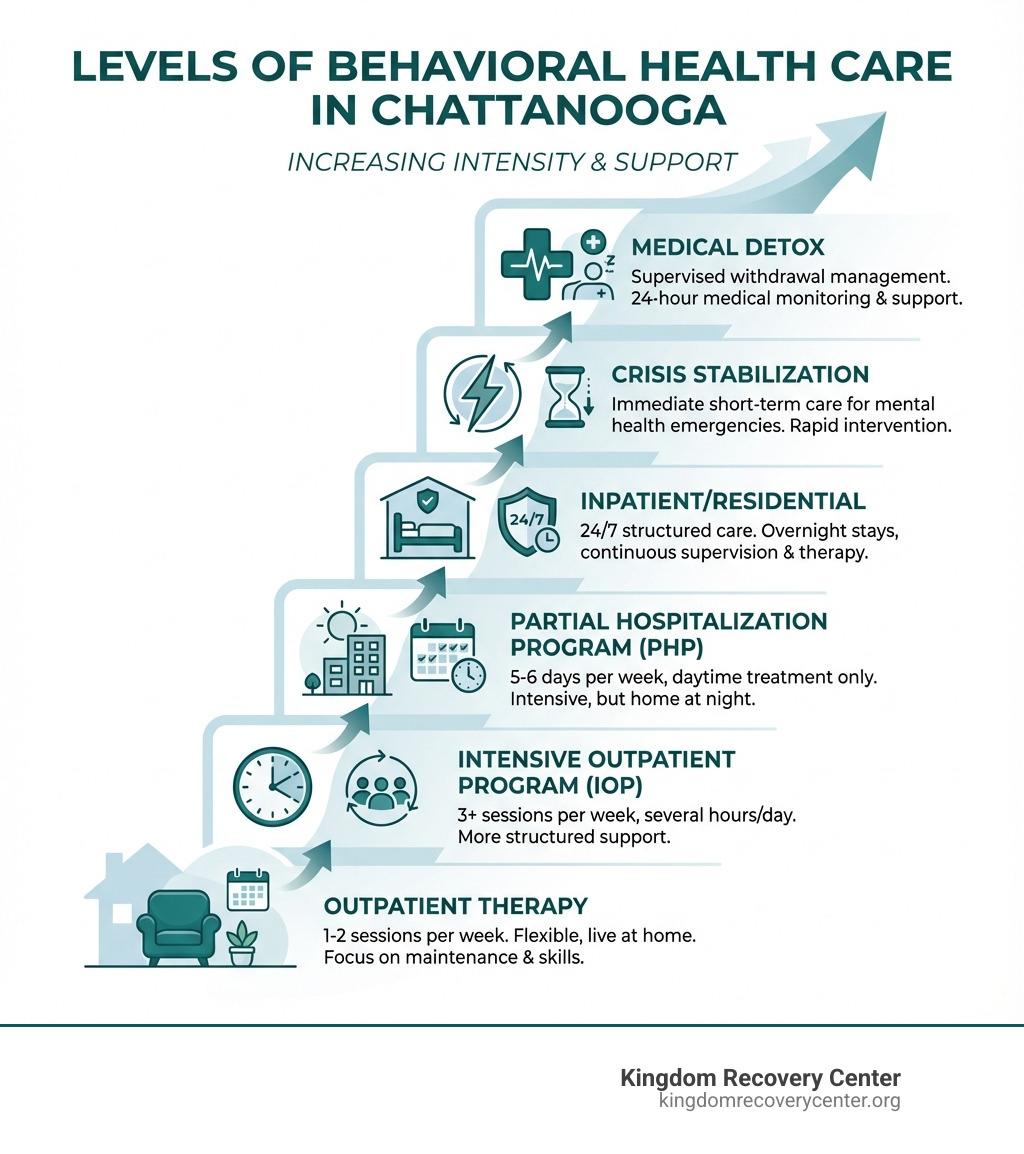
Navigating the landscape of behavioral health Chattanooga services can feel overwhelming, but understanding the different levels of care is the first step toward finding the right support. These levels are designed to match the intensity of treatment to an individual’s needs, ensuring effective and appropriate care.
-
Outpatient Therapy: This is typically the least intensive level of care, involving scheduled individual, group, or family therapy sessions while you continue to live at home and maintain your daily routine. It’s suitable for individuals who need support for mental health conditions but do not require constant supervision. Many local providers offer various forms of outpatient counseling and psychiatric care.
-
Intensive Outpatient Programs (IOP): IOPs offer a more structured approach than traditional outpatient therapy. They involve several hours of therapy per day, multiple days a week, often focusing on group therapy, skill-building, and education. Despite the intensity, participants still live at home, allowing them to integrate recovery skills into their daily lives. Several Chattanooga facilities provide IOP options.
-
Partial Hospitalization Programs (PHP): PHP is a step up from IOP, providing a higher level of care that can be an alternative to inpatient hospitalization or a step-down from it. PHPs typically run for most of the day, five to six days a week, offering comprehensive psychiatric services, group therapy, and education, but still allowing patients to return home at night. You can find facilities in Chattanooga offering a PHP for adults.
-
Medical Detox: For individuals struggling with substance use disorders, medical detox is often the crucial first step. This involves supervised withdrawal management in a safe, medically monitored environment to ensure physical safety and comfort during detoxification. Some local hospitals and specialized centers include detoxification services, with more capacity being added to the area.
-
Crisis Stabilization: These services provide immediate, short-term support for individuals experiencing an acute mental health crisis. The goal is to stabilize the individual, ensure safety, and connect them with ongoing care. Chattanooga has facilities that offer state-of-the-art crisis stabilization, crisis stabilization units, crisis walk-in centers, and telephone crisis lines.
-
Telehealth Services: Many providers now offer virtual appointments, increasing accessibility and convenience. This is particularly beneficial for those with transportation challenges or busy schedules. Local providers often use HIPAA-compliant secure programs for telemedicine.
At Kingdom Recovery Center, we believe in a full continuum of care, and we’re always ready to discuss our treatment services that align with your unique journey.
Common Treatment Approaches
When seeking behavioral health Chattanooga services, it’s helpful to understand the therapeutic approaches providers commonly use. Our goal at Kingdom Recovery Center is always to provide client-centered, evidence-based treatment, and we see many of these same effective methods employed across Chattanooga’s leading facilities.
- Evidence-Based Therapies: These are treatments that have been scientifically proven to be effective for specific mental health conditions. Many facilities emphasize the use of evidence-based approaches.
- Individualized Care Plans: Recognizing that every person’s journey is unique, quality providers focus on creating personalized treatment plans custom to individual needs. This ensures that care is relevant and effective for your specific situation.
- Cognitive Behavioral Therapy (CBT): A widely used therapy that helps individuals identify and change negative thought patterns and behaviors that contribute to mental health issues. Many IOPs and other programs often incorporate CBT.
- Dialectical Behavior Therapy (DBT): Often used for individuals with intense emotional dysregulation, DBT teaches skills in mindfulness, distress tolerance, emotion regulation, and interpersonal effectiveness. Some local IOPs also use DBT.
- 12-Step Immersion: For those struggling with addiction, participation in 12-Step programs (like Alcoholics Anonymous or Narcotics Anonymous) is a common and effective approach to recovery, often integrated into treatment plans at addiction-focused facilities.
- Medication Management: Psychiatric medication can be a critical component of treatment for many mental health conditions. Many providers offer psychiatric care and medication management services, often delivered by medically licensed doctors or nurse practitioners.
- Group Therapy: A powerful tool for fostering peer support, reducing isolation, and practicing new coping skills in a safe environment. Group therapy is a core component of IOPs and PHPs at many facilities.
- Family Therapy: Mental health and addiction affect the entire family system. Many providers offer family therapy to help improve communication, understanding, and support within the family unit.
- Holistic Wellness: A comprehensive approach that considers the whole person—mind, body, and spirit. This often involves integrating behavioral health with medical care and social resources for overall well-being, an approach shared by many providers seeking true wellness.
Spotlight on Comprehensive Behavioral Health Care in Chattanooga
Chattanooga is home to facilities that prioritize comprehensive behavioral health care, understanding that lasting recovery often requires a multi-faceted approach. Quality providers offer structured environments designed not just for stabilization but for deep, sustained healing.
For example, some local treatment centers provide state-of-the-art crisis stabilization and inpatient settings. Many highlight a serene environment with natural elements and outdoor spaces for patient exercise, recognizing that the physical setting contributes to the healing process. This focus on a supportive and therapeutic environment is crucial, especially for individuals undergoing intensive treatment.
Similarly, many programs emphasize a client-centered approach across its various services, from child and adolescent inpatient care to senior mental health programs. They aim to involve support systems like family and friends, understanding that a strong network is vital for long-term recovery. This holistic perspective, coupled with structured programs and evidence-based therapies, helps individuals address complex issues like addiction, anxiety, depression, and co-occurring disorders in a supportive setting.
Outpatient, Addiction, and Specialized Treatment Centers
For many, outpatient and specialized treatment centers in behavioral health Chattanooga offer the perfect balance: structured support without requiring a full inpatient stay. This flexibility allows individuals to continue with their daily responsibilities—work, school, family—while actively engaging in their recovery journey. These programs are often ideal for those transitioning from higher levels of care or for individuals whose conditions allow them to manage their symptoms in a less restrictive environment.

Finding Outpatient Behavioral Health Chattanooga Providers
Outpatient services are a cornerstone of behavioral health Chattanooga, offering accessible and flexible care for a wide range of needs. These services allow individuals to receive professional support while maintaining their daily lives.
Many local providers offer comprehensive outpatient care, including:
- Individual, group, and family counseling for children and adults.
- Psychiatric care and medication management.
- Specialized services for children and families.
- Telemedicine and tele-health options for convenient access to care.
- Individualized treatment for conditions like depression, bipolar disorder, anxiety, and ADHD.
These facilities offer crucial support for individuals seeking to improve their mental well-being without disrupting their entire routine.
Resources for Addiction and Co-Occurring Disorders
Addiction and co-occurring mental health disorders often walk hand-in-hand, requiring integrated and specialized treatment. Fortunately, behavioral health Chattanooga provides several valuable resources for individuals facing these complex challenges.
- Medical Detox Options: The first step in addiction recovery is often safe detoxification. Some local hospitals and specialized centers provide medical detox services to ensure a safe withdrawal process.
- Medication for Opioid Use Disorder (MOUD): Some providers offer Medication for Opioid Use Disorder (formerly MAT), which combines medication with counseling for a holistic approach to addiction recovery. MOUD is associated with positive outcomes like managing withdrawal symptoms, reducing cravings, and increasing sustained abstinence.
- Intensive Outpatient (IOP) Programs: For those who need structured addiction treatment but can live at home, IOPs are an excellent choice. Chattanooga has facilities offering IOPs that focus on evidence-based approaches like CBT and DBT for coping skills, relapse prevention, and family dynamics. These programs often include 12-step concepts, group therapy, and education.
- Dual Diagnosis Focus: Addressing both addiction and mental health simultaneously is critical for lasting recovery. Many local providers highlight their ability to provide integrated care for dual diagnosis, ensuring that both aspects of an individual’s condition are treated comprehensively.
At Kingdom Recovery Center, we specialize in individualized care and dual diagnosis programs, understanding that true recovery means addressing all underlying issues. We encourage you to explore What We Treat to see how our programs align with your needs.
How to Access Care and Immediate Support
Taking the first step toward seeking help for behavioral health Chattanooga services can feel daunting, but it’s a courageous decision. We’re here to guide you through the process of accessing care and finding immediate support when you need it most.
- First Steps: Many providers offer initial assessments to determine the most appropriate level of care. Some facilities provide free, confidential online screenings for behavioral health or depression, which can be a good starting point. You can also contact admissions departments directly to begin the assessment process.
- Insurance Verification: Before committing to a program, it’s crucial to understand the financial aspect. While many major providers accept a wide range of insurance plans, we always advise verifying your coverage directly with the facility. This ensures clarity and peace of mind regarding payment options.
- Contacting Admissions: This is often the most direct route to initiating care. A simple phone call can connect you with compassionate professionals who can answer your questions, schedule an assessment, and guide you through the intake process. Many facilities encourage calling their admissions line for a free private assessment.
- What to Expect During an Assessment: An assessment is a confidential conversation with a mental health professional who will ask about your symptoms, history, and needs. This helps them understand your situation and recommend the most suitable treatment plan. It’s an opportunity for you to ask questions and determine if the facility is the right fit for you.
Crisis Services and Emergency Mental Health
When facing an immediate mental health crisis, knowing where to turn is paramount. behavioral health Chattanooga offers several avenues for urgent support:
- Mobile Crisis Response: Some organizations provide mobile crisis response services, meaning help can come to you, offering immediate support in a less restrictive environment than an emergency room.
- Crisis Walk-In Centers: For those who can travel, there are also crisis walk-in centers, offering direct access to crisis intervention and stabilization services during business hours.
- 24/7 Support Lines: For round-the-clock assistance, local telephone crisis lines can provide immediate support, guidance, and resources. Many hospitals and crisis centers highlight their 24/7 mental health support availability.
- When to Call 911 or Go to an ER: In situations where there is an immediate threat of harm to oneself or others, calling 911 or going to the nearest emergency room is the most appropriate action. Emergency departments are equipped to handle acute mental health crises and ensure safety.
Additionally, for general mental health support and resources across Tennessee, including information relevant to crisis situations, you can refer to resources like the TN Won’t Be Silent initiative.
Specialized Behavioral Health Chattanooga Programs for All Ages
Behavioral health Chattanooga is committed to providing custom support across the lifespan, recognizing that mental health needs evolve with age.
- Adolescent Programs: Young people often face unique challenges. Local providers offer specialized inpatient and outpatient mental health programs for children and teens. Some programs even allow students to continue their schoolwork during treatment, and others support children and families through services like a Children’s Behavioral Health Safety Net.
- Senior-Focused Care: Older adults may encounter mental health issues related to grief, neurological disorders, declining health, or dementia. You can find dedicated senior mental health programs in the area that specifically address these complex needs.
- Adult Programs: For adults, a wide array of programs address everything from general mental health concerns to addiction. Chattanooga providers offer adult-focused services, including outpatient therapy, IOPs, PHPs, psychiatric care, and addiction treatment.
Here’s a list of common conditions treated across major facilities in Chattanooga:
- Depression
- Anxiety
- Bipolar disorder
- ADHD (Attention-Deficit/Hyperactivity Disorder)
- PTSD (Post-Traumatic Stress Disorder)
- Substance Use Disorder
- Dual Diagnosis
- Obsessive-Compulsive Disorder (OCD)
- Schizophrenia
- Psychosis
- Behavioral problems
- Relationship issues
Frequently Asked Questions about Behavioral Health in Chattanooga
We understand you likely have questions about accessing and navigating behavioral health Chattanooga services. Here, we address some of the most common inquiries.
What is the difference between outpatient and intensive outpatient behavioral health services?
The key difference lies in the intensity and frequency of treatment.
- Outpatient Services: This is the most flexible level of care. It involves scheduled appointments for individual therapy, group therapy, or medication management, typically once or twice a week. You live at home and continue with your daily routine (work, school, family responsibilities). It’s suitable for individuals with stable conditions who need ongoing support or those stepping down from a more intensive program. Many local providers offer these services.
- Intensive Outpatient Programs (IOP): IOPs offer a higher level of structure and support than traditional outpatient care. Participants attend therapy sessions for several hours a day, multiple days a week (often 3-5 days). While more intensive, you still live at home and can often manage some work or school commitments. IOPs are ideal for those who need more support than weekly therapy but don’t require 24/7 supervision. Many Chattanooga facilities offer robust IOPs, often focusing on skill-building, relapse prevention, and group dynamics.
Do Chattanooga providers offer virtual or telehealth appointments?
Yes, many behavioral health Chattanooga providers have adopted telehealth and virtual appointment options, especially in the wake of the COVID-19 pandemic. This has significantly improved accessibility to care. For example, some providers use HIPAA-compliant secure programs for telemedicine. We recommend checking directly with individual facilities or therapists to confirm their current telehealth offerings and whether it’s suitable for your specific needs.
How do I pay for behavioral health services in Chattanooga?
Understanding payment options is a crucial part of accessing behavioral health Chattanooga services.
- Insurance: Most major behavioral health providers in Chattanooga accept a wide range of private insurance plans. It’s always best practice to contact the specific provider’s admissions or billing department directly before starting treatment to verify your insurance coverage and understand any potential out-of-pocket costs, deductibles, or co-pays.
- National Health Services Corps (NHSC): Some facilities are members of the National Health Services Corps. This means they are committed to providing care to underserved populations and may offer services on a sliding scale based on income. You can learn more about this program and find participating locations at NHSC.hrsa.gov.
- Self-Pay: For those without insurance or who prefer not to use it, self-pay options are typically available. Discuss this with the provider’s financial counselors, as they may offer payment plans or adjusted rates.
- Government Programs/Grants: Depending on your situation, there may be state or federal programs, grants, or non-profit assistance available. Inquire with providers or local mental health organizations about such resources.
Always verify your insurance coverage directly with the provider before starting treatment to avoid any surprises.
Your Next Step: Finding Personalized Care in Chattanooga
Finding the right behavioral health Chattanooga support is a deeply personal journey, and we hope this guide has illuminated the diverse options available to you. We’ve seen that Chattanooga offers a wide spectrum of care, from crisis intervention and medical detox to comprehensive outpatient and inpatient programs, catering to all ages and a multitude of conditions.
Acknowledging a need for help and actively seeking it is a powerful act of courage. The path to wellness is unique for everyone, and finding a provider whose approach resonates with your individual needs and goals is paramount. Whether you’re navigating anxiety, depression, addiction, or a co-occurring disorder, there is support available, and healing is possible.
For those seeking a client-centered, evidence-based approach to addiction and co-occurring disorders, Kingdom Recovery Center offers specialized Outpatient Rehab Chattanooga programs designed to empower lasting change. We are dedicated to walking alongside you on your journey to recovery and a healthier, more fulfilling life.