
Understanding Partial Hospitalization Programs: A Critical Step in Recovery
A Partial hospitalization program (PHP) is an intensive, structured day treatment program designed for individuals who need more support than traditional outpatient therapy but don’t require 24-hour inpatient care. Here’s what you need to know:
- What it is: A day treatment program where you attend therapy and treatment sessions for 5-6 hours per day, typically 5 days per week, then return home each evening
- Who it’s for: People with acute mental health symptoms, substance use disorders, or dual diagnosis who need intensive support but have a stable living environment
- How it helps: Provides comprehensive treatment including individual therapy, group therapy, medication management, and skill-building while allowing you to maintain some daily responsibilities
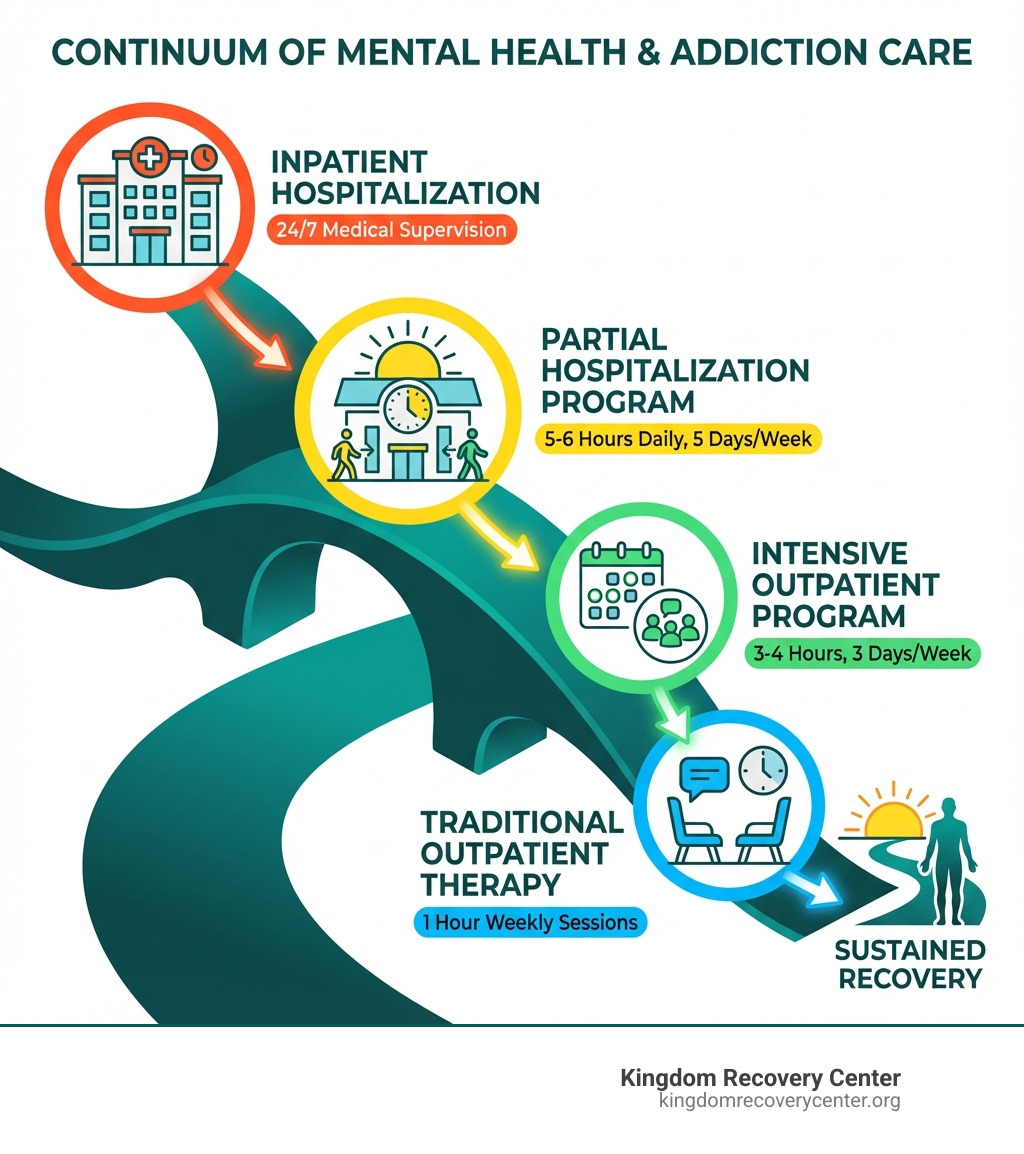
- Where it fits: Bridges the gap between inpatient hospitalization and outpatient care, often serving as a step-down from residential treatment or a step-up from basic outpatient services
If you’re struggling with addiction or mental health challenges in Tennessee, understanding your treatment options is the first step toward healing. Many people find themselves caught between needing serious help and wanting to stay connected to their home, family, and work. A PHP offers that middle ground—intensive treatment without leaving your life behind.
The concept isn’t new. PHPs emerged after the Community Mental Health Act of 1963, designed to reduce the cost of long-term care while keeping patients connected to their families and communities. Today, research shows that PHPs can provide superior or equivalent recovery-based care with greater patient satisfaction compared to inpatient treatment. By 2016, more than one-third of metropolitan hospitals in the United States offered PHP services, reflecting their proven effectiveness.
At Kingdom Recovery Center in Morristown, TN, we specialize in Partial Hospitalization Programs that combine evidence-based treatment with compassionate care custom to each person’s unique journey. Our experienced team has helped countless individuals transition from crisis to stability through our structured PHP, building the foundation for lasting recovery.
Who is PHP For and What Does It Treat?
A Partial hospitalization program is a unique and vital resource for individuals navigating significant mental health struggles or substance use disorders. It’s designed for those who require a high level of clinical support but can safely return to their home environment each evening.

Ideal Candidates and Eligibility
So, who exactly thrives in a PHP setting? We often find that ideal candidates are individuals experiencing acute symptoms that are difficult to manage, yet they are not an immediate danger to themselves or others. This is a crucial distinction, as anyone with imminent suicidal or homicidal ideation would first require inpatient stabilization.
Our clients in Tennessee often find PHP to be the perfect fit if they:
- Are stepping down from an inpatient or residential program and need continued intensive support to reintegrate into daily life.
- Need more structure and therapeutic intervention than traditional outpatient therapy can provide.
- Are struggling with chronic relapses or have difficulty managing cravings for substances.
- Have a stable and supportive living environment, which is key to successful PHP participation since clients return home each night.
- Are motivated for recovery and ready to engage actively in their treatment plan.
The decision to enter a Partial hospitalization program is always based on a thorough assessment of medical necessity. This assessment, often guided by criteria such as a Level 4 indication on a Level of Care assessment for adults, helps us ensure that PHP is the most appropriate and effective level of care for your unique situation. If you’re wondering if it’s time to seek help for substance use disorder, you can explore the Signs Indicating It’s Time to Seek Help for Substance Use Disorder.
Conditions Treated in a PHP
The comprehensive nature of a PHP allows us to treat a wide range of conditions, often simultaneously. Our programs in Tennessee address both mental health and substance use disorders, focusing on the interconnectedness of these challenges.
Common conditions we treat include:
- Depression: For individuals experiencing severe depressive episodes that impair daily functioning, a PHP offers intensive therapy and medication management. Learn more about What We Treat: Mental Health: Depression.
- Anxiety Disorders: Including generalized anxiety disorder, panic disorders, and social anxiety, where intensive skill-building and exposure therapies can be highly effective.
- Bipolar Disorder: Providing stabilization, psychoeducation, and strategies for managing mood swings and preventing relapse.
- Post-Traumatic Stress Disorder (PTSD): Utilizing trauma-informed therapies within a supportive group and individual setting.
- Eating Disorders: While some severe cases may require inpatient care, PHPs can be invaluable for individuals needing structured support for anorexia, bulimia, or binge-eating disorder.
- Substance Use Disorders (SUD): Addressing addictions to alcohol, opioids, stimulants, benzodiazepines, and other prescription drugs. Our Comprehensive Addiction Treatment focuses on relapse prevention and building a sober life.
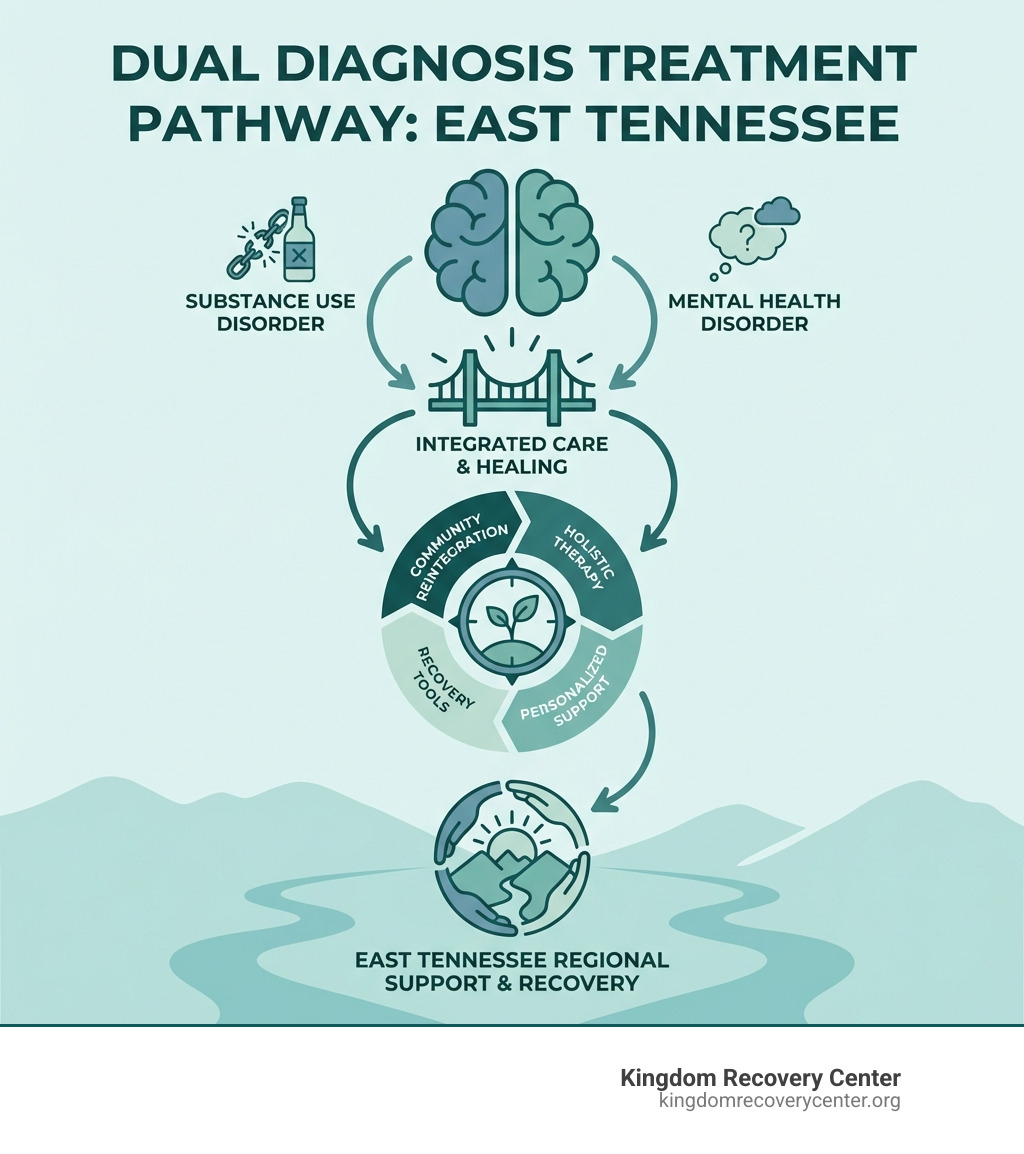
- Dual Diagnosis (Co-occurring Disorders): Many individuals struggle with both a mental health disorder and a substance use disorder. PHPs are particularly effective for this population, as they can integrate treatment for both conditions. Understanding the link between Mental Health Disorders and Substance Abuse is central to our approach.
- Personality Disorders: Such as Borderline Personality Disorder, where the intensive and structured environment of a PHP, often incorporating Dialectical Behavior Therapy (DBT), can provide the containment and skill development necessary for significant improvement.
PHPs are designed to stabilize acute symptoms, prevent the need for inpatient hospitalization, or serve as a critical step in transitioning from a higher level of care. It’s about providing the right intensity of support at the right time, allowing you to build resilience and coping skills in a real-world context.
A Day in the Life: Services and Structure of a Partial Hospitalization Program
Imagine a day dedicated entirely to your healing and growth, surrounded by professionals and peers who understand your journey. That’s what a day in a Partial hospitalization program at Kingdom Recovery Center is like. It’s a structured, therapeutic environment designed to equip you with the tools for lasting recovery.
Core Services and Therapeutic Modalities
Our PHPs are built upon a foundation of comprehensive care delivered by a multidisciplinary team. This team typically includes psychiatrists, licensed therapists, nurses, and case managers, all working collaboratively under physician direction to address your unique needs.
Here’s what you can expect from the core services:
- Individual Therapy: We believe in the power of one-on-one connection. You’ll have regular sessions with a dedicated therapist to explore personal challenges, develop coping strategies, and work towards your individual treatment goals. This is a cornerstone of your healing journey, as highlighted in Therapies: Individual Psychotherapy.
- Group Therapy: A significant portion of your day will be spent in group sessions. These groups provide a powerful sense of community, allowing you to share experiences, receive peer support, and practice new skills in a safe environment. Topics often include processing emotions, developing healthy relationships, and understanding your condition.
- Family Counseling: Recovery is a family affair. We offer family counseling to help mend relationships, improve communication, and educate loved ones on how to best support your journey.
- Medication Management: For many, medication is a vital component of managing mental health and addiction. Our team provides psychiatric evaluation and ongoing medication management to ensure you’re on the most effective regimen.
- Skill-Building Groups: These sessions focus on practical skills you can apply in your daily life, such as stress management, emotional regulation, communication skills, and relapse prevention strategies.
- Psychoeducation: Understanding your condition is empowering. These groups provide valuable information about mental health disorders, addiction, brain chemistry, and the recovery process.
We use evidence-based therapeutic modalities that have proven effective in treating mental health and substance use disorders. These include:
- Cognitive Behavioral Therapy (CBT): A highly effective therapy that helps you identify and change negative thought patterns and behaviors. Learn more about Therapies: Cognitive Behavioral Therapy.
- Dialectical Behavior Therapy (DBT): Particularly beneficial for individuals with intense emotional dysregulation or personality disorders, DBT teaches skills in mindfulness, distress tolerance, emotion regulation, and interpersonal effectiveness. Explore Therapies: Dialectical Behavioral Therapy.
- Acceptance and Commitment Therapy (ACT): Focuses on accepting difficult thoughts and feelings while committing to actions aligned with your values.
- Mindfulness-Based Therapies: Techniques that teach you to be present, observe thoughts without judgment, and reduce stress.
- 12-Step Program Education and Immersion: For those struggling with addiction, we integrate education and encourage participation in 12-Step programs, which provide a powerful framework for sustained recovery.
As noted in Evidence-based reviews of psychiatric partial hospitalization programs, a PHP treatment must be active and structured, with an individualized treatment plan and coordination of services to meet patient needs. This is precisely our commitment at Kingdom Recovery Center.
The Typical Structure and Duration
A typical Partial hospitalization program is designed to be intensive but flexible enough to allow you to return home each night. For adults, this usually means attending treatment five days a week, Monday through Friday, for approximately five to six hours per day. Our programs at Kingdom Recovery Center in East Tennessee are structured to maximize therapeutic engagement during these hours.
During your PHP day, you’ll engage in a variety of activities:
- Morning Check-in: A group session to set intentions for the day and discuss any immediate concerns.
- Therapeutic Sessions: A mix of individual and group therapy, skills-building workshops, and psychoeducation.
- Meals: Many PHPs, including ours, provide meals (often breakfast and lunch) to ensure proper nutrition and foster a sense of community.
- Breaks: Scheduled breaks allow for personal reflection, rest, and informal social interaction.
- Afternoon Wrap-up: A final group session to process the day’s learning and prepare for the evening at home.
The duration of a PHP can vary based on individual needs and progress, but it typically lasts for 4 to 6 weeks. Following this intensive phase, many clients transition to a less intensive level of care, such as an Intensive Outpatient Program (IOP), for an additional 2 to 4 weeks. This step-down approach ensures a smooth transition and continued support as you move towards greater independence. You can learn more about this progression in PHP and IOP Programs: A Path to Recovery.
This structured environment allows you to immerse yourself in healing during the day while practicing new coping skills and maintaining connections with your family and community in the evenings.
Comparing Levels of Care: PHP vs. Inpatient and IOP
Understanding where a Partial hospitalization program fits within the broader spectrum of behavioral health care can be confusing. Let’s clarify its role by comparing it to inpatient (residential) care and Intensive Outpatient Programs (IOPs). Each level offers a different intensity of support, custom to varying needs.
| Feature | Inpatient Care | Partial Hospitalization Program (PHP) | Intensive Outpatient Program (IOP) | Traditional Outpatient |
|---|---|---|---|---|
| Intensity | Highest (24/7 medical supervision and therapy) | High (structured day treatment, 5-6 hrs/day, 5 days/week) | Moderate (structured treatment, 3-4 hrs/day, 3-5 days/week) | Low (weekly or bi-weekly sessions) |
| Housing | Resides at facility | Resides at home (or sober living) | Resides at home | Resides at home |
| Duration | Days to several weeks | Typically 4-6 weeks | Typically 2-4 weeks (often after PHP) | Ongoing, as needed |
| Cost | Highest | Moderate (less than inpatient, more than IOP) | Lower (less than PHP) | Lowest |
| Ideal Candidate | Acute crisis, medical stabilization, safety risk | Acute symptoms, stable home environment, step-down from inpatient | Moderate symptoms, step-down from PHP, maintain daily life | Stable, needs ongoing support, preventative care |
Inpatient Care
Inpatient or residential treatment represents the highest level of care. Here, clients reside at a facility 24 hours a day, receiving constant medical supervision and a highly structured therapeutic environment. This level is reserved for individuals in acute crisis, those who are a danger to themselves or others, or who require medical stabilization, such as during severe detox. For a more detailed comparison of these options, see Outpatient vs Inpatient Rehab: Which is Best for You?.
Intensive Outpatient Program (IOP)
An Intensive Outpatient Program (IOP) offers a step down from PHP in terms of intensity. While still structured, IOPs typically involve fewer hours per day (around 3-4 hours) and fewer days per week (3-5 days). Clients attend treatment sessions and then return to their daily lives, often balancing work, school, or family responsibilities. IOPs are excellent for individuals who have progressed from PHP or who need more support than traditional outpatient therapy but don’t require the full-day commitment of a PHP. For a deeper dive into these two levels, explore IOP vs PHP: Which Care Level Supports Your Healing Process?.
Traditional Outpatient Care
Traditional outpatient care is the least intensive level of treatment, typically involving weekly or bi-weekly individual or group therapy sessions. It’s suitable for individuals with stable symptoms who need ongoing support, maintenance, or preventative care.
The Partial hospitalization program effectively bridges the gap between the immersive environment of inpatient care and the flexibility of outpatient services. It provides the intensive therapeutic support needed for significant healing without completely removing you from your everyday life. This allows for real-world practice of coping skills and a smoother transition back into full independence.
Benefits, Costs, and Life After PHP
Choosing a Partial hospitalization program is a significant step towards recovery, offering a unique blend of intensive support and real-world integration. Beyond the immediate benefits, understanding the financial aspects and what comes next is crucial for a successful long-term journey.

Key Benefits of Attending a PHP
The advantages of a PHP are numerous and contribute significantly to successful recovery outcomes:
- Intensive Support: You receive a high level of clinical care, including multiple hours of therapy and medical oversight daily, ensuring that acute symptoms are addressed effectively.
- Real-World Practice: Unlike inpatient care, returning home each evening allows you to immediately apply the coping skills and strategies learned in therapy to your daily life. This real-time application strengthens your recovery.
- Cost-Effective: PHPs are generally more affordable than inpatient treatment because they eliminate the costs associated with 24/7 residential care, while still offering robust support.
- Prevents Hospitalization: For many, a PHP serves as an alternative to inpatient psychiatric care, providing the necessary intervention to stabilize symptoms and prevent the need for full hospitalization.
- Greater Patient Satisfaction: Research indicates that PHPs can provide superior or equivalent recovery-based care with greater patient satisfaction compared to inpatient treatment. Patients and families often report higher satisfaction a year after discharge from a PHP, valuing the balance of intensive care with personal freedom.
- Family Involvement: Being home at night allows for continued family engagement, which is often crucial for long-term recovery. Family counseling and education are often integral parts of the PHP structure.
- Structured Environment: The predictable daily schedule and therapeutic routine provide stability and a sense of purpose, which can be incredibly beneficial during a vulnerable time.
- Empowerment: PHPs are often recovery-oriented, encouraging you to be an active partner in your treatment planning and fostering self-direction and personal responsibility. This aligns with the principles of Providing Crisis-oriented and Recovery-based Treatment in Partial Hospitalization Programs.
Navigating Costs and Insurance
We understand that the cost of treatment is a major concern for many. At Kingdom Recovery Center, we strive to make our PHPs accessible.
- Insurance Coverage: Most private health insurance plans, Medicare, and in some cases, Medicaid, offer coverage for Partial hospitalization program services, especially when deemed medically necessary. Federal laws like the Mental Health Parity and Addiction Equity Act and the Affordable Care Act mandate that insurance providers offer coverage for mental health and substance abuse treatment. However, the extent of coverage can vary significantly based on your specific plan and policy details.
- Medicare Criteria: Medicare has established specific criteria that PHPs must meet for reimbursement. These often serve as a standard for the broader insurance industry. Medicare may cover occupational therapy, individual patient training, caregiver training services, and group psychotherapy, but typically not meals, transportation, or purely recreational activities.
- Prior Authorization: Many insurance providers require prior authorization before beginning a PHP. Our team at Kingdom Recovery Center can assist with this process.
- Out-of-Pocket Costs: Depending on your insurance plan, you may be responsible for deductibles, copays, or coinsurance. For those without insurance, the average cost for a private PHP can range from $350 to $450 per day.
We encourage you to contact us for a confidential Insurance Verification. Our admissions team can help you understand your benefits and estimate any potential out-of-pocket expenses. We believe that financial barriers shouldn’t prevent anyone in Tennessee from accessing the care they need.
Life After PHP: Continuing the Recovery Journey
Completing a Partial hospitalization program is a significant achievement, but it’s not the end of your recovery journey. It’s a crucial stepping stone. Our focus at Kingdom Recovery Center is to prepare you for continued success and sustained well-being.
- Discharge Planning: Before you complete your PHP, our team will work closely with you to develop a comprehensive discharge plan. This plan outlines the next steps in your recovery, ensuring a smooth transition to a lower level of care or ongoing support services.
- Step-Down to IOP: Often, the next logical step is to transition to an Intensive Outpatient Program (IOP). This allows you to maintain a structured therapeutic environment with fewer hours, gradually increasing your independence. Learn more about Treatment: Intensive Outpatient (IOP).
- Aftercare Plan: Your aftercare plan may include continued individual therapy, participation in support groups (like 12-Step programs), medication management appointments, and connecting with community resources in Morristown, Knoxville, Johnson City, or other parts of East Tennessee.
- Alumni Groups: Many programs offer alumni groups, providing a supportive community where you can connect with others who have completed treatment and share ongoing challenges and successes.
- Relapse Prevention: A core component of post-PHP care is continued focus on relapse prevention strategies. These are essential tools for maintaining sobriety and mental well-being in the face of life’s challenges. You can gain valuable insights from Key Insights on Relapse Prevention After Treatment.
We are committed to supporting you every step of the way, ensuring you have the tools and resources to maintain the progress you’ve made and build a fulfilling life in recovery.
Frequently Asked Questions about Partial Hospitalization
We often hear common questions about Partial hospitalization programs. Here are some of the most frequent ones:
How long does a typical PHP last?
The typical duration of a Partial hospitalization program is usually 4 to 6 weeks. However, this can vary significantly based on your individual needs, the severity of your condition, and your progress in treatment. Some programs might be shorter, while others might extend a bit longer. The goal is always to provide the intensive support you need to stabilize symptoms and build sustainable coping skills before transitioning to a lower level of care, like an Intensive Outpatient Program (IOP), which might last an additional 2 to 4 weeks.
Can I work or go to school while in a PHP?
One of the significant advantages of a Partial hospitalization program is that it allows you to maintain some daily responsibilities, including work or school, while receiving intensive treatment. Since you return home each evening, many individuals find they can adjust their schedules to accommodate the PHP’s daytime hours (typically 5-6 hours per day, 5 days per week). This structure allows you to practice new skills in real-world settings and integrate your recovery into your ongoing life, minimizing disruption. We encourage open communication with your employer or educational institution about your treatment needs.
What is the main difference between PHP and IOP?
The main difference between a Partial hospitalization program (PHP) and an Intensive Outpatient Program (IOP) lies in the intensity and time commitment. PHP is a higher level of care. PHPs typically involve 5-6 hours of programming per day, 5 days a week, offering a more structured and immersive therapeutic environment. IOPs, on the other hand, are less intensive, usually providing 3-4 hours of service per day, 3-5 days a week. PHP often serves as a step-down from inpatient care or a step-up from traditional outpatient, while IOP is frequently a step-down from PHP, allowing for a gradual decrease in treatment intensity as you progress in your recovery.
Conclusion: Taking the Next Step Towards Healing
A Partial hospitalization program is more than just a treatment option; it’s a bridge—a vital connection between acute crisis and sustained recovery. It offers the intensive, structured support necessary for profound healing, all while allowing you to remain connected to your home, family, and community in Tennessee. We’ve seen how this balance empowers individuals to build resilience, develop crucial coping skills, and reclaim their lives.
At Kingdom Recovery Center, we are dedicated to providing client-centered, evidence-based care through our Partial hospitalization program. Our compassionate team understands the complexities of mental health and addiction, offering individualized treatment plans that foster lasting change. If you or a loved one in Morristown, Knoxville, Johnson City, or anywhere in East Tennessee is struggling, you don’t have to face it alone.
Taking the next step is a sign of incredible strength. We are here to guide you through our comprehensive Behavioral Health Services and help you find the right path to healing. Contact us for a confidential assessment and to learn more about our outpatient programs. Your journey to a healthier, happier life starts now.