
Understanding the Need for Anxiety Treatment in Knoxville
Knoxville anxiety treatment is more than just a search term—it represents a critical need for many Tennessee residents struggling with persistent worry, fear, and overwhelming stress that disrupts their daily lives.
Quick Answer: Top Knoxville Anxiety Treatment Options
- Therapy-Focused Centers: Offering CBT, DBT, and other evidence-based counseling
- Psychiatric Care: Medication management and advanced treatments like TMS
- Intensive Programs: IOP and PHP for more severe symptoms
- Specialized Services: Dual diagnosis treatment for anxiety and co-occurring conditions
- Holistic Approaches: Combining therapy, mindfulness, and lifestyle changes
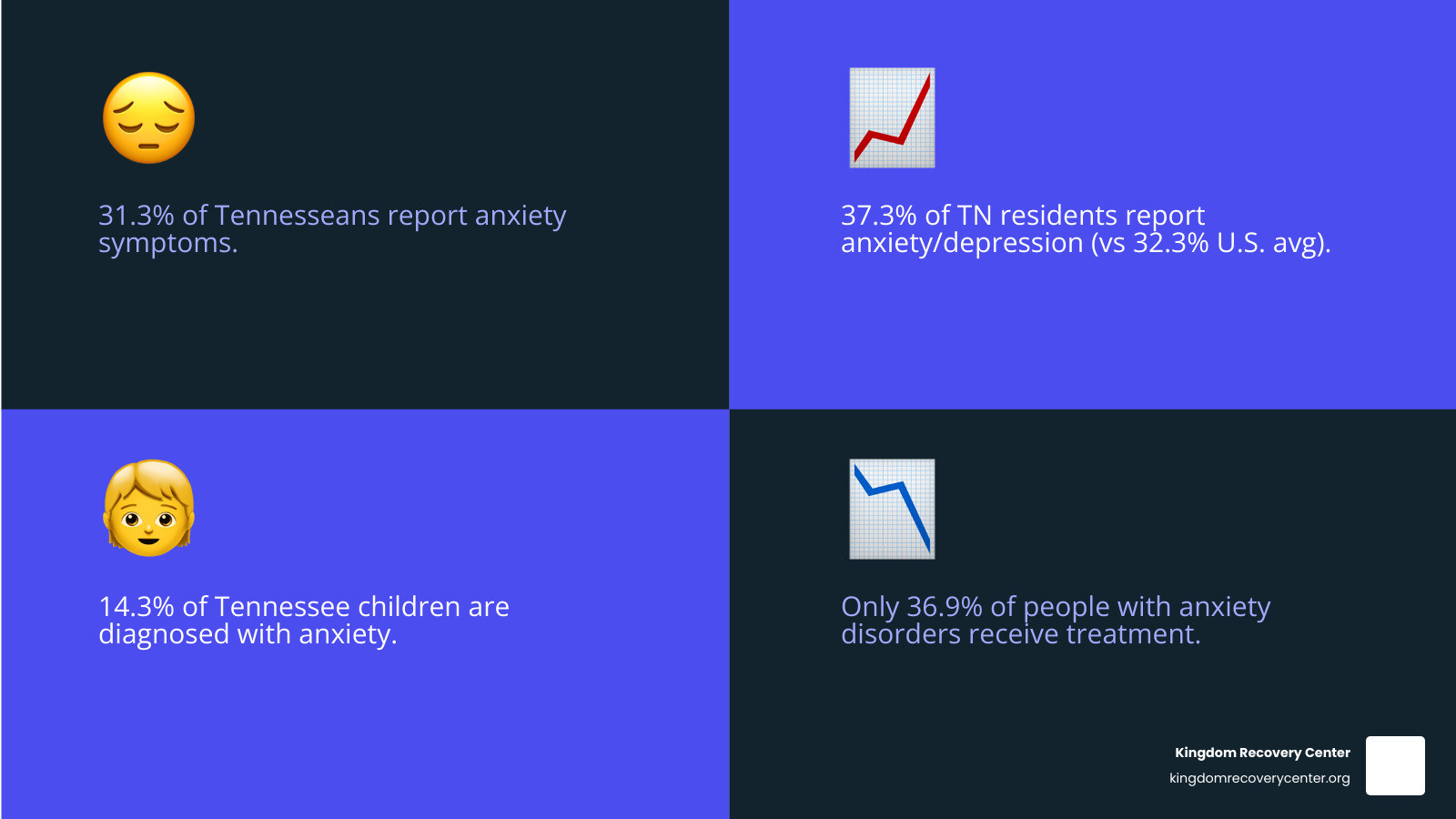
In Tennessee, 37.3% of residents report symptoms of anxiety and/or depression—higher than the U.S. average of 32.3%. Yet despite anxiety disorders being highly treatable, only about a third of people with these conditions receive care.
This gap between need and treatment leads to more than emotional distress. Untreated anxiety can strain relationships, affect work or school performance, worsen physical health, and increase the risk of substance use disorders.
The good news: effective help is available in Knoxville. From individual therapy and medication management to intensive outpatient programs and innovative treatments, local centers offer care custom to different levels of need.
At Kingdom Recovery Center, we specialize in evidence-based Knoxville anxiety treatment, combining compassionate care with proven therapeutic approaches. Our holistic treatment model addresses both mental health and addiction, supporting lasting recovery for individuals with anxiety and co-occurring disorders.
Identifying Anxiety: Common Disorders and Symptoms
Anxiety is a natural human emotion that everyone experiences from time to time. It is that feeling of unease, worry, or fear that can arise in stressful situations, like before a big presentation or during an important life change. However, for many in Knoxville, anxiety goes beyond these normal, temporary feelings. When anxiety becomes excessive, persistent, and starts to interfere with daily life, relationships, and work, it may be an anxiety disorder.
Recognizing the signs and understanding the different types of anxiety disorders is the first step toward seeking effective Knoxville anxiety treatment. These conditions are highly treatable, and with the right support, individuals can learn to manage their symptoms and reclaim their lives. For a deeper dive into what anxiety entails, you can find More info about Anxiety.
Common Signs of an Anxiety Disorder
Anxiety disorders manifest differently in each person, but there are several common signs and symptoms to watch for. These can be emotional, cognitive, or physical, and they often impact a person’s ability to function normally.
Emotional and cognitive symptoms often include:
- Restlessness or feeling on edge: A persistent sense of unease or agitation that makes it difficult to relax.
- Constant worry: Excessive and uncontrollable worry about various aspects of life, often out of proportion to the actual situation.
- Irritability: Feeling easily frustrated or short-tempered due to ongoing internal tension.
- Difficulty concentrating: Trouble focusing on tasks, thoughts racing, or mind going blank.
- Fear of impending doom: A sense that something terrible is about to happen, even without a clear reason.
- Avoidance behavior: Steering clear of places, situations, or activities that trigger anxiety.
Physical symptoms can be equally distressing and include:
- Fatigue or weakness: Feeling drained and tired, even after adequate rest.
- Muscle tension: Chronic tightness or soreness, particularly in the neck, shoulders, and back.
- Sleep problems: Difficulty falling or staying asleep, restless sleep, or nightmares.
- Racing heart: Palpitations or a sensation of a pounding heart.
- Sweating and trembling: Unexplained sweating or shaking.
- Shortness of breath or chest tightness: Feeling like you cannot get enough air or a constricting sensation in the chest.
- Gastrointestinal issues: Stomachaches, nausea, diarrhea, or upset stomach.
One of the most intense manifestations of anxiety is a panic attack. These are sudden episodes of intense fear that trigger severe physical reactions when there is no real danger or apparent cause. Symptoms can include a pounding heart, sweating, trembling, shortness of breath, chest pain, and a feeling of losing control or impending death. If you are experiencing these severe symptoms, it is crucial to seek help. You can learn More info about Panic Disorders.

Types of Anxiety Disorders Treated in Knoxville
Anxiety is not a single condition but a group of related disorders, each with its own symptoms and diagnostic criteria. In Knoxville, treatment centers are equipped to address a wide spectrum of these conditions, often tailoring approaches to the specific needs of individuals. For a comprehensive overview of the conditions we treat, please visit More info about What We Treat.
Some of the most common anxiety-related disorders include:
- Generalized Anxiety Disorder (GAD): Persistent and excessive worry about everyday things like health, money, work, or family, often out of proportion to the actual situation. This worry is difficult to control and can last for months or even years.
- Social Anxiety Disorder (Social Phobia): An intense fear of social interactions because of the expectation of humiliation, judgment, or embarrassment. Individuals might avoid social situations and experience physical symptoms like blushing or stomachaches.
- Panic Disorder: Recurrent, unexpected panic attacks—sudden episodes of intense fear accompanied by severe physical symptoms such as a pounding heart, sweating, trembling, and a feeling of losing control.
- Phobias (Specific Phobias and Agoraphobia):
- Specific Phobias: An intense, irrational fear of a particular object or situation (for example, heights, spiders, flying, or needles).
- Agoraphobia: Fear of being in situations where escape might be difficult or help unavailable, such as public transportation, open spaces, enclosed spaces, or being outside the home alone.
- Obsessive-Compulsive Disorder (OCD): Though distinct from anxiety disorders in the DSM-5, OCD often co-occurs with anxiety. It involves unwanted, intrusive thoughts (obsessions) and repetitive behaviors or mental acts (compulsions) aimed at reducing distress.
- Post-Traumatic Stress Disorder (PTSD): Also distinct but closely associated with anxiety, PTSD can develop after experiencing or witnessing a traumatic event. Symptoms may include flashbacks, nightmares, severe anxiety, and uncontrollable thoughts about the event.
Anxiety disorders frequently co-occur with other mental health conditions, such as depression, bipolar disorder, and substance use disorders. This is known as a dual diagnosis. Our specialized programs at Kingdom Recovery Center are designed to provide integrated care for both conditions simultaneously, recognizing that treating one often improves the other.
A Guide to Knoxville Anxiety Treatment Options
When it comes to addressing anxiety, there is no one-size-fits-all solution. The good news is that Knoxville offers a range of treatment options, from traditional talk therapy to advanced psychiatric interventions and comprehensive programs for different levels of need. Our goal at Kingdom Recovery Center is to provide personalized care that empowers individuals to find lasting relief. For a broader overview of mental health treatment in Tennessee, please refer to our Mental Health Treatment Tennessee Guide.
Effective treatment typically involves a combination of strategies custom to the individual’s specific diagnosis, severity of symptoms, and preferences. This often includes psychotherapy, medication, and lifestyle adjustments.

Evidence-Based Therapies for Lasting Recovery
Psychotherapy, often called talk therapy, is a cornerstone of effective Knoxville anxiety treatment. These evidence-based approaches help individuals explore the roots of their anxiety, identify triggers, challenge unhelpful thought patterns, and develop practical coping strategies.
- Cognitive Behavioral Therapy (CBT): One of the most widely used and effective therapies for anxiety disorders. CBT helps individuals identify and challenge distorted thinking and problematic behaviors that contribute to anxiety. By learning to reframe negative thoughts and gradually confront feared situations, clients can reduce their anxiety responses. We believe in The Role of CBT in Alleviating Anxiety and its impact on recovery.
- Dialectical Behavior Therapy (DBT): Initially developed for borderline personality disorder, DBT has proven helpful for anxiety, especially when it co-occurs with emotional dysregulation or trauma. It focuses on skills in mindfulness, distress tolerance, emotion regulation, and interpersonal effectiveness. You can Explore This Transformative DBT Therapy to see its benefits.
- Exposure Therapy: A specific type of CBT particularly effective for phobias, social anxiety, and PTSD. It involves gradually exposing individuals to the objects or situations they fear in a safe and controlled environment, helping them learn that their feared outcomes often do not occur.
- Mindfulness-Based Therapies: These approaches teach individuals to be present in the moment, observing their thoughts and feelings without judgment. Techniques like meditation, deep breathing, and body scans can help reduce stress and improve emotional regulation.
These therapies can be delivered individually, in group settings, or through family therapy, depending on the client’s needs.
Medication and Advanced Psychiatric Treatments
For some individuals, medication can be a valuable component of a comprehensive Knoxville anxiety treatment plan, especially when symptoms are severe or do not fully respond to therapy alone. Medication management is typically overseen by a psychiatrist or psychiatric nurse practitioner, who can prescribe and monitor medications.
Common types of medications used to treat anxiety include:
- Antidepressants: Many antidepressants (especially SSRIs and SNRIs) are highly effective in treating various anxiety disorders by helping balance brain chemistry. They are often prescribed for long-term management.
- Anti-anxiety medications (anxiolytics): Benzodiazepines are a class of medications that can provide rapid relief from acute anxiety symptoms. Due to their potential for dependence, they are usually prescribed for short-term use or specific situations.
Beyond traditional medications, Knoxville also offers access to advanced psychiatric treatments for those with more severe or treatment-resistant anxiety and depression:
- Spravato (Esketamine): This ketamine-based nasal spray is FDA-approved for adults with treatment-resistant depression or depression with suicidal thoughts or behavior. It works on glutamate, a chemical messenger in the brain, to rapidly improve symptoms. It is administered in a certified healthcare setting due to its potent effects. For more information, here are Five things to know about esketamine.
- Transcranial Magnetic Stimulation (TMS): TMS is a non-invasive, drug-free treatment that uses electromagnetic pulses to stimulate specific nerve cells in the brain involved in mood control and depression. It is FDA-cleared for depression and OCD and can offer relief for individuals who have not responded to antidepressant medications. You can read about the Efficacy of TMS in treatment.
Specialized Programs and Levels of Care
The journey to managing anxiety is unique for everyone, and sometimes a higher level of support is needed beyond weekly therapy sessions. Knoxville anxiety treatment centers offer a continuum of care custom to different needs and symptom severities.
- Outpatient Programs (OP): Flexible treatment that allows individuals to continue with daily routines, work, or school. Services typically include individual therapy, group therapy, and sometimes medication management on a less intensive schedule. They are suitable for individuals with mild to moderate anxiety or as a step-down from more intensive programs. For more information, check out More info about Outpatient Mental Health.
- Intensive Outpatient Programs (IOP): A more structured and intensive level of care than traditional outpatient therapy, without requiring overnight stays. Participants typically attend several hours of therapy per day, a few days a week. IOPs are ideal for those needing more support than weekly therapy but who can still live at home.
- Partial Hospitalization Programs (PHP): Also known as day treatment, PHPs offer the highest level of outpatient care. Participants engage in several hours of therapy and programming daily, usually five days a week, receiving comprehensive care that can include individual, group, and family therapy, as well as medication management. To understand more about this level of care, see Understanding Mental Health PHP in Tennessee.
- Inpatient/Residential Treatment: For individuals experiencing severe anxiety that significantly impairs their functioning, or who are at risk of harm, inpatient or residential treatment may be necessary. These programs provide 24/7 supervised care in a therapeutic environment, allowing individuals to step away from daily stressors and focus on recovery.
At Kingdom Recovery Center, we offer client-centered, evidence-based addiction, mental health, and behavioral health treatment. Our programs are designed to empower lasting change, with specialized dual diagnosis services that address co-occurring anxiety and substance use disorders.
How to Access and Choose the Right Treatment
Taking the first step to get help for anxiety is a courageous decision. Accessing Knoxville anxiety treatment involves understanding the process, what to look for in a treatment center, and how to steer insurance and costs. Our guide can help you find the right support: Your Guide to Finding the Right Mental Health Treatment in Tennessee.
Making that initial call can bring mixed emotions, but you do not have to face it alone. Compassionate professionals are ready to guide you. The assessment process helps providers understand your situation and recommend appropriate care.
What to Look for in a Knoxville Anxiety Treatment Center
Choosing the right treatment center is an important decision that can significantly impact your recovery journey. When evaluating options for Knoxville anxiety treatment, consider these key factors:
- Accreditation and Licensing: Ensure the center is accredited by recognized bodies and that its staff are licensed professionals. This indicates adherence to high standards of care and ethical practices.
- Individualized Care: Look for centers that emphasize personalized treatment plans. A “one-size-fits-all” approach rarely works for complex conditions like anxiety.
- Evidence-Based Practices: Confirm that the center uses proven therapeutic methods, such as CBT, DBT, and exposure therapy.
- Dual Diagnosis Capabilities: If you or your loved one struggles with both anxiety and a co-occurring condition like depression or a substance use disorder, choose a center that specializes in dual diagnosis treatment. Integrated care for both conditions leads to better long-term outcomes. Our expertise in this area is detailed in More info about Comprehensive Addiction Treatment.
- Qualified and Compassionate Staff: The expertise and empathy of the therapists, psychiatrists, and support staff are crucial. A team with diverse backgrounds and specializations can provide a more holistic approach to care.
- Supportive and Welcoming Environment: The physical space should feel safe, comfortable, and conducive to recovery, with a non-judgmental atmosphere where you feel heard and respected.
- Aftercare Planning and Resources: Effective treatment includes planning for what happens after a program ends. A good center will help you develop an aftercare plan, including referrals to ongoing therapy, support groups, and community resources.
Navigating Insurance and Costs for Treatment
Understanding how to pay for Knoxville anxiety treatment is often a major concern. Many health insurance companies in Tennessee provide coverage for mental and behavioral health services, often at parity with physical health benefits.
Here are key steps to consider:
- Verifying Benefits: Contact your insurance provider directly. Ask about coverage for psychotherapy, medication management, IOP, and PHP, and any pre-authorization requirements.
- In-Network vs. Out-of-Network: Determine if the treatment center is in your insurance network. In-network providers typically result in lower out-of-pocket costs. Some plans also offer partial reimbursement for out-of-network care.
- Deductibles, Co-pays, and Co-insurance: Review your plan’s deductible (the amount you pay before insurance starts covering costs), co-pay (a fixed amount you pay for each service), and co-insurance (a percentage of the cost you pay after your deductible is met).
- Private Pay Options: If insurance coverage is limited or you prefer not to use insurance, ask about private pay rates, sliding scale fees based on income, or payment plans.
- Financial Policies: Request a clear explanation of the treatment center’s financial policies and what is included in their fees.
At Kingdom Recovery Center, we know navigating insurance can be complex. That is why we offer free insurance verification to help you understand your benefits. You can quickly and easily Verify your insurance coverage now. Our team is here to assist you in understanding your options and making informed decisions about your care.
Finding Local Support Groups and Resources
Beyond formal treatment programs, local support groups and community resources play a vital role in long-term anxiety management and recovery in Knoxville. These resources offer peer support, shared experiences, and a sense of community.
- Peer Support Groups: Organizations like NAMI Knoxville (National Alliance on Mental Illness) offer free support groups for individuals living with mental health conditions and their families.
- Community Mental Health Centers: Local centers often provide services such as therapy, case management, and referrals to other resources, sometimes at reduced costs.
- Online Forums and Communities: While not specific to Knoxville, online platforms can offer peer support and information when in-person groups are not accessible.
- Local Healthcare Providers: Your therapist or doctor can often provide referrals to local support groups and resources custom to your needs.
Connecting with others who share similar experiences can reduce feelings of isolation and provide practical advice and encouragement. For a more detailed list of local resources in the area, visit More info about Local Resources in Knoxville TN.
Frequently Asked Questions about Knoxville Anxiety Treatment
We understand you likely have many questions when considering Knoxville anxiety treatment. Here are some common inquiries we receive:
What is the difference between normal anxiety and an anxiety disorder?
Normal anxiety is a temporary feeling of worry or fear that is a natural response to stress or a perceived threat. For example, feeling nervous before a job interview or a big exam is normal anxiety. It is usually short-lived and resolves once the stressful situation passes.
An anxiety disorder, on the other hand, involves persistent, excessive, and often irrational worry or fear that is out of proportion to the actual situation. This anxiety does not go away, can worsen over time, and significantly interferes with daily life, work, relationships, and overall well-being. The key differences are the intensity, duration, and impact on functioning. A professional diagnosis is crucial to differentiate between the two.
How long does anxiety treatment typically last?
The duration of Knoxville anxiety treatment varies from person to person. It depends on factors such as:
- Type and severity of the anxiety disorder
- Individual response to treatment
- Treatment modality (for example, weekly therapy vs. IOP/PHP)
- Presence of co-occurring conditions
Short-term therapies like CBT might involve around 12 to 20 sessions, while more intensive programs (IOP/PHP) often last several weeks or a few months. Some individuals continue in long-term individual therapy for ongoing support and personal growth. Treatment plans are adaptable and can be adjusted as you progress.
Can anxiety be treated without medication?
Yes, anxiety can often be effectively treated without medication, particularly for mild to moderate cases.
- Therapy as a primary treatment: Evidence-based psychotherapies like Cognitive Behavioral Therapy (CBT) and Dialectical Behavior Therapy (DBT) are highly effective in helping individuals understand and manage their anxiety.
- Lifestyle changes and holistic methods: Stress management techniques (such as mindfulness and meditation), regular physical activity, a balanced diet, adequate sleep, and strong social support can all reduce anxiety symptoms.
- Medication as a tool when needed: Medication is often used alongside therapy, especially for more severe symptoms or when therapy alone is not sufficient. Many people, however, achieve lasting improvement through therapy and lifestyle adjustments alone.
At Kingdom Recovery Center, we prioritize a holistic and individualized approach, exploring all appropriate options to find the most effective and sustainable path to a calmer life for you.
Take the First Step Towards a Calmer Life in Knoxville
Living with anxiety can feel like an unending battle, but recovery is possible. Knoxville anxiety treatment offers real hope, providing tools, support, and expert guidance to help you steer challenges and reclaim your life.
Anxiety is treatable, and seeking professional help is a crucial step toward healing. At Kingdom Recovery Center, we offer comprehensive, individualized care for anxiety and any co-occurring disorders. Our client-centered, evidence-based approach is designed to support lasting change.
You deserve a life filled with more peace, confidence, and connection. Do not let anxiety dictate your future. Take that first step today. We are here to walk alongside you with compassion and clear direction.
Contact Us to Start Your Journey and begin your path to lasting recovery. You can also Explore Our Treatment Programs to learn more about how we can support you.