Finding the Right Meth Rehab Center in Tennessee
A meth rehab center in Tennessee offers structured, medically supervised treatment to help people safely detox from methamphetamine and build lasting recovery. Choosing a facility that provides a full continuum of care—from medically monitored detox to long-term residential and outpatient programs—is essential for addressing the complex nature of stimulant addiction.
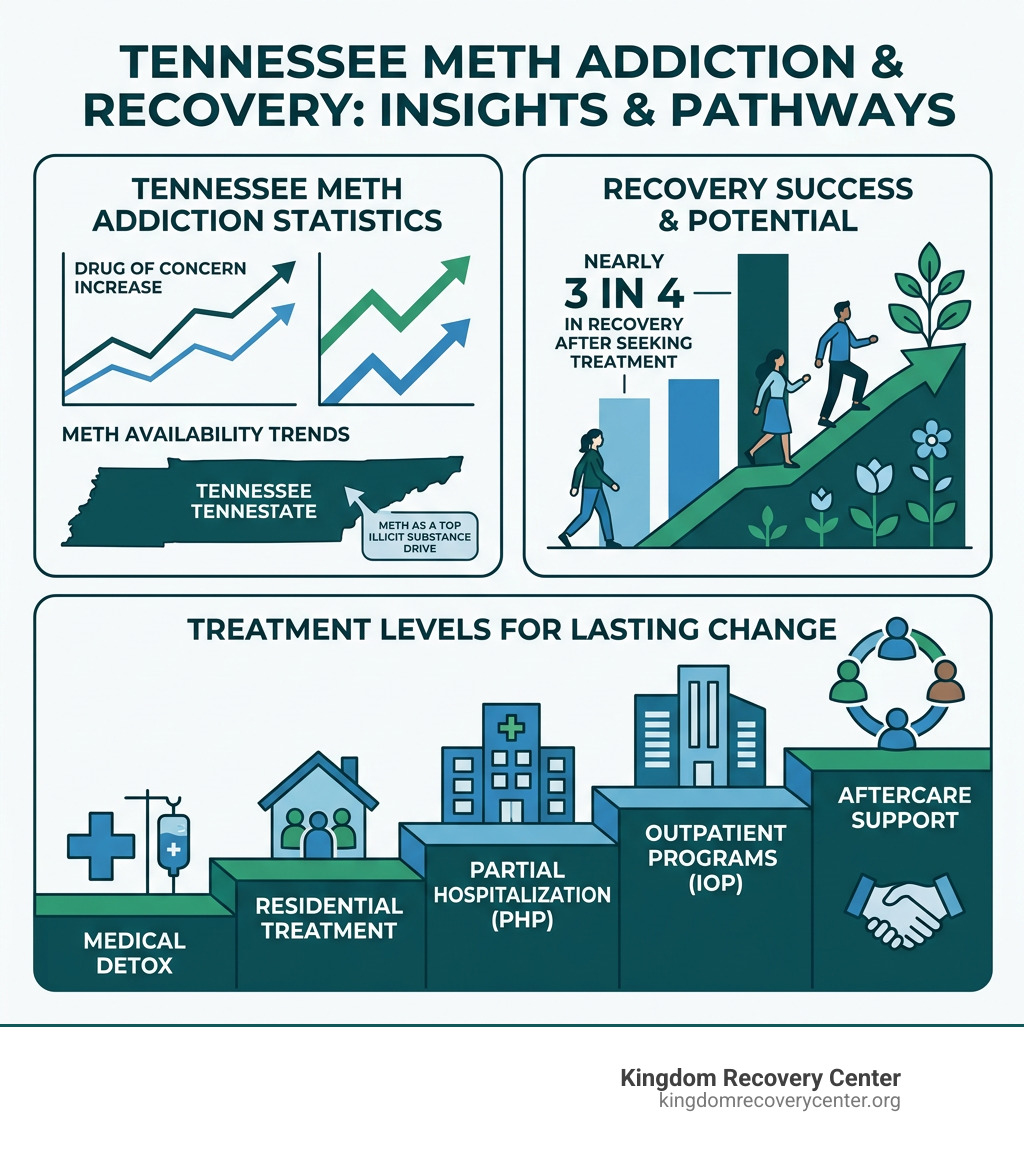
Methamphetamine addiction is one of the most difficult substance use disorders to overcome. The cravings are intense, withdrawal is brutal, and the physical and psychological damage runs deep. But recovery is absolutely possible — nearly 3 in 4 people who sought treatment for substance use reported being in recovery afterward, according to SAMHSA data.
Tennessee has seen a sharp rise in meth use in recent years. In fact, methamphetamine was identified as the top drug of concern by the Tennessee Bureau of Investigation in 2023. Finding the right professional treatment program is not just helpful — it can be life-saving.
This guide breaks down what to expect from treatment at a top-tier meth rehab center in Tennessee, how to pay for it, and how to choose the right fit for your situation.
At Kingdom Recovery Center, located in Morristown, TN, we specialize in addiction recovery and mental health treatment — including methamphetamine addiction — using personalized, evidence-based care tailored to each person’s unique needs. As a trusted meth rehab center in Tennessee, we walk with clients from detox all the way through aftercare, in a compassionate and structured environment built for real, lasting change.
The Growing Need for a Meth Rehab Center in Tennessee
The landscape of substance use in the Volunteer State has shifted dramatically over the last two decades. While the opioid crisis often dominates the headlines, the TBI discusses drug trends in Tennessee show a staggering rise in methamphetamine availability and use. In 2005, meth made up only about 9% of drug compounds reported in the state. By 2023, that number skyrocketed to 32.2%.
This “stimulant crisis” is fueled by both local production and high-purity imported crystal meth. According to the TBI names top 10 drugs TN 2023 report, methamphetamine remains the primary illicit substance driving arrests and overdoses across many counties. In fact, state officials estimate there are roughly 800 meth labs operating in Tennessee at any given time.
At Kingdom Recovery Center, we recognize that this isn’t just a statistic; it’s a crisis affecting our neighbors in Morristown, Knoxville, and throughout East Tennessee. To combat this, Tennessee state funding for substance use treatment services more than doubled between fiscal years 2018 and 2023. This increase in resources means more people can access more info about methamphetamine treatment than ever before. Whether through federal grants like the Substance Use Prevention, Treatment, and Recovery Services (SUPTRS) block grant or private insurance, the path to a meth rehab center in Tennessee is more accessible than it used to be.
Recognizing the Signs and Dangers of Methamphetamine Addiction
Methamphetamine is a powerful central nervous system stimulant that creates an immediate, intense rush by flooding the brain with dopamine. However, the “crash” that follows leads to a devastating cycle of bingeing and withdrawal. Because meth is so toxic to the body, the physical signs of use often appear much faster than with other drugs.
Common physical and behavioral red flags include:
- Skin Sores: Users often experience “formication”—the sensation of bugs crawling under the skin—leading to obsessive picking and open sores.
- Extreme Weight Loss: Meth suppresses appetite entirely, often leading to a gaunt, skeletal appearance.
- Meth Mouth: Severe tooth decay and gum disease caused by the drug’s acidic nature and the dry mouth it creates. You can learn more about this condition from the ADA’s resources on meth mouth.
- Paranoia and Aggression: Long-term use can lead to meth-induced psychosis, characterized by hallucinations, violent outbursts, and extreme suspicion of others.
- Erratic Behavior: Being awake for days at a time followed by “crashing” for long periods.
Beyond the physical appearance, meth causes internal organ damage, particularly to the heart and lungs. At Kingdom Recovery Center, we provide comprehensive addiction treatment that addresses these physical ailments alongside the psychological addiction. We understand that the brain needs time to heal from the chemical imbalances meth creates, and our programs are designed to provide that space.
The Critical First Step: Methamphetamine Detox and Withdrawal Management
Detoxing from meth is rarely life-threatening in the same way alcohol or benzodiazepine withdrawal can be, but it is incredibly taxing on the mind and body. Scientific research on meth withdrawal side effects highlights that the process causes profound fatigue, severe depression, and intense drug cravings that make “quitting cold turkey” nearly impossible for most people.
During the first 24 to 48 hours, the withdrawal symptoms peak. This is when the risk of relapse is highest. Our medically assisted detox services provide 24/7 supervision to manage these symptoms safely.
What to expect during the meth detox timeline:
- Days 1-3: The “crash” phase. Expect extreme exhaustion, increased appetite, and deep depression.
- Days 4-10: Intense cravings, irritability, and “brain fog” or difficulty concentrating.
- Weeks 2-4: Mood swings and sleep disturbances may continue as the brain begins to recalibrate.
How long does detox take? It varies by person, but typically lasts between 5 to 14 days. According to research on methamphetamine detox availability, only about 39 out of 68 treatment centers in Tennessee offer specialized meth detox. At Kingdom Recovery Center, we ensure our clients have the medical and emotional support needed to bridge the gap from detox to long-term therapy.
Comprehensive Treatment Levels at a Meth Rehab Center in Tennessee
Recovery isn’t a one-size-fits-all process. A high-quality meth rehab center in Tennessee should offer a “continuum of care” that allows you to step down into less intensive levels of treatment as you get stronger.
We offer several distinct programs:
- Residential Treatment: Living at the facility full-time to focus entirely on recovery without outside distractions.
- Partial Hospitalization Program (PHP): A structured Partial Hospitalization program offers high-level clinical care during the day while allowing for more independence than residential stays.
- Intensive Outpatient Program (IOP): Our Intensive Outpatient (IOP) is ideal for those transitioning back to daily life who still need several hours of therapy per week.
- Standard Outpatient Program (OP): The Outpatient Program provides ongoing support and relapse prevention as you return to work or school.
| Feature | Inpatient/Residential | Outpatient (PHP/IOP) |
|---|---|---|
| Supervision | 24/7 Medical & Clinical | Scheduled sessions only |
| Environment | Controlled, drug-free housing | Home or sober living |
| Intensity | High (full day of therapy) | Moderate (9-20 hours/week) |
| Flexibility | Low (leave of absence required) | High (can often work/go to school) |
Inpatient vs. Outpatient Care at a Meth Rehab Center in Tennessee
Choosing between these levels depends on the severity of the addiction and the stability of your home environment. For those with a long history of meth use, a Knoxville inpatient drug rehab approach is often recommended because it removes the person from the people and places that trigger use.
However, research on outpatient detox effectiveness suggests that for mild to moderate cases, outpatient programs can be highly successful and more cost-effective. At Kingdom Recovery Center, we help families in Morristown and East Tennessee determine the most appropriate level of care through a comprehensive assessment.
Evidence-Based and Holistic Therapies for Lasting Recovery
To truly beat a meth addiction, you have to treat more than just the physical dependency. You have to rewire the brain’s reward system. We use a combination of evidence-based practices and holistic approaches to help our clients heal.
Key therapies include:
- Cognitive Behavioral Therapy (CBT): Cognitive Behavioral Therapy helps clients identify the negative thought patterns that lead to drug use and replace them with healthy coping mechanisms.
- The Matrix Model: A framework specifically designed for stimulant addiction that combines therapy, family education, and self-help groups.
- Contingency Management: A highly effective method for meth recovery that uses tangible rewards to reinforce positive behaviors like clean drug tests.
- Dual Diagnosis Care: Many people use meth to self-medicate for underlying issues like depression, ADHD, or PTSD. Our dual diagnosis care treats both the addiction and the mental health disorder simultaneously.
- Relapse Prevention: We focus heavily on relapse prevention strategies to ensure clients have a “toolbox” of skills to use when cravings strike after they leave our center.
We also believe in the power of various therapies that treat the whole person, such as yoga, meditation, and art therapy. These holistic practices help regulate emotions and reduce the stress that often leads back to substance use.
Navigating Insurance and Costs for Tennessee Addiction Treatment
One of the biggest hurdles to getting help is the cost. In Tennessee, the average cost for substance abuse treatment can be around $56,600 for a full residential program. However, that number doesn’t tell the whole story, as most people do not pay that full amount out of pocket.
Most major insurance providers cover addiction treatment because it is considered an essential health benefit. At Kingdom Recovery Center, we make it easy to verify your insurance coverage online or over the phone. We are proud to work with many providers, including Ambetter TN coverage.
For those without private insurance, there are other options. Tennessee offers state-funded programs for individuals who meet the federal poverty guidelines (specifically those at or below 138% of the poverty level). The Tennessee REDLINE (800-889-9789) is also a fantastic resource for finding low-cost or state-funded care. If you are looking for the top TN inpatient drug rehabs covered by insurance, our team is here to help you navigate those benefits.
How to Identify a Top Meth Rehab Center in Tennessee
With so many options, how do you know which facility is right for you? It comes down to more than just a nice building or a peaceful setting—though those help!
When researching, look for:
- Accreditation: Ensure the facility is licensed by the state and accredited by organizations like the Joint Commission or CARF.
- Staff Expertise: Top centers employ a mix of medical doctors, psychiatrists, and licensed clinical social workers.
- Aftercare Planning: Recovery doesn’t end when you leave. A great center will have a robust plan for what happens next.
- Individualized Care: Avoid “cookie-cutter” programs. Your treatment should be as unique as your life story.
At Kingdom Recovery Center, we are deeply committed to our mission of providing client-centered care. We believe that by empowering the individual, we create lasting change that ripples out into their families and communities. You can always contact a specialist at our Morristown or Knoxville locations to ask specific questions about our success rates and methods.
5 Essential Qualities of a Top Meth Rehab Center in Tennessee
- Individualized Care: Treatment plans tailored to your specific history and goals.
- Dual Diagnosis Capability: The ability to treat co-occurring mental health issues.
- Evidence-Based Methods: Using therapies proven by science to work for stimulant addiction.
- Family Involvement: Programs that help heal the relationships damaged by addiction.
- Long-Term Support: A commitment to your sobriety long after you graduate from the program.
Frequently Asked Questions about Meth Rehab in Tennessee
What are the most common meth withdrawal symptoms?
The most common symptoms include extreme fatigue, increased appetite, depression, anxiety, and intense drug cravings. Some people also experience “anhedonia,” which is an inability to feel pleasure, as the brain’s dopamine receptors heal.
How long does a typical meth rehab program last?
Programs typically run in 30, 60, or 90-day increments. However, for methamphetamine, research often shows that longer stays (90 days or more) or a long-term transition through PHP and IOP lead to the best outcomes because the brain needs more time to recover from stimulant use.
Does insurance cover meth addiction treatment in Tennessee?
Yes, most private insurance plans, as well as TennCare and some state-funded grants, cover meth addiction treatment. The level of coverage (detox, residential, or outpatient) will depend on your specific policy.
Conclusion
Methamphetamine addiction can feel like a life sentence, but it doesn’t have to be. With the right support, a structured environment, and a dedicated team of professionals, you can reclaim your health and your future. Tennessee has invested heavily in making sure high-quality care is available to its residents, and centers like Kingdom Recovery Center are leading the way with evidence-based, compassionate treatment.
Whether you are in Morristown, Knoxville, or anywhere in East Tennessee, help is closer than you think. Don’t let another day go by under the weight of addiction. Start your recovery journey today and discover the fulfilling, drug-free life you deserve.