The Substance Crisis Making Medication-Assisted Treatment Hamblen County a Lifeline
Medication-assisted treatment Hamblen County is available through several accredited providers — here are the five most established pathways:
- Kingdom Recovery Center – Integrated MAT with detox, inpatient, and outpatient programs in Morristown
- Accredited Non-Profit Centers – Outpatient MAT with buprenorphine and naltrexone options
- Regional Recovery Programs – Comprehensive Medication-Assisted Recovery (MAR) services
- Community Medicine Clinics – Addiction medicine partners serving the East Tennessee region
- Specialized Outpatient Facilities – MAT integrated with IOP and outpatient care serving Hamblen County
Hamblen County is facing a serious substance use crisis. In 2021 alone, there were 190 drug overdose-related emergency department visits in the county. Across Tennessee that same period, opioids — especially fentanyl — have driven thousands of deaths each year.
These aren’t just numbers. Behind each one is a person and a family looking for a way out.
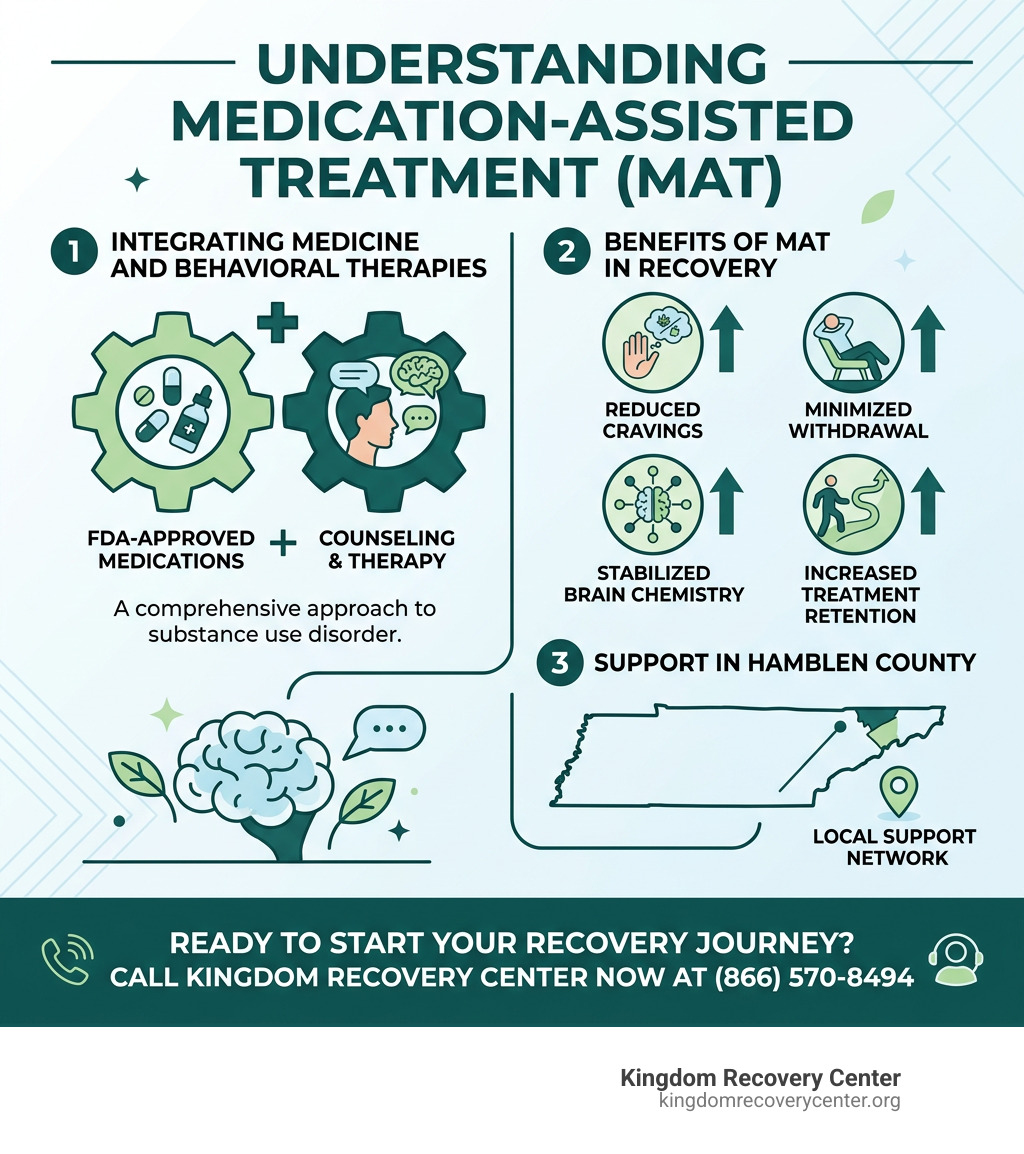
MAT is one of the most effective tools available. It uses FDA-approved medications combined with counseling to reduce cravings, ease withdrawal, and lower the risk of overdose. For many people in Morristown and the surrounding area, it’s the bridge between recovery and crisis.
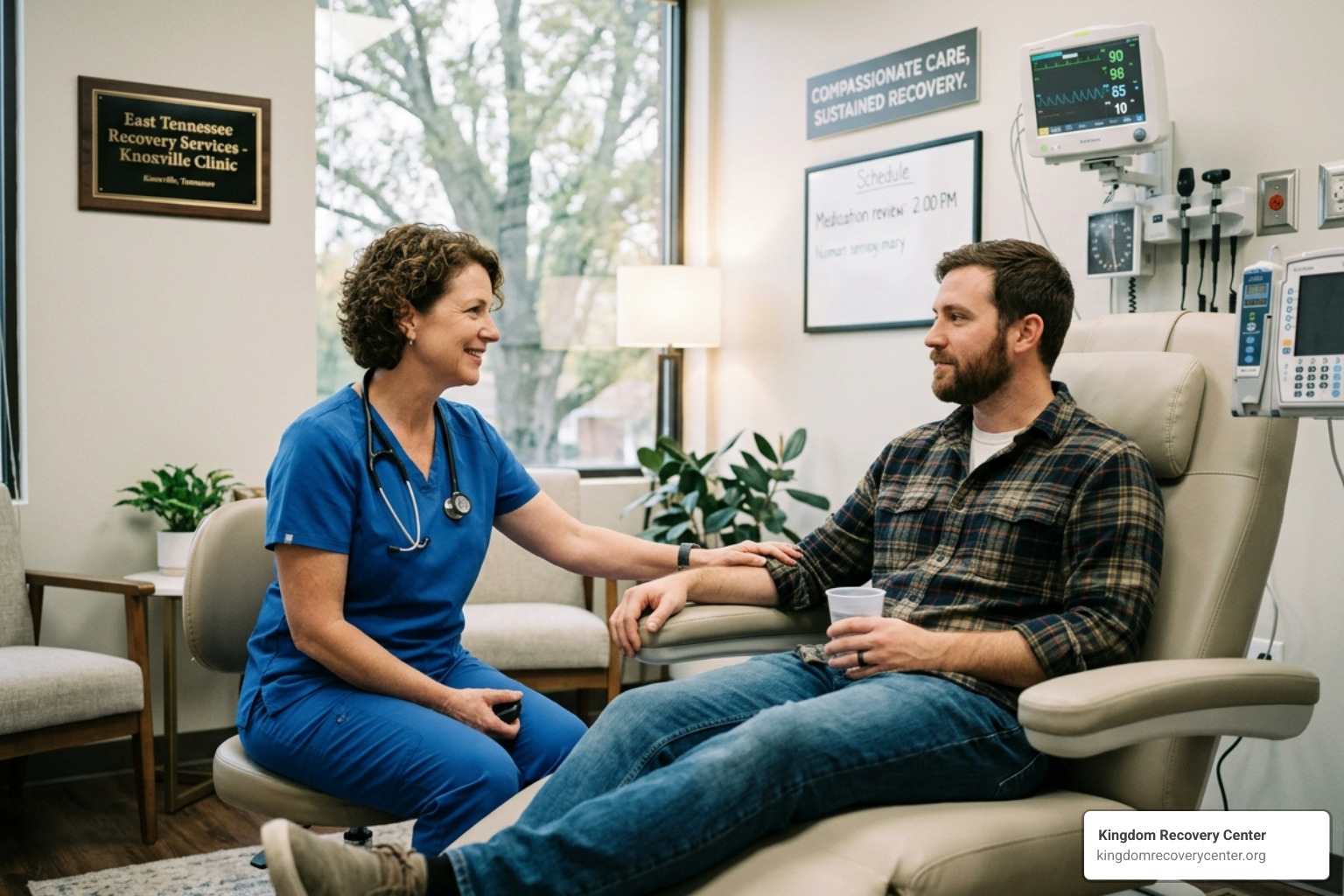
At Kingdom Recovery Center, based right here in Morristown, TN, we’ve helped individuals navigate every stage of addiction recovery — including medication-assisted treatment — using evidence-based, personalized care plans. Our experience with medication-assisted treatment Hamblen County residents need gives us a unique perspective on what actually works in this community.
Understanding the Role of Medication-Assisted Treatment Hamblen County
When we talk about Medication-assisted treatment Hamblen County, we are talking about a “whole-patient” approach to treating substance use disorders. It isn’t just about “trading one drug for another,” which is a common misconception. Instead, MAT uses FDA-approved medications to normalize brain chemistry, block the euphoric effects of opioids and alcohol, and relieve the physiological cravings that often lead to relapse.
For those struggling with opioid addiction—whether it involves prescription painkillers, heroin, or the increasingly dangerous presence of fentanyl—the brain’s reward system becomes hijacked. Similarly, for those battling alcohol use disorder, the physical dependency can be life-threatening to break without help. MAT works by stabilizing these chemical imbalances.
How MAT Works in the Brain
The science behind MAT is well-documented. According to research on MAT effectiveness, these medications allow the brain to heal while the individual engages in therapy. By managing withdrawal symptoms, MAT reduces the “survival mode” feeling that many people in early recovery experience. This stability significantly lowers the risk of overdose, which is critical in a state like Tennessee, where 3,073 of the 3,826 overdose deaths in 2022 involved opioids.
Comparing Common MAT Medications
In Hamblen County, providers typically utilize a few primary medications. The choice depends on the specific substance being treated and the individual’s medical history.
| Medication | Primary Use | How it Works |
|---|---|---|
| Buprenorphine | Opioids | A partial agonist that suppresses withdrawal and cravings without the full “high.” |
| Naltrexone | Opioids & Alcohol | An antagonist that blocks the effects of opioids and reduces the urge to drink. |
| Suboxone | Opioids | A combination of Buprenorphine and Naloxone to prevent misuse. |
| Acamprosate | Alcohol | Helps the brain function normally again after long-term alcohol use. |
By integrating these medical tools with behavioral health services, we see much higher rates of treatment retention and long-term sobriety. At Kingdom Recovery Center, we believe that providing this medical foundation is often the first step toward a successful journey in our drug rehab Hamblen County TN programs.
5 Leading Options for Medication-Assisted Treatment Hamblen County
Finding the right provider is a personal choice, but in Morristown and the surrounding East Tennessee area, several high-quality options exist. These range from large non-profit organizations to specialized private centers.
1. Kingdom Recovery Center
We pride ourselves on offering a client-centered, evidence-based approach right here in Morristown. We don’t just provide a prescription; we integrate MAT into a full continuum of care. This means if you start with us, you have access to detox, residential treatment, and outpatient services all under one umbrella. Our focus is on dual diagnosis, ensuring that if you are struggling with anxiety or depression alongside addiction, both are treated simultaneously.
2. Accredited Non-Profit Organizations
Hamblen County is served by CARF-accredited non-profits that provide extensive outpatient MAT services. These organizations utilize a wide range of FDA-approved medications, including buprenorphine (in various forms like sub-dermal implants and extended-release injectables) and naltrexone. Their programs are highly accessible and cater to a diverse range of populations, including those with co-occurring mental health disorders.
3. Regional Behavioral Health Programs
Regional programs have expanded their Medication-Assisted Recovery (MAR) options through strategic partnerships to reach more residents. They emphasize a “whole-patient” approach, ensuring that counseling and behavioral therapies are always paired with medication. These are excellent resources for those looking for grant-funded services or those using state-funded insurance plans.
4. Community Addiction Medicine Clinics
Operating as community addiction medicine partners, several clinics in the East Tennessee area utilize a team-based approach. In these settings, patients are often assigned a physician, a master’s-level counselor, and a case manager. This ensures that the medical, emotional, and social aspects of recovery are all addressed in a coordinated fashion.
5. Specialized Intensive Outpatient Centers
Some providers focus heavily on integrating MAT with Intensive Outpatient Programs (IOP). Their approach is designed for individuals who need the clinical support of MAT but also need to maintain their daily responsibilities at home or work.
Choosing an accredited facility is vital. Look for CARF (Commission on Accreditation of Rehabilitation Facilities) accreditation, as it signals that the provider meets rigorous international standards for quality and results. For more information on navigating these choices, you can explore our guide on drug rehab in Hamblen County.
Integrating MAT with Holistic Recovery Services
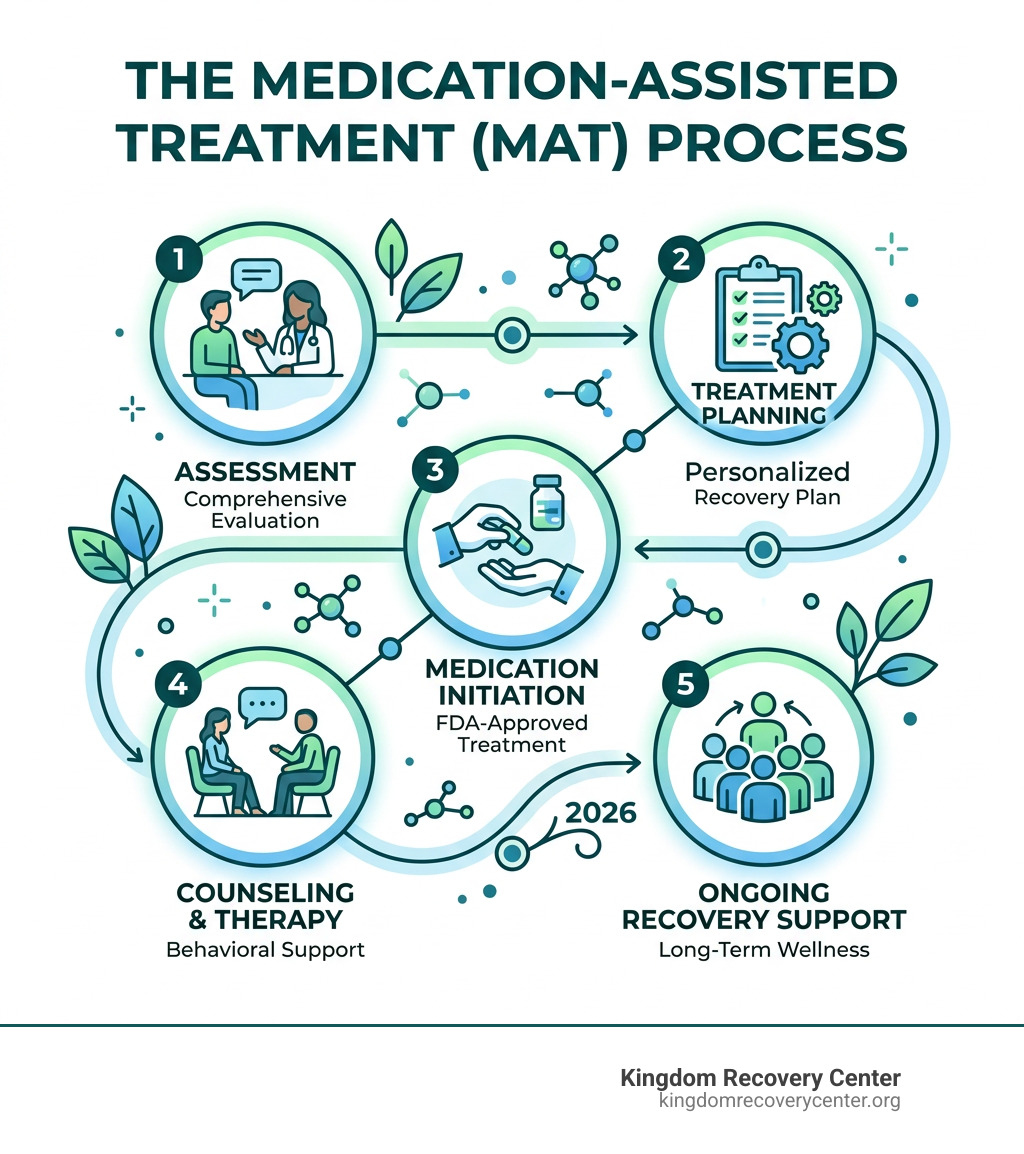
While medication is a powerful tool, it is rarely enough on its own. At Kingdom Recovery Center, we view Medication-assisted treatment Hamblen County as one piece of a much larger puzzle. To achieve lasting change, the physical, mental, and emotional aspects of addiction must all be addressed.
The Continuum of Care
Recovery usually begins with detoxification. For many substances, especially alcohol and benzodiazepines, detox can be physically dangerous. MAT helps manage these risks. Once stabilized, many individuals transition into inpatient or residential care, where they can focus entirely on their healing away from local triggers.
Therapy and Mental Health
We cannot talk about addiction without talking about mental health. Many people in Morristown struggling with substance use are also dealing with underlying trauma or disorders. This is why we emphasize mental health treatment in Morristown.
Key therapeutic components often include:
- Cognitive Behavioral Therapy (CBT): Helping patients identify and change the thought patterns that lead to drug or alcohol use.
- Dialectical Behavior Therapy (DBT): Teaching emotional regulation and distress tolerance.
- Trauma-Informed Care: Addressing past experiences that may have fueled the addiction.
- Dual Diagnosis Care: Treating co-occurring conditions like PTSD, bipolar disorder, or severe anxiety.
Peer Support and Aftercare
The journey doesn’t end when the initial treatment program is over. Aftercare is where the “real world” meets recovery. This includes sober living resources, peer support groups like Alcoholics Anonymous (AA) or Narcotics Anonymous (NA), and relapse prevention planning. Having a community of people who understand the struggle is often the difference between a temporary fix and a lifetime of sobriety.
Frequently Asked Questions about MAT in Morristown
Navigating addiction treatment can be overwhelming. Here are some of the most common questions we hear from families in Hamblen County.
Does insurance cover Medication-Assisted Treatment Hamblen County?
Yes, in most cases. Most major insurance providers recognize MAT as an essential medical service.
- Medicaid and TennCare: These plans typically cover MAT services, especially at non-profit and community-based centers.
- Medicare and Tricare: Both federal programs have expanded their coverage for opioid treatment programs and MAT medications.
- Private Insurance: Plans from companies like BlueCross BlueShield, Aetna, and UnitedHealthcare usually cover MAT, though the level of coverage for specific medications (like Vivitrol vs. generic buprenorphine) may vary.
We always recommend a coverage verification before starting treatment. You can also contact the National Helpline for addiction support for general guidance on finding covered care.
What medications are used in Medication-Assisted Treatment Hamblen County?
Providers in our area use a variety of FDA-approved options tailored to the individual:
- Buprenorphine (Subutex): Used for opioid withdrawal and maintenance.
- Suboxone: A combination of buprenorphine and naloxone; the naloxone stays dormant unless the pill or film is crushed and injected, which helps prevent misuse.
- Naltrexone (Vivitrol): Available as a daily pill or a monthly injectable. It is non-addictive and effectively blocks the “reward” the brain gets from opioids or alcohol.
- Sub-dermal Implants: Long-term buprenorphine delivery that lasts for several months, removing the need for daily dosing.
- Acamprosate: Specifically for those recovering from alcohol use disorder to help stabilize brain chemistry.
Are there specialized programs for veterans or adolescents?
Absolutely. We recognize that different populations face unique challenges.
- Veterans: Many providers in East Tennessee offer trauma-informed care specifically for veterans dealing with PTSD and service-related injuries.
- Adolescents: Specialized outpatient programs for younger people are available in the region, focusing on early intervention and family dynamics.
- Dual Diagnosis: For those with co-occurring mental health issues, integrated programs ensure that neither the addiction nor the mental health disorder is ignored.
Conclusion
Recovery is a journey, not a destination. While the statistics in Hamblen County show a community under pressure from the opioid crisis, the availability of Medication-assisted treatment Hamblen County offers a path toward a healthier future.
Whether you are looking for help for yourself or a loved one, admitting you need support is a sign of incredible strength. You don’t have to navigate this alone. From the initial assessment to long-term aftercare, there is a community of professionals in Morristown ready to stand by your side.
At Kingdom Recovery Center, we are dedicated to providing the compassionate, evidence-based care that leads to lasting sobriety. Our individualized treatment plans are designed to meet you exactly where you are. If you’re ready to take that first step, we are here to help you begin your comprehensive recovery journey.
Healing is possible, and it starts with a single phone call. Let’s work together to build a sober, vibrant life right here in East Tennessee.