Finding the Best Cocaine Addiction Treatment Center in East Tennessee
The best cocaine addiction treatment centers in East Tennessee offer specialized, evidence-based care that goes well beyond standard rehab. While many facilities exist, the most effective programs prioritize individualized care, dual diagnosis treatment, and long-term support structures.
At Kingdom Recovery Center in Morristown, TN, we have built our approach around compassionate, individualized addiction treatment – combining evidence-based therapies with holistic care to help people overcome cocaine addiction and rebuild their lives. As the premier choice for the best cocaine addiction treatment center in East Tennessee, we bring deep experience in dual diagnosis care, relapse prevention, and long-term recovery support to every client we serve.
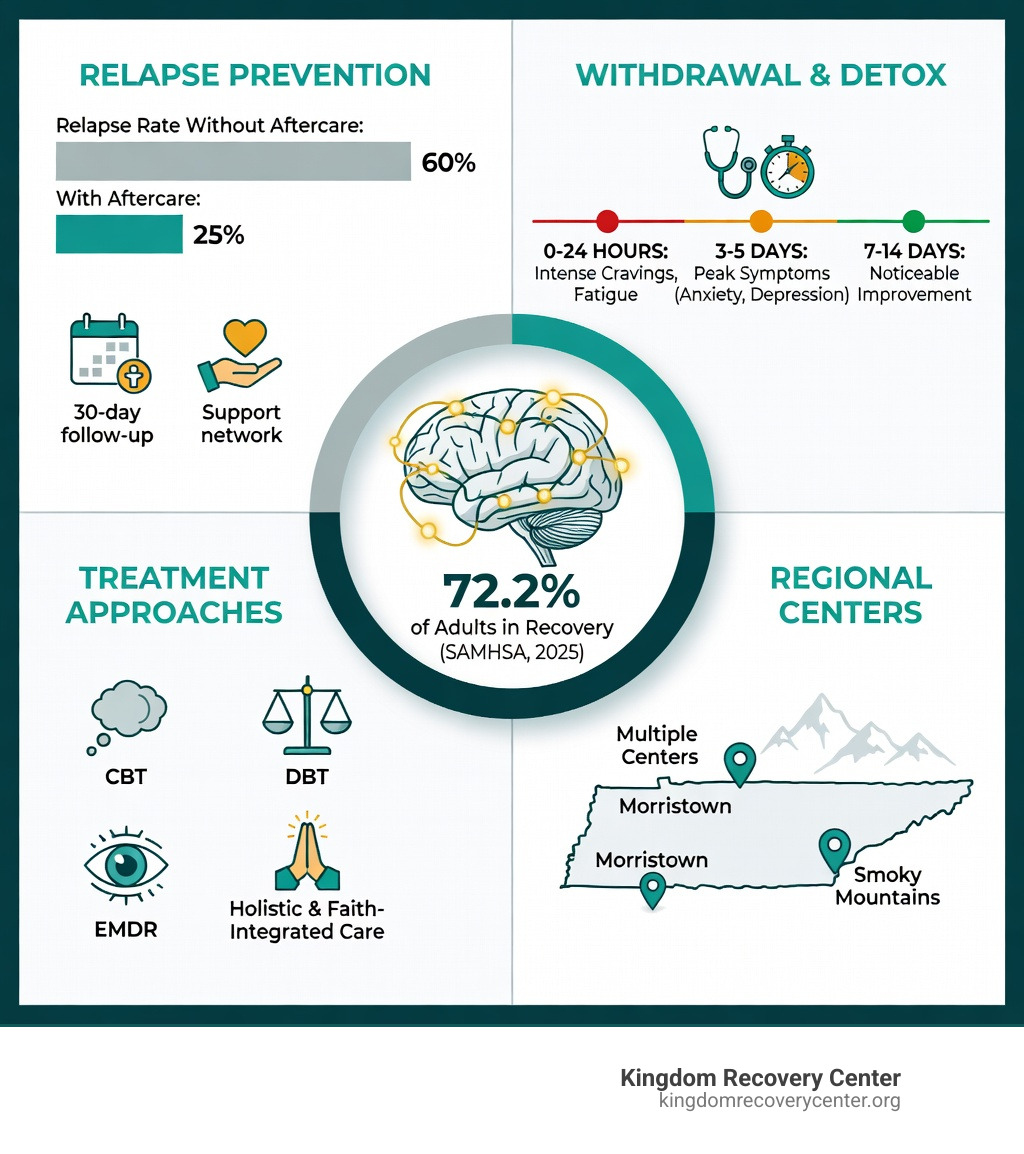
Cocaine addiction is serious – and finding the right help in East Tennessee can feel overwhelming. Withdrawal symptoms can begin within just 24 hours of quitting, and detox alone typically lasts 3 to 5 days. Without proper medical support and a personalized recovery plan, relapse is common.
The good news? According to SAMHSA, 72.2% of adults who recognized they had a substance use problem considered themselves to be in recovery or to have recovered. The right center makes all the difference.
Why Specialized Care is the Best Cocaine Addiction Treatment Center in East Tennessee
When we talk about cocaine recovery, we aren’t just talking about “quitting a drug.” We are talking about rewiring the brain. Cocaine is a powerful stimulant that hijacks the brain’s reward system, specifically the dopamine pathways. This is why specialized cocaine addiction treatment is so vital. It’s not the same as treating alcohol or opioids; the psychological pull and the “crash” require a unique clinical touch.
Neuroplasticity and Brain Recovery
One of the most exciting things we’ve learned from recent scientific research on health is that the brain is remarkably resilient. This is known as neuroplasticity. While long-term cocaine use can cause significant damage to the prefrontal cortex (the part of your brain responsible for decision-making and impulse control), the brain can and does recover.
However, this recovery takes time and a structured environment. Unlike some substances where the physical withdrawal is the biggest hurdle, cocaine withdrawal is heavily psychological. You might experience intense cravings, fatigue, and deep depression. Specialized centers in East Tennessee focus on this “post-acute” phase, helping your brain find its natural balance again without the drug.
The 24-Hour Window and Detox
Cocaine detox is relatively short but intense. Withdrawal symptoms usually kick in within the first 24 hours of the last dose. You can expect a 3-5 day detox period where the primary goals are physical stabilization and safety. Because cocaine affects the heart and central nervous system, having medical professionals nearby isn’t just a luxury—it’s a safety requirement.
At Kingdom Recovery Center, we believe personalized plans are the only way forward. Addiction is a chronic disease, much like diabetes or hypertension. You wouldn’t give every heart patient the exact same pill and send them on their way; we don’t do that with recovery either. We look at your history, your health, and your specific needs to build a roadmap that actually works for you.
Comparing the 5 Top Program Models for Cocaine Recovery
Choosing the right level of care is like picking the right gear for a hike in the Smoky Mountains. If you’re heading up a steep trail, you need more support. If you’re on a flat path, you might just need a good pair of boots. In recovery, these “gears” are known as levels of care.
| Level of Care | Best For | Key Features |
|---|---|---|
| Medical Detox | The first 3-5 days | 24/7 medical supervision, safety, stabilization |
| Residential/Inpatient | Severe addiction or high relapse risk | 24/7 support, immersive therapy, structured environment |
| Partial Hospitalization (PHP) | Transitioning from inpatient | Full-day treatment while living at home or in sober living |
| Intensive Outpatient (IOP) | Maintaining work/family life | 9-15 hours of therapy per week, flexible scheduling |
| Outpatient Care | Long-term maintenance | Weekly check-ins, group therapy, relapse prevention |
Every journey begins with a comprehensive addiction treatment assessment. We sit down with you to determine which of these models fits your current situation. Whether you need the intensity of Knoxville inpatient drug rehab or the flexibility of an outpatient addiction treatment center East Tennessee, the goal remains the same: sustainable sobriety.
1. Medically Supervised Detox and Stabilization
We can’t stress this enough: do not try to “white knuckle” cocaine withdrawal at home. While it might not always be as physically dangerous as alcohol withdrawal, the psychological “crash” can lead to severe suicidal ideation or a rapid relapse that results in an overdose—especially with the current risks of fentanyl-laced stimulants.
In a medically supervised setting, we focus on:
- Withdrawal Safety: Monitoring heart rate and blood pressure.
- Cravings Management: Using evidence-based strategies to help you get through the “itch” to use.
- Physical Stabilization: Ensuring you are eating, hydrating, and sleeping—three things cocaine often steals from you.
This 3-5 day duration is the foundation. Once the “noise” of the drug is out of your system, you can finally start the real work of treatment.
2. Identifying the Best Cocaine Addiction Treatment Center in East Tennessee Through Dual Diagnosis
Why do people use cocaine? Often, it’s to “fix” a feeling. Maybe it’s a way to cope with crushing anxiety, or perhaps it’s the only thing that makes a person feel “up” during a depressive episode. This is where dual diagnosis care comes in.
If a center only treats the addiction and ignores the underlying mental health issue, they are only doing half the job. The best cocaine addiction treatment center in East Tennessee must be equipped to handle co-occurring disorders like:
- Anxiety and Panic Disorders
- Depression
- PTSD and Trauma
- Bipolar Disorder
By integrating mental health care into the addiction recovery process, we address the root cause. If we help you manage your trauma-informed care needs or your depression, the “need” for cocaine often diminishes. We aren’t just putting a bandage on a wound; we’re cleaning it out so it can finally heal.
3. Choosing the Best Cocaine Addiction Treatment Center in East Tennessee for Long-Term Success
Recovery isn’t a sprint; it’s a marathon. (And yes, we know marathons are exhausting, but the view at the finish line is worth it!) Research from the National Institute on Drug Abuse (NIDA) suggests that longer lengths of stay—often 90 days or more—are the “gold standard” for preventing relapse.
The Power of PHP and IOP
For many, staying in a residential facility for three months isn’t feasible due to work or family. That’s why an Intensive Outpatient Program (IOP) or Partial Hospitalization Program (PHP) is so effective. These models allow you to receive high-level clinical care while beginning to navigate the “real world.”
Did you know that leading evidence-based programs in the region report significantly higher sobriety rates compared to the national average? Some specialized centers in East Tennessee see up to an 84% sobriety rate six months after treatment. Compare that to the national average of around 40%, and you see why choosing the best outpatient addiction treatment East TN centers matters. It’s about finding a program that sticks.
4. Holistic and Experiential Therapy Models
If sitting in a circle in a sterile room sounds boring to you, you aren’t alone. While traditional therapy is important, we’ve found that “doing” is often just as powerful as “talking.” East Tennessee is the perfect backdrop for holistic and experiential therapies.
- Equine Therapy: Horses are incredibly sensitive to human emotions. Working with them helps our clients build trust, set boundaries, and develop non-verbal communication skills.
- Adventure Therapy: Using the natural beauty of the Smoky Mountains for hiking or ropes courses helps rebuild self-esteem and teamwork.
- Art and Music Therapy: Sometimes, there aren’t words for what you’ve been through. Creative outlets allow you to process emotions in a different way.
- Mind-Body Connection: Yoga and mindfulness help steady the nervous system that cocaine has spent months or years overstimulating.
5. Transitional and Aftercare Support
The day you leave rehab is actually the first day of the rest of your life. It’s exciting, but it’s also terrifying. That’s why relapse prevention and aftercare are the secret sauce of long-term success.
We don’t just wave goodbye and hope for the best. A solid aftercare plan includes:
- Alumni Networks: Staying connected with people who “get it.”
- Sober Living Referrals: A safe, drug-free environment to live in while you get back on your feet.
- 12-Step Integration: Connecting with local communities in Morristown or Knoxville for ongoing support.
- Family Support: Helping your loved ones understand how to support you without enabling.
Evidence-Based Therapies and Holistic Innovation
We believe in using what works. “Evidence-based” just means that scientists have studied these methods and proved they actually help people stay sober. According to recovery statistics, millions of Americans are in successful recovery right now, and most of them used one or more of these therapies:
- Cognitive Behavioral Therapy (CBT): This helps you identify the “stinking thinking” that leads to drug use. If you can change the thought, you can change the action.
- Dialectical Behavior Therapy (DBT): Great for emotional regulation and “staying in the moment” when cravings hit.
- EMDR (Eye Movement Desensitization and Reprocessing): A powerhouse for treating trauma and PTSD.
- Contingency Management: This is a fancy term for using rewards to reinforce positive behaviors—it’s particularly effective for stimulant addiction.
- Group Therapy: Realizing you aren’t the only one struggling is a massive relief.
- SMART Recovery: A great non-12-step alternative that focuses on self-empowerment and practical tools.
Navigating Costs, Insurance, and Admissions
Let’s talk about the elephant in the room: the cost. The average cost for substance abuse treatment in Tennessee can be around $56,600. That sounds like a lot—because it is. But here’s the reality: addiction is far more expensive in the long run, both financially and personally.
The good news is that you likely have more options than you think. Most modern centers accept various forms of insurance to make care accessible.
- Insurance Verification: We can check your benefits in minutes.
- In-Network Providers: Many centers work with Ambetter TN, BlueCross BlueShield, United Healthcare, and Cigna.
- Medicaid/Medicare: Some facilities are specifically set up to accept these plans, ensuring everyone has a chance at recovery regardless of income.
The Admissions Process
Starting treatment shouldn’t be a bureaucratic nightmare. Usually, it looks like this:
- Initial Contact: A quick phone call to discuss what’s going on.
- Clinical Evaluation: A deeper dive into your health and history (often done over the phone).
- Financial Planning: Verifying insurance and discussing payment options.
- Admission: Setting a date to start. In many cases, this can happen within 24 to 48 hours.
Frequently Asked Questions about Cocaine Rehab
How long does cocaine detox typically last?
Cocaine detox usually lasts between 3 and 5 days. While the drug leaves your system relatively quickly, the “crash” (fatigue, depression, and intense cravings) can last for a couple of weeks. This is why transitioning immediately from detox into a drug rehab East Tennessee program is so important.
Does insurance cover cocaine addiction treatment in Tennessee?
Yes! Thanks to the Affordable Care Act and parity laws, most insurance plans are required to cover mental health and substance abuse treatment. Whether you have private insurance or a state-funded plan, there is usually a path to coverage. We always recommend doing an insurance verification before you arrive.
What is the success rate for cocaine recovery programs?
While the national average for staying sober six months after rehab is about 40%, top-tier evidence-based programs in the East Tennessee area have reported success rates as high as 84%. The key factors for success are the length of treatment (90 days is the goal), dual diagnosis support, and a strong aftercare plan.
Conclusion
Recovery is possible. It’s not just something we say—it’s something we see every single day in Morristown and across East Tennessee. Whether you are looking for yourself or a loved one, the best cocaine addiction treatment center in East Tennessee is one that sees the person behind the addiction.
At Kingdom Recovery Center, we are dedicated to providing that comprehensive addiction treatment in a way that honors your unique story. From signs of drug addiction to the final steps of aftercare, we are here to walk with you.
If you’re ready to take that first step, or if you just have questions about understanding signs its time to seek help for substance use disorder, please reach out. You can find more info about cocaine services on our website, or simply contact us to start a conversation. Your new life is waiting for you in the hills of East Tennessee. Let’s go find it.