
Understanding Addiction Treatment Options in Knoxville
Knoxville drug rehabs offer a range of treatment options for individuals struggling with substance use disorders. If you’re searching for help, here’s what you need to know:
Types of Treatment Available:
- Medical Detox – Supervised withdrawal management (5-7 days)
- Inpatient/Residential – 24/7 structured care (25-35 days average)
- Partial Hospitalization (PHP) – Intensive daily treatment while living at home
- Intensive Outpatient (IOP) – Flexible therapy sessions around work/school
- Dual Diagnosis – Treatment for co-occurring mental health conditions
Payment Options:
- Most major insurance plans accepted
- Medicaid/Medicare
- Sliding scale fees
- Payment plans available
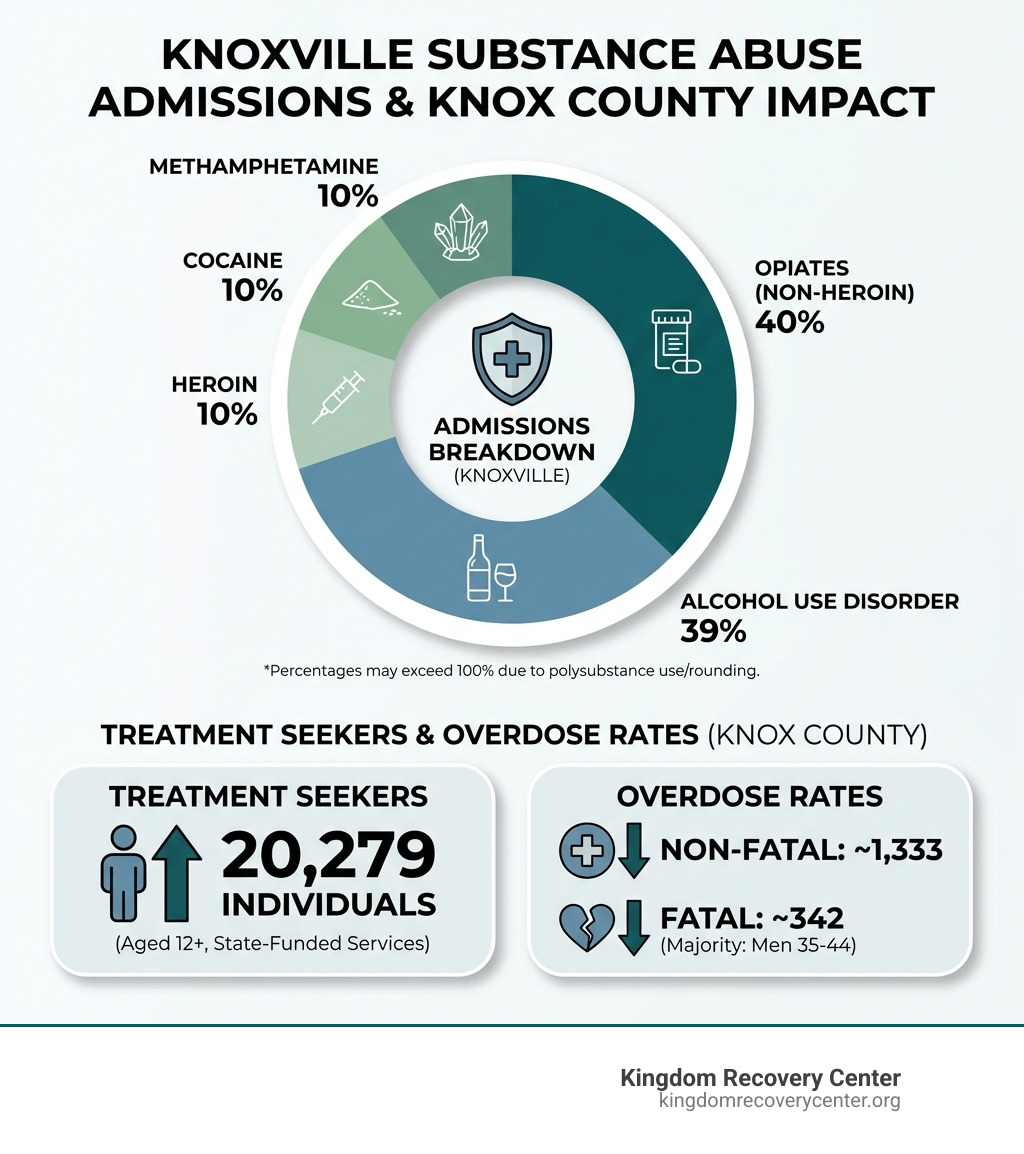
Knoxville and Knox County face significant substance abuse challenges. Approximately 20,279 individuals aged 12 or older are currently using state-funded treatment services in the region. The most common reasons people seek help are opioid addiction (40% of admissions) and alcohol use disorder (39% of admissions). The area has experienced roughly 1,333 non-fatal overdoses and 342 fatal overdoses, with the majority of deaths occurring among men aged 35-44.
These statistics reflect real people and families who need compassionate, evidence-based care. Recovery is absolutely possible with the right support.
At Kingdom Recovery Center, we’ve dedicated ourselves to providing holistic, personalized addiction treatment that addresses both substance use and mental health challenges. Our team brings experience in helping individuals throughout the Knoxville area steer their path to lasting recovery through comprehensive care that treats the whole person.
The Reality of Addiction in Knoxville
Addiction is a complex disease, not a moral failing, and its impact is deeply felt in communities across the nation, including our beloved Knoxville. We understand that seeing the statistics can be sobering, but they also highlight the urgent need for accessible and effective Knoxville drug rehabs. Let’s take a closer look at the local landscape.
In the Knoxville region and surrounding Knox County, the numbers tell a story of many individuals bravely seeking help. Approximately 20,279 individuals aged 12 or older have engaged with state-funded substance use disorder treatment and recovery services. This shows a community actively working towards healing. Among those receiving treatment, around 6,727 residents sought help for alcohol use disorder, while 6,887 individuals received treatment for marijuana dependency. These figures underscore that addiction takes many forms, and our treatment approaches must be equally diverse.
The opioid crisis, unfortunately, casts a long shadow over many parts of Tennessee. In Knoxville, we’ve seen 40% of all admissions into rehabs attributed to opiates other than heroin. Alcohol use disorders follow closely, accounting for 39% of admissions. Methamphetamine, cocaine, and heroin use each make up approximately 10% of admissions for alcohol and drug rehabs in Knoxville, TN. These statistics paint a clear picture of the primary substances driving individuals to seek professional help in our area.
Tragically, the consequences of substance abuse can be fatal. In Knoxville, there were approximately 1,333 non-fatal drug overdoses and a heartbreaking 342 fatal overdoses. The majority of these fatal overdoses occurred among males aged 35 to 44 years old. These are not just numbers; they represent brothers, fathers, sons, and friends whose lives were cut short. These figures serve as a powerful reminder of the life-saving potential of timely intervention and comprehensive addiction treatment.
At Kingdom Recovery Center, we believe that understanding these realities is the first step toward effective intervention. Our programs are designed to meet the specific needs of our community, offering hope and healing to those affected by these challenging statistics.
Recognizing the Signs: When to Seek Help for Addiction
It’s not always easy to recognize when a casual habit has spiraled into an addiction. Sometimes, the signs are subtle, creeping into daily life until they become undeniable. We often hear from families who express, “We just didn’t know what to look for.” That’s why understanding the common indicators is so crucial. If you or a loved one are exhibiting these signs, it might be time to consider professional help from Knoxville drug rehabs.
Addiction can manifest in various ways, affecting a person physically, behaviorally, and psychologically.
Physical Symptoms: These can be some of the most noticeable changes. You might observe:
- Sudden or dramatic weight loss or gain
- Dilated or constricted pupils
- Frequent nosebleeds or track marks on arms
- Neglect of personal hygiene (e.g., disheveled appearance, poor dental health)
- Unexplained health issues, tremors, or seizures
- Changes in sleep patterns, such as insomnia or excessive sleeping
Behavioral Changes: These often impact daily routines and relationships:
- Increased secrecy or dishonesty about activities
- Sudden changes in friends, hobbies, or usual hangouts
- Unexplained financial problems or stealing
- Legal troubles, like arrests for drug possession or DUI
- Missing work or school, or a significant drop in performance
- Becoming agitated or defensive when questioned about substance use
Psychological Indicators: The internal turmoil of addiction can be profound:
- Mood swings, increased irritability, or aggression
- Depression, anxiety, or paranoia
- Loss of interest in activities once enjoyed
- Feelings of guilt, shame, or hopelessness
- Difficulty concentrating or memory problems
- Rationalizing substance use or blaming others for problems
Neglecting Responsibilities: A hallmark of addiction is when substance use takes precedence over everything else. This could mean:
- Failing to meet deadlines at work or school
- Neglecting family duties or childcare
- Falling behind on bills or household chores
- Prioritizing getting and using the substance over all other obligations
Relationship Strain: Addiction rarely affects just one person; it ripples through families and friendships:
- Arguments with loved ones becoming more frequent or intense
- Withdrawal from social circles or isolating oneself
- Damaged trust with family members or partners
- Manipulative behavior to continue substance use
If you’re noticing these signs, please know that you’re not alone, and help is available. We’ve compiled more in-depth information on these topics through our resources:
Recognizing these signs is the brave first step towards recovery. We are here to support you in navigating the next steps.
A Guide to Knoxville Drug Rehabs and Treatment Levels
Navigating the landscape of addiction treatment can feel overwhelming, especially when you’re already carrying the weight of substance use disorder. But here’s the good news: Knoxville drug rehabs offer a comprehensive continuum of care, meaning there’s a treatment level designed to meet you exactly where you are on your recovery journey. We believe in finding the right fit for each individual, because a one-size-fits-all approach simply doesn’t work for something as personal as recovery.

Let’s explore the different levels of care available, typically moving from the most intensive to more flexible options:
Medically Supervised Detox
For many, the very first step toward recovery is safely managing withdrawal symptoms. This is where medically supervised detox comes in. It’s a critical stage, often lasting between 5-7 days, where individuals can safely rid their bodies of substances under constant medical supervision. Withdrawal can be incredibly uncomfortable, and for some substances like alcohol or benzodiazepines, it can even be life-threatening without professional oversight.
In a detox setting, medical professionals monitor vital signs, administer medications to alleviate severe withdrawal symptoms, and ensure the patient’s comfort and safety. This isn’t treatment in itself, but rather a crucial preparatory phase. Think of it as clearing the fog before you can truly see the path ahead. Our goal is to make this challenging initial phase as safe and comfortable as possible.
You can learn more about this vital first step through our resources:
Inpatient and Residential Programs
Once detox is complete, or for individuals who do not require detox but need a highly structured environment, inpatient and residential programs are often recommended. These programs provide 24/7 care in a facility, removing individuals from their daily triggers and allowing them to focus entirely on their recovery.
In an inpatient setting, you live at the facility, engaging in a full schedule of therapy, educational sessions, and recreational activities. This immersive environment fosters deep personal work and builds a strong foundation for sobriety. The average stay in such programs is typically between 25-35 days, but the length of treatment is always individualized based on clinical need. It’s an ideal option for those with severe addiction, co-occurring mental health disorders, or a history of relapse, offering a supportive community and round-the-clock professional guidance.
Find more about this intensive level of care:
Partial Hospitalization Programs (PHP)
Partial Hospitalization Programs (PHPs), sometimes called “Day Treatment,” offer a step-down from inpatient care. In a PHP, individuals receive intensive daily treatment, often 5-7 days a week for several hours a day, but they return home or to a sober living environment in the evenings. This allows for a blend of structured therapy and the opportunity to begin reintegrating into daily life with newfound coping skills.
PHPs are perfect for individuals who need a high level of clinical support but have a stable home environment and are ready for a bit more independence than residential care provides. It’s a bridge between the intensity of inpatient treatment and the flexibility of outpatient services.
Explore our PHP options and what they entail:
Intensive Outpatient Programs (IOP)
Intensive Outpatient Programs (IOPs) offer even more flexibility than PHPs. Clients attend therapy sessions several times a week for a few hours at a time, allowing them to maintain their work, school, or family responsibilities while still receiving vital support. IOPs typically involve group and individual therapy, focusing on relapse prevention, coping skills, and addressing underlying issues.
This level of care is suitable for individuals who have completed a higher level of care, have a strong support system, or whose addiction is less severe. It’s about empowering you to apply recovery principles in your everyday life, with the safety net of regular therapeutic guidance.
Learn how an IOP can support your journey:
Each of these levels plays a crucial role in the recovery process, and we are here to help you determine which path is best for your unique situation.
The Role of Specialized Treatment in Recovery
Addiction is rarely a standalone issue. Often, it’s intertwined with other mental health challenges, past traumas, or specific life circumstances. That’s why effective Knoxville drug rehabs understand the importance of specialized treatment approaches that address the whole person, not just the substance use.
Treating Co-Occurring Disorders: The Importance of Dual Diagnosis
It’s a common misconception that addiction occurs in isolation. In reality, many individuals struggling with substance use disorder also experience co-occurring mental health conditions such as anxiety, depression, PTSD, or bipolar disorder. This is known as a dual diagnosis, and it’s a critical factor in successful recovery. Ignoring one while treating the other is like trying to fix a leaky roof while the foundation is crumbling – it won’t lead to lasting stability.
At Kingdom Recovery Center, we specialize in integrated treatment for dual diagnosis. This means we treat both the substance use disorder and the co-occurring mental health condition simultaneously, recognizing that they often fuel each other. For example, someone might use alcohol to self-medicate anxiety, creating a vicious cycle. Our approach helps individuals understand the link between their mental health and addiction, providing strategies to manage both effectively.
We dig deeper into this connection in our resources:
By addressing these intertwined issues, we help individuals achieve more stable and sustainable recovery.
Evidence-Based Therapies Used in Knoxville Drug Rehabs
The foundation of effective addiction treatment lies in evidence-based therapies – approaches that have been scientifically proven to work. In Knoxville drug rehabs, you’ll find a variety of these therapeutic modalities custom to individual needs.
Some of the most common and effective therapies include:
- Cognitive Behavioral Therapy (CBT): This therapy helps individuals identify and change negative thought patterns and behaviors that contribute to substance use. It equips clients with coping skills to manage cravings and high-risk situations.
- Dialectical Behavioral Therapy (DBT): Often used for individuals with intense emotional dysregulation, DBT focuses on teaching skills in mindfulness, emotional regulation, distress tolerance, and interpersonal effectiveness.
- Group Therapy: A cornerstone of recovery, group therapy provides a supportive environment where individuals can share experiences, receive peer feedback, and develop social skills necessary for sobriety. It fosters a sense of community and reduces feelings of isolation.
- Individual Psychotherapy: One-on-one sessions with a therapist allow for personalized attention, deeper exploration of underlying issues, trauma processing, and development of a custom recovery plan.
We believe in the power of integrating these therapies for comprehensive healing:
- Understanding the Synergy of CBT and DBT in Recovery
- Key Benefits of Therapy in Addiction Rehabilitation
By utilizing these proven methods, we equip our clients with the tools and insights they need to build a life free from substance dependence.
Making Treatment Accessible: Costs, Insurance, and Legalities
One of the biggest concerns we hear from individuals and families seeking help is about the cost of treatment. We understand that financial worries can be a significant barrier. Fortunately, there are many avenues to make treatment accessible, and understanding your options is key. We also believe it’s important to be aware of the legal landscape surrounding substance use in Tennessee.

Paying for Knoxville Drug Rehabs
The cost of addiction treatment can vary widely depending on the type of program, its duration, location, and amenities. For example, residential treatment, which provides 24/7 care, will naturally be more expensive than an intensive outpatient program. According to research, without insurance, residential treatment can average around $16,373 for 3.25 months, while an intensive outpatient program averages $7,088 for 3 months. However, these numbers can be significantly reduced with insurance coverage.
The good news is that most major insurance plans now cover addiction treatment. Thanks to the Mental Health Parity and Addiction Equity Act, health insurers are required to cover substance use disorder treatment similarly to medical conditions. This means your insurance could cover a significant portion, sometimes 50-100% of the costs. For instance, with 80% insurance coverage, that $16,373 residential program could drop to approximately $3,275.
Beyond private insurance, other options exist:
- Medicaid and Medicare: These government programs often cover a range of addiction treatment services, especially for low-income individuals or those with disabilities.
- Sliding Scale Fees: Many Knoxville drug rehabs offer treatment based on a client’s ability to pay, adjusting costs according to income and family size.
- Payment Plans: Facilities may work with you to create a manageable payment schedule.
We are committed to helping you steer these options:
Don’t let cost deter you from seeking life-saving help. There are ways to make it work.
How to Verify Your Insurance Coverage
Verifying your insurance coverage for rehab services in Knoxville is a straightforward process, and our team is here to help make it as easy as possible. Most reputable treatment centers offer a free, confidential insurance verification service.
Here’s how it generally works:
- Online Verification Forms: Many rehab websites, including ours, provide an online form where you can submit your insurance information. This allows our admissions team to quickly check your benefits.
- Calling Admissions: You can directly call the admissions department of a treatment center. They will ask for your insurance provider, policy number, and date of birth. Our admissions counselors are experts at understanding complex insurance policies and can explain your coverage in simple terms.
- Information Needed: Be ready to provide your full name, date of birth, insurance company, policy number, and the subscriber’s name (if different from yours).
Once verified, we can give you a clear picture of what your plan covers, including deductibles, co-pays, and out-of-pocket maximums. We believe in transparency when it comes to financial matters, so you can make informed decisions.
For more details on insurance verification, check out these resources:
We want to remove as many barriers as possible so you can focus on what truly matters: your recovery.
Legal Considerations in Tennessee
Beyond the personal and financial aspects, it’s also helpful to be aware of certain legal considerations in Tennessee related to drug and alcohol use.
- DUI Consequences: Driving Under the Influence (DUI) laws in Tennessee are strict. A first-time DUI offender can face jail time, a driver’s license revocation for up to one year, and may be court-ordered to attend a drug and/or alcohol rehab program. This emphasizes the legal system’s recognition of addiction as a treatable condition.
- Tennessee Good Samaritan Law: This vital piece of legislation offers protection to individuals who seek medical attention for themselves or another person during an overdose on illegal substances. It shields them from arrest or prosecution for drug-related offenses and from civil lawsuits related to saving a life during a suspected overdose. This law encourages people to call for help without fear of legal repercussions, potentially saving lives.
- Naloxone Access: Naloxone (Narcan), a medication that can rapidly reverse an opioid overdose, is accessible in Tennessee with or without a prescription. You can purchase it over the counter or obtain it through anti-drug coalitions. There’s also free online training available for its administration, empowering more people to respond effectively to an overdose emergency.
- Court-Ordered Treatment: As mentioned with DUI laws, the judicial system sometimes mandates addiction treatment as part of sentencing or probation. While not always chosen voluntarily, court-ordered treatment can still be an effective pathway to recovery for many individuals.
These legal frameworks highlight Tennessee’s efforts to address substance abuse from both a public safety and public health perspective. For more information on treatment and recovery services supported by the state, you can visit:
Understanding these laws helps both individuals seeking help and those supporting them to steer the recovery journey more confidently.
Life After Rehab: Aftercare and Long-Term Sobriety
Completing a residential or intensive outpatient program is a monumental achievement, a huge step on the road to recovery. But we know that recovery doesn’t end when you leave the facility. In fact, it’s just beginning! Sustainable sobriety is a marathon, not a sprint, and effective aftercare planning is essential for long-term success.
At Kingdom Recovery Center, we emphasize that aftercare is not an afterthought; it’s an integral part of the treatment process. This phase focuses on equipping individuals with the tools and support systems needed to steer the challenges of daily life without returning to substance use.
Key components of comprehensive aftercare include:
- Relapse Prevention Planning: This involves identifying personal triggers, developing healthy coping mechanisms, and creating a detailed plan for what to do if cravings arise or challenging situations occur. It’s about being proactive, not reactive. You can explore more about this critical aspect:
- Sober Living Homes: For some, transitioning directly home might be too challenging. Sober living environments provide a safe, structured, and drug-free communal living space that supports continued sobriety while individuals rebuild their lives.
- Alumni Programs: Staying connected with your treatment center and peers who understand your journey can be incredibly empowering. Many Knoxville drug rehabs offer alumni programs, providing ongoing support, events, and a sense of belonging.
- Support Groups: These are invaluable resources for long-term recovery. Groups like Alcoholics Anonymous (AA) and Narcotics Anonymous (NA) offer peer support, shared experiences, and a structured path to maintaining sobriety through their 12-step programs. Other options like SMART Recovery also provide evidence-based, secular support.
We believe that building a strong network of support is crucial for life after rehab:
Here are some local Knoxville support group resources:
- Just for Today – United Methodist Church, 1620 N Central Str, Knoxville, TN 37919 (Daily 10:30 am – 12 noon)
- Noon Thirty – Martin Chapel United Methodist Church, 1746 Ohio Ave, Knoxville TN 37921 (Daily 12:30 pm – 1:30 pm)
- New Attitudes Group – Phyllis Wheatley YWCA, 124 S. Cruze Str, Knoxville TN 37915 (Sunday 12:30 pm = 1:30 pm)
- Primary Purpose – Faith Lutheran Church, 225 Jamestown Blvd, Knoxville TN 37934 (Tuesday and Thursday, 7:30 pm – 8:30 pm)
- Hope in da Hood – Fifth Ave Baptist Church, 2500 E Fifth Ave, Knoxville TN 3720 (Monday, Tuesday, Thursday, Friday, Saturday, 8 pm – 9 pm)
- Smart Recovery Online – Smart Recovery Online
- LifeRing Secular Recovery (Online) – LifeRing Secular Recovery (Online)
- Loosid (App) – Loosid (App)
Asking for help is a sign of strength, not weakness. These resources are designed to provide ongoing encouragement and practical strategies as you build a fulfilling, sober life.
Take the First Step Toward a New Life
The journey from addiction to recovery is deeply personal, often challenging, but always profoundly rewarding. We’ve walked alongside countless individuals in Knoxville, Johnson City, and across East Tennessee, witnessing their change and the rebuilding of their lives. We know, without a shadow of a doubt, that recovery is possible for you too.
At Kingdom Recovery Center, we are dedicated to providing client-centered, evidence-based addiction, mental health, and behavioral health treatment. Our specialized individualized care and dual diagnosis programs are designed to empower lasting change. We treat the whole person – mind, body, and spirit – offering hope for a brighter, healthier future.
If you or a loved one are struggling, professional help is key. Don’t let fear, shame, or uncertainty stand in the way of a new beginning. We are here to answer your questions, ease your concerns, and guide you every step of the way.
Your road to recovery starts with a single, courageous step. We invite you to explore our services and learn how we can support you.
Find the right rehab center in Knoxville for your needs
Ready to talk? We’re ready to listen.