Understanding Drug Rehab Options in McMinn County, TN
Drug Rehab McMinn County, TN offers critical services for individuals and families facing substance use disorders. If you’re seeking treatment in McMinn County, here’s what you need to know:
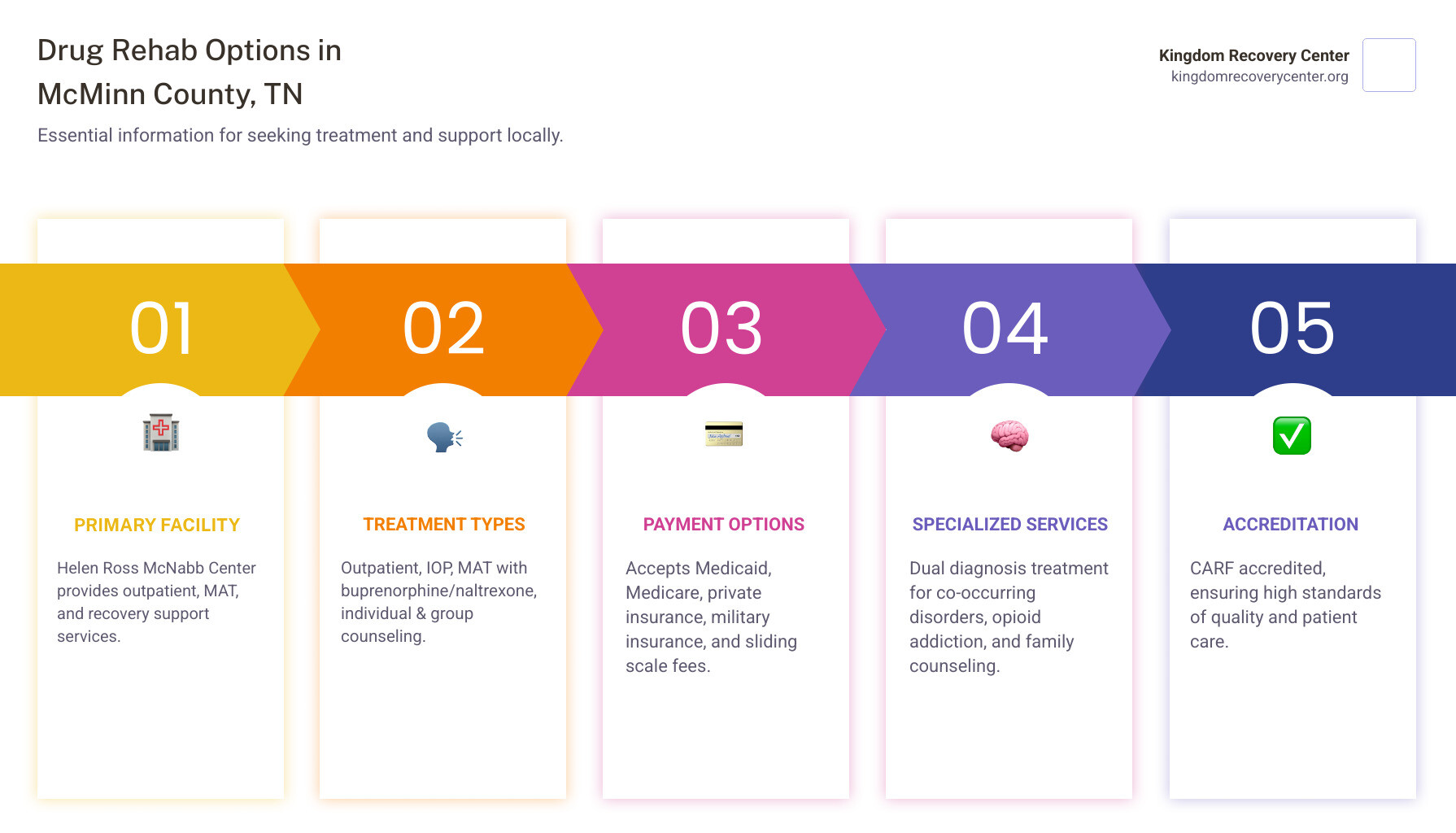
Quick Overview of Drug Rehab in McMinn County:
- Primary Facility: Helen Ross McNabb Center McMinn County Center in Athens provides outpatient treatment, medication-assisted treatment (MAT), and recovery support services
- Treatment Types Available: Outpatient programs, intensive outpatient (IOP), medication-assisted treatment with buprenorphine and naltrexone, individual and group counseling
- Payment Options: Medicaid, Medicare, private insurance, federal military insurance, and sliding scale fees
- Specialized Services: Dual diagnosis treatment for co-occurring mental health and substance use disorders, opioid addiction treatment, family counseling
- Accreditation: CARF (Commission on Accreditation of Rehabilitation Facilities) accredited
Substance use disorders affect communities across Tennessee, and McMinn County is no exception. According to state data, Tennessee experienced 3,814 drug overdose deaths in 2021, with opioid-related overdoses continuing to rise since 2013. In fact, more than 6.8 million painkiller prescriptions were written in Tennessee in 2017—exceeding the state’s entire population.
The impact on local communities is significant. With approximately 375,000 adults in Tennessee struggling with substance use disorders and 1 in 10 high school students misusing prescription drugs, the need for accessible, effective treatment has never been greater. Whether you’re dealing with alcohol addiction, opioid dependence, or co-occurring mental health challenges like anxiety or depression, seeking help is the first step toward lasting recovery.
At Kingdom Recovery Center, we understand the challenges facing individuals seeking Drug Rehab McMinn County, TN, and we’re committed to providing compassionate, evidence-based treatment that addresses both addiction and mental health needs. Our holistic approach combines proven therapies with personalized care to support your journey toward a healthier, more fulfilling life.
The Reality of Addiction in Our Community
Substance use disorder (SUD) is a complex and chronic disease that impacts millions of lives across the United States, and our beautiful state of Tennessee is certainly not immune. In McMinn County, like many other communities, we see the ripple effects of addiction on individuals, families, and the wider community. The good news is that with understanding, support, and the right resources, hope for recovery is not just a possibility—it’s a reality we help create every day.
The statistics paint a stark picture of the challenges we face, yet they also underscore the urgent need for comprehensive and accessible Drug Rehab McMinn County, TN services. We believe that by shedding light on these realities, we can better equip ourselves and our community to address the crisis head-on and foster an environment where recovery can truly flourish.
The Alarming Statistics
The opioid epidemic continues to be a significant concern across Tennessee. According to the 2021 National Survey on Drug Use and Health (NSDUH), a staggering 44.1 million American adults reported a substance use disorder in the past year. While alcohol remains the most commonly abused substance, with 29.5 million people aged 12 and older reporting alcohol abuse, the rise of opioid addiction is particularly devastating.
Approximately 70,000 Tennessee residents currently suffer from some type of opioid addiction. These aren’t just numbers; they represent our neighbors, friends, and family members struggling with powerful substances like hydrocodone, oxycodone, oxymorphone, methadone, and fentanyl. The tragic consequence of this epidemic is reflected in the rising number of drug overdose deaths in our state. According to the Tennessee Drug Overdose Data Dashboard, there were 3,814 drug overdose deaths and 7,008 nonfatal inpatient overdoses in 2021 alone. Opioid overdoses have sadly increased every year in Tennessee since 2013, with occurrences rising from 754 in 2013 to nearly 1,300 in 2017.
The impact extends beyond individual health. The Tennessee Bureau of Investigation (TBI) reports that 80% of crimes in the state each year are drug-related, highlighting the profound societal cost of addiction. Prescription drug misuse also plays a significant role in this crisis. In 2017, more than 6,879,698 painkiller prescriptions were written in Tennessee, exceeding the state’s total population for that year. Alarmingly, 1 in 10 high school students in Tennessee admit to misusing prescription drugs, compared to only 4% nationally. These statistics underscore how deeply addiction affects individuals, tearing at the fabric of families and communities by causing financial strain, legal troubles, and emotional distress.
For more detailed information on drug overdose deaths in Tennessee, you can visit the official Tennessee Drug Overdose Data Dashboard. For a broader understanding of national substance use trends, the 2021 National Survey on Drug Use and Health provides comprehensive data.
Recognizing the Need for Help
Sometimes, the signs that someone needs help with a substance use disorder can be subtle, but often they become increasingly apparent. Recognizing these indicators is the first crucial step toward intervention and seeking professional Drug Rehab McMinn County, TN services.
Here are some common signs that someone may need drug rehab:
- Behavioral Changes: This can include an inability to go a day without using the substance, constantly worrying about the next dose, finding less pleasure in activities they once enjoyed, hiding drug use, or engaging in risky behaviors to obtain drugs. There might be a noticeable shift in priorities, with drug-seeking becoming the central focus.
- Physical Symptoms: These vary depending on the substance but can include experiencing withdrawal symptoms when not using (like shaking, sweating, anxiety, nausea), significant changes in appetite or sleep patterns, unexplained weight loss or gain, poor hygiene, or dilated/constricted pupils. For alcohol addiction, signs might include cravings, blackouts, or physical dependence.
- Psychological Signs: Mood swings, increased irritability, anxiety, depression, paranoia, and a general change in personality are common. They might use alcohol or drugs to cope with problems, indicating a reliance on substances for emotional regulation.
- Neglecting Responsibilities: A person struggling with addiction may start to neglect work, school, or home responsibilities. This could manifest as frequent absences, declining performance, or failure to meet commitments.
- Relationship Strain: Addiction often leads to conflict with family and friends, isolation, and a breakdown of trust. They might face legal or financial issues directly related to their substance use.
If you observe these signs in yourself or a loved one, it’s a strong indicator that professional help is needed. Understanding these symptoms is vital for initiating the conversation about treatment. For a more comprehensive look at the indicators, our page on Signs of drug addiction provides further details.
Navigating Your Options for Drug Rehab in McMinn County, TN

Finding the right path to recovery can feel overwhelming, but understanding the various options for Drug Rehab McMinn County, TN can make the journey clearer. We offer a range of client-centered, evidence-based treatments designed to meet diverse needs.
Levels of Care in Addiction Treatment
Addiction treatment is not a one-size-fits-all solution; it involves a spectrum of care levels custom to an individual’s specific needs and the severity of their substance use disorder.
-
Medical Detox: This is often the first step in recovery, especially for those with significant physical dependence. Medical detox provides a safe, supervised environment where individuals can withdraw from substances under the care of medical professionals. This process helps manage uncomfortable and potentially dangerous withdrawal symptoms. Detox typically lasts from 3 to 7 days, depending on the substance and individual. Our page, Detox timelines, offers more insights into this critical phase.
-
Inpatient Residential Care: For individuals who require 24/7 support and a structured environment away from triggers, inpatient residential care is highly effective. These programs provide intensive therapy, medical supervision, and a supportive community. Residential rehab programs often last 28 days or longer, allowing for deep therapeutic work and skill-building for lasting recovery.
-
Partial Hospitalization Programs (PHP): PHP offers a high level of structured care, similar to inpatient, but allows clients to return home in the evenings. This is a great option for those who need intensive treatment but have a stable home environment. Our guide to Understanding PHP and IOP programs elaborates on this level of care.
-
Intensive Outpatient Programs (IOP): IOPs provide a flexible yet structured treatment option, allowing individuals to attend therapy sessions several times a week while maintaining their work, school, or family commitments. Intensive Outpatient Programs typically last 3 to 6 months.
-
Standard Outpatient Programs: This is the least intensive level of care, offering regular therapy sessions on a less frequent basis. It’s ideal for individuals transitioning from higher levels of care or those with milder substance use disorders who have strong support systems.
The choice between inpatient and outpatient care depends on many factors, including the severity of addiction, co-occurring mental health issues, and personal circumstances. For a detailed comparison, explore Outpatient vs Inpatient Rehab. In McMinn County, the Helen Ross McNabb Center offers valuable outpatient and intensive outpatient services, making these levels of care accessible locally.
Specialized Treatment Approaches
Effective Drug Rehab McMinn County, TN often incorporates specialized treatment approaches to address the multifaceted nature of addiction. At Kingdom Recovery Center, we pride ourselves on offering comprehensive, individualized care that includes these vital modalities.
-
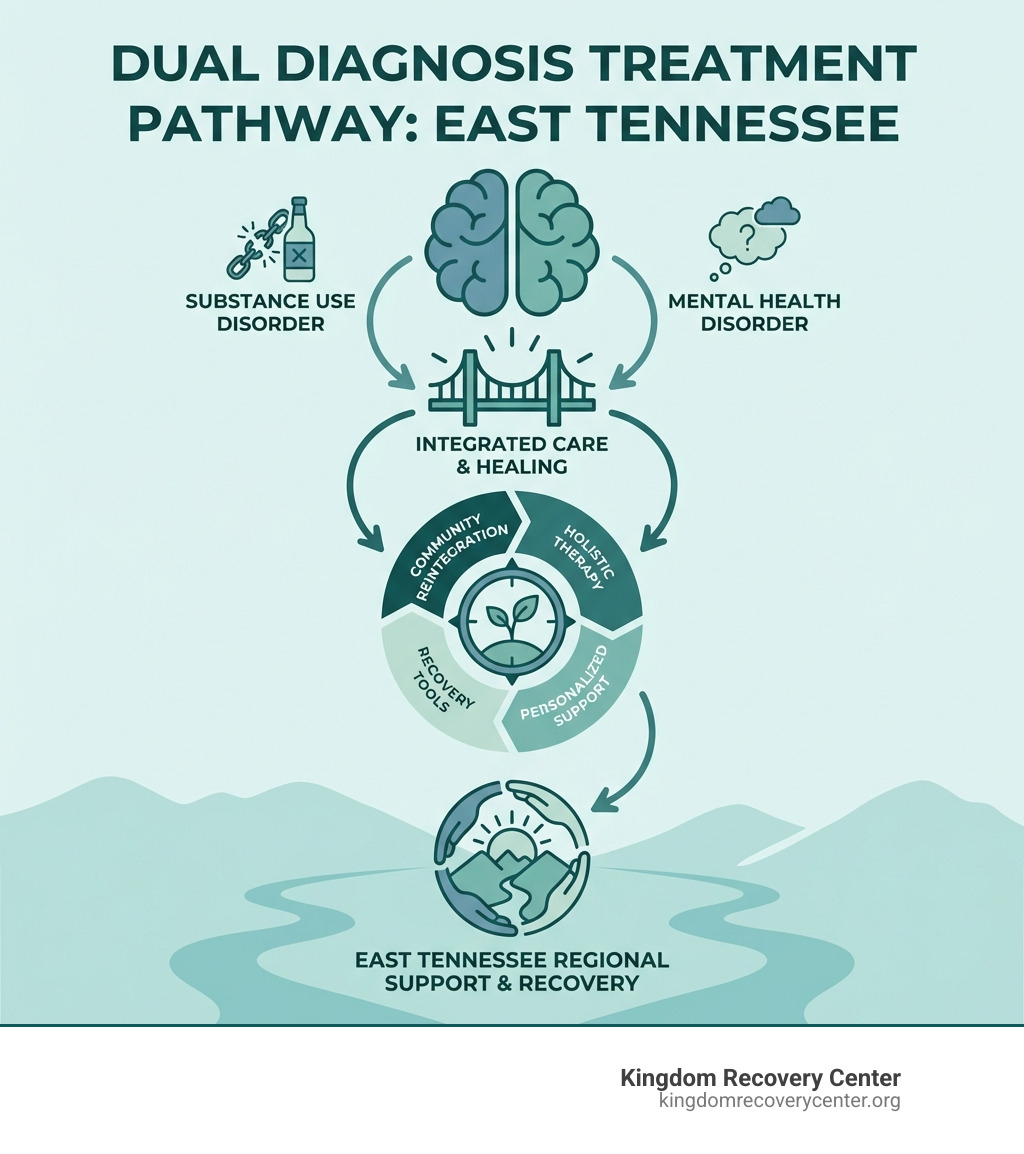
Dual Diagnosis Treatment: It’s a common misconception that addiction exists in a vacuum. In reality, a significant number of individuals struggling with substance use disorders also have co-occurring mental health conditions such as anxiety, depression, PTSD, or bipolar disorder. In fact, research indicates that two-thirds of individuals struggling with addiction also have co-occurring mental health needs, and approximately 50% of people with substance use disorders have dual diagnoses. Dual diagnosis treatment addresses both conditions simultaneously, recognizing that treating one without the other can hinder long-term recovery. The Helen Ross McNabb Center in McMinn County also offers integrated treatment for co-occurring mental health and substance use disorders, demonstrating the importance of this approach. Our dedicated page on Dual Diagnosis treatment provides more information.
-
Medication-Assisted Treatment (MAT): MAT combines FDA-approved medications with counseling and behavioral therapies to provide a “whole-patient” approach to treating substance use disorders, particularly opioid addiction. Medications like buprenorphine (often found in Suboxone®) and naltrexone help reduce cravings and withdrawal symptoms, making it easier for individuals to engage in therapy and focus on their recovery. MAT is an evidence-based practice that has proven highly effective in improving treatment outcomes. The Helen Ross McNabb Center McMinn County Center uses buprenorphine and naltrexone in its MAT programs, offering crucial support for those battling opioid dependence.
-
Evidence-Based Therapies: Our programs, and those at reputable facilities like the Helen Ross McNabb Center, are grounded in evidence-based therapies. These are treatment methods that have been rigorously tested and shown to be effective through scientific research. They form the backbone of our Comprehensive addiction treatment approach, ensuring that our clients receive the most effective care available.
The Role of Therapy in Recovery
Therapy is the heart of addiction recovery, providing individuals with the tools, insights, and coping mechanisms necessary to overcome substance use disorders and build a fulfilling life.
-
Cognitive Behavioral Therapy (CBT): CBT helps individuals identify and change negative thought patterns and behaviors that contribute to substance use. By understanding how thoughts, feelings, and actions are interconnected, clients learn to develop healthier responses to triggers and stressors.
-
Dialectical Behavior Therapy (DBT): DBT is particularly effective for individuals who struggle with intense emotions and self-destructive behaviors. It teaches skills in mindfulness, emotional regulation, distress tolerance, and interpersonal effectiveness, empowering clients to manage difficult situations without resorting to substance use.
-
Individual Counseling: One-on-one sessions with a therapist provide a private and confidential space for clients to explore the root causes of their addiction, process trauma, develop personal goals, and receive custom guidance throughout their recovery journey.
-
Group Therapy: Group sessions foster a sense of community and shared experience. Clients learn from each other, practice new social skills, and gain support from peers who understand their struggles. The Helen Ross McNabb Center McMinn County Center effectively uses individual, group, and family counseling in their treatment programs.
-
Family Counseling: Addiction affects the entire family system. Family counseling helps loved ones understand addiction, improve communication, set healthy boundaries, and heal strained relationships, creating a supportive environment for the individual in recovery.
The benefits of therapy in rehab are profound, extending beyond sobriety to foster overall mental wellness and personal growth. To learn more about how these therapeutic approaches work together, explore Benefits of therapy in rehab and Understanding CBT and DBT.
Key Factors in Choosing a Treatment Center

When seeking Drug Rehab McMinn County, TN, the decision of which center to choose is incredibly personal and significant. It’s about finding a place that aligns with your needs, values, and offers the best chance for lasting recovery. We believe in transparency and empowering you with the knowledge to make an informed choice.
Finding the Right Drug Rehab in McMinn County, TN
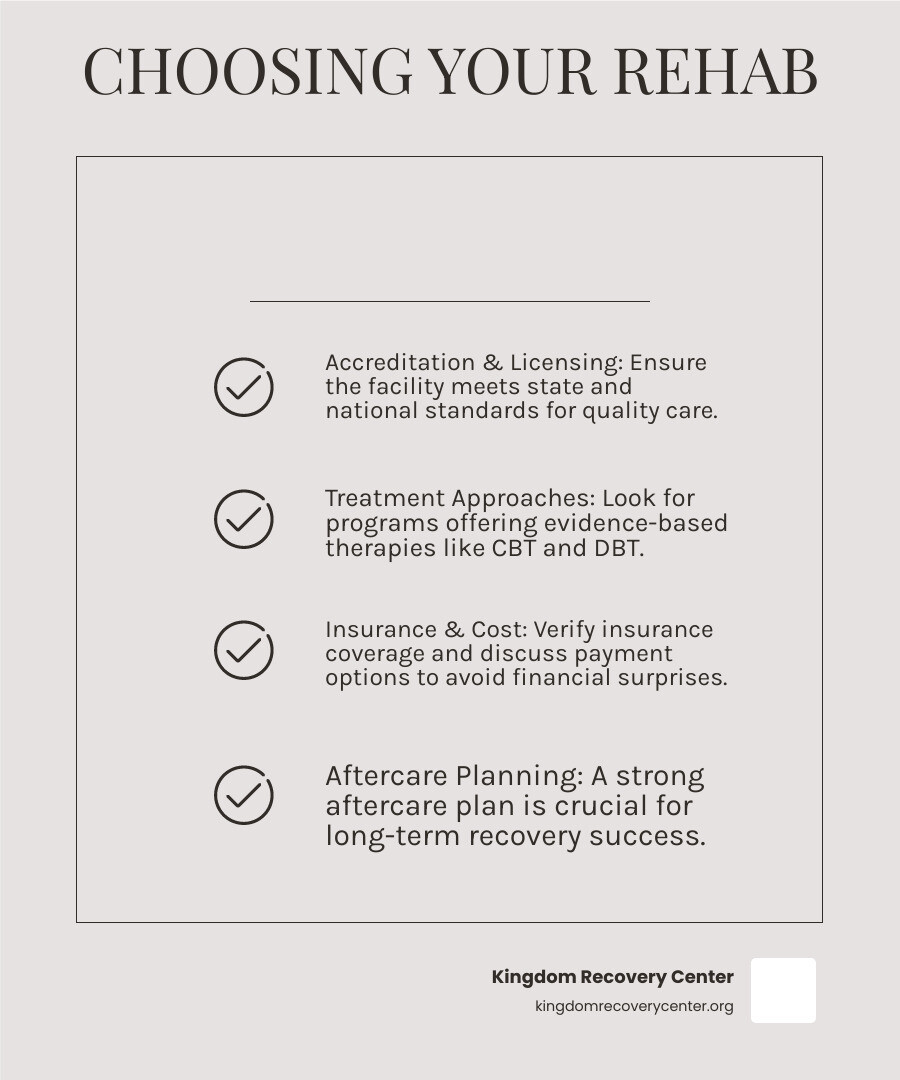
Selecting the right rehab center requires careful consideration of several key factors that contribute to effective treatment and long-term sobriety.
-
Accreditation: Look for centers that hold accreditations from reputable organizations, such as the Commission on Accreditation of Rehabilitation Facilities (CARF). Accreditation signifies that a facility meets rigorous standards for quality of care, safety, and ethical practices. The Helen Ross McNabb Center McMinn County Center, for example, holds CARF accreditation, assuring a certain level of quality.
-
Licensed Professionals: Ensure the treatment team consists of licensed and experienced professionals, including medical doctors, therapists, counselors, and support staff. Their expertise is crucial for providing evidence-based care.
-
Individualized Care Plans: Effective treatment is never one-size-fits-all. A quality rehab center will develop a personalized treatment plan that addresses your unique history, challenges, co-occurring disorders, and recovery goals. This client-centered approach is fundamental to what we do at Kingdom Recovery Center, as highlighted on our Client-centered treatment page.
-
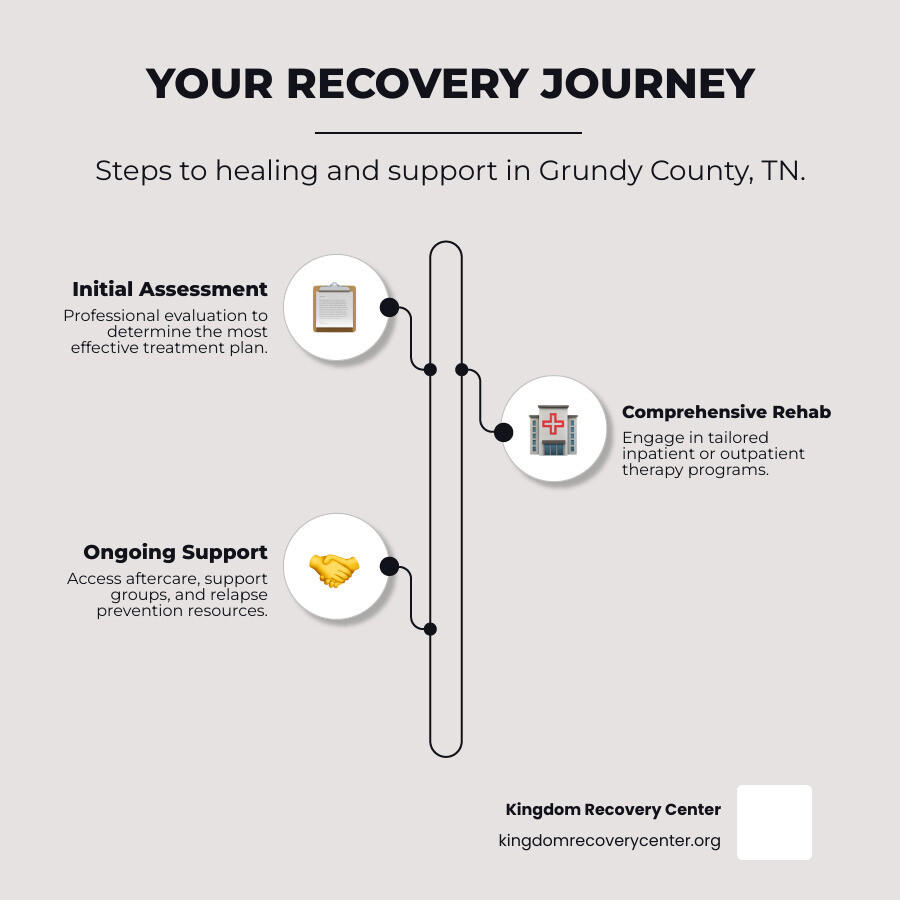
Aftercare and Relapse Prevention: Recovery is a lifelong journey, not just the duration of treatment. A good rehab program will include robust aftercare planning and relapse prevention strategies to support you once you leave the facility. This can include ongoing therapy, support groups, sober living arrangements, and community resources. The Helen Ross McNabb Center provides recovery support services like housing, coaching, employment counseling, and transitional services such as discharge planning and outcome follow-up, which are vital for sustained recovery.
For more guidance on what to look for, our page on Choosing the right recovery center offers valuable insights.
The Benefits of Local Treatment
While some people choose to travel for rehab, opting for a local Drug Rehab McMinn County, TN offers distinct advantages that can significantly improve the recovery process.
-
Community Support: Staying local allows you to maintain connections with your established support network of family, friends, and community members who can provide encouragement and accountability. This familiar support can be incredibly motivating.
-
Family Involvement: Local treatment makes it much easier for family members to participate in therapy sessions and educational programs. Family counseling, which the Helen Ross McNabb Center offers, is crucial for healing relationships and building a strong, supportive home environment.
-
Familiar Environment: Being in a familiar geographical area can reduce the stress of adjusting to a new place, allowing you to focus more fully on your recovery.
-
Easier Transition Post-Treatment: Returning to daily life after treatment can be challenging. A local rehab center can help you gradually re-integrate into your community, making the transition smoother and more sustainable.
-
Access to Local Aftercare Resources: Local facilities often have established connections with local support groups (like AA or NA), sober living homes, and other community resources that can continue to support your recovery journey. Embracing your local community can be a powerful force in maintaining long-term sobriety, as discussed further on our page about Embracing community in the journey of addiction recovery.
Costs and Payment Options for Drug Rehab in McMinn County, TN
Concerns about the cost of treatment should never be a barrier to seeking help. In McMinn County, as in other parts of Tennessee, various payment options are available to make Drug Rehab McMinn County, TN accessible.
-
Private Insurance: Most private health insurance plans offer coverage for addiction treatment. The extent of coverage can vary, so it’s always best to verify your specific benefits. Many facilities, including the Helen Ross McNabb Center, accept private health insurance.
-
Medicaid and Medicare: These government-funded programs often cover a significant portion, if not all, of addiction treatment costs, particularly for those who meet eligibility requirements. The Helen Ross McNabb Center McMinn County Center accepts both Medicare and Medicaid, making quality care accessible to many.
-
State-Funded Programs: Tennessee offers various state-funded programs and grants designed to help individuals access addiction treatment, especially for those without insurance or who are underinsured. These options are crucial for ensuring that financial constraints don’t prevent someone from getting the help they need.
-
Sliding Scale Fees: Some treatment centers offer sliding scale fees, which adjust the cost of services based on an individual’s income and ability to pay. This option ensures that high-quality care can be affordable. The Helen Ross McNabb Center is a non-profit organization that offers sliding scale payment options.
-
Self-Payment Options: For those without insurance or other funding, self-payment is an option. Centers often work with individuals to create manageable payment plans, or accept cash, credit/debit cards. It’s always best to discuss these options directly with the facility.
We understand that navigating insurance and payment can be complex. We encourage you to visit our Verifying your insurance coverage page, or contact us directly, to understand your options and ensure you can access the care you deserve.
Frequently Asked Questions about Addiction Recovery
We know you have questions, and we’re here to provide clear, compassionate answers to help you or your loved one begin the journey to recovery.
How long does drug rehab typically last?
The duration of drug rehab in McMinn County, TN, or anywhere else, is highly individualized and depends on several factors, including the severity of the addiction, the presence of co-occurring mental health disorders, the type of substance used, and the individual’s progress.
- Varies by individual: There’s no fixed timeline, as each person’s recovery journey is unique.
- 30, 60, 90-day programs: Many inpatient and residential programs offer these common durations. While a 30-day program can be a good starting point, research often suggests that longer lengths of stay correlate with better chances of sustained sobriety. Residential rehab programs often last 28+ days.
- Long-term care options: For some, particularly those with chronic addiction or complex co-occurring issues, long-term residential programs extending beyond 90 days may be recommended.
- Level of care dependency: As discussed earlier, detox typically lasts 3 to 7 days. Intensive Outpatient Programs (IOPs) usually range from 3 to 6 months. Standard outpatient programs can continue for much longer, sometimes for years, as part of ongoing aftercare.
The goal is always to provide enough time for individuals to stabilize, develop coping skills, address underlying issues, and build a strong foundation for lasting recovery. You can find more insights into specific durations, such as Detox timelines, on our website.
Are there free or low-cost drug rehab options in McMinn County, TN?
Yes, absolutely. We firmly believe that financial constraints should never prevent someone from accessing life-saving addiction treatment. In McMinn County and across Tennessee, there are several avenues for free or low-cost Drug Rehab McMinn County, TN options:
- Medicaid-accepting facilities: As mentioned, the Helen Ross McNabb Center McMinn County Center accepts Medicaid, which can cover the costs of outpatient treatment, MAT, and counseling services for eligible individuals.
- Government-funded programs: State and federal funding often support addiction treatment services. These programs might be directly offered by government agencies or disbursed to non-profit organizations to provide care. The Helen Ross McNabb Center also accepts Federal or government funding for substance use treatment programs.
- Non-profits: Many non-profit organizations, like the Helen Ross McNabb Center, are dedicated to providing affordable care to the community. They often have various funding sources and a mission to serve those in need, regardless of their ability to pay.
- Sliding scale payment options: A number of facilities offer treatment costs adjusted based on an individual’s income and family size, making care more affordable for those with limited financial resources.
We encourage you to explore our guide on Finding affordable rehabs in Tennessee for more information on how to access these vital resources. Don’t let cost deter you from seeking help; solutions are available.
How can I help a loved one struggling with addiction?
Helping a loved one through addiction can be one of the most challenging experiences, but your support can be a powerful catalyst for change. The key is to help without enabling, fostering an environment where recovery is possible.
Here’s how you can make a difference:
- Offer support without enabling: This is a delicate balance. Providing money without accountability might inadvertently support substance use. Instead, offer practical help that directly supports recovery, such as paying for a necessary utility bill, providing transportation to therapy sessions, or researching treatment options.
- Encourage professional help: Addiction is a disease that requires professional treatment. Gently but firmly encourage your loved one to seek help from a qualified Drug Rehab McMinn County, TN center. You can offer to assist with finding a facility or making initial contact.
- Set healthy boundaries: Establishing clear, consistent boundaries is crucial for both your well-being and your loved one’s recovery. Communicate what you will and will not tolerate, and stick to these boundaries. This might include refusing to cover up for their behavior or providing financial assistance that could be used for substances.
- Educate yourself on addiction: Understanding addiction as a disease, rather than a moral failing, can help you respond more effectively and with greater empathy. Learn about the nature of the specific substance they are using and the recovery process.
- Practice self-care: Supporting someone with an addiction can be emotionally draining. It’s vital to take care of your own mental and emotional health. Seek support for yourself through family support groups (like Al-Anon or Nar-Anon) or individual counseling.
While you can offer support and resources, the decision to seek and commit to recovery ultimately belongs to your loved one. Your consistent, loving support, coupled with healthy boundaries, can significantly increase their chances of choosing and maintaining sobriety. Our page on Supporting a loved one’s recovery offers more in-depth guidance.
Your Path to Recovery Starts Today
The journey to lasting recovery from substance use disorder is a testament to resilience, courage, and the power of dedicated support. In McMinn County, TN, and across East Tennessee, we want you to know that hope and healing are not just possibilities – they are within your reach.
At Kingdom Recovery Center, we are more than just a treatment facility; we are your partner in this transformative journey. Our client-centered care means that your unique needs, experiences, and goals are at the forefront of your treatment plan. We combine evidence-based practices with a compassionate, individualized approach to address not only addiction but also any co-occurring mental health challenges you may face.
Taking the first step can be daunting, but it’s the most courageous act you can make towards reclaiming your life. If you or a loved one are seeking Drug Rehab McMinn County, TN, we are here to guide you with understanding and expertise. Let us help you find the peace and sobriety you deserve.
Begin your journey with Drug Rehab in East Tennessee today, and let’s walk this path to a brighter, healthier future together.