
Why Understanding Alcohol Detox and Rehab Matters
Alcohol detox and rehab are the foundational steps toward lasting sobriety for anyone struggling with alcohol use disorder. Here’s what you need to know:
Quick Overview:
- Detox is the first phase where your body clears alcohol and manages withdrawal symptoms (typically 4-10 days).
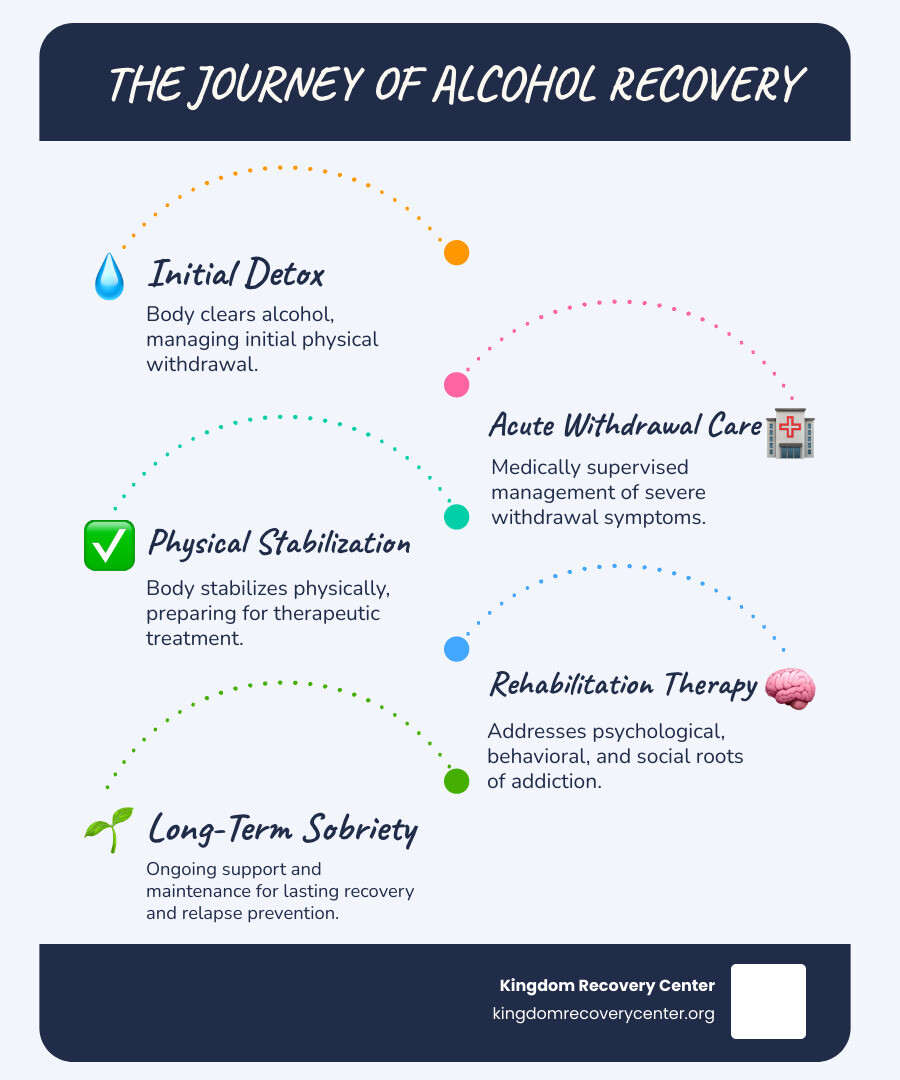
- Rehab follows detox and addresses the psychological, behavioral, and social aspects of addiction through therapy and support.
- Medical supervision is crucial during detox due to potentially life-threatening withdrawal symptoms like seizures and delirium tremens.
- Treatment works: Less than half of people relapse after one year of sobriety, and that drops to less than 15% after five years.
The journey from alcohol dependence to recovery can feel overwhelming, and roughly 95% of Americans with alcohol use disorder don’t feel they need treatment. However, alcohol detox and rehab are proven medical interventions that save lives.
Detoxification is the physical stabilization process where your body eliminates alcohol. While uncomfortable, it’s safe with medical care. Withdrawal symptoms can range from mild anxiety to severe complications like seizures, making unsupervised detox dangerous.
Rehabilitation follows detox, addressing the root causes of drinking, building coping skills, and creating a life without alcohol. Treatment is not one-size-fits-all, with options ranging from 24/7 residential care to flexible outpatient programs.
At Kingdom Recovery Center in Tennessee, we guide individuals through comprehensive alcohol detox and rehab. Our holistic, evidence-based approach combines medical care with compassionate, customized support, addressing both physical withdrawal and the underlying drivers of addiction to build a foundation for lasting recovery.
The road ahead requires courage, but you don’t have to walk it alone. Let’s explore the treatment process and how it can transform your life.
The First Step: Understanding Alcohol Detoxification
Detoxification, or detox, is the essential first step in recovery. It involves medical interventions to manage withdrawal symptoms as alcohol leaves the body. While critical, detox is not a standalone treatment; it prepares you for the deeper work of rehabilitation.
Consistent alcohol use creates physical dependence. As a central nervous system (CNS) depressant, alcohol slows brain activity. The CNS adapts by working harder to function normally. When alcohol is removed, the overexcited CNS causes uncomfortable and potentially dangerous withdrawal symptoms.
Due to the unpredictable nature of these symptoms, medically supervised detox is crucial. At Kingdom Recovery Center, we provide a safe environment to manage withdrawal, helping you transition smoothly into the next stages of recovery. For a deeper dive, explore our page on Understanding Drug and Alcohol Detox: Withdrawal Symptoms Explained.
Alcohol Withdrawal Symptoms and Timeline
Understanding the withdrawal timeline is vital, though experiences vary based on factors like the duration of alcohol use, age, and overall health.

Here’s a general timeline of what to expect:
- First 6-12 Hours: Early symptoms like headache, anxiety, insomnia, sweating, nausea, and tremors may begin. Increased heart rate and blood pressure can also occur.
- 12-24 Hours: Symptoms can intensify, including poor concentration and gastrointestinal issues. Hallucinations may occur in some cases.
- 24-72 Hours: This is the peak of withdrawal severity. Symptoms can include confusion, high heart rate and blood pressure, and fever. The risk of seizures is highest during this time, and delirium tremens (DTs), a life-threatening condition, may begin.
- 4-5 Days and Beyond: Acute symptoms usually subside by day seven. Psychological symptoms like insomnia and anxiety can persist for weeks or months, a condition known as Post-Acute Withdrawal Syndrome (PAWS).
Our team at Kingdom Recovery Center provides continuous monitoring throughout this period. For more information, visit our pages on Alcohol Withdrawal and The Journey of Drug and Alcohol Detox During Withdrawal.
The Risks of Alcohol Withdrawal: Why Medical Supervision is Crucial
Detoxing from alcohol without medical supervision is extremely dangerous. One of the most severe complications is Delirium Tremens (DTs). Affecting about 5% of withdrawal cases, it’s a medical emergency appearing 48-72 hours after the last drink, with symptoms like severe confusion, hallucinations, and seizures. Without medical care, DTs can be fatal.
Seizures are another critical risk, especially for those with a history of heavy use. They can occur unexpectedly within the first 48 hours. Other risks include:
- Severe Dehydration from vomiting and diarrhea.
- Cardiac Complications, including heart attacks or arrhythmias.
- Worsened Co-occurring Health Conditions, with higher risk for those over 65.
Roughly 10% of people in detox experience severe symptoms, which can start suddenly. This unpredictability is why medical supervision is a necessity. Our medically assisted detox programs provide 24/7 monitoring and use medications to ensure a safe transition. Learn more on our Medically Assisted Detox: Ensuring a Smooth Transition page.
How Long Does Alcohol Detox Take?
The duration of alcohol detox varies, but acute physical withdrawal typically lasts 4 to 10 days. Several factors make each journey unique:
- Amount and Duration of Use: Heavy, prolonged drinking usually leads to a longer, more intense withdrawal.
- Age and Overall Health: Older adults and those with underlying health issues may have a more complicated detox.
- History of Previous Withdrawals: Repeated detoxes can lead to more severe symptoms over time (a phenomenon called “kindling”).
- Body Chemistry and Metabolism: Individual physiology affects how quickly the body processes alcohol.
- Coexisting Mental Health Conditions: Depression or anxiety can worsen withdrawal symptoms.
After the first week, many experience Post-Acute Withdrawal Syndrome (PAWS), a cluster of symptoms that can last for weeks or months. These include:
- Mood swings and irritability
- Anxiety and depression
- Sleep disturbances
- Difficulty concentrating
- Low energy and fatigue
- Intense cravings
PAWS is a normal part of recovery, highlighting why ongoing support and comprehensive rehabilitation are vital after detox. At Kingdom Recovery Center, we tailor our approach to support you through every stage. For more information, visit How Long Does Detox Take? Insights on Substance Duration.
The Path Forward: Comprehensive Alcohol Rehabilitation
After detox clears the body of alcohol, the true work begins: comprehensive alcohol rehabilitation. This phase moves beyond physical stabilization to address the underlying psychological issues of addiction, helping individuals build a foundation for a life free from alcohol.
Rehab focuses on the psychological, emotional, and behavioral aspects of addiction. The goal is not just to stop drinking but to build a fulfilling life in sobriety by understanding triggers and learning new coping skills. This includes:
- Addressing Root Causes: Exploring past traumas, mental health conditions, and behavioral patterns.
- Psychological Healing: Engaging in therapies to build self-esteem and a healthier self-image.
- Relapse Prevention: Learning strategies to manage cravings and avoid high-risk situations.
At Kingdom Recovery Center, our programs facilitate this crucial transition from detox to rehab. We offer individualized treatment plans to prepare you for a sustainable recovery path. Find out more on our Transitioning from Detox: Preparing for Your Recovery Path page, and explore our Comprehensive Addiction Treatment services.
Levels of Care: Inpatient vs. Outpatient Rehab
Choosing the right level of care for alcohol rehab is a key decision based on addiction severity, living situation, and medical needs. We offer various options to suit your journey.
Here’s a comparison of the primary levels of care:
| Feature | Inpatient (Residential) Rehab | Outpatient Rehab |
|---|---|---|
| Environment | 24/7 supervised, structured, alcohol-free living environment | Live at home, attend scheduled sessions, maintain daily life |
| Intensity | Highly intensive, daily therapy and activities | Flexible, varying intensity (Standard, IOP, PHP) |
| Ideal For | Severe AUD, unstable home environment, co-occurring disorders | Mild-to-moderate AUD, stable home, strong support system, work/school commitments |
| Medical Care | On-site medical staff, continuous monitoring | Access to medical care as needed, less direct supervision |
| Focus | Immersive healing, removal from triggers, foundational change | Skill-building, relapse prevention, integrating recovery into daily life |
| Duration | Typically 30, 60, or 90 days, sometimes longer | Varies widely: 3-6 months for standard, 8-12 weeks for IOP |
Inpatient (Residential) Rehab offers a 24/7 structured, trigger-free environment. It’s ideal for severe alcohol dependence or unstable home situations, providing round-the-clock support and intensive therapy.
Outpatient Rehab provides flexibility, allowing you to live at home while attending therapy. It’s suitable for mild-to-moderate AUD with a strong support system and daily commitments. Different intensities are available:
- Intensive Outpatient Programs (IOPs): Require at least 9 hours of therapy per week over 3-5 days, offering comprehensive care with more independence.
- Partial Hospitalization Programs (PHPs): More intensive than IOPs, requiring at least 20 hours of treatment per week, providing day-time hospital-level care.
Our team at Kingdom Recovery Center can help you determine the best fit. For a detailed comparison, read our guide on Outpatient vs Inpatient Rehab: Which is Best for You?.
Therapies and Medications Used in Alcohol Rehab
Effective alcohol rehab combines evidence-based therapies and medications to support long-term recovery, addressing both the behavioral and physiological aspects of AUD.

Behavioral Therapies: These are the cornerstone of rehab, helping individuals change problematic thought patterns and behaviors.
- Cognitive Behavioral Therapy (CBT): Helps you identify triggers for alcohol use and learn healthier coping strategies to manage them. Learn more on our Cognitive Behavioral Therapy page.
- Dialectical Behavioral Therapy (DBT): Teaches skills in mindfulness, emotional regulation, distress tolerance, and interpersonal effectiveness, which is helpful for those who struggle with intense emotions. Find out more about Dialectical Behavioral Therapy.
- Family Counseling: Addiction impacts the entire family. This therapy helps heal relationships, improve communication, and build a supportive home environment for recovery.
Medications for Alcohol Use Disorder (AUD): Specific non-addictive, FDA-approved medications can support long-term sobriety by reducing cravings or deterring alcohol use.
- Naltrexone: Reduces alcohol cravings and blocks the pleasurable effects of alcohol.
- Acamprosate: Helps maintain abstinence by reducing negative symptoms like anxiety and sleep disturbances.
- Disulfiram: Causes unpleasant physical reactions when alcohol is consumed, acting as a deterrent.
Our multidisciplinary teams are skilled in delivering personalized care. We offer a range of Therapies to support your journey.
Building a Foundation for Lasting Sobriety
Maintaining sobriety after treatment requires ongoing effort and a strong foundation. This aftercare stage is crucial for preventing relapse and living a fulfilling life. Recovery is a marathon, not a sprint, and we provide the skills and support for this long-term journey.
Encouragingly, long-term sobriety rates improve significantly over time. Less than half of people relapse after one year of sobriety, and this drops to less than 15% after five years. This highlights the importance of commitment and continuous support.
Building a robust support system and engaging in aftercare are integral to lasting sobriety. At Kingdom Recovery Center, we emphasize these elements to empower you for a successful recovery. To understand more, visit Understanding the Need for Support in Addiction Recovery.
The Role of Counseling and Support Groups
Counseling and support groups are indispensable for long-term recovery, providing the emotional and social support needed to steer sobriety.
- Individual Therapy: Private sessions with a therapist to explore personal issues, develop coping strategies, and address co-occurring conditions.
- Group Therapy: Provides a sense of community and shared experience with peers, reducing isolation and fostering accountability.
- Peer Support: Connecting with others in recovery provides empathy, encouragement, and practical advice outside of formal therapy.
Mutual Support Groups are a cornerstone of recovery, offering diverse approaches to find the right fit:
- 12-Step Programs: Alcoholics Anonymous (AA) offers a structured, spiritual path to recovery.
- Non-12-Step Groups: Options like SMART Recovery, LifeRing, and Women for Sobriety provide secular or evidence-based frameworks for self-empowerment.
- Family Support Groups: Al-Anon and SMART Recovery Family & Friends offer crucial support for loved ones, helping them cope and set healthy boundaries.
Our team can help guide you toward appropriate resources. Learn more on our Treatment for Alcohol Problems page.
Addressing Co-Occurring Disorders (Dual Diagnosis)
Alcohol use disorder (AUD) rarely exists in isolation. Many people also have co-occurring mental health conditions, known as a dual diagnosis. Addressing this is a critical part of effective alcohol detox and rehab.
Millions of adults with AUD also suffer from conditions like depression, anxiety, or trauma. These disorders often feed into each other, with alcohol used to self-medicate symptoms, which in turn worsens mental health.
At Kingdom Recovery Center, we specialize in dual diagnosis treatment, addressing both addiction and mental health conditions simultaneously for effective recovery. Our integrated approach ensures:
- Comprehensive Assessment: We conduct thorough evaluations to identify all co-occurring conditions.
- Integrated Treatment Plan: Your plan addresses both your alcohol use and mental health needs concurrently.
- Specialized Care: Our multidisciplinary team includes professionals trained in both addiction and mental health.
Ignoring a co-occurring condition can undermine recovery, as untreated mental health symptoms can trigger relapse. By addressing these issues together, we empower you to achieve more stable, long-lasting sobriety. Explore our pages on Dual Diagnosis and our Mental Health Treatment Tennessee Guide to learn more.
Navigating the Practicalities of Alcohol Detox and Rehab
Recognizing the need for help is the first step. The path to care involves practicalities like overcoming stigma and finding a quality program. We can guide you through these important decisions.
It’s natural to feel overwhelmed, but Alcohol Use Disorder (AUD) is a common medical condition, not a character flaw. Overcoming the stigma is crucial to seeking the help you deserve.
Finding quality care involves understanding what effective treatment looks like. The NIAAA offers an excellent resource to help you find the right support: NIAAA Alcohol Treatment Navigator®—How to Find Quality Alcohol Treatment.
Signs You or a Loved One May Need Help
Recognizing the signs of an alcohol use disorder (AUD) is the first step toward getting help. AUD involves an inability to control alcohol use despite negative consequences and is classified as mild, moderate, or severe based on the number of symptoms.
Here are key signs that indicate a need for treatment:
- Impaired Control:
- Drinking more, or for longer, than intended.
- Wanting to cut down or stop drinking but being unable to.
- Spending a lot of time drinking or recovering from it.
- Having strong urges or cravings to drink.
- Social Problems:
- Continuing to drink despite causing problems with family or friends.
- Giving up important activities because of alcohol use.
- Risky Use:
- Drinking in physically hazardous situations (e.g., driving).
- Continuing to drink despite it worsening a health problem.
- Health Consequences:
- Developing a tolerance (needing more to get the same effect).
- Experiencing withdrawal symptoms when alcohol wears off.
- Neglecting Responsibilities:
- Failing to fulfill major obligations at work, school, or home.
If these signs are present, it’s time to consider professional help. Early intervention improves outcomes. We provide comprehensive support for What We Treat: Alcohol Abuse.
How to Choose the Right Alcohol Treatment Program
Choosing the right alcohol treatment program is a personal decision that impacts recovery success. Consider these factors to find the best fit:
- Accreditation: Look for accreditations from bodies like the Joint Commission, which indicate high standards of care.
- Evidence-Based Practices: The program should use research-backed therapies like CBT and DBT.
- Individualized Care Plans: A quality program creates a custom plan for your specific needs. This is central to our philosophy at Kingdom Recovery Center.
- Staff Qualifications: The team should be multidisciplinary, experienced, and qualified, including doctors, therapists, and counselors.
- Dual Diagnosis Specialization: If you have a co-occurring mental health condition, choose a program specializing in dual diagnosis, like Kingdom Recovery Center.
- Location and Environment: Consider the facility’s location and atmosphere. A supportive environment is essential. Our Alcohol Rehab Franklin TN program, for example, provides a healing environment.
When you’re ready, ask detailed questions about the program’s approach, patient expectations, and how success is measured.
Does Insurance Cover Alcohol Detox and Rehab?
Cost is a common concern when seeking alcohol detox and rehab. The good news is that insurance often makes treatment accessible.
- Affordable Care Act (ACA): The ACA mandates that most health insurance plans cover mental health and substance use disorder treatment as essential health benefits.
- Verifying Benefits: Coverage varies by plan. It’s crucial to verify your benefits with your provider or let us help you through our Insurance Verification service.
- In-Network vs. Out-of-Network: In-network facilities typically offer better coverage, but out-of-network options may still be available at a higher cost.
- Public vs. Private Insurance: Many people use public or private insurance for treatment. Over 30% of individuals in treatment for alcoholism use insurance to pay for it.
- Payment Options: If insurance is limited, many facilities offer payment plans, sliding scale fees, or help finding other funding.
At Kingdom Recovery Center, we believe financial barriers shouldn’t prevent anyone from getting help. We work with a variety of insurance providers to help you steer the financial aspects of treatment. For more information, visit our Coverage for Addiction Treatment page.
Frequently Asked Questions about Alcohol Treatment
It’s natural to have many questions when considering alcohol detox and rehab. Here, we address some of the most common inquiries.
How do I know if I need medical detox?
Medical detox is recommended if you’ve been drinking heavily or for a long time. Alcohol withdrawal can be dangerous, with risks of seizures or delirium tremens (DTs). A medical professional can assess your risk and create a safe detox plan. Never attempt to detox alone if you have a moderate to severe alcohol dependence.
Is relapse a sign of failure?
No, relapse is not a failure but a common part of the recovery process for a chronic disease. It’s an opportunity to learn, identify new triggers, and adjust your recovery plan. Sustained recovery is highly achievable, with relapse rates dropping significantly after one and five years of sobriety. If a relapse happens, reach out to your support system immediately.
Can I be forced into rehab?
Generally, adults cannot be forced into rehab. However, some states have involuntary commitment laws that can be used if a person is a danger to themselves or others. Lasting recovery is most successful with personal motivation, but family interventions can often encourage someone to seek help voluntarily.
Your Journey to Recovery Starts Today
Starting the journey of alcohol detox and rehab is a courageous, life-altering decision. It’s a path to renewed purpose, health, and happiness. We’ve seen how detox is the vital first step, followed by comprehensive rehab that addresses underlying issues and equips you with tools for relapse prevention.
Long-term support, from counseling to dual diagnosis care, is key to sustained sobriety. At Kingdom Recovery Center, we provide client-centered, evidence-based treatment to empower lasting change. We are ready to support you across Tennessee, including in Knoxville, Morristown, and Johnson City.
A hopeful future, free from the grip of alcohol, is not just a dream—it’s a tangible reality waiting for you. Take that brave first step today. We are here to walk alongside you, offering compassion, expertise, and a clear path forward.
Begin your recovery journey at our Alcohol Detox in Knoxville