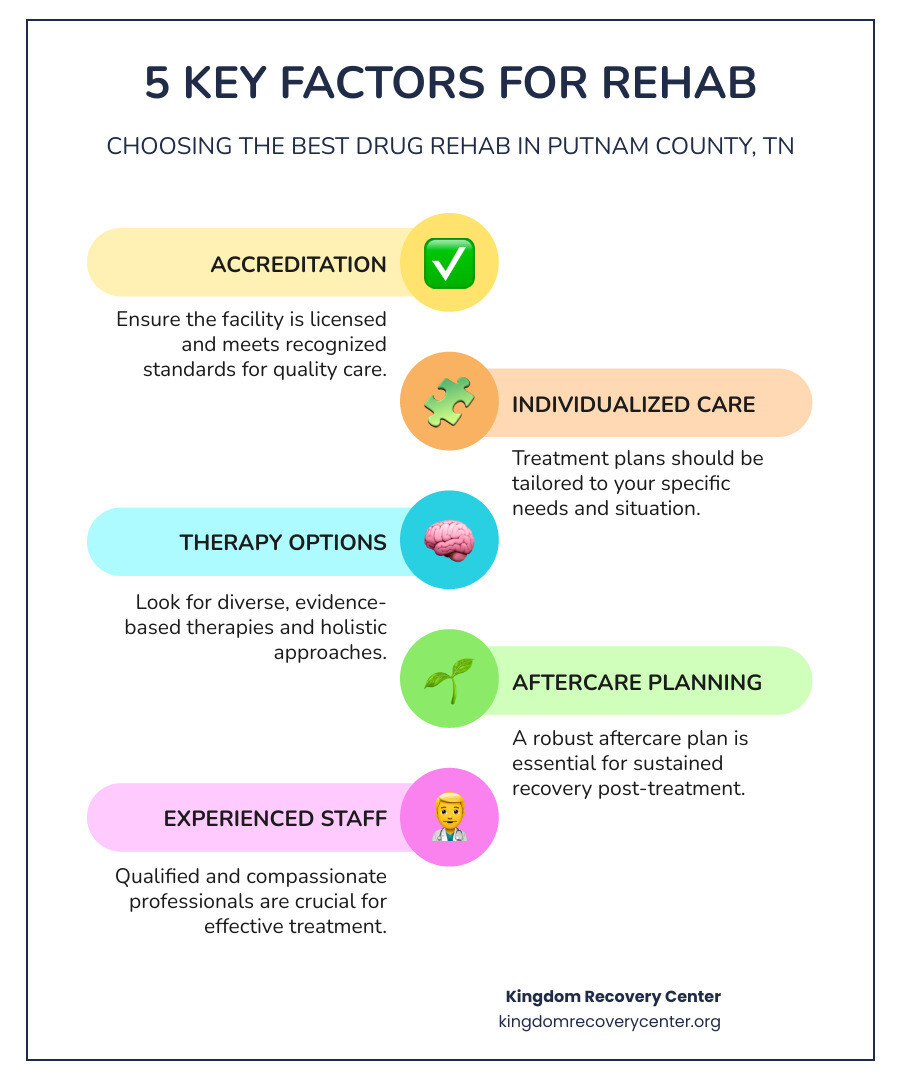
Why Choosing the Right Drug Rehab Can Save Your Life
Drug Rehab Putnam County, TN offers multiple treatment options for individuals battling addiction, but finding the right fit requires careful consideration of several key factors:
Quick Guide to Finding the Right Drug Rehab:
- Level of Care – Medically supervised detox, inpatient residential, or outpatient programs (IOP/PHP)
- Specialized Treatment – Programs for specific addictions (opioids, alcohol, meth, fentanyl)
- Mental Health Support – Dual diagnosis care for co-occurring disorders like anxiety and depression
- Evidence-Based Therapies – CBT, DBT, group and individual counseling
- Insurance & Cost – Coverage verification, sliding scales, state-funded options
- Aftercare Services – Relapse prevention, sober living, ongoing support
Putnam County faces a serious substance abuse crisis. In 2022 alone, 29 residents died from drug overdoses, and the opioid overdose death rate reached 17.2 per 100,000 residents in 2020. These statistics aren’t just numbers—they represent families torn apart, careers destroyed, and lives lost. The right treatment center can make the difference between relapse and lasting recovery.
Choosing a rehab isn’t about finding the most expensive facility or the one closest to home. It’s about matching your unique needs—whether that’s medically supervised detox, specialized opioid treatment, or dual diagnosis care for addiction and mental health—with a program that has the expertise, accreditation, and compassionate staff to guide you toward sobriety.
At Kingdom Recovery Center, we understand the challenges of finding quality Drug Rehab Putnam County, TN services because we’ve helped countless individuals from the region achieve lasting recovery through personalized, evidence-based care. This guide will walk you through the 10 most important factors to consider when choosing a rehab program, so you can make an informed decision that sets you up for long-term success.
Understanding the Substance Abuse Crisis in Putnam County
The opioid epidemic and broader substance abuse crisis continue to cast a long shadow over communities across the nation, and Putnam County, Tennessee, is no exception. The statistics paint a stark picture of the local impact, underscoring the urgent need for accessible and effective treatment options.
In 2022, Putnam County tragically reported 29 deaths due to drug overdose. This isn’t just a number; it represents 29 families struggling with unimaginable loss, 29 stories cut short. Looking back slightly, in 2020, the opioid overdose death rate in Putnam County was 17.2 per 100,000 residents. The problem persists, with Putnam County reporting 21 opioid overdose deaths in 2021. Furthermore, in 2009, 13.1% of adults were smokers, and 7.4% of residents reported household marijuana use in the last six months. These figures highlight a community wrestling with various forms of substance misuse, affecting individuals and families across the board.
Addiction disrupts lives, creates immense financial and emotional strain, and ripples through social systems. It’s a complex disease that demands a comprehensive, compassionate, and localized response. That’s why the availability of dedicated Drug Rehab Putnam County, TN services, or easily accessible services for Putnam County residents within Tennessee, is not just beneficial—it’s absolutely vital. Local treatment programs are essential because they understand the unique dynamics of the community, fostering a sense of belonging and making the recovery journey more manageable. As we often say, the importance of rehab programs in Tennessee for lasting recovery cannot be overstated.
At Kingdom Recovery Center, we recognize the profound impact these statistics have on Putnam County. Our mission is to provide the highest standard of client-centered, evidence-based treatment, empowering individuals from Putnam County and surrounding areas to achieve lasting change and reclaim their lives.
10 Factors for Choosing the Best Drug Rehab Putnam County, TN
When you’re looking for a Drug Rehab Putnam County, TN, or a reputable center serving the area, it’s crucial to assess several factors to ensure you find the right fit for lasting recovery. We believe that choosing a recovery center is one of the most important decisions you’ll ever make, and it shouldn’t be taken lightly. As we emphasize in our guidance on what to assess when choosing the right recovery center, a thorough evaluation ensures the program aligns with your unique needs.
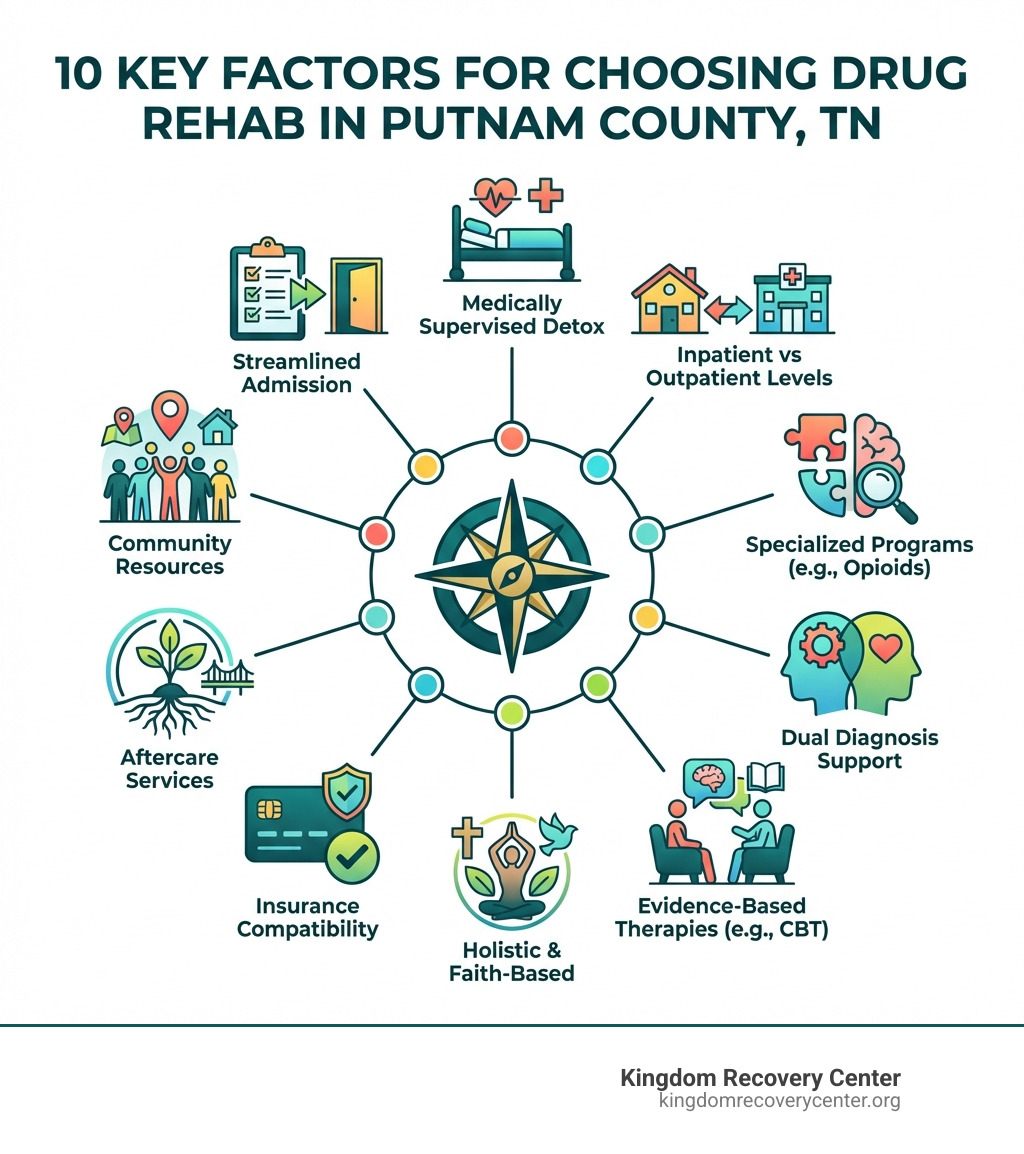
Here are 10 key factors to consider:
1. Availability of Medically Supervised Detox
For many, the first step on the road to recovery is detoxification. Withdrawal symptoms can range from uncomfortable to life-threatening, depending on the substance and severity of addiction. That’s why medically supervised detox is non-negotiable for safety and comfort.
In a medically assisted detox program, trained healthcare professionals monitor your vital signs, administer medications to manage withdrawal symptoms, reduce cravings, and alleviate discomfort. This supportive atmosphere minimizes health risks and ensures a smoother transition into the next stages of recovery. At Kingdom Recovery Center, we understand that medically assisted detox ensures a smooth transition, providing the crucial first step in a safe, controlled environment.
2. Inpatient vs. Outpatient Care Levels
Understanding the different levels of care is key to choosing a program that fits your lifestyle and recovery needs.
- Inpatient (Residential) Rehab: This provides a structured, immersive environment with round-the-clock support. It’s ideal for individuals who need to step away from their daily triggers and focus entirely on recovery. While Kingdom Recovery Center primarily focuses on outpatient services, we understand the comprehensive nature of inpatient care.
- Outpatient Rehab (OP): This offers flexibility, allowing individuals to attend treatment sessions while maintaining their daily responsibilities like work, school, or family commitments. These programs typically involve regular check-ins and counseling sessions.
- Partial Hospitalization Programs (PHP): PHP offers an intensive level of care, similar to inpatient, but allows individuals to return home each evening. It’s a great option for those transitioning from inpatient care or needing more support than traditional outpatient services.
- Intensive Outpatient Programs (IOP): IOPs provide structured treatment for several hours a day, a few days a week, offering a balance between the intensity of PHP and the flexibility of standard outpatient care.
At Kingdom Recovery Center, we offer various outpatient options, including PHP and IOP, designed to meet you where you are in your recovery journey. For a deeper dive into which option might be best for you, explore our guide on outpatient vs inpatient rehab: which is best for you?.
Here’s a quick comparison of these care levels:
| Feature | Inpatient (Residential) | Partial Hospitalization Program (PHP) | Intensive Outpatient Program (IOP) |
|---|---|---|---|
| Environment | Live at facility | Attend during day, return home | Attend several hours, few days/week |
| Intensity | High, 24/7 support | High, structured daily treatment | Moderate, structured weekly sessions |
| Flexibility | Low | Moderate | High |
| Ideal For | Severe addiction, need removal from triggers | Transition from inpatient, strong home support | Manage daily life, early recovery, step-down care |
3. Specialized Programs for Specific Addictions
Addiction is not one-size-fits-all, and neither should be treatment. The best Drug Rehab Putnam County, TN options will offer specialized programs custom to specific substances, recognizing that different drugs present unique challenges.
At Kingdom Recovery Center, we provide comprehensive treatment for a wide range of addictions. Whether you’re struggling with opioids, methamphetamine, alcohol abuse, or fentanyl, our programs are designed to address the specific physical and psychological aspects of each. Our what we treat: addictions page provides more details on our specialized approaches.
4. Dual Diagnosis and Mental Health Support
It’s common for individuals struggling with substance abuse to also experience co-occurring mental health disorders like anxiety, depression, or PTSD. In fact, 1 in 4 adults with a mental illness also have a substance abuse disorder. Addressing both issues simultaneously is crucial for successful, long-term recovery.
At Kingdom Recovery Center, our dual diagnosis programs are a cornerstone of our client-centered approach. We understand that mental health disorders and substance abuse often feed into each other, creating a complex cycle. Our integrated treatment plans address both the addiction and underlying mental health conditions, such as anxiety, depression, and PTSD. This holistic approach is essential for true healing, as detailed in our guide dual diagnosis demystified: finding your path to integrated recovery.
5. Evidence-Based Therapy Options
Effective treatment relies on therapies proven to work. Look for programs that incorporate evidence-based practices (EBPs), which are treatments backed by scientific research.
Some of the most effective therapies include:
- Cognitive Behavioral Therapy (CBT): This helps individuals identify and change negative thought patterns and behaviors that contribute to substance use. We extensively use cognitive behavioral therapy to empower our clients.
- Dialectical Behavior Therapy (DBT): Often used for individuals with intense emotional dysregulation, DBT teaches skills in mindfulness, distress tolerance, emotion regulation, and interpersonal effectiveness.
- Group Therapy: Provides a supportive environment where individuals can share experiences, learn from peers, and develop coping strategies.
- Individual Counseling: Offers personalized attention, allowing clients to explore root causes of addiction and develop custom recovery plans with a therapist.
Our comprehensive approach at Kingdom Recovery Center integrates these and other proven therapies to ensure our clients receive the most effective treatment possible.
6. Holistic and Faith-Based Approaches
Recovery isn’t just about abstaining from substances; it’s about healing the whole person—mind, body, and spirit. Many individuals find immense value in holistic and faith-based approaches that complement traditional therapies.
Holistic therapies can include mindfulness practices, yoga, meditation, and nutritional guidance, all aimed at promoting overall wellness and stress management. For those who find strength in spirituality, faith-based programs offer a framework for recovery rooted in spiritual principles and community support. At Kingdom Recovery Center, we believe in embracing faith-based recovery to heal mind, body, spirit for those who resonate with this path, alongside other holistic modalities.
7. Cost and Insurance Compatibility
The cost of Drug Rehab Putnam County, TN can be a significant concern, but it shouldn’t be a barrier to seeking help. Many reputable centers work with various payment options.
When considering a rehab, inquire about:
- Insurance Coverage: Many private insurance plans, including Ambetter, Blue Cross Blue Shield, and others, cover addiction treatment under behavioral health benefits. We offer insurance verification services to help you understand your benefits. For example, we frequently assist clients with questions like does Ambetter cover addiction and mental health?
- Medicaid and State Funding: These options can provide vital access to care for individuals with limited financial resources. Tennessee has various public programs designed to serve patients’ needs.
- Sliding Scale Fees: Some facilities offer reduced fees based on your income and ability to pay.
- Payment Plans: Many centers are willing to work with you to create an affordable payment schedule.
Understanding using insurance to cover the costs of rehab is a crucial step in planning your recovery journey. Don’t let financial worries deter you from seeking the help you need.
8. Robust Aftercare and Sober Living
Completing a rehab program is a monumental achievement, but it’s just the beginning of a lifelong journey. A strong aftercare plan is critical for maintaining sobriety and preventing relapse.
Look for programs that offer:
- Relapse Prevention Planning: Strategies and tools to identify triggers and cope with cravings. Our focus on empowering your recovery: relapse prevention after treatment is key.
- Sober Living Environments: Structured, supportive housing where individuals can gradually reintegrate into independent living.
- Support Groups: Connections to 12-step programs (like AA or NA) or other peer support networks.
- Ongoing Counseling: Continued individual or group therapy to address emerging challenges.
Aftercare provides the scaffolding for long-term recovery, ensuring you have continued support as you steer life outside of a structured treatment environment.
9. Community Involvement and Prevention
While direct treatment is paramount, a strong community network dedicated to prevention and support can significantly improve recovery efforts in areas like Putnam County. Organizations like Power of Putnam (PoP) play a crucial role.
Power of Putnam (PoP) is a coalition of community members concerned about substance misuse in Putnam County. Their mission is to partner with diverse elements of the community in a united substance misuse prevention effort, designed to empower individuals, strengthen families, and build character and resiliency, resulting in drug-free children and youth. They focus on uniting the community in developing and implementing strategies to prevent and lessen the progression of substance misuse, supporting other community agencies, and filling gaps in services. This grassroots approach, focusing on youth and underage alcohol and drug use, creates a supportive environment that complements formal treatment services.
10. Streamlined Admission Process
When you or a loved one is ready for help, the last thing you need is a complicated, confusing admission process. A reputable Drug Rehab Putnam County, TN program, or one serving its residents, should have a clear, compassionate, and efficient pathway to treatment.
This typically involves:
- Initial Consultation: A conversation to understand your needs and answer initial questions.
- Comprehensive Assessment: A detailed evaluation to determine the appropriate level of care and tailor a treatment plan.
- Insurance Verification: Assistance with understanding your coverage.
- Intake and Orientation: Guiding you through the initial steps of entering the program.
At Kingdom Recovery Center, we strive to make the admissions process as smooth and stress-free as possible, ensuring that when you’re ready to take that courageous first step, we’re here to guide you.
Recognizing the Signs You Need Drug Rehab Putnam County, TN
It can be incredibly challenging to admit that you or a loved one needs help for substance abuse. The signs can be subtle at first, gradually escalating until they become undeniable. Recognizing these indicators is the first critical step toward seeking a Drug Rehab Putnam County, TN program. We’ve outlined some common signs indicating it’s time to seek help for substance use disorder:
- Behavioral Changes:
- Increased secrecy or dishonesty.
- Neglecting responsibilities at work, school, or home.
- Loss of interest in hobbies or activities once enjoyed.
- Changes in peer group, associating with new friends who use substances.
- Engaging in risky behaviors under the influence.
- Attempts to stop or cut down use that are unsuccessful.
- Physical Symptoms:
- Changes in appearance, such as poor hygiene, weight loss or gain, bloodshot eyes, or dilated pupils.
- Frequent illness or unexplained injuries.
- Withdrawal symptoms when not using the substance (e.g., tremors, sweating, nausea, anxiety).
- Developing a tolerance, needing more of the substance to achieve the same effect.
- Psychological and Emotional Indicators:
- Increased irritability, anxiety, or depression.
- Mood swings or unpredictable emotional responses.
- Paranoia or hallucinations.
- Denial about the extent of substance use.
- Financial Strain:
- Unexplained money problems or borrowing money frequently.
- Selling possessions to fund substance use.
- Legal issues related to substance use, such as DUIs or arrests.
- Relationship Issues:
- Frequent arguments with family and friends.
- Isolation from loved ones.
- Breakdowns in communication.
If you recognize several of these signs in yourself or someone you care about, it’s time to consider professional help. Addiction is a progressive disease, and early intervention can significantly improve treatment outcomes.
Navigating the Cost of Drug Rehab in Putnam County
One of the most common concerns when seeking a Drug Rehab Putnam County, TN program is the cost. It’s true that treatment can be an investment, but there are numerous options available to make it accessible. Our goal at Kingdom Recovery Center is to ensure that financial concerns do not prevent anyone from receiving the help they need. We often share insights on the best rehabs in Tennessee on a budget, demonstrating that quality care is within reach.
Here are common payment options and considerations:
- Insurance Verification: We cannot stress this enough – always verify your insurance benefits. Most private insurance plans, including major providers like Ambetter and Blue Cross Blue Shield, offer coverage for substance abuse treatment. The extent of coverage varies, so understand your deductible, co-pays, and out-of-pocket maximums. Our team can assist with this process, helping you steer the complexities of your policy.
- Medicaid and State-Funded Programs: For individuals with limited income, Medicaid and state-funded programs in Tennessee can cover a significant portion, if not all, of treatment costs. These resources are designed to ensure that financial hardship doesn’t stand in the way of recovery.
- Sliding Scale Fees: Some treatment centers offer fees adjusted based on your income. This makes treatment more affordable for those without comprehensive insurance or significant financial resources.
- Payment Plans: Many facilities are willing to work with you to establish a manageable payment plan, allowing you to pay for treatment over time.
- Personal Loans or Savings: While not ideal for everyone, personal loans or utilizing savings can be an option if other avenues are exhausted.
- Free Programs and Support Groups: While not comprehensive rehab, free support groups like Alcoholics Anonymous (AA) and Narcotics Anonymous (NA) offer invaluable peer support at no cost. These can be excellent complements to formal treatment or a starting point for those exploring recovery.
At Kingdom Recovery Center, we believe everyone deserves a chance at recovery. Our team is dedicated to helping you understand your financial options and connect with the resources that make treatment possible.
Frequently Asked Questions about Drug Rehab Putnam County, TN
When exploring options for Drug Rehab Putnam County, TN, it’s natural to have many questions. We’re here to provide clear, straightforward answers.
How long does the detox process take in Putnam County?
The duration of the detox process can vary significantly depending on the substance used, the severity of the addiction, and individual physiological factors. Generally, the acute withdrawal phase, where the most intense physical symptoms occur, typically lasts 3 to 7 days. During this time, medical supervision is crucial for managing discomfort and preventing complications.
However, it’s important to understand that detox is just the first step. The overall process, including physical and psychological stabilization, can extend to several weeks or even months as your body and mind adjust. Our insights on how long does detox take? insights on substance timelines provide more detailed information on what to expect.
Does insurance cover the full cost of treatment?
While many insurance plans, including those with behavioral health benefits, do cover a significant portion of addiction treatment costs, it’s rare for insurance to cover the entire cost. Your coverage will depend on your specific plan, deductible, co-pays, and out-of-pocket maximums.
For example, when clients ask does Ambetter cover addiction and mental health?, we explain that while Ambetter generally offers robust coverage for these services, the exact benefits will vary by individual plan. We strongly recommend undergoing an insurance verification process with the treatment center you’re considering. Our team at Kingdom Recovery Center is experienced in working with various insurance providers and can help you understand your benefits and any potential out-of-pocket expenses.
What is the difference between PHP and IOP?
Both Partial Hospitalization Programs (PHP) and Intensive Outpatient Programs (IOP) are crucial components of the continuum of care in addiction treatment, offering structured support without requiring overnight stays. The primary differences lie in their intensity and time commitment:
-
Partial Hospitalization Programs (PHP):
- Intensity: High. Often considered a step down from inpatient care or for those who need intensive support but have a stable home environment.
- Clinical Hours: Typically involves attending treatment for several hours a day, 5-7 days a week. It’s like a full-time job for recovery.
- Housing: Clients return home or to a sober living facility each evening.
- Focus: Provides comprehensive therapeutic services, including individual therapy, group therapy, and skill-building sessions, allowing individuals to practice coping mechanisms in real-world settings while still having substantial clinical support.
-
Intensive Outpatient Programs (IOP):
- Intensity: Moderate. Offers significant support while allowing more flexibility for work, school, or family responsibilities.
- Clinical Hours: Involves fewer clinical hours than PHP, typically 3-5 days a week for 3-4 hours per session.
- Housing: Clients live at home or in a sober living environment.
- Focus: Concentrates on relapse prevention, coping skills, and reintegration into daily life, often serving as a step-down from PHP or for those who don’t require the highest level of daily structure.
Choosing between PHP and IOP depends on your individual needs, the severity of your addiction, and your living situation. Our guide IOP vs PHP: which care level supports your healing process? offers more insights to help you make an informed decision.
Conclusion
Navigating the path to recovery from addiction can feel overwhelming, but finding the right Drug Rehab Putnam County, TN program doesn’t have to be. By understanding the critical factors we’ve discussed—from medically supervised detox and specialized programs to dual diagnosis support and robust aftercare—you can make an informed decision that truly empowers lasting change.
At Kingdom Recovery Center, we are deeply committed to providing client-centered, evidence-based addiction and mental health treatment. While we may not have a physical facility directly within Putnam County, our accessible locations across East Tennessee, including Johnson City, Knoxville, Morristown, and Hamblen County, are ready to serve residents seeking compassionate and effective care. Our individualized care and dual diagnosis programs are designed to meet your unique needs, guiding you toward a healthier, sober future.
Taking that first step is often the hardest, but it’s also the most courageous. If you or a loved one in Putnam County is struggling with addiction, know that help is available. We invite you to explore our comprehensive addiction treatment options and connect with us today. Your journey to lasting sobriety begins now.