
Why So Many Women Are Searching for Alcohol Detox Programs Right Now
Alcohol detox for women is not the same as detox for men — and finding the right program can make the difference between safe recovery and serious risk.
Here is a quick overview of what women-specific alcohol detox looks like:
| What to Know | Key Details |
|---|---|
| Who needs it | Women with physical alcohol dependence or withdrawal symptoms |
| How long it takes | Typically 5 to 7 days with medical supervision |
| Why women-specific care matters | Women absorb alcohol faster, face higher health risks, and often have unique trauma histories |
| What to look for | Medically supervised detox, trauma-informed care, dual diagnosis support |
| Where to start | Contact a licensed detox center to verify insurance and get assessed |
The numbers behind women and alcohol are serious. One-third of all people who struggle with alcohol addiction are women. Yet women develop alcohol-related health problems faster and at lower drinking levels than men. Their death rates from alcohol use disorder are between 50 and 100 times higher than men’s.
And the barriers to getting help — shame, stigma, childcare, finances — are very real.
That is exactly why women-only alcohol detox programs exist. They are built around the specific biological, emotional, and social factors that shape how women experience addiction and recovery.
At Kingdom Recovery Center in Morristown, TN, we provide compassionate, evidence-based alcohol detox for women as part of a holistic approach to addiction recovery and mental health. Our experienced team is here to walk alongside you from the first difficult step through long-term healing.
Basic alcohol detox for women vocab:
- Knoxville alcohol addiction treatment
- Knoxville alcohol treatment centers
- inpatient alcohol rehab Tennessee
Why Alcohol Detox for Women Requires a Specialized Approach
When we talk about alcohol detox for women, we aren’t just talking about a “pink version” of a men’s program. There are profound biological and physiological differences that dictate how a woman’s body processes alcohol and, subsequently, how she must detox from it.
Biological Sex and Metabolism
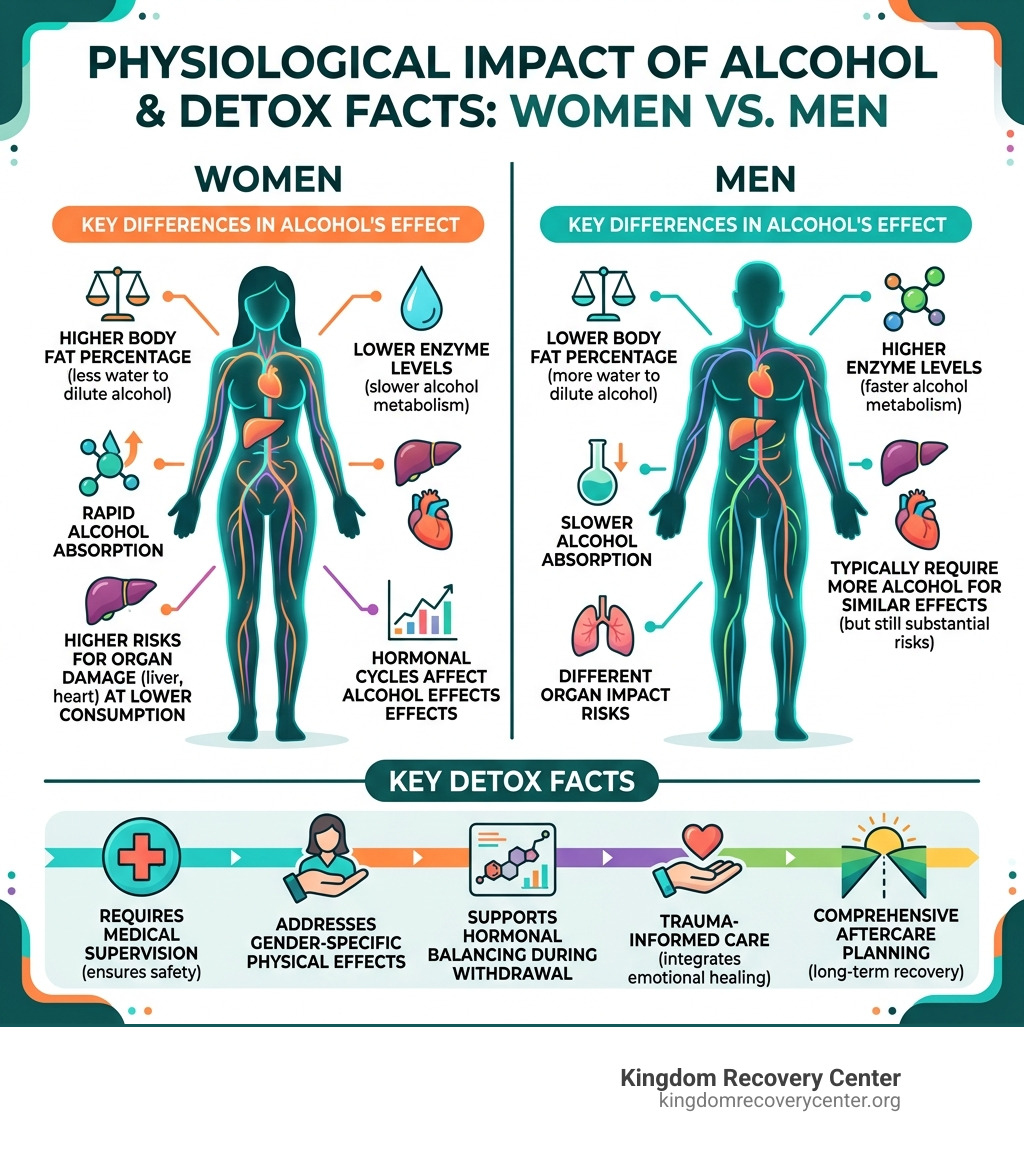
Biologically, women have less body water and a higher percentage of body fat than men. Because alcohol is water-soluble, it remains more concentrated in a woman’s system. This means women absorb alcohol faster, feel its effects more quickly, and those effects tend to last longer. Even when a woman drinks the same amount as a man of the same weight, her Blood Alcohol Concentration (BAC) will likely be higher.
The Telescoping Effect
Women often experience what researchers call the “telescoping effect.” This means that while women may start drinking later in life than men, the progression from the first drink to addiction and health complications happens much faster. This rapid onset makes specialized alcohol rehab for women essential for catching and treating these issues before they become life-threatening.
Health Risks: Liver and Estrogen
Women are more susceptible to alcohol-related organ damage. For instance, women who drink are more likely to develop liver inflammation and cirrhosis than men, even at lower levels of consumption. Furthermore, alcohol significantly impacts estrogen levels, which can lead to menstrual irregularities, fertility issues, and an increased risk of breast cancer.
In April 2026, we continue to see that the psychological toll is just as heavy. Women are statistically more likely than men to experience panic attacks, depression, and anxiety as a result of substance use. This is one of the many 5 Convincing Reasons You Need Womens Mental Health Services Hamblen County to ensure your detox plan includes mental health support from the start.
Understanding the alcohol detox for women Process and Timeline

Detox is the process of allowing the body to clear itself of alcohol while managing the symptoms of withdrawal. For women, this process should never be taken lightly. Because of the physiological risks mentioned above, alcohol detox for women should always be conducted under professional medical supervision.
Why 24/7 Medical Supervision is Vital
Attempting to “white knuckle” it at home is not just difficult; it can be deadly. Withdrawal from alcohol can cause severe complications, including grand mal seizures and hallucinations. At Kingdom Recovery Center, we prioritize Medically Assisted Detox Ensuring A Smooth Transition by providing 24/7 monitoring of vital signs like heart rate and blood pressure.
The Role of Pharmacological Support
Medical detox isn’t just about safety; it’s about comfort. We utilize The Science Behind Medically Assisted Detox Practices to administer medications that ease cravings and reduce the severity of withdrawal symptoms. This pharmacological support helps prevent the most dangerous side effects, such as seizures, while keeping the patient stable.
Common Symptoms of alcohol detox for women
Withdrawal symptoms can range from mildly irritating to life-threatening. Common experiences include:
- Physical: Tremors (the “shakes”), nausea, vomiting, insomnia, and increased heart rate.
- Emotional: Extreme anxiety, depression, and irritability.
- Severe: Delirium Tremens (DTs), which involves confusion, fever, and hallucinations.
For a deeper dive into what your body goes through, you can read more about Understanding Drug And Alcohol Detox Withdrawal Symptoms Explained.
How Long Does alcohol detox for women Typically Last?
While every woman’s body is unique, the general timeline for alcohol detox for women follows a predictable pattern:
- 6–12 Hours After Last Drink: Minor symptoms like anxiety and tremors begin.
- 24–72 Hours: Symptoms usually peak. This is the period where the risk for seizures or DTs is highest.
- 5 to 7 Days: Most physical symptoms begin to subside.
Factors like the duration of alcohol use, overall health, and co-occurring mental health issues can influence How Long Does Detox Take Insights On Substance Timelines. Some women may also experience Post-Acute Withdrawal Syndrome (PAWS), which involves lingering emotional or cognitive symptoms for weeks or months. For more on these variations, see How Long Does Detox Take Insights On Substance Duration.
Essential Components of Women-Only Treatment Programs
A women-only environment creates a sanctuary where recovery can flourish without the distractions or discomforts of a mixed-gender setting. This is particularly important for women who have histories of domestic violence or sexual trauma.
Trauma-Informed Care
Many women turn to alcohol as a way to cope with past trauma. A gender-specific program recognizes this link and provides trauma-informed care. This approach ensures that the detox and rehab process doesn’t re-traumatize the individual but instead offers a safe space to begin processing those experiences. If you are in crisis or need immediate resources, the National Helpline for Mental Health, Drug, Alcohol Issues – SAMHSA is an excellent starting point.
Dual Diagnosis and Specialized Support
It is rare for addiction to exist in a vacuum. Most women we treat are also dealing with a co-occurring disorder like PTSD, bipolar disorder, or clinical depression. Our programs for What We Treat/Addictions/Alcohol Abuse are designed to treat both the addiction and the underlying mental health condition simultaneously.
Support for Mothers and Pregnant Women
One of the biggest barriers to alcohol detox for women is the fear of leaving children behind or the stigma of being pregnant while struggling with addiction. Specialized programs in Tennessee offer:
- Prenatal Care Coordination: Ensuring the health of both mother and baby during withdrawal.
- Parenting Classes: Building the skills needed for a healthy family life in sobriety.
- Childcare Solutions: Addressing the logistical hurdles that often prevent mothers from seeking help.
Holistic Therapies and Nutritional Support
Recovery is about more than just “not drinking.” It’s about rebuilding a shattered system. Alcohol use often leaves women with severe vitamin deficiencies (especially B vitamins) and disrupted metabolisms.
Nutritional Recovery
During alcohol detox for women, we focus on hydration protocols and amino acid therapy to help repair brain chemistry. Proper nutrition helps manage the weight fluctuations and food cravings that often occur when the body stops receiving “liquid calories.”
Mind-Body-Soul Healing
We believe in treating the whole person. This includes:
- Mindfulness and Yoga: To help manage the anxiety and panic attacks common during early recovery.
- Emotional Wellness: Group therapy and peer support bonds allow women to share their stories without shame, fostering a sense of community that is vital for long-term success.
Navigating Insurance and Financial Options in Tennessee
We understand that the cost of treatment is a major concern. Fortunately, there are many avenues to make alcohol detox for women accessible.
Coverage Verification
Most major insurance providers cover medically necessary detox and inpatient treatment. The first step is always coverage verification. You can learn more about the logistics in our guide on Important Considerations For Drug And Alcohol Detox In Tennessee.
Financial Flexibility
From residential programs to more affordable outpatient options, we help you find a level of care that fits your life and budget. For those without insurance, there are scholarship opportunities and state-funded resources available. Check out Vital Aspects Of Selecting Drug And Alcohol Detox In Tennessee for more information on how to navigate these choices.
Preparing for and Maintaining Long-Term Sobriety
Detox is just the beginning — it’s the “clear the air” phase. Real, lasting change happens in the weeks and months that follow.
Mental and Physical Readiness
Preparing for detox means being honest with yourself and your support system. It involves setting boundaries and readying your mind for the hard work of therapy. To understand the transition, read What To Expect After Detox Preparing For Your Recovery Path.
The Continuum of Care
Once detox is complete, the journey continues through:
- Inpatient Rehab: Immersive healing in a structured environment.
- Sober Living: A transitional step to practice sobriety in the real world.
- Aftercare Planning: Ongoing therapy and support groups to prevent relapse.
For more on this transition, see Transitioning From Detox Preparing For Your Recovery Path. If you are in the East Tennessee area, you can Start Your Journey at Alcohol Detox Knoxville to find local resources tailored to your needs.
Frequently Asked Questions about Alcohol Detox for Women
Is it safe to detox from alcohol at home?
In short: No. For women, the risks of seizures, severe dehydration, and cardiovascular strain are too high. Professional medical monitoring ensures that if a complication arises, help is immediate. What To Expect In A Drug And Alcohol Detox Program For Everyone outlines why a clinical setting is the gold standard for safety.
Why do women experience withdrawal differently than men?
It comes down to hormones and body composition. Fluctuating estrogen levels can make emotional symptoms like anxiety more intense. Additionally, women tend to have higher rates of co-occurring mental health issues, which can complicate the withdrawal process. You can learn more about these nuances in The Journey Of Drug And Alcohol Detox During Withdrawal.
What types of programs are available for mothers?
Many Tennessee facilities, including our local centers in Morristown and Knoxville, offer programs that include family therapy and parenting support. Some even provide onsite childcare or allow for modified schedules so mothers can maintain their family responsibilities while getting well. There are various local resources and community support systems available throughout East Tennessee designed to help mothers navigate the path to recovery while maintaining their family bonds.
Conclusion
Recovery is not just a possibility; it is a reality for thousands of women every year. By choosing a program that understands the unique biological and emotional landscape of alcohol detox for women, you are giving yourself the best possible chance at a sustainable, sober future.
At Kingdom Recovery Center, we are dedicated to providing the empowerment and evidence-based care needed for lasting change. Whether you are in Morristown, Knoxville, or anywhere in East Tennessee, we are here to help you turn the page.