
Why Affordable Recovery Options Matter in Tennessee
Finding rehab tennessee shouldn’t drain your savings or prevent you from getting help. If you’re searching for addiction treatment in Tennessee, here’s what you need to know:
Quick Answer: Affordable Rehab Options in Tennessee
- Inpatient rehab costs: $628.89 per day without insurance, dropping to $125.78 per day with 80% coverage
- Outpatient rehab costs: $56.60 per day without insurance, dropping to $11.32 per day with 80% coverage
- State-funded programs: Available for those who qualify, including ADAT (for DUI-related treatment) and SPOT (for probationers)
- Free resources: TN REDLINE (800-889-9789) for treatment referrals and FindHelpNowTN.org for facility searches
- Financial assistance: Sliding scale fees, payment plans, and grant funding through the State of Tennessee
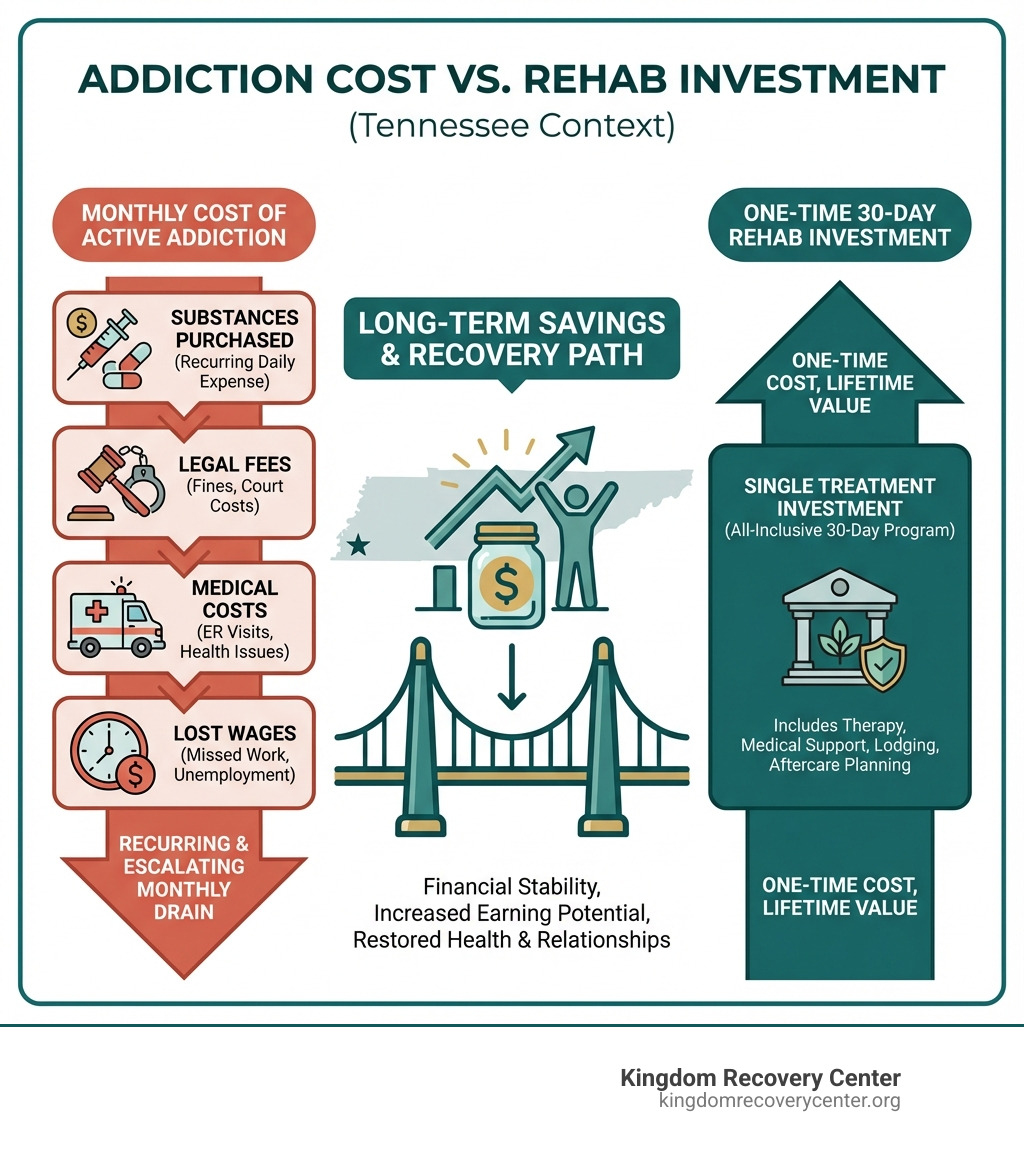
The reality is stark: over 110,000 people died from overdose in 2023, a leading cause of injury-related death in the U.S. In Tennessee, the opioid overdose death rate has been significantly higher than the national average. While the average cost for substance abuse treatment in Tennessee is estimated at $56,600, the cost of not seeking treatment is far higher.
Many people avoid rehab because they believe they can’t afford it. But Tennessee offers numerous low-cost and state-funded options that make recovery accessible. From insurance coverage that can reduce costs by 60-80% to state programs for those without the means to pay, there are pathways to treatment.
At Kingdom Recovery Center in Morristown, TN, we help individuals steer these financial barriers to access compassionate, evidence-based rehab tennessee treatment. Cost concerns shouldn’t stand between you and recovery, which is why we work with most insurance providers and offer guidance on state-funded options.
Understanding the Cost of Addiction Treatment in Tennessee
When considering rehab tennessee, the first question is often, “How much does it cost?” While most centers don’t publicly post direct costs, we can provide general figures to help you plan.
The average cost for substance abuse treatment in Tennessee is estimated at $56,600, but this figure varies. Your actual cost depends on:
- Type of Program: Inpatient (residential) programs are more expensive than outpatient options due to 24/7 care and accommodation.
- Duration of Treatment: Longer programs naturally cost more.
- Amenities and Location: Facilities with luxury amenities or unique environments may have higher prices. Many effective, affordable options are available in your community, including our locations in Morristown, Knoxville, Johnson City, and East Tennessee.
- Insurance Coverage: This is the most significant factor in determining out-of-pocket expenses.
Here are some projected average costs for the state:
| Program Type | Daily Cost (without insurance) | Daily Cost (with 60% insurance) | Daily Cost (with 80% insurance) |
|---|---|---|---|
| Inpatient Rehab | $628.89 | $251.56 | $125.78 |
| Outpatient Rehab | $56.60 | $22.64 | $11.32 |
These figures show how insurance can dramatically reduce the financial burden of rehab tennessee, making treatment much more accessible.
Paying for Rehab: Insurance and Other Options
Financial concerns shouldn’t be a barrier to recovery. Insurance makes rehab more accessible for many. Most private insurance plans, Medicare, and Medicaid offer coverage for substance use disorder treatment. The extent of coverage varies by plan and whether the center is in-network.
At Kingdom Recovery Center, we work with most major insurance companies. Our team offers a complimentary insurance verification to clarify your benefits, including deductibles, co-pays, and out-of-pocket maximums, so you know what to expect. Calling for a free insurance verification provides immense peace of mind.
If you don’t have insurance or your coverage is limited, there are still options for accessing rehab tennessee:
- Sliding Scale Fees: Many facilities adjust treatment costs based on your income.
- Payment Plans: Some centers allow you to pay for treatment in installments.
- Grant Funding: The State of Tennessee, Department of Mental Health & Substance Abuse Services, provides grant funding that individuals may qualify for, particularly in locations like Knoxville and Hamblen County.
- Employee Assistance Programs (EAPs): Your employer might offer an EAP with resources, referrals, or financial assistance.
- Financing Options: Some centers partner with lenders for healthcare-specific loans.
We encourage you to discuss your financial situation with our admissions team. Our goal is to ensure you receive the care you need, and we’ll explore every avenue to make that happen. Understanding these Vital Aspects of Selecting Drug and Alcohol Detox in Tennessee can be incredibly empowering.
State-Funded and Low-Cost Rehab Tennessee Options
Tennessee is committed to supporting residents struggling with addiction, especially those without the financial means for private treatment. The state offers various programs to make treatment accessible, often in partnership with local providers in areas like Knoxville and Hamblen County.

The Tennessee Department of Mental Health and Substance Abuse Services funds treatment for criminal justice-involved individuals who cannot otherwise pay:
- Alcohol and Drug Addiction Treatment (ADAT): For individuals convicted of DUI and court-ordered into treatment. It covers residential, halfway house, and outpatient care.
- Supervised Probation Offender Treatment (SPOT): For individuals on supervised probation at risk of violation due to substance use. It provides a continuum of care.
- Community Treatment Collaborative: Targets state probation and parole technical violators with a substance abuse diagnosis.
Eligibility for these programs generally requires being 18+, on state probation/parole for a substance-related violation, lacking financial means or other insurance, and meeting federal poverty guidelines.
Non-profit organizations also play a vital role in providing low-cost rehab tennessee options. Many CARF International accredited non-profits offer a full continuum of services, from residential care and Medication-Assisted Therapy (MAT) to detox and outpatient programs. This proves that high-quality, comprehensive care is available outside of high-cost private facilities.
We encourage you to Follow the TN Department of Mental Health for resources to stay updated on available programs.
How to Access State-Supported Services
Accessing state-supported rehab tennessee services involves knowing where to look:
- TN REDLINE: Call or text 800-889-9789 for a confidential referral to state-funded or low-cost options in your area, including Morristown, Knoxville, and Johnson City.
- Tennessee Statewide Crisis Line: For immediate mental health crisis support, call 1-855-274-7471. This can be a gateway to integrated care for co-occurring disorders.
- FindHelpNowTN.org: This state website helps you find addiction treatment by location, insurance, and payment methods, making it easier to locate affordable options.
- Application Process: For programs like ADAT and SPOT, the process involves an assessment to determine eligibility based on legal status, financial need, and clinical diagnosis.
It’s also important to know about the Tennessee Good Samaritan Law and Addiction Treatment Act. This law protects people seeking medical help during an overdose from arrest or prosecution for certain drug-related offenses, encouraging people to call for help without fear.
Initiating this process can feel overwhelming, but the first step is the most important. For a comprehensive guide, explore Your Guide to Finding the Right Mental Health Treatment in Tennessee.
Types of Treatment Programs and What to Expect
When seeking rehab tennessee, it’s helpful to understand the different levels of care available, each designed to meet varying needs.

- Medical Detoxification: Often the first step, medical detox provides a safe, supervised environment to manage withdrawal symptoms. It typically lasts 3 to 7 days.
- Residential Treatment (Inpatient Rehab): This involves living at a facility 24/7 in a structured therapeutic environment, away from triggers. Programs typically last 28 days or longer and include individual and group therapy, educational workshops, and holistic activities.
- Partial Hospitalization Program (PHP): PHP offers intensive, structured care during the day, while clients return home or to a sober living environment in the evenings. It’s a step-down from residential care or an alternative for those who don’t need 24/7 supervision.
- Intensive Outpatient Program (IOP): IOPs provide structured therapy for a few hours, several days a week, allowing individuals to live at home and maintain work or school responsibilities.
- Standard Outpatient Treatment: The least intensive level, this involves weekly therapy and support groups, often as a long-term aftercare component.
The duration of rehab tennessee programs varies, often ranging from 30 to 90 days or more, based on an individual assessment.
Recognizing the Need for a Rehab Tennessee Program
Recognizing when addiction has taken hold can be difficult due to denial. Understanding the signs is the first step toward seeking help from a rehab tennessee program.
Physical Signs of Addiction:
- Changes in appearance, like poor hygiene or unexplained weight changes.
- Dilated/constricted pupils or red/glazed eyes.
- Frequent nosebleeds or track marks.
- Tremors, slurred speech, or impaired coordination.
- Withdrawal symptoms like shaking, sweating, nausea, or anxiety when not using.
Behavioral Changes:
- Secrecy or dishonesty about activities.
- Neglecting responsibilities at work, school, or home.
- Sudden changes in friends or hobbies.
- Increased irritability, aggression, or mood swings.
- Legal or financial problems from substance use.
- Continuing use despite negative consequences.
Psychological Symptoms:
- Increased anxiety, paranoia, or depression.
- Loss of interest in previously enjoyed activities.
- Memory problems or blackouts.
- Denial about the extent of substance use.
- Using substances to cope with stress or emotional problems.
Our research shows over 75% of patients report using more than one substance (polysubstance use), which requires a comprehensive treatment approach.
If you answered yes to several of the following questions, it may indicate a need for professional help: Have you felt guilty about your use? Has your work/school performance suffered? Have relationships been negatively impacted? Do you use to cope or sleep? Have you experienced withdrawal? For more guidance, refer to our Mental Health Treatment Tennessee Guide.
Specialized Therapies and Programs
Effective rehab tennessee addresses underlying issues and equips individuals with tools for lasting recovery. Many centers, including Kingdom Recovery Center, offer specialized therapies.
- Dual Diagnosis Treatment: This is crucial, as about 50% of people with substance use disorders also have a co-occurring mental health condition like PTSD, anxiety, or depression. Integrated treatment addresses both simultaneously to prevent relapse.
- Evidence-Based Therapies: We prioritize scientifically proven therapies:
- Cognitive Behavioral Therapy (CBT): Helps change negative thought patterns and behaviors.
- Dialectical Behavior Therapy (DBT): Focuses on emotional regulation, distress tolerance, and mindfulness.
- Experiential Therapy: Uses activities like art or music to process emotions.
- Trauma-Informed Therapy: Addresses past trauma, a common root cause of addiction.
- Family Therapy: Involves family to rebuild healthy relationships.
- Holistic Approaches: Practices like yoga, meditation, and art therapy support overall well-being and complement clinical treatment. Find more about Holistic Approaches to Addiction Recovery in Tennessee Explained.
- Gender-Specific Care: Programs custom for men or women can provide a safe space to address gender-specific issues and trauma.
- Medication-Assisted Treatment (MAT): MAT combines FDA-approved medications (like Naltrexone and Buprenorphine) with counseling. It is effective for opioid and alcohol use disorders, helping manage cravings and withdrawal. Our Knoxville location offers MAT services. For more on intensive options, explore What to Expect from Tennessee’s Mental Health PHP Program.
How to Choose the Right Rehab in Tennessee for You
Selecting the right rehab tennessee program is a critical decision. Focus on these key indicators of quality and suitability.
1. Accreditation and Licensing: This is paramount. Look for centers accredited by reputable organizations and licensed by the state.
* CARF International (Commission on Accreditation of Rehabilitation Facilities): CARF accreditation demonstrates a program’s commitment to quality, transparency, and high international standards. Many quality providers in East Tennessee are CARF accredited.
* The Joint Commission: This accreditation indicates a facility meets high performance standards for quality and safety.
* State Licensing: Ensure the facility is licensed by the Tennessee Department of Mental Health & Substance Abuse Services, verifying it meets state-mandated standards.
Accreditation is a commitment to best practices and continuous improvement.
2. Staff Credentials and Treatment Philosophy: Inquire about the qualifications of the clinical staff. Are they licensed professionals? Understand the center’s treatment philosophy. Does it emphasize an individualized approach? We believe in empowering lasting change through compassionate, professional care.
3. Evidence-Based Practices: A reputable rehab tennessee center will use evidence-based therapies (like CBT, DBT, MAT) that are scientifically proven to be effective. Be wary of programs relying on unproven methods.
4. Location Benefits: A facility closer to home in East Tennessee (like our locations in Morristown, Knoxville, or Johnson City) can allow for easier family involvement and smoother transitions back into the community.
5. Reading Client Reviews and Testimonials: Reviews can offer valuable insights into a facility’s culture, staff effectiveness, and patient satisfaction. Look for patterns in feedback.
The “best” rehab is the one that best meets your individual needs. We are dedicated to client-centered care, specializing in individualized treatment plans and dual diagnosis programs. For further resources, explore Rehab Centers in Knoxville Tennessee.
The Importance of Aftercare and Ongoing Support in Rehab Tennessee
Completing a rehab tennessee program is a monumental achievement, but it’s the start of a lifelong journey. Aftercare and ongoing support are critical for sustained recovery and relapse prevention.
Think of aftercare as the bridge between intensive treatment and independent sobriety. Key components include:
- Relapse Prevention Planning: Identifying personal triggers and developing coping strategies.
- Sober Living Homes: Structured, substance-free homes that provide a supportive transition and peer support after residential treatment.
- Alumni Programs: Rehab alumni networks provide ongoing connection, support, and mentorship.
- Support Groups (e.g., AA/NA): Peer-led groups like Alcoholics Anonymous (AA) and Narcotics Anonymous (NA) are widely available and offer community and a framework for long-term sobriety.
- Continued Counseling and Therapy: Regular sessions help address emerging challenges and reinforce coping skills.
- Building a Sober Network: Cultivating relationships with sober friends and mentors provides a strong support system.
A “360-degree post-treatment plan of action” is what we strive for, ensuring individuals leave our care with a robust toolkit and a supportive network. We are committed to supporting our clients every step of the way. Learn more about The Importance of Rehab Programs in Tennessee for Lasting Recovery.
Frequently Asked Questions about Rehab in Tennessee
We know you have questions, and we’re here to provide clear answers as you consider rehab tennessee.
How long does rehab in Tennessee typically last?
The duration of rehab tennessee programs is customized to an individual’s needs, addiction severity, and progress. Common program lengths include:
- 30-day programs: A good starting point for less severe addictions or for detox and stabilization.
- 60-day programs: Offer more time for therapy and skill-building.
- 90-day or longer programs: Provide the most immersive experience for severe or chronic addictions, often leading to better long-term outcomes.
Research suggests longer treatment durations are associated with higher success rates. The ideal length is determined by a clinical assessment.
Can I get fired for going to rehab in Tennessee?
Generally, no. Federal laws protect employees who seek addiction treatment:
- Family and Medical Leave Act (FMLA): Allows eligible employees to take up to 12 weeks of unpaid, job-protected leave for addiction treatment.
- Americans with Disabilities Act (ADA): Protects individuals recovering from addiction. Employers may be required to provide reasonable accommodations for employees in recovery.
Confidentiality is a cornerstone of treatment, and your employer typically cannot disclose your medical information. It’s wise to understand your company’s policies. Seeking help is a protected health decision.
What is the first step to getting into a rehab program in Tennessee?
Taking the first step towards rehab tennessee is courageous. We make the process straightforward:
- Initial Assessment: The first step is a confidential assessment, often over the phone. You’ll discuss your situation, substance use, and treatment goals.
- Contacting an Admissions Team: Reach out to a treatment center like Kingdom Recovery Center. You can call or make an appointment online. The TN REDLINE (800-889-9789) is also an excellent resource for referrals.
- Insurance Verification: The admissions team will verify your insurance benefits to determine your out-of-pocket costs.
- Asking Questions: Don’t hesitate to ask about the program, therapies, staff, or payment options.
Once these steps are complete, the admissions team will help schedule your admission. For more insights, refer to our guide on Effective Ways to Seek Mental Health Treatment in Tennessee.
Conclusion
The journey to recovery can feel overwhelming, especially financially. However, this guide shows that finding affordable rehab tennessee is a tangible reality. Through state-funded programs, insurance options, and non-profit organizations, the path to healing is accessible.
The cost of untreated addiction far outweighs the investment in recovery. By exploring your options, you can overcome financial barriers and focus on a healthier, sober life.
At Kingdom Recovery Center in Morristown, Knoxville, and Johnson City, we are dedicated to client-centered, evidence-based treatment. We specialize in individualized care and dual diagnosis programs to empower lasting change. We believe everyone deserves the chance to recover.
Don’t let cost deter you. Take the courageous first step. Contact us today, or learn more about the importance of rehab programs for lasting recovery. Your better life is waiting.