Why Sober Living Facilities Hamblen County Matter for Lasting Recovery
Sober living facilities Hamblen County residents can access offer a critical bridge between formal treatment and independent life — and knowing your options can make all the difference in staying sober.
Here are the key sober living and transitional housing options available in Hamblen County:
- Helen Ross McNabb Center Recovery Home — A four-unit complex housing up to 20 women for a minimum of four months, serving graduates of the Jail to Work program in Morristown
- Kingdom Recovery Center — Holistic, faith-integrated addiction and mental health treatment in Morristown, TN, with aftercare and recovery support
- Cherokee Health Systems — Offers sober living alongside outpatient and dual diagnosis services across East Tennessee
- Morristown VA Clinic — Provides sober living options specifically for veterans with co-occurring addiction and mental health needs
- Recovery Together — Sober living homes in the broader East Tennessee region, including services for women
The need is real. In 2021 alone, Hamblen County recorded 190 drug overdose-related emergency department visits. Behind every statistic is a person — and a family — searching for a way forward.
Sober living fills a gap that inpatient rehab and outpatient programs simply cannot. It gives people a stable, substance-free home while they rebuild their lives, reconnect with their community, and develop the skills to stay sober long-term.
At Kingdom Recovery Center, we are a Morristown-based treatment center with deep roots in Hamblen County’s recovery community, offering compassionate, evidence-based care for addiction and mental health that complements sober living facilities Hamblen County residents rely on. Our team is here to help guide you through every stage of recovery — from your first call to life after treatment.
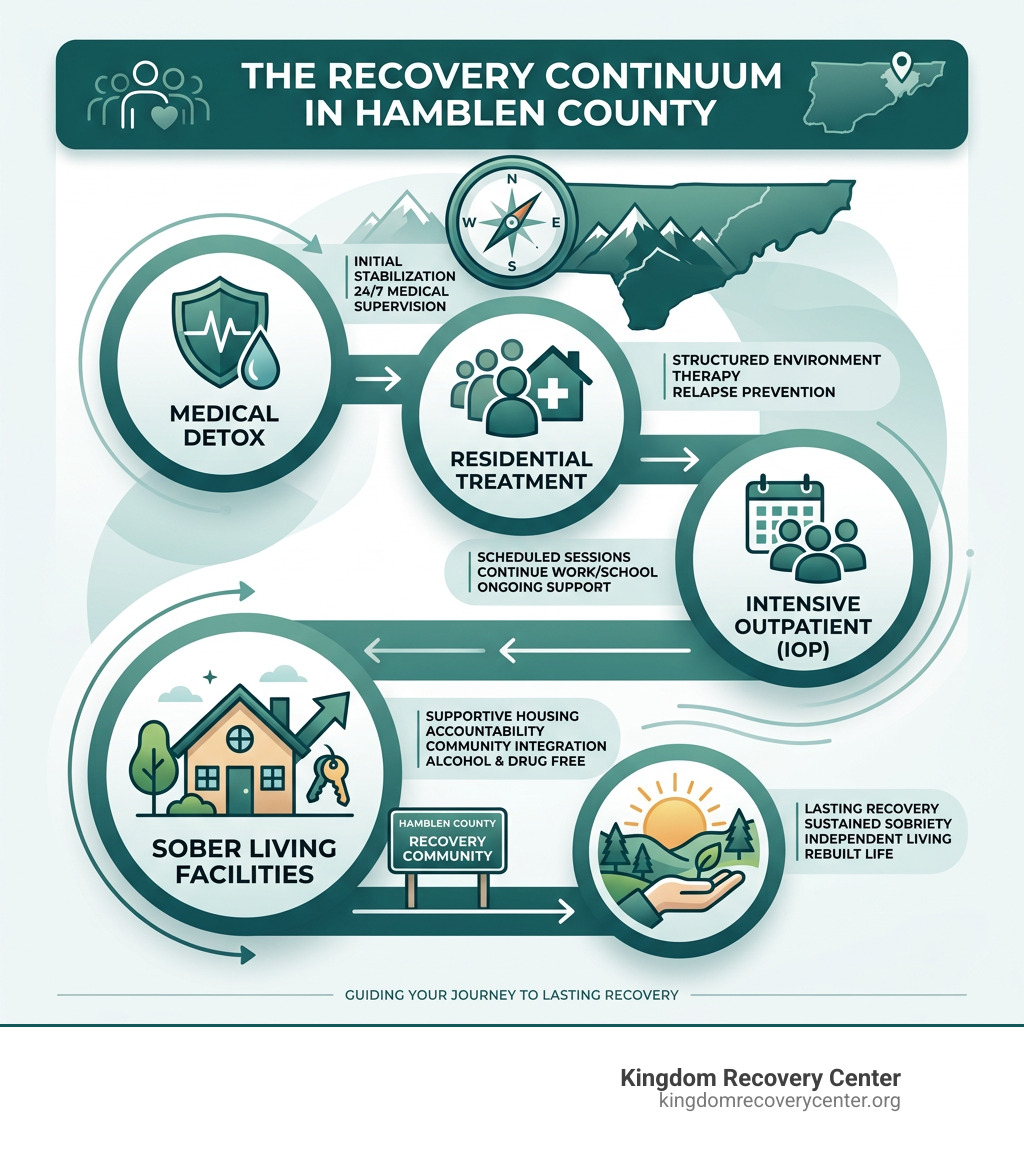
Understanding Sober Living Facilities Hamblen County
When we talk about sober living facilities Hamblen County, we are referring to substance-free residences designed for individuals who are new to addiction recovery. These are not just “places to stay”; they are structured environments that prioritize accountability, peer support, and a shared commitment to a drug-free lifestyle.
Unlike a standard apartment, a recovery home operates on a social model of recovery. This means that the residents themselves, often guided by staff or senior peers, help maintain the rules and spirit of the house. According to the Tennessee Drug Overdose Data Dashboard, the state saw over 3,800 overdose deaths in 2021. In a community like Morristown, having a safe haven away from the triggers of the “old life” is often the difference between a successful transition and a relapse.
At Kingdom Recovery Center, we often emphasize that drug rehab in Hamblen County is just the beginning. Sober living provides the “training wheels” for real-world sobriety.
Inpatient Rehab vs. Sober Living: What is the Difference?
It is common to confuse these two levels of care. Here is a quick breakdown to help you understand where you or your loved one might fit:
| Feature | Inpatient Rehab | Sober Living Environment |
|---|---|---|
| Medical Supervision | 24/7 Clinical & Nursing Staff | Peer-led or House Manager oversight |
| Structure | Highly restrictive; scheduled hourly | Flexible; residents work or attend school |
| Duration | Typically 30 to 90 days | Four months to over a year |
| Focus | Detox and intensive therapy | Reintegration and life skills |
| Cost | Higher (covers medical care/meals) | Lower (usually monthly rent/fees) |
Exploring Effective Recovery Residences and Programs in Morristown
Morristown has seen a beautiful surge in community-led recovery efforts. Local leaders recognized that without stable housing, the cycle of addiction often leads right back to the legal system. This is supported by data from the (TBI) Tennessee Bureau of Investigation, which notes that approximately 80% of crimes in the state are drug-related.
To combat this, the community rallied to fund the Hamblen County Recovery Home. This project was made possible by a $750,000 fundraising campaign, proving that the people of Morristown are deeply invested in the success of their neighbors. These facilities focus on life after rehab, ensuring that the progress made during clinical treatment isn’t lost the moment a resident walks out the door.
Specialized Sober Living Facilities Hamblen County for Women
One of the most significant advancements in our local area is the opening of dedicated spaces for women. Women often face unique barriers to recovery, including higher rates of past trauma and the need for specialized women’s mental health services.
The McNabb Center’s Recovery Home in Morristown is a prime example. It is a four-unit complex that can house up to 20 women at a time. The program is built on several key pillars:
- Trauma-Informed Care: Recognizing that many women in the program have experienced significant life hardships.
- 12-Step Model: An abstinence-based approach that utilizes the proven framework of programs like AA and NA.
- Life Skills Training: Staff-led groups focus on everything from budgeting and grocery shopping to work-readiness.
- Employment Assistance: Helping residents find stable jobs so they can eventually transition to independent living.
Accessing Sober Living Facilities Hamblen County and Local Resources
Getting into a sober living home usually requires a referral from a treatment provider or a legal entity. Most sober living facilities Hamblen County hosts require residents to have completed some form of primary treatment (like detox or residential rehab) and to be committed to total abstinence.
If you are looking for help right now, here are some steps and resources:
- Referral: Talk to your current counselor or search for mental health hotlines to find placement assistance.
- Tennessee Redline: You can call 800-889-9789 for 24/7 confidential referrals to treatment and recovery resources across the state.
- Support Meetings: Attendance at AA, NA, or Celebrate Recovery meetings is almost always a requirement for living in these homes. Morristown has a robust network of these meetings.
- Eligibility: Most local homes, especially those tied to the McNabb Center, prioritize residents from Hamblen County or those graduating from specific local programs.
The Role of the Jail to Work Program in Local Recovery
We cannot discuss sober living facilities Hamblen County without highlighting the “Jail to Work” program. This initiative has been described as having “unprecedented success” in our region. It targets incarcerated women, offering them an 8-12 week intensive rehabilitation program while they are still on the Hamblen County campus.
Instead of being released back into the same environment where they struggled, graduates of Jail to Work can transition directly into the Recovery Home. This creates a “warm handoff” that significantly reduces recidivism (the likelihood of returning to jail). According to the National Survey on Drug Use and Health, over 375,000 adults in Tennessee struggle with substance use disorders. Programs like these ensure that those who want to change have a clear, supported path to do so.
By combining therapy, substance abuse treatment, and relapse prevention strategies, the Jail to Work program and its associated recovery housing prove that recovery is possible for anyone, regardless of their past.
Frequently Asked Questions about Hamblen County Recovery Homes
What is the average cost of sober living in Morristown?
The cost can vary based on the level of support provided. Some facilities are funded through grants and community donations, making them very affordable for those coming out of the legal system. Others operate on a “rent” model where residents pay a weekly or monthly fee.
- Insurance: While insurance often covers the clinical parts of treatment (like therapy), it rarely covers “room and board” for sober living. However, it is always worth checking your opioid addiction treatment guide for specifics on what your plan might include.
- Sliding Scales: Many nonprofit providers offer sliding scale fees based on your income.
- Self-Pay: Most residents use the money they earn from their new jobs to pay their stay fees, which helps build financial responsibility.
How long can residents stay in a transitional home?
In the Morristown area, many programs like the McNabb Recovery Home require a minimum stay of four months. However, recovery isn’t a race. Many individuals choose to stay for six months to a year to ensure they have reached total stability before moving into an independent apartment. This long-term approach is vital to empowering your recovery and preventing the “revolving door” of treatment.
Are there sober living options for veterans in the area?
Yes! The Morristown VA Clinic is a major resource for our local heroes. They offer specialized care that addresses the unique needs of those who have served, including veteran addiction treatments. Many veterans struggle with co-occurring disorders like PTSD, and local sober living options often integrate dual diagnosis support to treat both the addiction and the underlying trauma simultaneously.
Conclusion
Finding the right sober living facilities Hamblen County offers is a major step toward a life of freedom. Whether you are a woman transitioning from the Jail to Work program, a veteran seeking specialized care, or someone simply looking for a supportive community in Morristown, there is a place for you.
At Kingdom Recovery Center, we believe in holistic healing. We know that recovery involves the mind, body, and spirit. By combining evidence-based clinical care with the structured support found in local recovery homes, we help our neighbors build foundations that last.
If you or a loved one are ready to take that first step, don’t wait. The community of Hamblen County has built these resources because they believe in your potential to change. We believe in it, too.
Ready to start your journey? Start your recovery journey in Hamblen County with us today. Reach out to Kingdom Recovery Center and let’s walk this path together.