Finding the Best Residential Dual Diagnosis Treatment Centers Near Knoxville TN
If you or someone you love is struggling with both addiction and a mental health condition, here are the key residential dual diagnosis treatment centers near Knoxville, TN to know about:
| Center | Location | Key Features |
|---|---|---|
| Kingdom Recovery Center | Morristown, TN | Holistic dual diagnosis, CBT, DBT, MAT, family counseling |
| English Mountain Recovery | Near Newport, TN | 27-acre Smoky Mountains campus, co-occurring disorders program, equine therapy |
| Summit at Knoxville Recovery Center | Knoxville, TN | Residential dual diagnosis, detox, 4.2/5 rating (158 reviews) |
| Prevail Recovery Center | Knoxville, TN | Holistic dual diagnosis, mindfulness, yoga, art/music therapy |
| Tennessee Valley Recovery | Knoxville, TN | Integrated addiction and mental health treatment, relapse prevention |
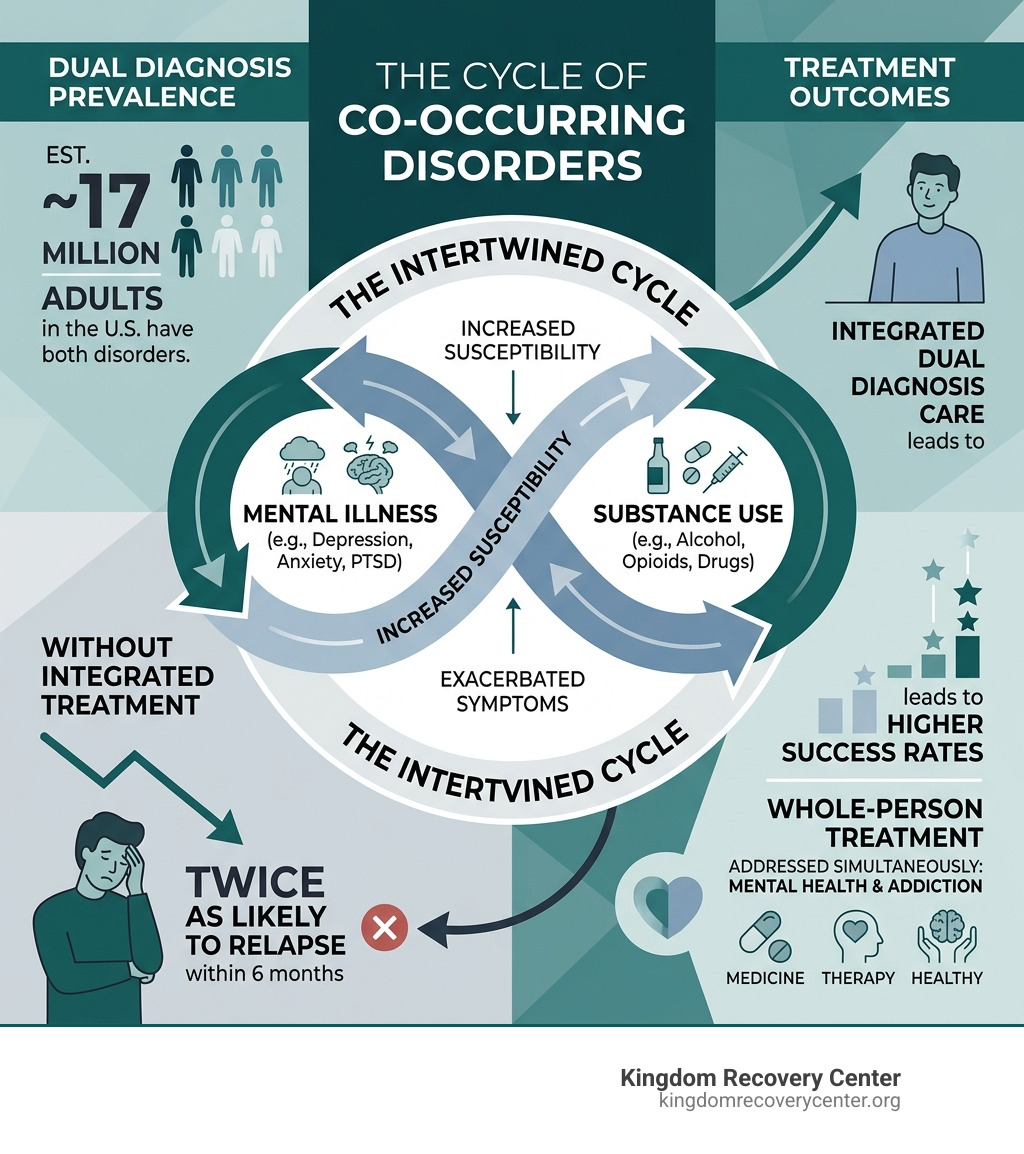
Dual diagnosis means you have both a substance use disorder and a mental health condition at the same time — things like depression plus alcohol dependence, or PTSD alongside opioid addiction. These conditions feed each other, making recovery significantly harder without the right help.
The numbers tell a sobering story. Around 17 million adults in the U.S. have a co-occurring mental illness and substance use disorder. Yet most never receive treatment for both at once — and those who don’t treat both conditions simultaneously are twice as likely to relapse within six months.
The good news? Tennessee has over 535 dual diagnosis treatment centers, and several excellent residential dual diagnosis treatment centers near Knoxville TN offer the integrated, whole-person care that actually works.
At Kingdom Recovery Center, located in Morristown, TN — just a short drive from Knoxville — we specialize in compassionate, evidence-based addiction and mental health treatment tailored to each person’s unique needs. Our experience helping individuals with co-occurring disorders through residential dual diagnosis treatment centers near Knoxville TN gives us a deep understanding of what lasting recovery truly requires.
Must-know residential dual diagnosis treatment centers near knoxville tn terms:
- Knoxville alcohol addiction treatment
- Knoxville alcohol treatment centers
- inpatient alcohol rehab Tennessee
Why Integrated Residential Dual Diagnosis Treatment Centers Near Knoxville TN are Essential
When we talk about recovery, we often hear people say, “I just need to stop drinking,” or “If I could just get my drugs under control, I’d be fine.” But for millions of Americans, the substance use is actually a symptom of something deeper. Research into Dual Diagnosis Addiction and Mental Health Treatment shows that addiction and mental health disorders are deeply intertwined. If you only treat the addiction while ignoring the underlying depression or anxiety, the mental health symptoms will likely trigger a relapse the moment you face a stressful day.
Integrated care is the “gold standard” for a reason. Instead of treating the mind and the body in separate buildings at different times, integrated residential dual diagnosis treatment centers near Knoxville TN address both conditions simultaneously. This approach helps patients understand the dual diagnosis demystified—seeing how their trauma might fuel their opioid use, or how their bipolar disorder makes them more prone to stimulant abuse.
As of April 2026, the statistics remain a call to action. Approximately 1 in 4 adults with a mental illness also struggle with a substance use disorder. In Tennessee specifically, nearly 73% of clients receiving treatment are identified as having a dual diagnosis. Without integrated care, these individuals are caught in a “revolving door” of rehab stays. By focusing on the root causes through specialized dual diagnosis programs, we provide the tools necessary to break that cycle for good.

Core Components of High-Quality Dual Diagnosis Programs
Choosing a facility is a big decision, and it helps to know what “high quality” actually looks like. Not all centers are created equal. Some may focus heavily on the 12 steps, while others lean into medical interventions. The best residential dual diagnosis treatment centers near Knoxville TN offer a blend of both, backed by high clinical standards.
Comparing Levels of Care
While some people benefit from outpatient services, residential care offers a level of immersion that is often necessary for complex cases. Here is a quick look at how they compare:
| Feature | Residential Treatment | Outpatient (IOP/PHP) |
|---|---|---|
| Environment | 24/7 supervised, drug-free campus | Living at home, attending sessions |
| Medical Support | On-site medical detox and monitoring | Limited medical oversight |
| Intensity | Full-time immersion in therapy | 9–30 hours of therapy per week |
| Best For | Severe dual diagnosis, unstable home life | Step-down care, mild symptoms |
One of the most critical components is medical detox. Withdrawal from substances like alcohol or benzodiazepines can be physically dangerous, especially when co-occurring with mental health crises. High-quality centers provide on-site medical supervision to ensure safety before the heavy therapeutic work begins.
Furthermore, look for accreditations. The Joint Commission and CARF (Commission on Accreditation of Rehabilitation Facilities) are the “seal of approval” in our industry. These organizations evaluate centers based on strict performance standards for safety and quality of care. When you choose a center with these credentials, you know you are receiving care that meets national benchmarks.
In our guide to Knoxville inpatient rehab, we emphasize the importance of staff qualifications. You should be looking for programs led by Master’s and Doctoral-level therapists who specialize in co-occurring disorders. Having 24/7 licensed medical staff on-site isn’t just a luxury; it’s a safety requirement for those navigating the complexities of dual diagnosis.
Evidence-Based Therapies in Residential Dual Diagnosis Treatment Centers Near Knoxville TN
Recovery isn’t just about “talking it out”—it’s about rewiring the brain and learning new ways to cope with life’s stressors. We use evidence-based therapies because they are scientifically proven to work.
- Cognitive Behavioral Therapy (CBT): This helps you identify the negative thought patterns that lead to substance use. If you think, “I’m a failure, so I might as well drink,” CBT helps you challenge that thought and replace it with something healthier.
- Dialectical Behavior Therapy (DBT): Originally developed for borderline personality disorder, DBT is excellent for dual diagnosis. It teaches emotional regulation, distress tolerance, and mindfulness—essential skills for anyone who uses substances to “numb” their feelings.
- Trauma-Informed Care: Many people with co-occurring disorders have a history of trauma or PTSD. We ensure that treatment doesn’t re-traumatize the individual but instead helps them process their past safely.
- EMDR (Eye Movement Desensitization and Reprocessing): This is a specialized therapy used to treat PTSD by helping the brain reprocess traumatic memories so they no longer trigger a fight-or-flight response.
- Medication-Assisted Treatment (MAT): For some, medications like buprenorphine or naltrexone are vital tools to manage cravings and brain chemistry while they focus on the psychological side of recovery.
When researching, you can find detailed reviews of East TN centers that highlight which facilities excel in these specific therapeutic modalities.
Specialized Care at Residential Dual Diagnosis Treatment Centers Near Knoxville TN
While clinical therapy is the foundation, healing the “whole person” requires more than just sitting in a therapist’s office. This is where holistic and experiential therapies come into play. These approaches help reconnect the mind and body, providing non-verbal ways to express emotions and build confidence.
Equine Therapy is a popular feature in many East Tennessee programs. Working with horses requires patience, assertiveness, and emotional awareness—traits that are often lost during active addiction. Similarly, Music and Art Therapy allow individuals to process feelings they might not have the words for yet.
Other holistic components include:
- Yoga and Fitness: Exercise releases natural endorphins and helps repair the physical damage caused by substance use.
- Nutritional Counseling: Addiction often leads to severe nutritional deficiencies. Learning to fuel the body correctly can significantly improve mood and energy levels during early recovery.
- Mindfulness and Meditation: These practices are essential for managing the anxiety and racing thoughts that often accompany dual diagnosis.
- Family Therapy: We believe that addiction is a family disease. Healing the relationships at home is a vital part of finding your home for healing and ensuring a supportive environment after discharge.
Insurance, Costs, and Choosing the Right Facility
We know that the financial side of treatment can feel overwhelming. However, accessing residential dual diagnosis treatment centers near Knoxville TN is more achievable than many realize. Since the passage of the Affordable Care Act, mental health and addiction services are considered “essential health benefits,” meaning most insurance plans are required to cover them.
Verifying Insurance Coverage
Most private insurance providers (PPO and POS plans) like BlueCross BlueShield, Aetna, Cigna, and UnitedHealthcare offer coverage for residential dual diagnosis care. The best first step is to verify your insurance for alcohol detox or residential treatment directly with the facility. They can run a “Verification of Benefits” (VOB) to tell you exactly what your out-of-pocket costs, deductibles, and co-pays will be.
Financial Assistance and Sliding Scales
If you don’t have private insurance, don’t lose hope. Some centers offer sliding scale fees based on income, or they can point you toward 50 Best Tennessee Co-Occurring Disorders Rehabs that may accept state-funded programs. While many high-end residential centers do not accept Medicaid or Medicare, there are community resources available for those in need.
How to Choose
When comparing facilities, ask these questions:
- Are you Joint Commission or CARF accredited?
- Do you have a dedicated dual diagnosis track, or is mental health just a secondary thought?
- What is the staff-to-patient ratio?
- Do you offer a continuum of care, including aftercare and alumni support?
- What is your approach to medication management for psychiatric conditions?
Frequently Asked Questions about Dual Diagnosis Treatment
What are the signs someone needs dual diagnosis care?
It can be hard to tell where the mental health issue ends and the addiction begins. Common signs include:
- Self-Medication: Using drugs or alcohol to “calm down,” sleep, or escape feelings of sadness.
- Worsening Mood: Even when sober, the person struggles with extreme highs, lows, or persistent anxiety.
- Withdrawal from Life: Neglecting responsibilities at work or home and isolating from friends and family.
- Increased Tolerance: Needing more of a substance to achieve the same “numbing” effect for their mental distress.
- Failed Attempts to Quit: Trying to stop using substances but being unable to handle the emotional “crash” that follows.
How long does residential dual diagnosis treatment typically last?
There is no “one-size-fits-all” timeline, but research shows that longer stays generally lead to better outcomes.
- 30-Day Programs: Best for stabilization and introducing the tools of recovery.
- 60-90 Day Programs: These extended stays allow the brain time to heal and give the individual a chance to practice new coping skills in a safe environment.
- Step-Down Planning: Successful treatment always includes a transition plan to a lower level of care, such as a Partial Hospitalization Program (PHP) or Intensive Outpatient Program (IOP).
Does insurance cover residential treatment in Tennessee?
Yes, most private health insurance plans cover residential treatment for dual diagnosis. However, coverage can vary. Some plans require “pre-authorization,” where the insurance company must agree that the level of care is medically necessary. Most residential dual diagnosis treatment centers near Knoxville TN have admissions teams that handle this paperwork for you to make the process as stress-free as possible.
Conclusion
Recovery from a co-occurring disorder is a journey, but it is one you don’t have to take alone. The cycle of self-medication and mental health struggles can be broken when you have the right team of experts by your side. At Kingdom Recovery Center, we are dedicated to providing the evidence-based, compassionate care that helps our neighbors in Knoxville and across East Tennessee find lasting stability.
From the initial medical detox to long-term aftercare support and alumni networks, we focus on the “whole person” to ensure that sobriety isn’t just a temporary phase, but a lifelong transformation. If you are ready to address your addiction and mental health together, we are here to help.
The road to a healthier, more balanced life starts with a single phone call. Whether you are looking for alcohol detox in Knoxville or a comprehensive residential stay, your path to healing is waiting.
Start your recovery journey today and discover the freedom of true mental health stability.