
Understanding Your Mental Health Treatment Options
Outpatient mental health care is treatment for mental health conditions and substance use disorders that happens in an office, clinic, or community setting—without requiring you to stay overnight at a facility. It allows you to receive professional support while continuing to live at home, work, and maintain your daily responsibilities.
Key Points About Outpatient Mental Health:
- What it is: Therapy, counseling, medication management, and support services you attend on a scheduled basis while living at home
- Who it’s for: People with mild to moderate mental health conditions, those transitioning from higher levels of care, or anyone who doesn’t need 24/7 supervision
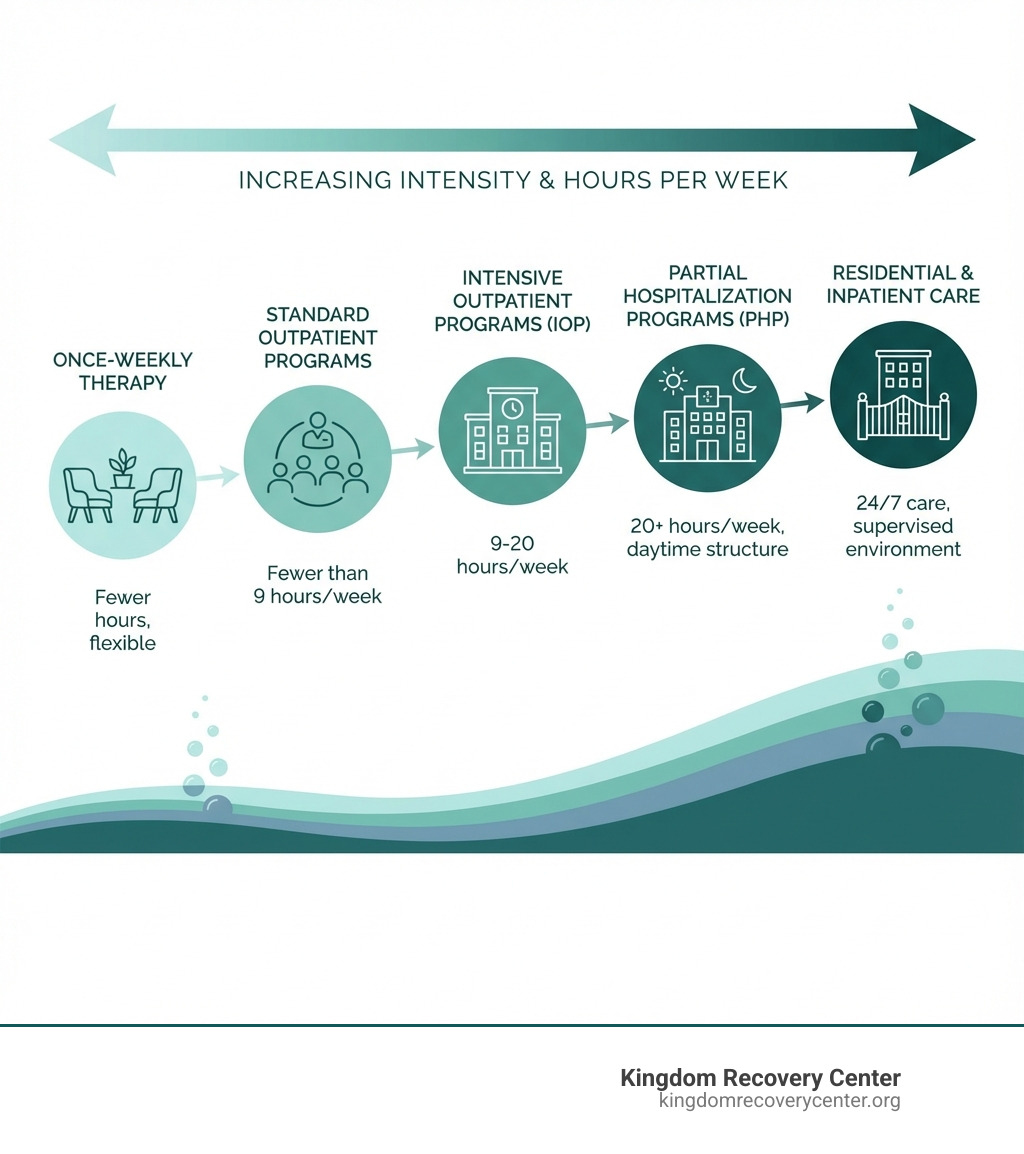
- Types available: Standard outpatient (fewer than 9 hours/week), Intensive Outpatient Programs/IOP (9-20 hours/week), and Partial Hospitalization Programs/PHP (20+ hours/week)
- Conditions treated: Depression, anxiety, trauma, PTSD, substance use disorders, bipolar disorder, and co-occurring disorders
- Benefits: More affordable than inpatient care, flexible scheduling, ability to apply new skills in real-world settings immediately
Since the pandemic started, mental health professionals have seen a large increase in demand for services. Many people are seeking help for the first time, recognizing that mental health is just as important as physical health.
The good news? You don’t have to choose between getting help and living your life. Outpatient mental health care offers a flexible middle ground—more structured support than weekly therapy alone, but without the disruption of leaving home for residential treatment.
Whether you’re managing anxiety, struggling with addiction, or dealing with both mental health and substance use challenges, understanding your outpatient options is the first step toward lasting recovery.
What is Outpatient Mental Health Care?
At Kingdom Recovery Center, we believe in empowering lasting change, and that often begins with understanding what outpatient mental health care truly means. Simply put, outpatient mental health treatment involves receiving mental health services in an office, clinical setting, or even within your community, rather than being admitted to a hospital overnight. It’s an excellent option for individuals who don’t require round-the-clock care but still need professional support to manage their mental health.
In this flexible model, you learn to cope with stressors, develop new skills, and manage your mental health while continuing to steer your daily life. This means you can maintain your work, school, and family responsibilities, integrating newly learned strategies into your real-world environment. Our approach at Kingdom Recovery Center, serving communities like Morristown, Knoxville, and Johnson City, is client-centered, meaning we tailor treatment plans to provide each person with the right support and structure. Treatment can range from short-term counseling focused on specific issues to long-term plans designed for ongoing support and recovery.
The Core Services of Outpatient Mental Health
Outpatient mental health programs offer a diverse array of services, all designed to support your journey toward well-being. These services are often delivered by a multidisciplinary team of mental health professionals, ensuring comprehensive care. Here are some of the core services you can expect:
- Individual Counseling/Psychotherapy: One-on-one sessions with a therapist to explore thoughts, emotions, behaviors, and life experiences in a confidential and supportive setting. This is a cornerstone of most outpatient programs, providing personalized guidance.
- Group Therapy: Led by a clinician, these sessions bring together individuals facing similar challenges. Group therapy fosters a sense of community, reduces feelings of isolation, and allows for shared experiences and coping strategies. It’s an evidence-based intervention that can increase motivation for healing and improve social functioning.
- Family Therapy: Sometimes, mental health challenges affect the whole family system. Family therapy sessions are crucial for improving communication, resolving conflicts, and building a stronger, more supportive home environment. If you’re in East Tennessee, we understand the importance of involving loved ones in the healing process.
- Psychiatric Evaluation: A thorough assessment by a psychiatrist or psychiatric nurse practitioner to diagnose mental health conditions and determine the most appropriate course of treatment, including medication if needed.
- Medication Management: For many, medication is an important part of managing mental health conditions. A psychiatrist carefully monitors and adjusts medications to ensure optimal effectiveness and minimize side effects.
- Psychoeducation: Learning about your condition, its symptoms, and effective coping strategies is empowering. Psychoeducation helps you understand your mental health better and equips you with tools for self-management.
- Case Management: This service helps coordinate your care, connecting you with additional resources, support services, and community programs that can aid in your recovery journey.
Conditions Treated
Outpatient mental health programs are incredibly versatile and can effectively treat a wide range of conditions. At Kingdom Recovery Center, we specialize in individualized care for many of these challenges, helping our clients in Hamblen County and beyond find lasting change.
Some of the most common conditions we address in an outpatient setting include:
- Depression: From persistent sadness to major depressive disorder, outpatient care offers therapies and medication management to alleviate symptoms and restore hope.
- Anxiety Disorders: This includes generalized anxiety disorder, panic disorder, social anxiety, and specific phobias. Outpatient treatment helps individuals learn coping mechanisms and reduce anxiety’s impact on daily life.
- Bipolar Disorder: Outpatient programs provide ongoing therapy, medication management, and psychoeducation to help individuals manage mood swings and maintain stability.
- Trauma and PTSD: For those who have experienced traumatic events, outpatient therapy, including specialized approaches like Eye Movement Desensitization and Reprocessing (EMDR) or Dialectical Behavior Therapy (DBT), can help process trauma and reduce its lingering effects.
- Substance Use Disorders: Outpatient rehab allows individuals to address drug and alcohol addiction while living at home, providing therapy, education, and relapse prevention strategies. This is a core focus of our work at Kingdom Recovery Center.
- Dual Diagnosis (Co-occurring Disorders): It’s common for individuals to experience both a mental health condition and a substance use disorder simultaneously. Integrated outpatient programs are designed to treat both conditions concurrently, as addiction is often tied to trauma and other underlying mental health issues.
- Personality Disorders: Conditions like Borderline Personality Disorder can be effectively managed with specialized outpatient therapies such as DBT, which focuses on emotional regulation and interpersonal skills.
- Stress Management: Learning healthy ways to cope with life’s stressors is vital for overall well-being. Outpatient programs offer skills training to build resilience and reduce the impact of stress.
Exploring the Different Levels of Outpatient Care
Understanding the various levels of outpatient mental health care is like looking at a spectrum of support. It’s not a one-size-fits-all system; rather, it’s a continuum designed to meet diverse needs. You might start at one level and, as you progress, step down to a less intensive program, or if challenges arise, step up to a more structured environment. This individualized intensity ensures you receive the right amount of care at the right time.

Standard Outpatient Programs (OP)
Standard outpatient mental health programs represent the lowest intensity level of structured care. These programs are designed for individuals who need consistent support but can function well in their daily lives with minimal disruption. Typically, a standard OP involves fewer than 9 hours of treatment per week, often consisting of weekly or bi-weekly individual therapy sessions, and sometimes a group session.
This level of care is ideal for:
- Individuals with mild to moderate mental health conditions that don’t require intensive daily intervention.
- Those who have completed a higher level of care, like an IOP or PHP, and are transitioning to long-term maintenance and relapse prevention.
- People with a strong support system and high levels of independence who are seeking ongoing personal growth and skill development.
Standard OPs allow you to maintain employment, attend school, and stay connected with your family and community, applying the skills you learn directly to your everyday experiences. It’s about building resilience and managing your mental health with consistent, yet flexible, professional guidance.
Intensive Outpatient Programs (IOP)
Intensive Outpatient Programs (IOPs) serve as a crucial bridge between standard outpatient care and more intensive options like Partial Hospitalization Programs (PHPs) or even inpatient treatment. IOPs provide a more structured and comprehensive level of outpatient mental health support without requiring an overnight stay.
At Kingdom Recovery Center, we know that sometimes, traditional weekly therapy isn’t enough. IOPs are designed for individuals who need more treatment and support than can be provided through traditional outpatient services, but who do not require the level of care provided through residential or inpatient treatment.
Key characteristics of IOPs include:
- Time Commitment: IOPs typically involve 9 to 20 hours of treatment per week. This often translates to several hours a day, multiple days a week, allowing for a deep dive into therapeutic work. Medicare Part B, for instance, covers IOP services if your care plan states you require at least 9 hours of therapeutic services per week.
- Structured Programming: While flexible enough to accommodate work or school, IOPs offer a structured schedule of therapeutic activities.
- Group-Focused: Much of the work in an IOP happens in group therapy settings. These curated groups allow you to connect with peers facing similar challenges, fostering a supportive community and reducing feelings of isolation.
- Individual and Family Sessions: In addition to group therapy, IOPs include regular individual therapy sessions with a primary therapist. Family therapy is also often incorporated, recognizing its leading role in predicting success in recovery.
- Comprehensive Services: IOPs often include mental health education, skill-building workshops (e.g., coping skills, emotional regulation, stress reduction), and medication management as needed.
For those dealing with substance use disorders, IOPs are particularly effective. The Substance Abuse and Mental Health Services Administration (SAMHSA) provides scientific research on IOP services, highlighting their efficacy, especially for individuals transitioning from higher levels of care or those with moderate to severe conditions. IOPs allow you to integrate new coping skills into your daily life, maintain your support systems, and continue working or going to school, all while receiving significant professional guidance.
Partial Hospitalization Programs (PHP)
Partial Hospitalization Programs (PHPs), often referred to as “day treatment,” represent the most intensive level of outpatient mental health care. They offer a comprehensive, structured treatment experience that is a direct alternative to inpatient hospitalization for many individuals. While you return home each evening, a PHP provides a robust treatment schedule during the day, typically involving 20 or more hours of therapy per week.
PHPs are designed for individuals who:
- Are experiencing acute mental health symptoms but do not require 24/7 medical supervision or an overnight stay.
- Need a high level of support and structure, similar to inpatient care, but have a safe and supportive home environment.
- Are transitioning from inpatient treatment and need a step-down program to continue their recovery journey with intensive support.
- Are dealing with complex mental health conditions, including severe depression, anxiety, trauma, or substance use disorders, where daily, multi-hour intervention is beneficial.
What happens during a PHP? Much like inpatient programs, PHPs offer a wide array of therapeutic interventions. These can include:
- Individual Therapy: Regular, in-depth sessions with a therapist.
- Group Therapy: Multiple group sessions throughout the day, focusing on topics like coping skills, emotional regulation, relapse prevention, and interpersonal effectiveness.
- Family Therapy: To involve loved ones and build a supportive home environment.
- Medication Management: Psychiatric oversight for medication needs.
- Psychoeducation: Intensive learning about mental health conditions and recovery strategies.
- Experiential Therapies: Such as art therapy, mindfulness, or recreational activities.
For those struggling with co-occurring mental health and substance use disorders, PHPs provide an integrated approach, treating both conditions simultaneously. This comprehensive “day treatment” model helps individuals stabilize, develop crucial coping skills, and prepare for a successful return to their daily lives with reduced symptom severity.
Who Benefits Most from Outpatient Mental Health Treatment?
One of the greatest strengths of outpatient mental health treatment is its adaptability. It’s not just for one type of person or one kind of struggle. Instead, it’s designed for individuals who are ready to engage in their healing journey while maintaining their connection to the world around them.
At Kingdom Recovery Center, we’ve seen how outpatient care can be transformative for those with:
- A Strong Support System: Having understanding family, friends, or community members who encourage your recovery can make a huge difference. This network can provide emotional support and practical assistance, reinforcing the skills learned in therapy.
- High Independence: Individuals who can manage their daily responsibilities, like self-care, transportation, and attending appointments, are excellent candidates. Outpatient treatment empowers you to take an active role in your recovery.
- Motivation for Recovery: A genuine desire to make changes and commit to the therapeutic process is key. While we provide the tools and guidance, your active participation is what drives lasting change.
- Stable Living Environment: A safe and stable home environment is crucial. This means a place free from active substance use or significant stressors that could undermine treatment progress.
Outpatient treatment allows you to immediately apply new coping skills in real-world situations, which can be incredibly empowering. It’s about integrating healing into your everyday life, making it a sustainable and practical path to well-being.
Inpatient vs. Outpatient: Making the Choice
Deciding on the right level of mental health care can feel overwhelming. Is inpatient care necessary, or is outpatient mental health treatment a better fit? The answer lies in your individual needs, the severity of your condition, and your current life circumstances. Neither option is inherently “better”; they simply serve different purposes.
Here’s a comparison to help clarify:
| Feature | Inpatient Care | Outpatient Care |
|---|---|---|
| Environment | 24/7 residential facility (hospital, residential treatment center). | Office, clinic, community setting; patient lives at home. |
| Supervision | Constant medical and clinical supervision; round-the-clock care. | Scheduled sessions; no overnight supervision; patient responsible for self-management between sessions. |
| Intensity | Highest level of care; highly structured daily schedule of therapy, medication management, and medical monitoring. | Varies from low (Standard OP) to high (PHP); structured sessions with flexibility for daily life. |
| Ideal Candidate | Individuals in crisis, at risk of harm to self or others, severe symptoms, needing detoxification, or unable to function safely independently. | Individuals with mild to moderate symptoms, stable living situation, strong support system, transitioning from higher care, or seeking maintenance. |
| Cost | Generally higher due to 24/7 care, accommodation, and intensive staffing. | Generally lower, as it doesn’t include accommodation or constant supervision. |
| Flexibility | Very limited; removed from daily life responsibilities. | High; allows continuation of work, school, and family obligations. |
| Real-World Application | Limited initial application; focus on stabilization; skills applied upon discharge. | Immediate application of learned skills in daily life. |
If you’re unsure which path is right for you, our team at Kingdom Recovery Center in East Tennessee can help. We conduct thorough assessments to determine the most appropriate level of care, always with your well-being and lasting recovery in mind.
Key Benefits of Outpatient Care
Choosing outpatient mental health treatment offers a wealth of benefits, making it an attractive and effective option for many individuals seeking support for their mental health or substance use disorders. We’ve seen these advantages with our clients across Morristown, Knoxville, and Johnson City.
Here are some of the key benefits:
- Affordability: Generally, outpatient care is more cost-effective than inpatient or residential treatment. Since it doesn’t include the costs of overnight stays, meals, or 24/7 staffing, it can significantly reduce the financial burden of treatment.
- Flexibility with Schedule: This is perhaps one of the most compelling benefits. Outpatient programs are designed to accommodate your life. Whether you need to attend work, school, or care for family, you can often find sessions that fit your schedule, including evenings and weekends.
- Maintaining Employment and Education: By allowing you to continue with your daily responsibilities, outpatient care helps you maintain stability in your career or academic pursuits. This continuity can be crucial for your overall well-being and future success.
- Staying Connected to Family and Support Systems: Unlike inpatient care, which can temporarily separate you from loved ones, outpatient treatment allows you to remain at home. This means you can lean on your existing support network and involve family members in your recovery process, which is a leading predictor of success.
- Real-World Skill Application: The immediate integration of learned coping mechanisms and strategies into your daily life is invaluable. You can practice new skills in the very environments where you need them most, making your recovery more practical and sustainable.
- Reduced Stigma: Because outpatient treatment is often less visible and more integrated into daily life, some individuals find it reduces the perceived stigma associated with seeking mental health care. You’re simply attending appointments, much like any other medical visit.
These benefits combine to create a powerful treatment model that supports healing without uprooting your life, fostering a sense of empowerment and self-efficacy in your recovery journey.
How to Find and Access Quality Care
Taking the first step to seek help is a courageous act, and knowing how to find and access quality outpatient mental health care is essential. Whether you’re in Hamblen County or elsewhere in East Tennessee, there are clear pathways to support.
Accessing care can begin in a few ways:
- Self-referral: If you recognize a need for support, you can directly contact mental health providers or treatment centers. Many facilities, like Kingdom Recovery Center, have admissions teams available to discuss your needs and guide you through the intake process.
- Physician referral: Your primary care physician is an excellent resource. They can conduct initial screenings, discuss your symptoms, and refer you to appropriate mental health specialists or programs. Medicare Part B, for example, covers annual depression screenings if received in a primary care setting that can provide follow-up treatment and referrals.
Finding a Provider
When searching for an outpatient mental health provider, it’s important to look for reputable sources and qualified professionals.
- Government Resources: The Substance Abuse and Mental Health Services Administration (SAMHSA) offers an invaluable tool: Find a treatment facility via SAMHSA. This confidential and anonymous resource allows you to search for treatment facilities for mental and substance use disorders across the United States. Similarly, the National Institute of Mental Health (NIMH) resources provide comprehensive information on various mental health conditions and treatment options.
- Community Mental Health Centers: These centers often provide a wide range of services, including therapy, medication management, and crisis support, frequently on a sliding scale for those with limited income.
- Private Practices and Hospital Outpatient Departments: Many individual therapists, psychologists, and psychiatrists operate private practices, and hospitals often have dedicated outpatient mental health departments.
- Accreditation: When choosing a program, look for accreditations from organizations like the Commission on Accreditation of Rehabilitation Facilities (CARF) or The Joint Commission. These accreditations signify that a facility meets rigorous standards for quality and safety, ensuring you receive evidence-based care.
At Kingdom Recovery Center, we are committed to providing evidence-based addiction, mental health, and behavioral health treatment. We encourage you to ask questions about our programs, our team’s qualifications, and how we tailor care to your specific needs.
Understanding Costs for Outpatient Mental Health
The cost of outpatient mental health treatment is a common concern, but thankfully, there are many options to make care accessible. At Kingdom Recovery Center, we believe that financial barriers shouldn’t stand in the way of healing.
- Insurance Coverage: Most major insurance providers, including commercial plans, Medicaid, and Medicare, offer coverage for outpatient mental health services. For example, Medicare Part B covers a wide range of outpatient mental health services. After meeting your Part B deductible, you typically pay 20% of the Medicare-approved amount for visits. If services are in a hospital outpatient clinic or department, an additional copayment or coinsurance to the hospital may apply. We recommend contacting your insurance provider directly or our admissions team to understand your specific plan’s coverage, including co-pays and deductibles.
- Medicaid: In states where Medicaid covers Intensive Outpatient Programs (IOPs), like in Tennessee, this can be a vital resource for eligible individuals, including those with low income.
- Private Pay Options: For those without insurance or who prefer not to use it, many providers offer private pay options. Costs can vary widely depending on the type and intensity of services. For instance, private pay estimates for an Intensive Outpatient Program (IOP) might range from $250-$350 per day, while a Partial Hospitalization Program (PHP) could be $350-$450 per day. Some facilities may offer sliding-fee scales based on income.
- Payment Plans and Loans: Don’t hesitate to inquire about payment plans directly with your provider. Some organizations also offer low-interest loans specifically for healthcare expenses.
- Low-Cost/Free Rehabs and Funding: There are also state-funded programs, grants, and scholarships available, particularly for substance use disorders, that can help cover treatment costs.
Navigating the financial aspects can be complex, but our team is here to help you understand your options and verify your insurance coverage so you can focus on your recovery.
What to Do in a Crisis
While outpatient mental health care is designed for ongoing support, it’s crucial to know what to do if you or someone you know experiences a mental health crisis. Immediate access to help can be life-saving.
If you or someone you know is in crisis:
- Call or Text 988: The 988 Suicide & Crisis Lifeline offers free and confidential support 24 hours a day, 7 days a week. You can call or text 988, or chat online at 988lifeline.org. This service connects you with trained crisis counselors who can provide immediate support and connect you to local resources. For TTY, you can call 711 then 988.
- Emergency Services (911): If there is an immediate medical crisis, danger of harm to self or others, or if someone is unresponsive, call 911 right away. Emergency services can provide immediate assistance and transport to a hospital if needed.
- Veterans Crisis Line: For Veterans, service members, and their families, specialized support is available. You can connect with the Veterans Crisis Line by calling 988 and selecting 1, starting a confidential chat online, or texting 838255.
- Go to the Nearest Emergency Room: If you are experiencing severe psychiatric symptoms or feel you cannot keep yourself safe, going to the nearest emergency room is a vital step. They can provide immediate evaluation and stabilization.
- SAMHSA’s National Helpline: For treatment referral and information, the National Helpline provides free, confidential support 24/7 at 1-800-662-HELP (4357).
- Disaster Distress Helpline: If you’re experiencing emotional distress related to a natural or human-caused disaster, the Disaster Distress Helpline offers immediate crisis counseling 24/7 at 1-800-985-5990.
Reaching out for help in a crisis is a sign of strength. These resources are available to provide immediate support and ensure your safety.
Frequently Asked Questions about Outpatient Mental Health
We often hear similar questions from individuals exploring outpatient mental health options. Here are some common inquiries and our answers to help clarify your understanding.
How long does outpatient treatment last?
The duration of outpatient mental health treatment is highly individualized and depends on several factors, including the severity of your condition, your progress, the level of care you’re receiving, and your personal goals.
- Standard Outpatient Programs (OP): These can be ongoing for many months or even years, especially for individuals managing chronic conditions or those seeking long-term support and maintenance.
- Intensive Outpatient Programs (IOP): IOPs typically last for a shorter, more concentrated period. Many programs, like some virtual IOPs, suggest a duration of 9-12 weeks. Your exact discharge date will depend on your overall treatment progress and will be determined collaboratively with your primary therapist.
- Partial Hospitalization Programs (PHP): PHPs are more intensive and often have a structured duration, typically lasting several weeks to a few months. For addiction, PHPs can last at least 3 months.
The goal is to provide enough support for you to achieve stability and develop sustainable coping mechanisms. Our team at Kingdom Recovery Center works with you to determine the best discharge plan for your needs, ensuring a smooth transition.
Can outpatient care treat co-occurring disorders (dual diagnosis)?
Absolutely! Many outpatient mental health programs, especially those specializing in addiction and mental health like Kingdom Recovery Center, are specifically designed to treat co-occurring disorders, often referred to as dual diagnosis.
It’s a common scenario: millions of Americans have both a mental health condition and a substance use disorder. In fact, approximately half of people with a substance use disorder also experience serious mental illness. Treating these conditions in an integrated manner is crucial because they often influence each other. For example, substance use can exacerbate mental health symptoms, and mental health conditions can increase the risk of substance use.
Integrated treatment means addressing both conditions simultaneously within the same program, often by the same clinical team. This approach ensures that:
- Therapies for mental health (e.g., for depression, anxiety, trauma) are delivered alongside therapies for substance use (e.g., relapse prevention, coping skills for cravings).
- Medication management considers the interactions and effects on both conditions.
- Psychoeducation helps you understand the complex relationship between your mental health and substance use.
At Kingdom Recovery Center, we are experts in individualized care and dual diagnosis programs, empowering lasting change for those facing both mental health and addiction challenges in East Tennessee.
Is virtual outpatient treatment effective?
Yes, virtual outpatient mental health treatment has proven to be highly effective and has become an increasingly accessible option, particularly since the pandemic. Telehealth services have revolutionized how many people can access vital mental health care.
Benefits of virtual outpatient treatment include:
- Increased Accessibility: It removes barriers such as transportation issues, geographical distance (especially for those in rural areas of Tennessee), and mobility limitations.
- Flexibility: You can receive treatment from the comfort and privacy of your own home, making it easier to fit into busy schedules.
- Continuity of Care: Virtual platforms allow for consistent engagement, which is crucial for maintaining progress in recovery.
- Similar Services: Virtual IOPs, for instance, offer the same core services as in-person programs, including curated group therapy, individual therapy, family therapy, and psychiatry sessions, all delivered through a secure online platform.
While virtual treatment requires a stable internet connection and a private space, it offers a powerful way to engage in healing without disrupting your daily life. Many virtual programs also provide 24/7 crisis support, ensuring you’re never without help between sessions. Studies have shown that clients in virtual IOPs report significant improvements in symptoms associated with depression, anxiety, and self-harm.
Begin Your Path to Healing Today
Understanding the “ins and outs” of outpatient mental health options can feel like a lot, but we hope this guide has brought clarity and confidence. The journey to mental wellness and recovery from substance use is deeply personal, and the right support can make all the difference.
We’ve explored how outpatient care offers a flexible, effective, and often more affordable path to healing, allowing you to stay connected to your life while receiving crucial professional support. From standard outpatient programs to intensive outpatient (IOP) and partial hospitalization programs (PHP), there’s a spectrum of care designed to meet your unique needs. Whether you’re managing anxiety, depression, trauma, or navigating dual diagnosis challenges, hope and recovery are possible.
Taking that first step—reaching out for help—is often the hardest, but it’s also the most courageous. At Kingdom Recovery Center, we are dedicated to providing client-centered, evidence-based addiction, mental health, and behavioral health treatment right here in Tennessee, serving communities like Morristown, Knoxville, Johnson City, and Hamblen County. We believe in empowering lasting change, and our team is ready to walk alongside you.
Don’t let uncertainty hold you back from a healthier, happier future. If you or a loved one is struggling, we invite you to explore the personalized care options available.
Learn about our evidence-based programs and find how we can help you achieve lasting change.