
Mental Health Help Is Closer Than You Think in Knoxville
Knoxville mental health centers offer a wide range of care options — from therapy and medication management to intensive inpatient programs — for people dealing with depression, anxiety, trauma, addiction, and more.
Here are the key services and care levels available in Knoxville:
| Service Level | Key Offerings | Best For |
|---|---|---|
| Outpatient Care | Therapy, medication, testing | Adults, teens, children |
| Intensive Outpatient (IOP) | Group & individual therapy | Balancing recovery with life |
| Partial Hospitalization (PHP) | Intensive daily treatment | Step-down from inpatient |
| Inpatient Stabilization | 24/7 medical & clinical care | Acute crisis management |
| Specialized Support | LGBTQ+ affirming care, geriatric units | Diverse community needs |
Mental illness is more common than most people realize. 1 in 5 people live with a mental health condition — which means if you’re struggling, you’re far from alone.
Finding the right care can feel overwhelming. There are many types of facilities, programs, and treatment approaches. Knowing what’s available in Knoxville is the first step toward getting better.
At Kingdom Recovery Center, based in Morristown, TN, we specialize in addiction recovery and mental health services using evidence-based, holistic treatment tailored to each person’s needs — giving us a close perspective on the mental health landscape across Tennessee, including Knoxville mental health centers. In this guide, we break down the available options so you can find the right fit for your situation.
Comprehensive Services at Knoxville Mental Health Centers
When you begin your search for Knoxville mental health centers, you’ll find that the “one-size-fits-all” approach has largely been replaced by a diverse menu of clinical services. The goal of modern behavioral health services is to meet you exactly where you are in your journey. Whether you are dealing with a sudden crisis or a long-term struggle with a chronic condition, there is a specific level of care designed for your needs.
Diagnostic Assessments and Psychological Testing
The first step in any effective treatment plan is an accurate diagnosis. Many centers in Knoxville offer comprehensive psychological testing. This isn’t just a simple questionnaire; it involves in-depth evaluations for conditions like ADHD, Autism Spectrum Disorder (ASD), personality disorders, and cognitive impairments. Getting a clear picture of what’s happening in the brain allows providers to create a roadmap for recovery.
Medication Management
For many, biological factors play a significant role in mental health. Medication management involves working with psychiatrists or psychiatric nurse practitioners to find the right balance of prescriptions. This process includes regular monitoring to ensure the medication is effective and that side effects are minimized. In Knoxville, this often goes hand-in-hand with talk therapy for the best results.
Psychotherapy and Counseling
Talk therapy remains the cornerstone of mental health care. Knoxville providers offer various formats, including:
- Individual Therapy: One-on-one sessions focusing on personal goals.
- Group Therapy: Connecting with others who share similar struggles to reduce isolation.
- Family and Couples Therapy: Healing the relationships that support your daily life.
For a deeper dive into how these services fit together, check out our mental health treatment Tennessee guide.
Specialized Care for Diverse Needs in Knoxville Mental Health Centers
Knoxville is home to several specialized units designed for specific age groups and demographics. This is crucial because a teenager dealing with social anxiety requires a very different approach than a senior citizen struggling with geriatric depression.
- Geriatric Units: Specialized centers in the region have opened dedicated units specifically for older adults. These programs focus on acute depression, dementia-related behavioral issues, and the unique late-life transitions that affect mental wellness.
- Adolescent and Pediatric Support: Youth in Knoxville face unique pressures. Recent research has even highlighted the impact of climate disasters on adolescent mental health, showing that environmental stressors can lead to significant distress in younger populations. Specialized pediatric providers focus on developmental milestones and school-based challenges.
- LGBTQ+ Affirming Care: Many Knoxville mental health centers now offer specialized counseling for LGBTQ+ individuals and couples, ensuring a safe, non-judgmental space to discuss identity, “coming out,” and relationship dynamics.
Evidence-Based Modalities and Dual Diagnosis Support
In mental health, “evidence-based” is a term you’ll hear often. It simply means the treatment has been scientifically proven to work. When you visit a center in Knoxville, you are likely to encounter several key modalities:
- Cognitive Behavioral Therapy (CBT): This helps you identify and change negative thought patterns that lead to harmful behaviors or emotions.
- Dialectical Behavior Therapy (DBT): Originally developed for borderline personality disorder, DBT is now used for many conditions to teach mindfulness, emotional regulation, and distress tolerance.
- Trauma-Informed Care: This approach recognizes how past trauma shapes current mental health and ensures that treatment does not re-traumatize the patient.
The Importance of Dual Diagnosis Treatment
Many people struggling with mental health also face challenges with substance use. This is known as a dual diagnosis. It is nearly impossible to treat one effectively without addressing the other.
The data shows why this integrated approach is so vital. For instance, integrated programs in the region have seen patients report a 74% decrease in craving symptoms, alongside a 68% decrease in depression symptoms and a 63% decrease in anxiety symptoms. By treating the “whole person,” centers can help individuals find Knoxvilles road to recovery discovering effective addiction treatment options that actually last.
Navigating Levels of Care: From Inpatient to Outpatient
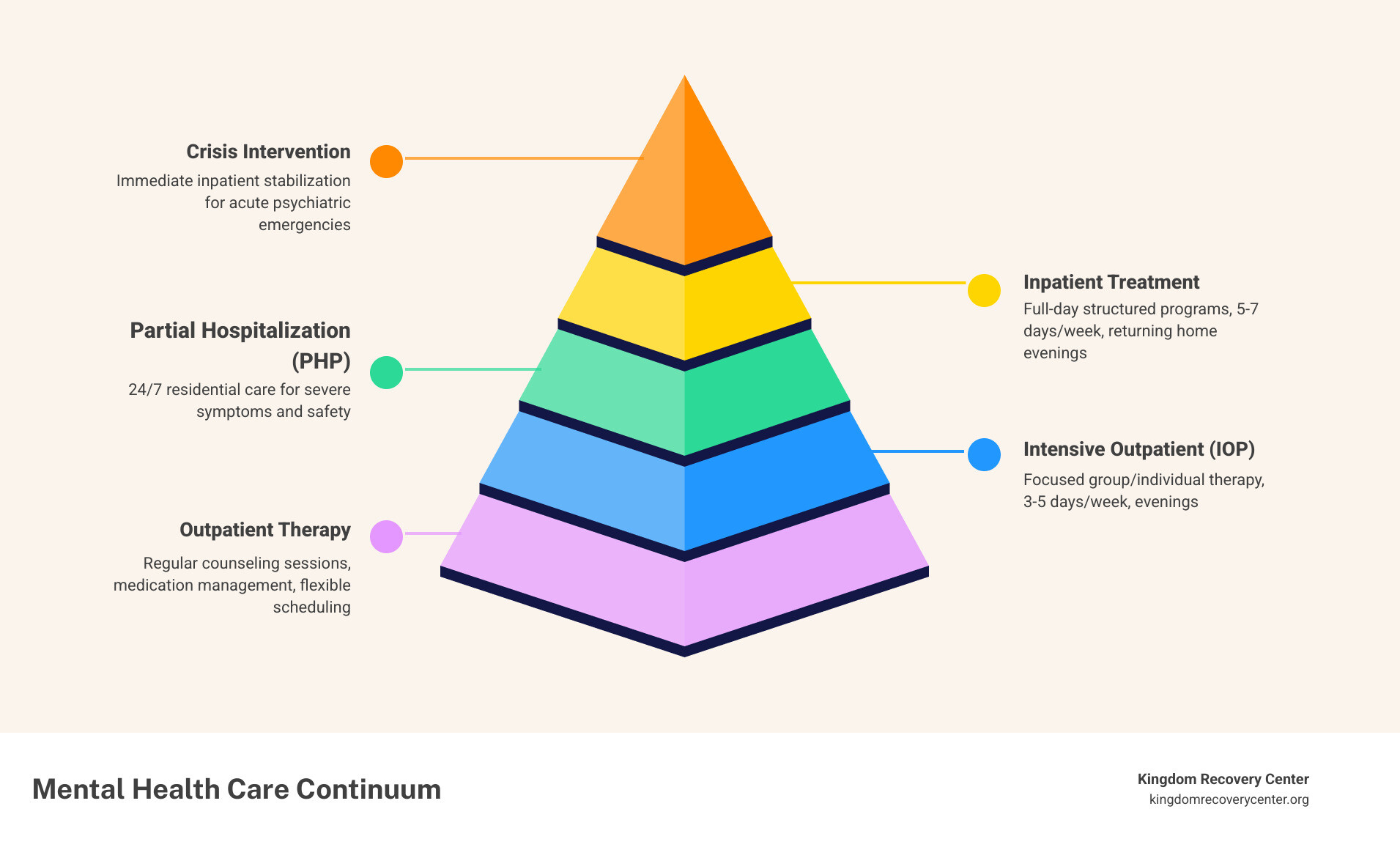
Understanding the “continuum of care” helps you decide which program fits your current level of need. Mental health treatment isn’t a single destination; it’s a series of steps.
Inpatient Stabilization
Inpatient care is the most intensive level of treatment. It is designed for individuals in immediate crisis, such as those experiencing suicidal ideation, psychosis, or severe inability to function. Local inpatient facilities provide 24/7 monitoring and medical support to stabilize patients before they transition to lower levels of care. For those dealing specifically with substance crises, Knoxville inpatient drug rehab provides a structured environment to begin the journey safely.
Partial Hospitalization Programs (PHP)
PHP is often called “day treatment.” You spend the majority of your day (usually about 5 hours) at the center receiving intensive therapy and medical check-ins, but you return home at night. This is an excellent “step-down” for people leaving inpatient care who still need significant support.
Intensive Outpatient Programs (IOP)
IOP offers more flexibility, typically requiring 3 hours of therapy a few days a week. This allows you to maintain work, school, or family commitments while still receiving professional help. It’s a popular choice for outpatient mental health because it balances clinical rigor with real-world application.
Comparison of PHP and IOP
| Feature | Partial Hospitalization (PHP) | Intensive Outpatient (IOP) |
|---|---|---|
| Hours per day | 5+ hours | 3 hours |
| Days per week | 5 days | 2–5 days |
| Living Situation | Home or sober living | Home or sober living |
| Medical Support | Daily access to providers | Weekly or as-needed |
| Best For | Transitioning from inpatient | Maintaining daily responsibilities |
Quality Assurance and Financial Considerations
When choosing between Knoxville mental health centers, quality markers matter. Look for accreditations from organizations like CARF International or The Joint Commission. These certifications mean the facility has passed rigorous inspections regarding safety, patient rights, and clinical excellence. Seeking a CARF-accredited facility demonstrates a high commitment to transparency and quality.
Insurance and Accessibility
Cost is often the biggest barrier to care. Most major Knoxville mental health centers accept a variety of insurance plans, including Aetna, BlueCross BlueShield, Cigna, and UnitedHealthcare. However, it is important to note that insurance acceptance varies; while some private clinics have specific requirements, many community-based organizations accept TennCare.
We always recommend performing an insurance verification before your first visit. You can find more information on navigating these hurdles in our list of local resources Knoxville TN.
The Socioeconomic Gap in Care
It is a hard reality that why treatment for severe mental illness looks radically different for rich and poor people is often tied to housing and insurance. Those with stable housing and private insurance often have faster access to innovative treatments like TMS or Spravato, while those experiencing homelessness may rely more heavily on community crisis centers. Knoxville advocates are working hard to bridge this gap through increased social services and “Housing First” initiatives.
Community Advocacy and Educational Resources
Recovery doesn’t happen in a vacuum. Beyond clinical treatment, Knoxville offers a wealth of community-based support.
- NAMI Knoxville: The local affiliate of the National Alliance on Mental Illness provides free support groups for both individuals with mental illness and their family members. They are a powerhouse for advocacy and education in the Greater Knoxville area.
- Peer Recovery: Many programs now employ “Peer Recovery Specialists”—individuals who have lived experience with mental illness or addiction and can offer unique, empathetic support.
- Crisis Intervention Teams (CIT): Knoxville law enforcement and mental health providers work together through CIT. If you are calling 911 for a mental health crisis, you can specifically ask for a CIT-trained officer who is equipped to de-escalate the situation and connect you with help rather than jail.
Staying informed is also a part of the process. Reading up on NAMI Mental Health Research News can help you and your family understand the latest breakthroughs in treatment and policy.
Frequently Asked Questions about Knoxville Mental Health Centers
What should I bring to my first mental health appointment?
For your first visit, you should generally bring your photo ID, insurance card, a list of any current medications (with dosages), and any relevant medical records. If you are attending a PHP or IOP program, you might also want to bring a water bottle, snacks, and a light jacket, as clinical offices can sometimes be chilly!
Do Knoxville mental health centers accept major insurance plans?
Yes, most centers are in-network with major providers like BCBS, Aetna, and Cigna. However, coverage varies by facility. Always call ahead or use an online verification tool to confirm that your specific plan is accepted.
Are there specialized programs for co-occurring disorders in Knoxville?
Absolutely. Many centers in the area specialize in “Dual Diagnosis” care. This is essential if you are dealing with both a mental health condition (like depression) and a substance use disorder. Treating both simultaneously is the gold standard for long-term recovery.
Conclusion
Navigating the landscape of Knoxville mental health centers is a journey of “mind over matter.” It takes courage to admit that you need help, but the resources in East Tennessee are vast and ready to support you. From innovative interventional psychiatry available at specialized clinics to the community-rooted advocacy of NAMI Knoxville, there is a place for everyone.
At Kingdom Recovery Center, we believe that every individual deserves a treatment plan as unique as they are. Whether you are looking for addiction support, mental health stabilization, or dual diagnosis care, our mission is to empower lasting change through evidence-based, compassionate treatment.
If you’re ready to take the next step, let this be your guide to finding the right mental health treatment in Tennessee. You don’t have to do this alone—help is just a phone call away.