When Schizophrenia Becomes a Crisis: What Knoxville Residents Need to Know
Schizophrenia inpatient treatment Knoxville TN is available for individuals experiencing severe psychotic symptoms who need 24/7 structured psychiatric care to stabilize and begin recovery.
Quick answers for Knoxville residents:
- What it is: Inpatient schizophrenia treatment provides round-the-clock medical supervision, medication management, and therapy in a secure facility
- Who it’s for: People experiencing hallucinations, delusions, or disorganized thinking severe enough to affect safety or daily functioning
- Where to start: Call 988 (Suicide & Crisis Lifeline) for immediate help, or contact a local behavioral health facility for a no-cost assessment
- What to expect: A personalized treatment plan combining antipsychotic medication, evidence-based therapy (CBT, DBT), and discharge planning
- Cost: Without insurance, inpatient care typically ranges from $200 to $1,000 per day; most major insurance plans, Medicare, and Medicaid are accepted at many Knoxville facilities
Schizophrenia is a serious mental health condition. It distorts how a person perceives reality — making it hard to think clearly, communicate, and function day to day. It is not a character flaw or a life sentence. But it does require specialized, consistent care.
The stakes are real. Research shows that people living with schizophrenia lose an average of 28.5 years of life compared to those without the condition. About 4.9% die by suicide. And nearly half have at least one co-occurring mental health disorder. Early, effective treatment changes those outcomes.
At Kingdom Recovery Center, based in Morristown, TN, we specialize in addiction recovery and mental health services — including support for individuals navigating schizophrenia and co-occurring disorders — making us a trusted resource for those exploring schizophrenia inpatient treatment Knoxville TN and the surrounding region. Our holistic, evidence-based approach is built around each person’s unique needs, from initial assessment through aftercare.
Understanding Schizophrenia and the Need for Specialized Care
Schizophrenia is often misunderstood, but at its core, it is a chronic brain disorder. When someone is in the middle of a psychotic episode, their brain processes information in a way that creates a reality entirely different from the one others are experiencing. This is why specialized mental health care is so vital.
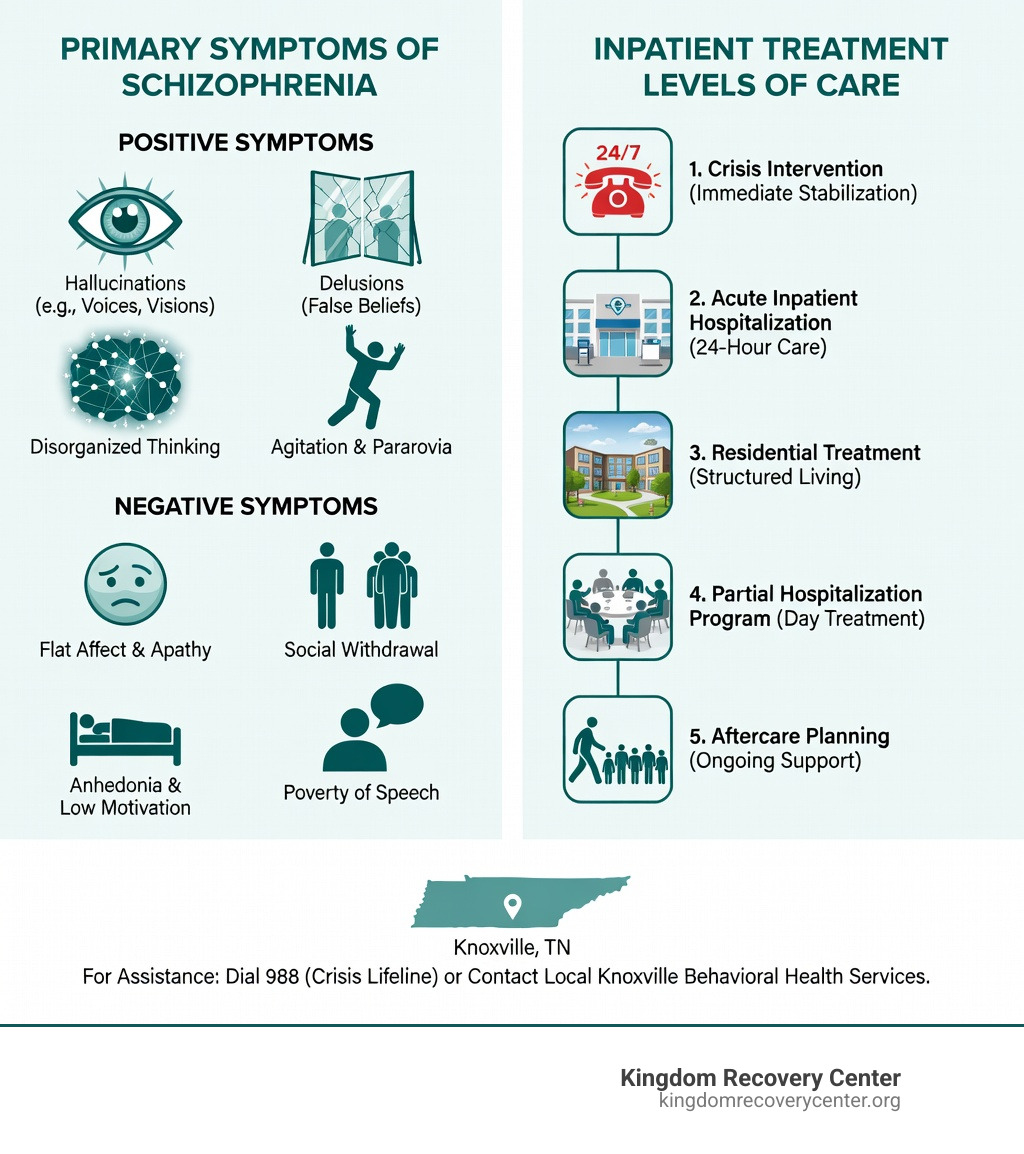
The symptoms of schizophrenia are generally categorized into “positive” symptoms (behaviors added to the personality) and “negative” symptoms (capabilities taken away).
Primary Symptoms
- Hallucinations: These involve sensing things that aren’t there. While visual hallucinations occur, auditory hallucinations—hearing voices—are the most common.
- Delusions: These are fixed, false beliefs that aren’t grounded in reality. A person might believe they have extraordinary powers or that they are being targeted by a conspiracy.
- Disorganized Speech and Thinking: This often manifests as “word salad,” where sentences don’t make sense, or the person switches rapidly between unrelated topics.
- Negative Symptoms: These include a lack of emotional expression, social withdrawal, and a loss of motivation or interest in daily activities.
According to the National Institute of Mental Health, schizophrenia affects approximately 0.25% to 0.64% of U.S. adults, though some estimates suggest up to 1.1% of the population lives with the condition. In Tennessee, the need for care is significant, as roughly 252,000 adults in the state live with a serious mental illness.
Because of the premature death risks and the 4.9% suicide rate associated with the disorder, professional intervention isn’t just a suggestion—it is a life-saving necessity. Specialized care ensures that the person is monitored for safety while their brain chemistry is stabilized through medication.
Signs You Need Schizophrenia Inpatient Treatment in Knoxville TN
Knowing when to transition from “managing at home” to seeking schizophrenia inpatient treatment Knoxville TN can be difficult for families. However, certain “red flags” indicate that a person requires a higher level of clinical intervention.
When to Seek Inpatient Care
- Acute Psychosis: If a loved one is actively experiencing a break from reality and cannot distinguish what is real, they are in a state of acute psychosis.
- Safety Concerns: Any talk of self-harm or threats toward others requires immediate hospitalization.
- Inability to Function: If the person has stopped eating, bathing, or sleeping due to their symptoms, they need 24/7 medical support.
- Paranoia: Severe paranoia can lead to erratic or dangerous behavior as the person tries to “protect” themselves from imagined threats.
It is also important to distinguish between chronic schizophrenia and brief psychotic disorder, which accounts for about 9% of first-onset psychosis cases in the U.S. Brief psychotic disorder typically lasts less than 30 days and is often triggered by extreme stress, but it still requires the same level of immediate stabilization.
Knoxville Crisis Resources
If you or a loved one is in immediate danger, you can access help through:
- 988 Suicide & Crisis Lifeline: Available 24/7 for confidential support.
- Mobile Crisis Units: Many areas in East Tennessee offer mobile teams that can evaluate an individual in their home.
- Emergency Rooms: While not a long-term solution, local Knoxville ERs can provide initial safety until a bed opens in a psychiatric facility.
For those not in an immediate emergency but needing a higher level of support, exploring different treatment options is the first step toward stability.
Comparing Outpatient Care to Schizophrenia Inpatient Treatment Knoxville TN
Not every person with schizophrenia needs to stay in a hospital indefinitely. The goal of the mental health community in Knoxville is to provide the “least restrictive” environment that still keeps the patient safe.
| Feature | Inpatient Treatment | Partial Hospitalization (PHP) | Intensive Outpatient (IOP) |
|---|---|---|---|
| Supervision | 24/7 Medical Staff | 6 Hours/Day, 5 Days/Week | 3 Hours/Day, 3-5 Days/Week |
| Living Arrangement | On-site Facility | Home or Sober Living | Home |
| Medication | Heavily Monitored | Professionally Managed | Self-Administered/Monitored |
| Primary Goal | Crisis Stabilization | Intensive Skill Building | Relapse Prevention |
While inpatient care is the gold standard for crisis stabilization, many people transition into a partial hospitalization program once they are no longer a danger to themselves or others. This allows them to receive intensive therapy during the day while returning home or to a supportive environment at night.
Evidence-Based Therapies in Schizophrenia Inpatient Treatment Knoxville TN
Modern treatment has come a long way from the “asylums” of the past. Today, we focus on a combination of medical science and behavioral therapy to help patients reclaim their lives.
- Medication Management: This is the cornerstone of schizophrenia care. Antipsychotic medications help regulate dopamine and serotonin levels in the brain to reduce hallucinations and delusions.
- Cognitive Behavioral Therapy (CBT): CBT helps patients identify and “test” their delusional thoughts, learning to recognize when their brain is playing tricks on them.
- Dialectical Behavior Therapy (DBT): DBT is excellent for emotional regulation and helping patients cope with the intense distress that psychosis causes.
- Individual and Group Counseling: Group therapy is particularly helpful for schizophrenia, as it breaks the isolation that the disorder often creates. Patients can share experiences and social skills in a safe environment.
At Kingdom Recovery Center, we believe in looking at what we treat through a holistic lens, ensuring that physical health, nutrition, and social support are addressed alongside psychiatric symptoms.
Navigating Costs, Insurance, and Admissions for Knoxville Facilities
One of the biggest hurdles to seeking schizophrenia inpatient treatment Knoxville TN is the concern over cost. However, Tennessee has several avenues to make care accessible.
Insurance and Coverage
Most inpatient facilities in the Knoxville and East Tennessee area accept a variety of insurance types:
- Private Insurance: Providers like BlueCross BlueShield of Tennessee, Aetna, Cigna, and Humana often cover inpatient psychiatric stays, though the length of stay may require “prior authorization.”
- Medicare and Medicaid: Many local behavioral health hospitals accept government-funded insurance for seniors and low-income individuals.
- VA Community Care: Veterans in the Knoxville area can often access private psychiatric care through the VA’s community care network.
Out-of-Pocket Costs
If you do not have insurance, inpatient care can be expensive, ranging from $6,000 to $30,000 per month depending on the facility’s amenities and level of care. Many rehab centers in Knoxville Tennessee offer sliding scale fees or payment plans to help families manage these costs.
The Admissions Process
Admissions usually begin with a “no-cost assessment.” A clinician will sit down with the individual (and often their family) to review medical history, current symptoms, and safety risks. If the person meets the criteria for inpatient care, they can often be admitted the same day.
Long-Term Recovery: Dual Diagnosis and Aftercare Planning
Recovery from schizophrenia is not a sprint; it’s a marathon. At Kingdom Recovery Center, we emphasize that stabilization is only the beginning. Because about half of those with schizophrenia also struggle with substance use, dual diagnosis treatment is essential.
Why Dual Diagnosis Matters
Many people with schizophrenia attempt to “self-medicate” their symptoms with alcohol, nicotine, or illicit drugs. Unfortunately, substances like marijuana or stimulants can actually worsen psychotic symptoms. An integrated treatment plan addresses both the mental health disorder and the addiction simultaneously.
Discharge and Aftercare
A successful stay in schizophrenia inpatient treatment Knoxville TN always ends with a solid discharge plan. This might include:
- Transitioning to a PHP or IOP program.
- Setting up appointments with a local Knoxville psychiatrist for ongoing medication management.
- Connecting with support groups like NAMI (National Alliance on Mental Illness) Knoxville.
- Family therapy to help loved ones understand how to provide a supportive home environment.
Frequently Asked Questions about Schizophrenia Treatment
Is schizophrenia curable?
There is currently no cure for schizophrenia, but it is highly treatable. With the right combination of medication and therapy, many people live fulfilling lives, hold jobs, and maintain healthy relationships. Think of it like diabetes: it’s a chronic condition that requires lifelong management, but it doesn’t have to define your life.
How long does inpatient treatment typically last?
The duration varies based on the severity of the symptoms. Some acute stabilization stays last between 7 to 14 days. However, more intensive residential programs can last 30 to 90 days to ensure the patient is fully stabilized on their medication and has learned the necessary coping skills.
How can I access immediate crisis care in Knoxville?
In an emergency, dial 988 or go to the nearest hospital emergency room. For non-emergencies, you can call local behavioral health facilities directly to schedule an assessment. Many facilities in the Knoxville area have 24/7 admissions teams ready to take your call.
Conclusion
Schizophrenia is a heavy burden to carry, but you don’t have to carry it alone. From the initial crisis of psychosis to the long-term journey of recovery, Knoxville and the surrounding East Tennessee area offer a wealth of resources. Whether it’s through intensive schizophrenia inpatient treatment Knoxville TN or stepped-down outpatient support, the goal is always the same: helping you or your loved one find a path back to reality and a life of purpose.
If you are navigating the complexities of mental health and addiction, we invite you to read Your Guide to Alcohol and Drug Rehab in Knoxville TN to learn more about the local landscape of care.
For those ready to take the next step toward a structured, supportive environment, explore our options for Knoxville Inpatient Drug Rehab and mental health stabilization. At Kingdom Recovery Center, we are here to empower lasting change for you and your family.