
Understanding Behavioral Health and Its Importance
Behavioral health services encompass a wide range of support for mental health conditions, substance use disorders, and overall emotional well-being. These services, including therapy, counseling, and medication management, are designed to help individuals achieve healthier, more fulfilling lives.
The need for these services is significant. One in five adults experienced a behavioral health issue between 2019 and 2020, and in 2023, over 20 million adults had both a mental health condition and a substance use disorder. Behavioral health is about the connection between our behaviors and our mental, emotional, and physical well-being. It addresses how we think, feel, and act, and how these factors affect our relationships, work, and daily life.
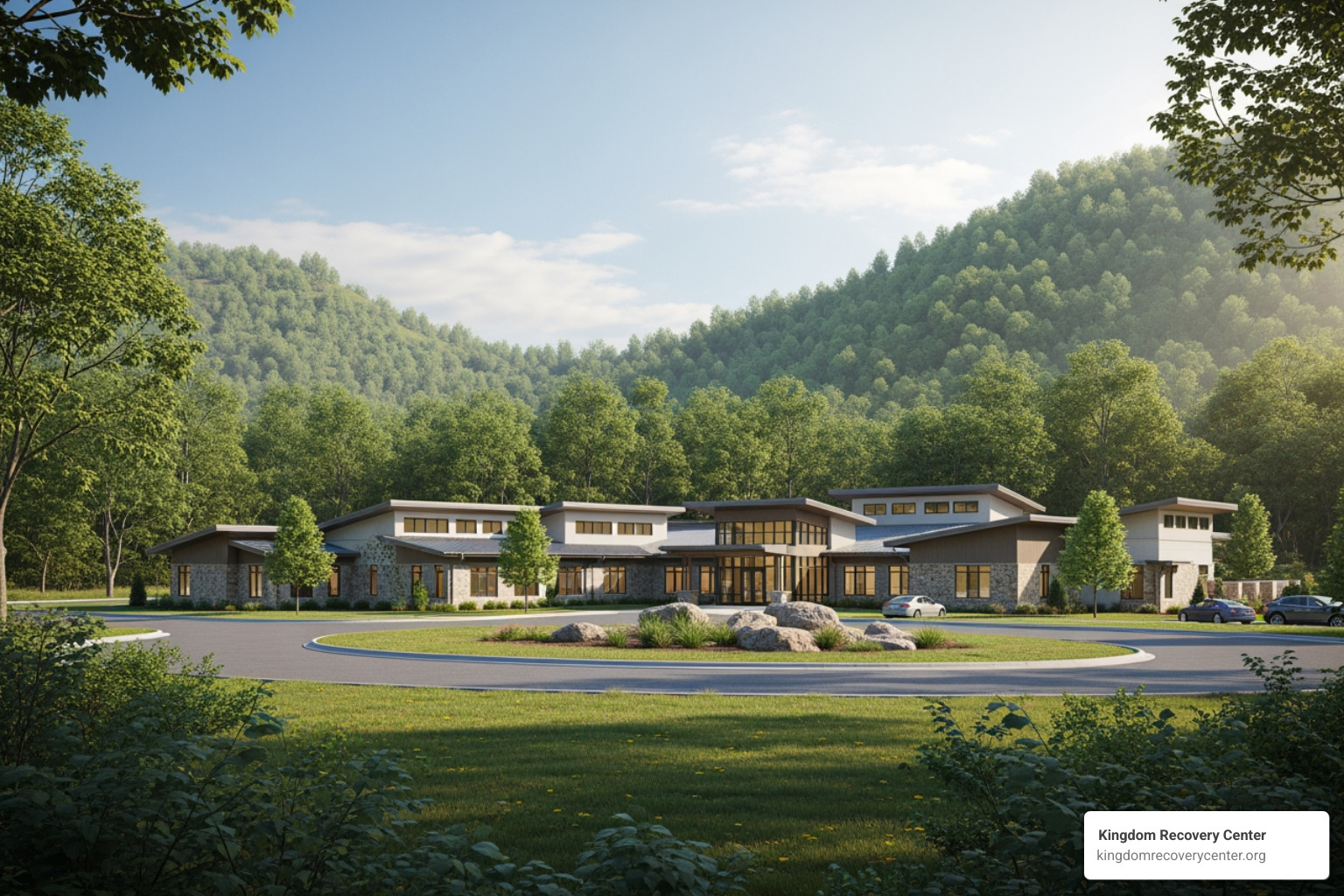
Despite growing demand, accessing care remains a challenge for many. At Kingdom Recovery Center in Morristown, Tennessee, we provide comprehensive behavioral health services, including detoxification, inpatient and outpatient programs, and therapeutic support for individuals facing addiction and mental health challenges.
Our team offers personalized, evidence-based treatment 24/7 to help you or your loved one start the journey toward lasting recovery.
The Spectrum of Conditions Addressed by Behavioral Health Services
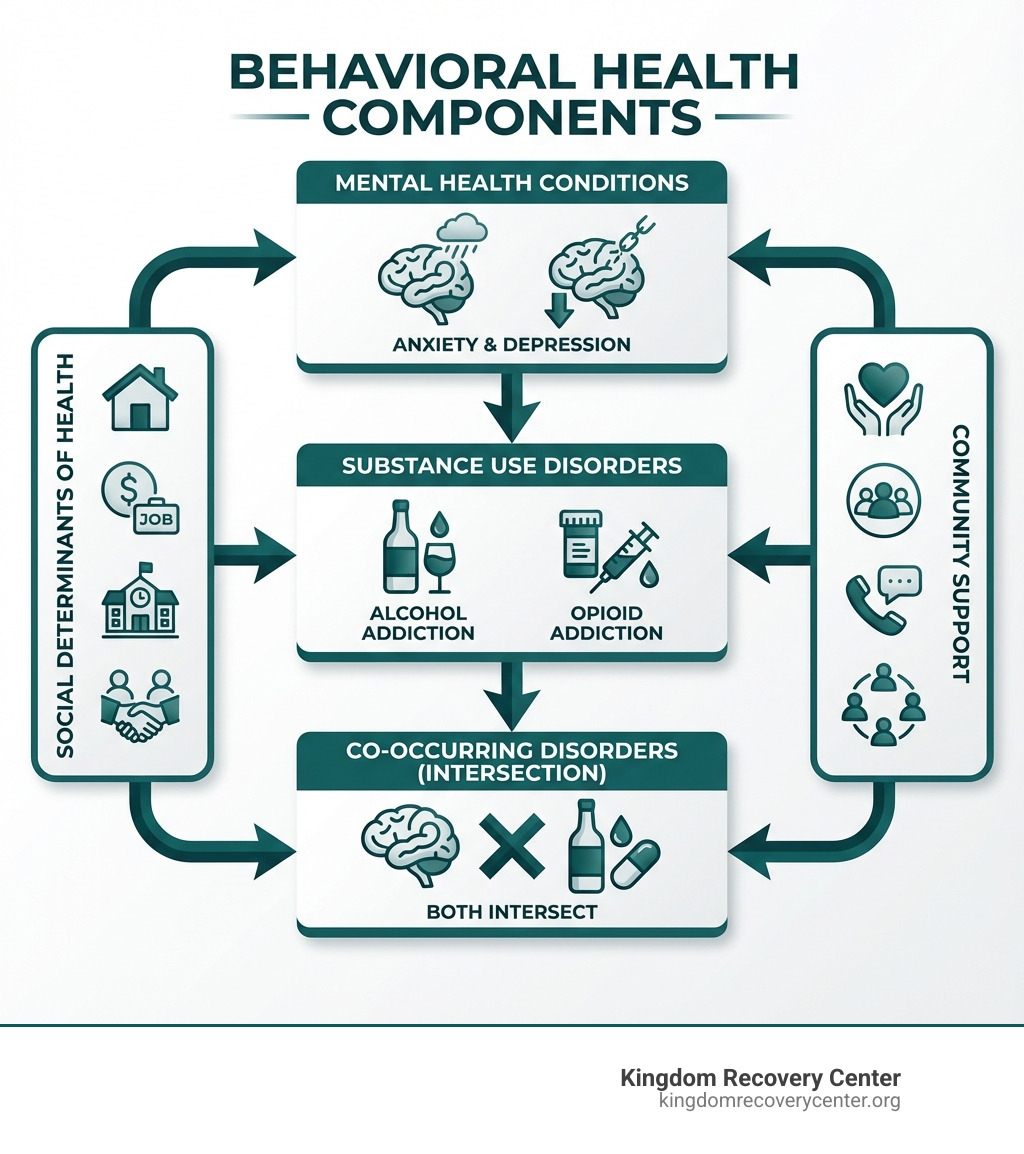
Behavioral health covers mental health, substance use, and behaviors affecting wellness. At Kingdom Recovery Center, our behavioral health services treat various conditions, often alongside substance use disorders.
Mental Health Conditions
We address:
- Anxiety: Persistent worry or fear. Learn more here.
- Depression: Persistent sadness and loss of interest. Details here.
- PTSD: Develops after trauma. Explore options here.
- Bipolar Disorder: Mood swings between mania and depression. Learn more here.
- Borderline Personality Disorder: Affects self-perception and relationships. Support available here.
Substance Use and Co-Occurring Disorders
When mental health disorders and substance use disorders exist together (dual diagnosis), it affects 20.4 million U.S. adults. We specialize in treating both simultaneously:
- Alcohol Abuse: Comprehensive sobriety programs here.
- Opioid Addiction: Specialized care for opioid dependencies here.
Our dual diagnosis approach recognizes the intimate connection between mental health and substance use. Learn more here and about the link from NIMH.
Comprehensive Behavioral Health Services: What to Expect
Kingdom Recovery Center offers comprehensive behavioral health services integrating therapeutic modalities, medication management, and integrated care.
The Role of Therapy and Counseling
Therapy provides a safe space for healing. We offer:
- CBT: Changes negative thought patterns. Learn more here.
- DBT: Teaches mindfulness and emotional regulation. Details here.
- Trauma Therapy: Processes traumatic experiences safely. Read more here.
- Individual, Group, and Family Therapy: Various formats for comprehensive support.
The Role of Medication Management
Medication often complements therapy:
- Psychiatric Evaluation: Determines medication appropriateness.
- Mental Health Medications: Manage symptoms of anxiety and depression.
- MAT: Medications like buprenorphine reduce cravings and withdrawal.
- Medically Assisted Detox: Safe withdrawal management. Learn more here.
Integrated Behavioral Health
This model combines behavioral health with primary care, reducing stigma and improving outcomes. Learn more here.
Navigating Levels of Care and Treatment Settings
The continuum of care offers treatment options from intensive inpatient to flexible outpatient services.
Outpatient Behavioral Health Services
- PHP: Structured day programs. Details here.
- IOP: Several therapy hours weekly. Learn more here.
- Standard Outpatient: Regular weekly sessions for ongoing support.
Inpatient and Residential Treatment
- Inpatient Care: Short-term hospital stays for stabilization.
- Residential Treatment: Extended facility stays with 24-hour supervision.
Our programs provide appropriate care levels for lasting recovery. Learn more from SAMHSA.
Accessing Care and Finding Support
Finding behavioral health services doesn’t have to be overwhelming.
How to Find and Choose a Provider
Look for licensed providers specializing in your needs. Ask about their approach and experience. Kingdom Recovery Center offers individualized care to find your right fit.
Navigating Insurance and Payment Options
- Medicaid and Medicare: Cover mental health services.
- Private Insurance: MHPAEA requires coverage similar to medical care.
Verify your insurance coverage on our website.
Resources for a Behavioral Health Crisis
- 988 Suicide & Crisis Lifeline: Call or text 988.
- The Trevor Project: LGBTQ+ youth support at 1-866-488-7386.
- Local Resources: Johnson City and Knoxville.
The Spectrum of Conditions Addressed by Behavioral Health Services
Behavioral health is an umbrella term that covers mental health, substance use, and the behaviors that affect wellness. At Kingdom Recovery Center, our behavioral health services are equipped to treat a variety of these conditions, often in conjunction with substance use disorders.
Mental Health Conditions
Common mental health conditions we address include:
- Anxiety: Characterized by persistent worry or fear. We offer support to help individuals manage and overcome overwhelming anxious feelings. You can learn more about how we treat anxiety here.
- Depression: Involves persistent sadness, loss of interest, and changes in sleep or appetite. Our programs provide comprehensive care for individuals struggling with depression. Find out more about our approach to depression here.
- PTSD (Post-Traumatic Stress Disorder): Can develop after a traumatic event, leading to flashbacks and severe anxiety. Trauma-informed care is a cornerstone of our treatment. Explore our PTSD treatment options here.
- Bipolar Disorder: Marked by significant mood swings between mania and depression. We help individuals stabilize their moods and develop coping strategies. Learn about our bipolar disorder treatment here.
- Borderline Personality Disorder (BPD): Impacts how a person thinks and feels about themselves and others. Our specialized services can help individuals steer the challenges of BPD. Find our support for borderline personality disorder here.
- Mood Disorders: A broad category including depression and bipolar disorder, where the primary symptom is a disturbance in mood.
Substance Use and Co-Occurring Disorders
Many individuals turn to substances to cope with stress or mental distress, which can lead to a substance use disorder (SUD). When a mental health disorder and an SUD exist simultaneously, it’s known as a co-occurring disorder or dual diagnosis. This is incredibly common, affecting approximately 20.4 million adults in the U.S. in 2023.
At Kingdom Recovery Center, we specialize in dual diagnosis programs, addressing both the addiction and the underlying mental health challenges concurrently. We treat a range of substance use disorders, including:
- Alcohol Abuse: We provide comprehensive treatment to help individuals achieve sobriety. Learn more about our alcohol abuse programs here.
- Opioid Addiction: Our programs offer specialized care for addiction to opioids like prescription painkillers, heroin, and fentanyl. Explore our opioid treatment options here.
Understanding the synergy of these conditions is vital for effective treatment. Our dual diagnosis programs are designed to provide integrated care, recognizing that a person’s mental health and substance use are intimately connected. Learn more about our dual diagnosis approach here. You can also read more about the link between substance use and mental health here.
Comprehensive Behavioral Health Services: What to Expect
At Kingdom Recovery Center, we offer a comprehensive approach to behavioral health services that caters to your unique needs. Our programs integrate various therapeutic modalities, medication management, and integrated care models to ensure you receive the most effective treatment possible.
The Role of Therapy and Counseling
Therapy and counseling are foundational components of effective behavioral health treatment. They provide a safe space to explore thoughts, feelings, and behaviors and develop healthy coping skills. We offer:
- Cognitive Behavioral Therapy (CBT): An evidence-based therapy that helps individuals identify and change negative thought patterns and behaviors. Learn more about CBT for mental health.
- Dialectical Behavioral Therapy (DBT): Focuses on teaching skills in mindfulness, distress tolerance, and emotional regulation. Learn more about DBT.
- Trauma Therapy: Specialized approaches to help individuals process traumatic experiences in a safe environment. Read about our trauma therapy within addiction treatment.
- Individual, Group, and Family Therapy: These formats provide personalized attention, peer support, and help for repairing family relationships.
The Role of Medication Management
For many, medication is a crucial part of a comprehensive treatment plan, working alongside therapy.
- Psychiatric Evaluation: A thorough assessment to determine if medication is appropriate.
- Medication for Mental Health: Medications can help manage symptoms of conditions like anxiety and depression.
- Medications for Substance Use Disorders (MSUD): Also known as Medication-Assisted Treatment (MAT), these medications (like buprenorphine and naltrexone) can reduce cravings and withdrawal symptoms, making recovery more manageable.
- Medically Assisted Detox: Provides a safe, supervised environment to manage withdrawal symptoms, often the first step in recovery. Learn more about our medically assisted detox.
Integrated Behavioral Health
Integrated behavioral health combines behavioral health services with primary medical care, recognizing the strong link between physical and mental well-being. This collaborative model helps reduce stigma, improve access to care, and treat the whole person for better overall health outcomes. You can learn more about how integrated behavioral health works here.
Navigating Levels of Care and Treatment Settings
Understanding the different levels of care in behavioral health services is key to finding the right fit for your needs. The “continuum of care” offers a range of treatment options, from intensive inpatient programs to flexible outpatient services, allowing for a personalized recovery journey.
Outpatient Behavioral Health Services
Outpatient care allows individuals to receive structured support while maintaining their daily responsibilities. Options include:
- Partial Hospitalization Programs (PHP): A high level of structured care during the day, with clients returning home at night. Find more about our PHP programs.
- Intensive Outpatient Programs (IOP): A step down from PHP, offering several hours of therapy per week while allowing for more flexibility. Explore our IOP offerings.
- Standard Outpatient Care: Regular, scheduled therapy sessions (e.g., once a week) for ongoing support and maintenance.
Inpatient and Residential Treatment
For those needing a more immersive and supportive environment, inpatient and residential programs are ideal.
- Inpatient Care: This involves a short-term stay in a hospital setting for medical stabilization, particularly for acute crises or severe withdrawal.
- Residential Treatment: Clients live at the treatment facility for an extended period, receiving 24-hour supervision and a structured schedule of therapies. This setting is ideal for focusing entirely on recovery.
At Kingdom Recovery Center, our inpatient and outpatient programs are designed to provide the right level of care for your journey to lasting recovery. You can learn more about different treatment types from this SAMHSA guide.
Accessing Care and Finding Support
Finding the right behavioral health services can feel overwhelming, but you don’t have to steer it alone. Understanding who provides care, what they do, and how payment works can make the process much smoother.
How to Find and Choose a Provider
Finding the right behavioral health services provider means looking for someone who understands your unique needs. Ensure they are properly licensed and, if applicable, specialize in your specific concerns, such as co-occurring disorders. Don’t hesitate to ask questions about their approach and experience. At Kingdom Recovery Center, we believe in individualized care and can help you find the right fit within our programs.
Navigating Insurance and Payment Options
The cost of care is a common concern. Fortunately, many options are available:
- Medicaid and Medicare: These government programs cover a range of mental health services.
- Private Insurance: The Mental Health Parity and Addiction Equity Act (MHPAEA) requires most private insurance plans to cover mental health and substance use disorders similarly to medical care. However, coverage can vary by plan.
At Kingdom Recovery Center, we work with various insurance providers. You can easily verify your insurance coverage on our website.
Resources for a Behavioral Health Crisis
If you or someone you know is in crisis, immediate help is available.
- 988 Suicide & Crisis Lifeline: Call or text 988 for 24/7 confidential support.
- The Trevor Project: Provides 24/7 crisis services for LGBTQ+ youth at 1-866-488-7386.
- Local Tennessee Resources: For local support, you can explore resources for Johnson City, TN and Knoxville, TN on our site.
The Spectrum of Conditions Addressed by Behavioral Health Services
Behavioral health is an umbrella term that covers mental health, substance use, and the behaviors that affect wellness. At Kingdom Recovery Center, our behavioral health services are equipped to treat a variety of these conditions, often in conjunction with substance use disorders.
Mental Health Conditions
Common mental health conditions we address include:
- Anxiety: Characterized by persistent worry or fear. We offer support to help individuals manage and overcome overwhelming anxious feelings. You can learn more about how we treat anxiety here.
- Depression: Involves persistent sadness, loss of interest, and changes in sleep or appetite. Our programs provide comprehensive care for individuals struggling with depression. Find out more about our approach to depression here.
- PTSD (Post-Traumatic Stress Disorder): Can develop after a traumatic event, leading to flashbacks and severe anxiety. Trauma-informed care is a cornerstone of our treatment. Explore our PTSD treatment options here.
- Bipolar Disorder: Marked by significant mood swings between mania and depression. We help individuals stabilize their moods and develop coping strategies. Learn about our bipolar disorder treatment here.
- Borderline Personality Disorder (BPD): Impacts how a person thinks and feels about themselves and others. Our specialized services can help individuals steer the challenges of BPD. Find our support for borderline personality disorder here.
- Mood Disorders: A broad category including depression and bipolar disorder, where the primary symptom is a disturbance in mood.
Substance Use and Co-Occurring Disorders
Many individuals turn to substances to cope with stress or mental distress, which can lead to a substance use disorder (SUD). When a mental health disorder and an SUD exist simultaneously, it’s known as a co-occurring disorder or dual diagnosis. This is incredibly common, affecting approximately 20.4 million adults in the U.S. in 2023.
At Kingdom Recovery Center, we specialize in dual diagnosis programs, addressing both the addiction and the underlying mental health challenges concurrently. We treat a range of substance use disorders, including:
- Alcohol Abuse: We provide comprehensive treatment to help individuals achieve sobriety. Learn more about our alcohol abuse programs here.
- Opioid Addiction: Our programs offer specialized care for addiction to opioids like prescription painkillers, heroin, and fentanyl. Explore our opioid treatment options here.
Understanding the synergy of these conditions is vital for effective treatment. Our dual diagnosis programs are designed to provide integrated care, recognizing that a person’s mental health and substance use are intimately connected. Learn more about our dual diagnosis approach here. You can also read more about the link between substance use and mental health here.
Comprehensive Behavioral Health Services: What to Expect
At Kingdom Recovery Center, we offer a comprehensive approach to behavioral health services that caters to your unique needs. Our programs integrate various therapeutic modalities, medication management, and integrated care models to ensure you receive the most effective treatment possible.
The Role of Therapy and Counseling
Therapy and counseling are foundational components of effective behavioral health treatment. They provide a safe space to explore thoughts, feelings, and behaviors and develop healthy coping skills. We offer:
- Cognitive Behavioral Therapy (CBT): An evidence-based therapy that helps individuals identify and change negative thought patterns and behaviors. Learn more about CBT for mental health.
- Dialectical Behavioral Therapy (DBT): Focuses on teaching skills in mindfulness, distress tolerance, and emotional regulation. Learn more about DBT.
- Trauma Therapy: Specialized approaches to help individuals process traumatic experiences in a safe environment. Read about our trauma therapy within addiction treatment.
- Individual, Group, and Family Therapy: These formats provide personalized attention, peer support, and help for repairing family relationships.
The Role of Medication Management
For many, medication is a crucial part of a comprehensive treatment plan, working alongside therapy.
- Psychiatric Evaluation: A thorough assessment to determine if medication is appropriate.
- Medication for Mental Health: Medications can help manage symptoms of conditions like anxiety and depression.
- Medications for Substance Use Disorders (MSUD): Also known as Medication-Assisted Treatment (MAT), these medications (like buprenorphine and naltrexone) can reduce cravings and withdrawal symptoms, making recovery more manageable.
- Medically Assisted Detox: Provides a safe, supervised environment to manage withdrawal symptoms, often the first step in recovery. Learn more about our medically assisted detox.
Integrated Behavioral Health
Integrated behavioral health combines behavioral health services with primary medical care, recognizing the strong link between physical and mental well-being. This collaborative model helps reduce stigma, improve access to care, and treat the whole person for better overall health outcomes. You can learn more about how integrated behavioral health works here.
Navigating Levels of Care and Treatment Settings
Understanding the different levels of care in behavioral health services is key to finding the right fit for your needs. The “continuum of care” offers a range of treatment options, from intensive inpatient programs to flexible outpatient services, allowing for a personalized recovery journey.
Outpatient Behavioral Health Services
Outpatient care allows individuals to receive structured support while maintaining their daily responsibilities. Options include:
- Partial Hospitalization Programs (PHP): A high level of structured care during the day, with clients returning home at night. Find more about our PHP programs.
- Intensive Outpatient Programs (IOP): A step down from PHP, offering several hours of therapy per week while allowing for more flexibility. Explore our IOP offerings.
- Standard Outpatient Care: Regular, scheduled therapy sessions (e.g., once a week) for ongoing support and maintenance.
Inpatient and Residential Treatment
For those needing a more immersive and supportive environment, inpatient and residential programs are ideal.
- Inpatient Care: This involves a short-term stay in a hospital setting for medical stabilization, particularly for acute crises or severe withdrawal.
- Residential Treatment: Clients live at the treatment facility for an extended period, receiving 24-hour supervision and a structured schedule of therapies. This setting is ideal for focusing entirely on recovery.
At Kingdom Recovery Center, our inpatient and outpatient programs are designed to provide the right level of care for your journey to lasting recovery. You can learn more about different treatment types from this SAMHSA guide.
Accessing Care and Finding Support
Finding the right behavioral health services can feel overwhelming, but you don’t have to steer it alone. Understanding who provides care, what they do, and how payment works can make the process much smoother.
How to Find and Choose a Provider
Finding the right behavioral health services provider means looking for someone who understands your unique needs. Ensure they are properly licensed and, if applicable, specialize in your specific concerns, such as co-occurring disorders. Don’t hesitate to ask questions about their approach and experience. At Kingdom Recovery Center, we believe in individualized care and can help you find the right fit within our programs.
Navigating Insurance and Payment Options
The cost of care is a common concern. Fortunately, many options are available:
- Medicaid and Medicare: These government programs cover a range of mental health services.
- Private Insurance: The Mental Health Parity and Addiction Equity Act (MHPAEA) requires most private insurance plans to cover mental health and substance use disorders similarly to medical care. However, coverage can vary by plan.
At Kingdom Recovery Center, we work with various insurance providers. You can easily verify your insurance coverage on our website.
Resources for a Behavioral Health Crisis
If you or someone you know is in crisis, immediate help is available.
- 988 Suicide & Crisis Lifeline: Call or text 988 for 24/7 confidential support.
- The Trevor Project: Provides 24/7 crisis services for LGBTQ+ youth at 1-866-488-7386.
- Local Tennessee Resources: For local support, you can explore resources for Johnson City, TN and Knoxville, TN on our site.
Frequently Asked Questions about Behavioral Health Services
It’s natural to have questions when exploring behavioral health services. Here are answers to some common inquiries.
What is the difference between behavioral health and mental health?
While often used interchangeably, “behavioral health” is a broader term. It includes mental health (our emotional and psychological well-being) and also covers how our habits and behaviors, such as substance use, impact overall wellness.
How long does behavioral health treatment usually last?
The duration of treatment is highly individualized. It can range from a few days for stabilization to several months for more intensive programs like residential care. The goal is to provide the right level of support for as long as needed to support lasting recovery.
How can I support a loved one who needs behavioral health services?
You can help by:
- Encouraging professional help and offering to assist them in finding it.
- Listening without judgment and showing you care.
- Educating yourself about their condition to better understand their experience.
- Participating in family therapy if it’s offered as part of their treatment.
- Taking care of your own well-being, as supporting someone can be demanding.
At Kingdom Recovery Center, we recognize the vital role of community and support in recovery. We encourage embracing community in the journey of addiction recovery.
Conclusion: Taking the First Step Toward Well-Being
Navigating behavioral health services can seem daunting, but taking that first step toward seeking help is a meaningful act of courage and self-care. Recovery and improved well-being are not just possibilities; they are realities we witness every day at Kingdom Recovery Center.
Our commitment to client-centered, evidence-based treatment in Morristown, Knoxville, Johnson City, and throughout East Tennessee is unwavering. We offer a holistic approach to addiction, mental health, and co-occurring disorders, empowering individuals to create lasting change in their lives.
If you or a loved one are struggling, you don’t have to face it alone. Our compassionate and experienced team is available 24/7 to answer your questions, discuss treatment options, and help you begin your journey toward a healthier, more fulfilling life.
We invite you to learn about important considerations for starting your recovery journey in Tennessee here.
Kingdom Recovery Center
850 W 3rd N St, Morristown, TN 37814
Call us anytime at (866) 570-8494.
Start your path to a healthier, sober life at Kingdom Recovery Center—where hope and healing begin.