Why LGBTQ+ Mental Health Resources in Hamblen County Matter
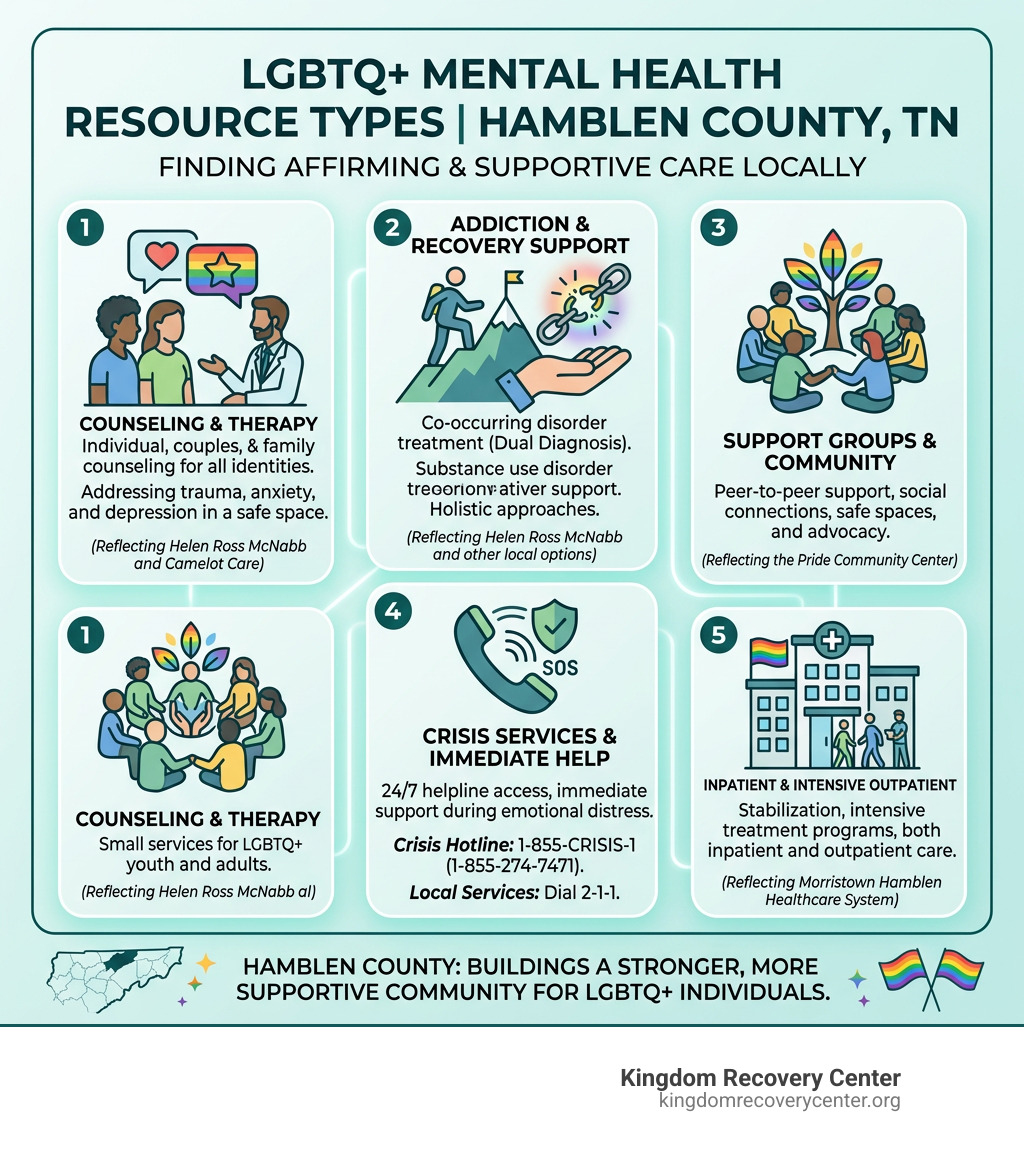
LGBTQ+ mental health resources Hamblen County residents can access include several local and regional facilities that explicitly welcome and support LGBTQ+ individuals:
- Helen Ross McNabb Center (320 West 3rd North Street, Morristown) – Outpatient treatment for co-occurring mental health and substance use disorders, explicitly serving LGBT clients
- Morristown Hamblen Healthcare System – Center for Behavioral Health – Inpatient and outpatient mental health and substance abuse care for LGBT clients
- Camelot Care Centers Morristown – Outpatient mental health treatment, including services for LGBTQ+ adolescents and transitional-age young adults
- Pride Community Center of the Tri-Cities – Safe space, support groups, advocacy, and emotional well-being resources for the broader LGBTQ+ community in the region
- Crisis support: Call 1-855-CRISIS-1 (1-855-274-7471) 24/7, or dial 2-1-1 to connect with local services
Finding affirming, judgment-free mental health care is hard enough. For LGBTQ+ individuals in Hamblen County, it can feel even harder.
According to a 2022 Trevor Project survey, 61% of LGBTQ+ youth in Tennessee were unable to access the mental health care they needed. That gap is real, and it has serious consequences — from untreated depression and anxiety to higher rates of substance use and crisis.
The good news? Local options do exist. And knowing where to look makes all the difference.
At Kingdom Recovery Center, located right in Morristown, TN, we specialize in addiction recovery and mental health services with a holistic, individualized approach — including compassionate care for LGBTQ+ individuals seeking support for co-occurring disorders and mental health challenges in Hamblen County. Below, we walk you through every resource available to you or your loved one.
Top LGBTQ+ Mental Health Resources Hamblen County
When we talk about LGBTQ+ mental health resources Hamblen County, we aren’t just looking for a generic therapist. We are looking for “affirming care”—the kind of environment where you don’t have to explain your identity before you start explaining your symptoms. In Morristown and the surrounding East Tennessee area, several pillars of the healthcare community have stepped up to provide these specific pathways.
One of the most prominent resources is the Helen Ross McNabb Center. Their Hamblen County Center (Building 2/Upper) is specifically noted for catering to LGBT clients. They offer a mix of mental health and substance abuse treatment, which is vital because many in the community deal with “dual diagnosis”—having both a mental health condition and a substance use disorder simultaneously.
Another key player is the Morristown Hamblen Healthcare System through their Center for Behavioral Health. They provide a full spectrum of care, from triage and crisis assessment to inpatient stabilization. For someone in the LGBTQ+ community facing an acute mental health crisis, having a local hospital that explicitly lists LGBT clients as a priority population is a massive safety net.
For those seeking specialized medical or therapeutic guidance, our Psychiatric services guide provides deeper insights into how these facilities manage complex cases. Whether it is managing medication for depression or navigating the psychological impacts of gender dysphoria, these local Morristown facilities are equipped to help.
Specialized LGBTQ+ Mental Health Resources Hamblen County for Youth and Adults
The needs of a 14-year-old coming out in high school are vastly different from a 40-year-old professional navigating workplace discrimination. Fortunately, Hamblen County has resources tailored to different life stages.
For Youth and Adolescents: Camelot Care Centers in Morristown is a standout for younger populations. They specialize in outpatient mental health treatment for children and adolescents experiencing serious emotional disturbances. They are known for being LGBT-friendly and also work with transitional-age young adults (those aged 18–24) who are moving from the foster care system or pediatric care into adult services.
Early intervention is also a critical piece of the puzzle. The Tennessee Early Intervention System provides support for families with very young children who may have developmental delays, ensuring a supportive environment from the very beginning.
For Adults and Community Support: While Morristown has clinical resources, sometimes what we need most is community. This is where the Pride Community Center of the Tri-Cities comes in. Located in nearby Johnson City but serving the entire region including Hamblen County, they offer:
- A physical safe space for gathering.
- Support groups for various identities (Transgender, Gay, Lesbian, etc.).
- Advocacy and education to help local businesses and providers become more inclusive.
- Emotional and spiritual well-being resources that go beyond traditional clinical therapy.
Accessing LGBTQ+ Mental Health Resources Hamblen County and Crisis Support
We know that the hardest part of getting help is often just making that first phone call. If you are in the middle of a mental health emergency, you don’t have time to research—you need a human on the line.
Immediate Crisis Help:
- Statewide Crisis Line: Call 1-855-CRISIS-1 (1-855-274-7471). This connects you to a trained professional 24/7.
- Youth Villages Specialized Crisis: For those under 18, call (866) 791-9224.
- Tennessee 211: Simply dial 2-1-1 or visit the Tennessee 211 website. It is a massive database of over 10,000 programs that can help with everything from food pantries to mental health clinics.
For a comprehensive list of numbers to keep on your fridge or in your phone, check out our guide on Mental health hotlines.
Paying for Care: We believe that your bank account should never determine your mental health. Many of the LGBTQ+ mental health resources Hamblen County offers utilize a sliding fee scale. This means your cost is based on your income.
- Medicaid and Medicare: Most major facilities in Morristown, including Cherokee Health Systems and Helen Ross McNabb, accept TennCare (Medicaid) and Medicare.
- Behavioral Health Safety Net: This is a state-funded program for adults 18+ who have no insurance and no other way to pay. It covers essential mental health services so you aren’t left behind.
- Private Insurance: Facilities like Health Connect America and Kingdom Recovery Center work with most major private insurance providers to minimize out-of-pocket costs.
Comprehensive Treatment Services and Support Systems
In Hamblen County, the approach to LGBTQ+ mental health is often “integrated.” This means providers look at the whole person, not just a single symptom. For many, this involves a combination of therapy, medication, and peer support.
| Service Type | Best For… | Local Providers |
|---|---|---|
| Inpatient Treatment | Acute crisis, stabilization, 24/7 safety | Morristown Hamblen Healthcare System |
| Outpatient Therapy | Ongoing support, work/school balance | Helen Ross McNabb, Kingdom Recovery |
| Dual Diagnosis | Mental health + Substance use | Kingdom Recovery, Health Connect America |
| MAT (Medication-Assisted Treatment) | Opioid or alcohol recovery | Cherokee Health Systems, Helen Ross McNabb |
| Support Groups | Peer connection, reducing isolation | Pride Community Center of the Tri-Cities |
Individual and Group Counseling: Most local clinics use Cognitive Behavioral Therapy (CBT), which is highly effective for treating the anxiety and depression often caused by “minority stress” (the chronic stress faced by members of stigmatized groups). Group therapy is also incredibly powerful for LGBTQ+ individuals, as it breaks the isolation that often comes with living in more rural areas of East Tennessee.
Medication-Assisted Treatment (MAT): For those struggling with substance use alongside mental health issues, MAT is a gold standard. Facilities in Morristown provide medications like buprenorphine or naltrexone to help manage cravings while the individual focuses on their psychological healing.
Addressing Unique Challenges: Trauma and Community Support
It is no secret that the LGBTQ+ community faces unique hurdles. From family rejection to discrimination in housing or employment, these “external” problems quickly become “internal” mental health struggles.
Trauma-Informed Care: Many LGBTQ+ individuals have experienced trauma—whether it’s the “big T” trauma of physical violence or the “little t” trauma of constant microaggressions. Local providers like Health Connect America and Helen Ross McNabb emphasize trauma-informed care. This means they don’t just ask “What’s wrong with you?” but rather “What happened to you?”
Support Beyond the Clinic: Mental health doesn’t exist in a vacuum. If you don’t have a safe place to sleep or a steady job, therapy can only do so much.
- Housing Assistance: Organizations like ARCH – THE APPALACHIAN REGIONAL COALITION ON HOMELESSNESS work to coordinate housing for vulnerable populations in East Tennessee.
- Peer Support: Sometimes the best “doctor” is someone who has been where you are. Peer recovery specialists are available at many local centers to walk alongside you in your journey.
- Legal and Advocacy: Groups like the ARC of Washington County and local interagency councils help ensure that LGBTQ+ individuals aren’t being unfairly denied services.
As we look toward the future, the landscape of care is improving. Our review of Hamblen County mental health 2026 suggests that more providers are adopting inclusive protocols and cultural competency training every year.
Frequently Asked Questions about LGBTQ+ Care in Morristown
We know you probably have a lot of questions. Here are the most common things we hear from the community in Hamblen County.
What facilities in Morristown offer LGBTQ-specific programs?
While many facilities are “LGBT-friendly,” a few have specific programs designed for the community. The Helen Ross McNabb Center and Morristown Hamblen Healthcare System both explicitly designate LGBT clients as a priority population for their behavioral health and substance abuse programs. This usually means their staff has received extra training in LGBTQ+ issues, such as the specific stressors faced by transgender individuals or the nuances of “coming out” in a family setting.
Additionally, Camelot Care Centers offers specialized support for LGBTQ+ youth. This is vital because LGBTQ+ teenagers are significantly more likely to experience bullying or homelessness, and having a provider that understands these risks is life-saving.
Are there low-cost or sliding scale options for LGBTQ+ individuals?
Yes, absolutely. We know that the “pink tax” and economic disparities can make paying for healthcare difficult.
- Cherokee Health Systems and Helen Ross McNabb both offer sliding fee scales based on your income.
- The Behavioral Health Safety Net program is a literal lifesaver for uninsured residents.
- If you are looking for addiction-focused help, you can call (423) 207-5079 for confidential assistance with finding payment plans or even “access to recovery” vouchers.
How can allies support LGBTQ+ loved ones in treatment?
If you are a friend, family member, or ally, your role is huge.
- Educate Yourself: Use resources like the Hamblen County interagency resources to find out what is available.
- Use Correct Language: Respecting someone’s name and pronouns is a basic form of mental health support.
- Be an Advocate: Help your loved one navigate the system. Sometimes, having an ally to help make that first appointment at a place like Kingdom Recovery Center makes the process feel much less daunting.
- Join a Support Group: There are groups for families of LGBTQ+ individuals that can help you process your own feelings so you can be a better support for your loved one.
Conclusion
Finding the right LGBTQ+ mental health resources Hamblen County has to offer doesn’t have to be an uphill battle. Whether you are looking for the clinical expertise of a psychiatrist in Morristown, the community connection of the Pride Center in the Tri-Cities, or the specialized dual diagnosis care we provide here at Kingdom Recovery Center, help is closer than you think.
We pride ourselves on a client-centered, evidence-based approach. We know that “one size fits all” doesn’t work in mental health—especially not for the LGBTQ+ community. We empower lasting change by treating you as an individual, with a story and an identity that deserves respect.
If you or a loved one are struggling with addiction, depression, or the weight of navigating the world as an LGBTQ+ person, reach out. You don’t have to carry it alone. For more information on how we can help, explore our specialized Mental health treatment in Morristown TN page.