Why Mental Health Treatment in Tennessee Matters Now More Than Ever
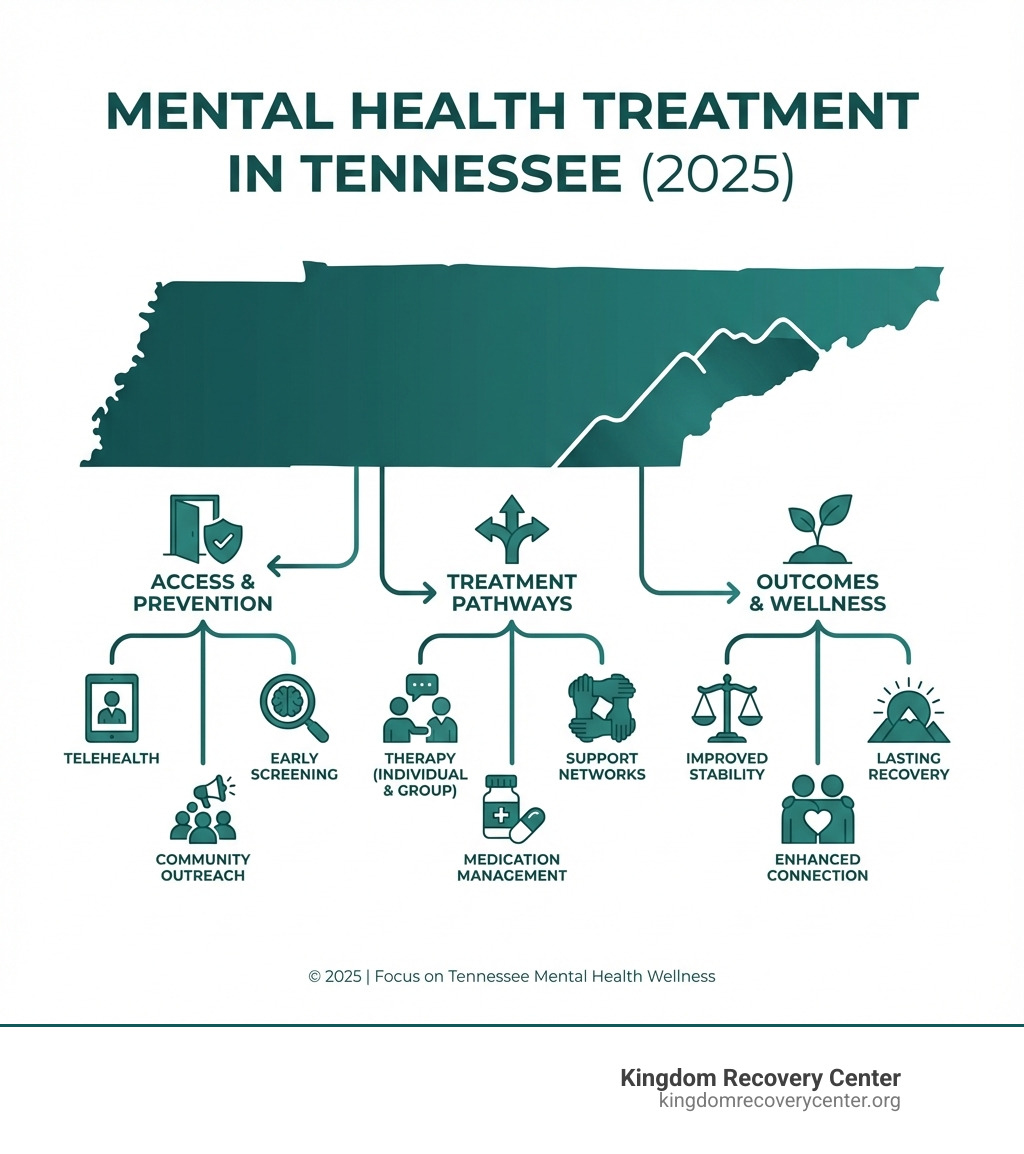
Mental Health Treatment in Tennessee is more accessible than ever, offering a full continuum of care from crisis intervention to long-term recovery. If you’re facing anxiety, depression, trauma, or co-occurring disorders, finding the right help can feel overwhelming, but you are not alone.
Quick Guide to Finding Mental Health Services in Tennessee:
- Crisis Support: Call or text 988 (available 24/7) for immediate help, or visit one of nine Crisis Walk-In Centers
- Inpatient Care: 24/7 supervised treatment at Regional Mental Health Institutes or private psychiatric hospitals
- Partial Hospitalization (PHP): Intensive day treatment while living at home
- Outpatient Services: Flexible therapy schedules through IOP and standard outpatient programs
- Specialized Programs: Services for adults, children, families, veterans, and those with co-occurring disorders
- State Resources: Tennessee Department of Mental Health and Substance Abuse Services (TDMHSAS) coordinates services statewide
- Payment Options: TennCare (Medicaid), private insurance, sliding scale fees, and the Behavioral Health Safety Net for uninsured Tennesseans
Tennessee has built a robust mental health system to meet you wherever you are. From the mountains of East Tennessee to Nashville and Memphis, help is available 24/7 through state-operated crisis services, specialized treatment centers, and community providers delivering evidence-based, trauma-informed care.
According to the National Institute of Mental Health (NIMH), millions of Americans face mental health challenges each year. In Tennessee alone, nearly 23,000 housing opportunities have been created for people with mental health issues, and a 68% decrease in depression symptoms has been documented among clients one year after treatment.
This guide will walk you through everything you need to know about mental health services in Tennessee—from understanding different levels of care to finding specialized treatment for your unique needs.
At Kingdom Recovery Center in Morristown, Tennessee, we’ve helped countless individuals steer their journey toward Mental Health Treatment in Tennessee, offering personalized dual diagnosis care that addresses both mental health and addiction together. Our team understands that recovery isn’t one-size-fits-all, which is why we’ve designed programs that meet you where you are and walk alongside you every step of the way.
Understanding Tennessee’s Mental Health System
Tennessee’s mental health care system is built on compassion, evidence, and a commitment to recovery, ensuring individuals and families can access support for healthier lives. This effort is led by the Tennessee Department of Mental Health and Substance Abuse Services (TDMHSAS), which shapes Mental Health Treatment in Tennessee.
The TDMHSAS administers a diverse array of services for all ages living with mental illness or co-occurring disorders, aiming to promote resiliency, recovery, and independence. Learn more on the state’s Mental Health Services overview page.
The Tennessee Department of Mental Health and Substance Abuse Services (TDMHSAS)
The TDMHSAS is the central hub for mental health services in Tennessee, responsible for overseeing, funding, and setting care standards. It supports community-based programs in areas like Morristown, Knoxville, and Johnson City and operates four Regional Mental Health Institutes (RMHIs) for inpatient psychiatric treatment. These facilities are accredited by The Joint Commission and meet CMS standards. The state also contracts with private hospitals to ensure access to care. More details are on the TDMHSAS Hospital Services page.
Core Values in Tennessee’s Mental Health Care
Tennessee’s mental health system is guided by core values to provide effective, humane care:
- Person-Centered Approach: Treatment plans are customized to an individual’s unique needs, empowering them to make choices in their healing journey.
- Culturally Responsive and Linguistically Competent Services: Services are sensitive to diverse cultural backgrounds and available in multiple languages to ensure everyone feels understood.
- Trauma-Informed Care: This approach asks “What’s happened to you?” instead of “What’s wrong with you?”, acknowledging trauma’s impact and integrating this understanding into all treatment.
- Preventing Adverse Childhood Experiences (ACEs): Focuses on preventing and mitigating the impact of ACEs, as early experiences can affect long-term mental health.
- Evidence-Based and Evidence-Informed Practices: Prioritizes therapeutic approaches proven effective through research, ensuring care is both compassionate and scientifically sound.
- Peer Support Integration: Promotes peer recovery services, where individuals with lived experience support others, fostering connection and reducing isolation.
- Combating Stigma: Aims to reduce the stigma of mental illness through education and supportive communities, encouraging more people to seek help.
- Faith-Based Initiatives: For many, faith is a crucial part of healing. Tennessee supports faith-based recovery initiatives that integrate spiritual guidance with treatment for a holistic path to recovery.
A Spectrum of Care: Levels of Mental Health Treatment in Tennessee
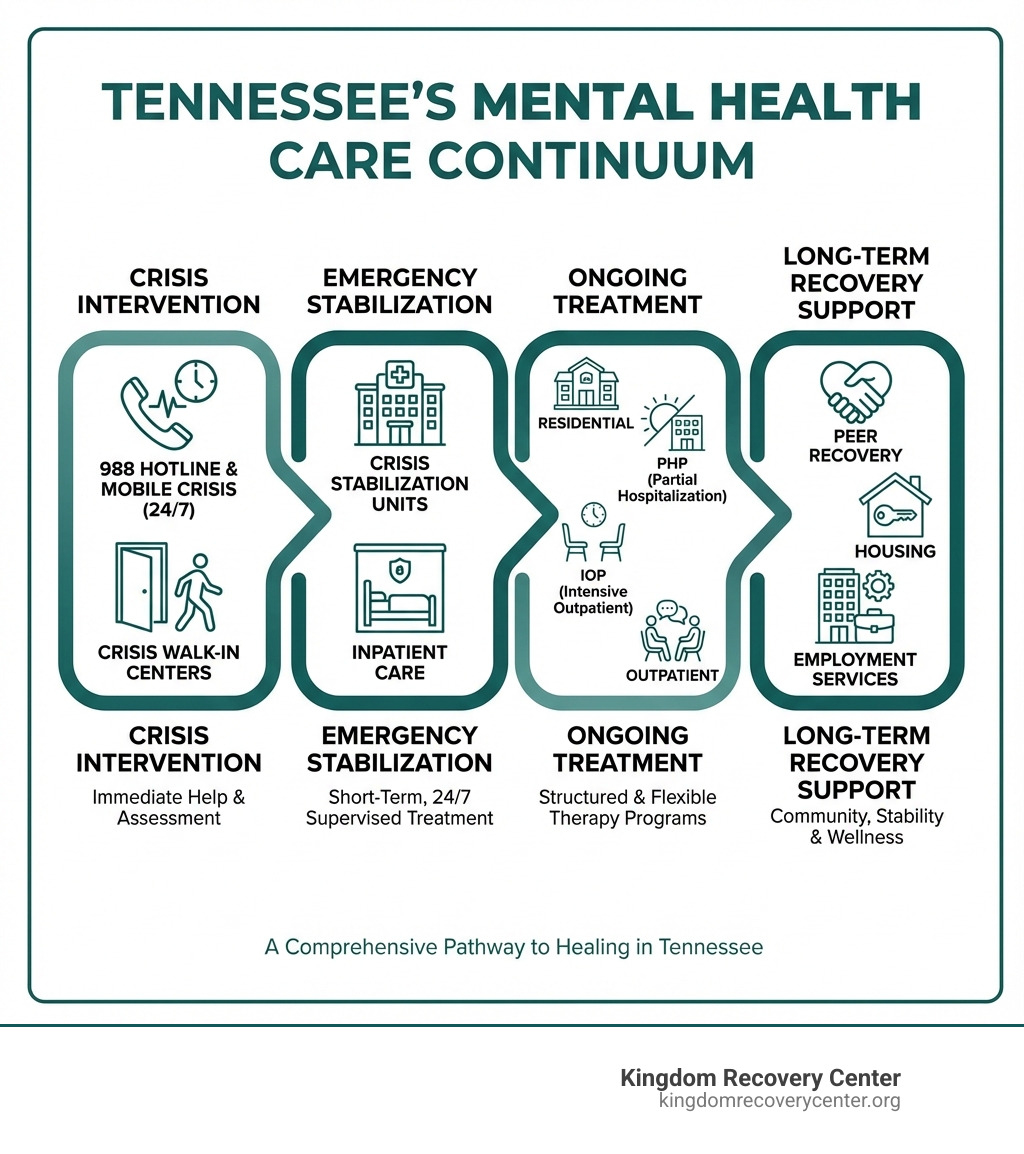
Mental Health Treatment in Tennessee offers a spectrum of care, allowing individuals to find the right level of support. This “continuum of care” means you can “step up” to more intensive services during a crisis or “step down” as you gain stability. Understanding these levels helps you steer your options. For a deeper dive, explore Outpatient vs Inpatient Rehab: Which is Best for You?.
| Level of Care | Intensity | Time Commitment | Living Situation | Best For |
|---|---|---|---|---|
| Inpatient/Residential | Highest (24/7 medical and psychiatric) | 24 hours a day, several days to months | Live at the facility | Acute crises, severe symptoms, stabilization, complex co-occurring disorders, when safety is a concern. |
| Partial Hospitalization (PHP) | High (intensive day treatment) | 5-7 days a week, 6-8 hours per day | Live at home or in sober living | Transition from inpatient, significant symptoms requiring structure, but no immediate danger; allows some connection to home life. |
| Intensive Outpatient (IOP) | Moderate (structured, but flexible) | 3-5 days a week, 3-4 hours per day | Live at home | Step-down from PHP, individuals needing significant support while maintaining work, school, or family commitments; moderate symptoms. |
| Outpatient (OP) | Lowest (individual or group sessions) | 1-3 times a week, 1-2 hours per session | Live at home | Mild to moderate symptoms, ongoing support for stable individuals, aftercare following more intensive programs, general mental health maintenance. |

Inpatient and Residential Treatment
Inpatient or residential treatment offers the highest level of care for severe or life-threatening mental health challenges. These programs provide a safe, 24/7 supervised environment focused on stabilization, intensive therapy, and medication management. It’s recommended for acute crises, severe depression, or when an individual is a danger to themselves or others. Facilities in East Tennessee and Knoxville offer individualized treatment for complex conditions. Learn more about options at Knoxville Inpatient Drug Rehab, which often includes co-occurring mental health care.
Partial Hospitalization Programs (PHP)
A Partial Hospitalization Program (PHP) offers intensive day treatment while allowing you to live at home. Typically running 5-7 days a week for several hours, PHPs are a step down from inpatient care or an alternative for those needing significant support without 24/7 supervision. Clients engage in individual, group, and family therapies before returning home. PHPs are a vital bridge in the care continuum, helping individuals stabilize and build coping skills. To learn more, explore Understanding Mental Health PHP in Tennessee and Exploring Your Options with Partial Hospitalization Programs.
Intensive Outpatient Programs (IOP) and Outpatient (OP)
As you progress in recovery, IOPs and OP services offer flexible treatment.
- Intensive Outpatient Programs (IOPs): IOPs involve therapy for a few hours, 3-5 days a week. This allows clients to maintain work, school, or family commitments while receiving significant support through individual and group counseling. Learn more with our IOP Johnson City TN Guide.
- Outpatient (OP) Services: As the least intensive level, OP involves weekly or bi-weekly therapy sessions. It’s ideal for ongoing support, managing mild symptoms, or as aftercare. Our centers offer comprehensive Outpatient Mental Health and specific Outpatient Program (OP) options across East Tennessee.
Crisis Services and Suicide Prevention
When a mental health crisis occurs, immediate help is available through Tennessee’s robust crisis services continuum.
- 988 Suicide & Crisis Lifeline: Call or text 988 to connect with a local crisis counselor 24/7. This national service is free, confidential, and available statewide.
- Mobile Crisis Services: These teams offer 24/7/365 on-site response for adults and children experiencing a mental health emergency, providing assessment and de-escalation.
- Walk-In Centers: Tennessee has nine Crisis Walk-In Centers for immediate, 24/7/365 face-to-face evaluation and observation, offering a safe space for assessment.
- Crisis Stabilization Units (CSUs): CSUs provide free, intensive, short-term stabilization (average 3 days) for mental health emergencies. Access is by referral from Mobile Crisis or Walk-In Centers. Tennessee has nine CSUs, with more planned.
- Crisis Respite Services: These services offer very short-term relief (48 hours or less) during a crisis and are accessed by referral.
This network ensures that no matter where you are in Tennessee, including Morristown, Knoxville, and Johnson City, immediate help is within reach. Find more information on Tennessee’s Crisis Services Continuum.
Specialized Support for Every Tennessean
Mental health challenges don’t fit into neat boxes. That’s why Mental Health Treatment in Tennessee emphasizes specialized care, recognizing that different populations and conditions require custom approaches. From adults facing life’s complexities to children navigating emotional growth and families seeking unity, custom care is essential for true healing.
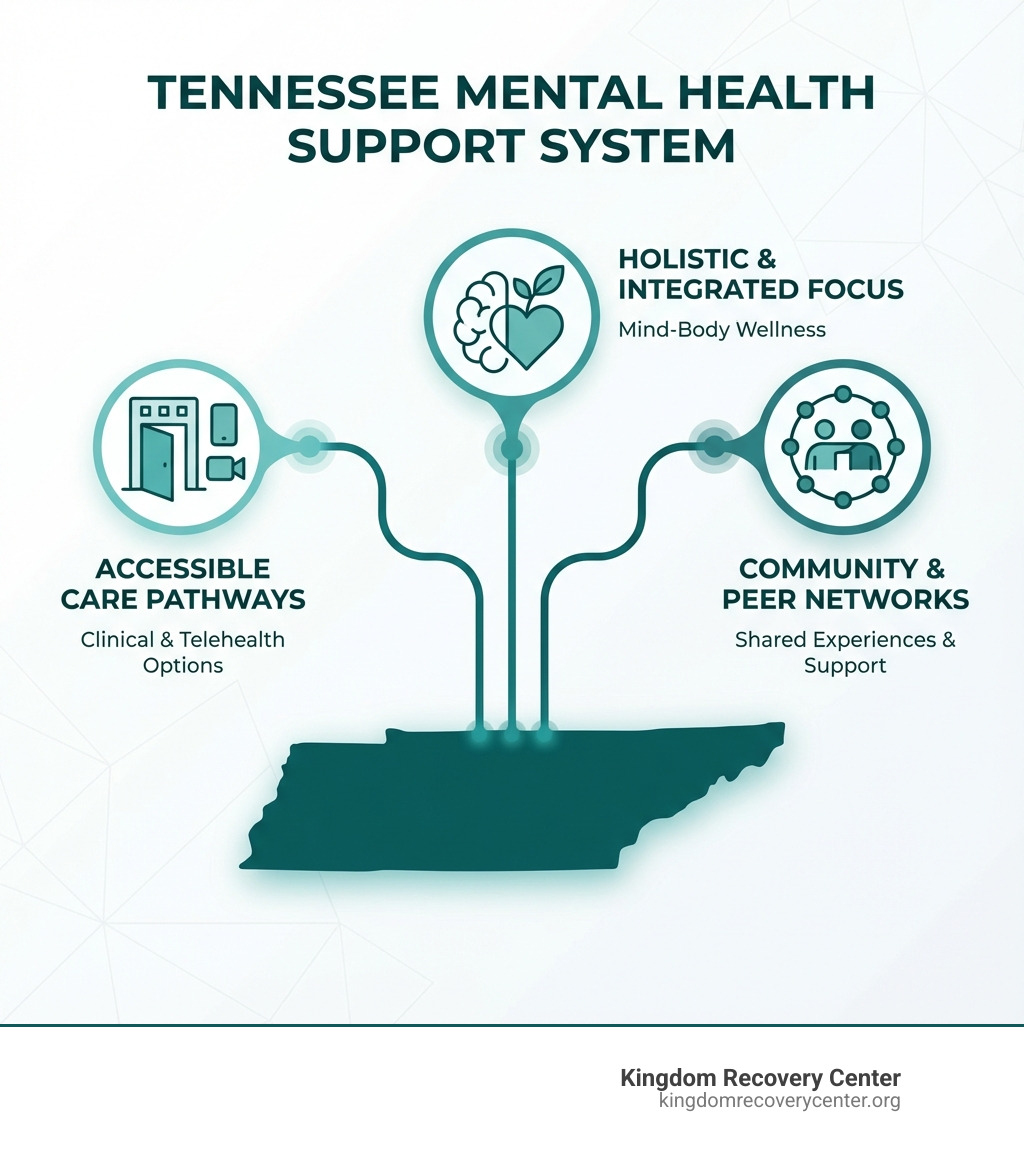
Navigating Adult Mental Health Treatment in Tennessee
Adults in Tennessee have access to a variety of specialized services:
- Behavioral Health Safety Net: For uninsured Tennesseans, this vital program provides essential mental health outpatient services, ensuring that lack of insurance doesn’t prevent access to care.
- Housing and Homeless Services: Recognizing that stable housing is fundamental to mental health, the TDMHSAS’s Creating Homes Initiative has leveraged nearly $700 million to create almost 23,000 housing opportunities for people living with mental health issues. This initiative provides crucial support in areas like Morristown, Knoxville, and Johnson City.
- Individual Placement and Support (IPS) Supported Employment: This program helps individuals with mental health conditions find and keep jobs. Our state offers IPS Supported Employment in partnership with the Department of Human Services, understanding that meaningful work is a powerful component of recovery.
- Peer Recovery Services: These programs offer invaluable support from individuals who have lived experience with mental health recovery. Peers provide empathy, guidance, and hope, fostering a strong sense of community and reducing isolation.
- Programs for Older Adults: Recognizing the unique mental health needs of seniors, Tennessee offers specialized programs to address issues like depression, anxiety, and cognitive changes that can affect older adults.
Services for Children, Young Adults, and Families
The mental health of our younger population and the well-being of families are paramount. Tennessee’s System of Care principles guide services for children, young adults, and families, ensuring that care is child-centered, family-driven, and community-based.
- Serious Emotional Disturbances (SED): Services are specifically designed to support children and youth living with serious emotional disturbances, providing early intervention and ongoing support.
- School-Based Mental Health Liaisons: These liaisons help connect students to mental health services, bridging the gap between schools and providers.
- Family Support Networks: Family involvement is critical for educating family members about mental health and recovery, providing a supportive environment for everyone.
Integrated Care for Co-Occurring Disorders
It’s common for individuals to experience both a mental health condition and a substance use disorder simultaneously. These are known as co-occurring disorders, or dual diagnoses. Research by SAMSHA (Substance Abuse and Mental Health Services Administration) clearly indicates that treating addiction and mental health conditions simultaneously provides the best outcomes.
- Dual Diagnosis Explained: A person with both a substance use disorder and a mental health condition is said to have a co-occurring disorder, meaning the two conditions are present and often affect each other profoundly. Addiction rarely occurs on its own; it’s frequently intertwined with underlying mental health issues.
- Treating Both Simultaneously: At Kingdom Recovery Center, we specialize in integrated treatment for co-occurring disorders, understanding that addressing both conditions at the same time leads to more sustainable recovery. Our approach involves a whole-person assessment that considers personal history, current presentation, safety, and ability to engage in programming, rather than just labels or diagnoses.
- Common Co-Occurring Conditions: Some of the most common mental health conditions that co-occur with substance use disorders include:
- Anxiety disorders
- Depression
Post-traumatic stress disorder (PTSD) - Attention-deficit hyperactivity disorder (ADHD)
- Bipolar disorder
You can dig deeper into this intricate relationship by reading Unraveling the Mental Health and Addiction Relationship and exploring What We Treat: Dual Diagnosis. Our comprehensive programs in Morristown, Knoxville, and Johnson City are designed to address the complex interplay between these conditions, fostering true healing.
Your Path to Healing: Therapies and Accessing Care
Starting on a journey toward improved mental health is a brave and powerful step. Once you’ve decided to seek help, understanding the types of therapies available and how to access care can make the process less daunting. Mental Health Treatment in Tennessee offers a variety of therapeutic approaches custom to individual needs, helping you find the right tools for your healing.
Common Therapeutic Approaches
Modern mental health treatment in Tennessee uses a range of evidence-based and holistic therapeutic approaches:
- Cognitive Behavioral Therapy (CBT): This widely used therapy helps individuals identify and change negative thought patterns and behaviors that contribute to mental health issues like anxiety and depression. It’s a practical, goal-oriented approach that equips you with coping strategies. Learn more about Cognitive Behavioral Therapy (CBT).
- Dialectical Behavioral Therapy (DBT): Often used for individuals with intense emotional dysregulation, DBT combines CBT techniques with mindfulness, emotional regulation, distress tolerance, and interpersonal effectiveness skills. Explore Dialectical Behavioral Therapy (DBT).
- Holistic Therapies: These approaches treat the whole person—mind, body, and spirit. In Tennessee, you might find options like:
- Music Therapy: Using music to address physical, emotional, cognitive, and social needs.
- Art Therapy: Expressing emotions and experiences through creative art processes.
- Adventure-Based Counseling: Utilizing outdoor activities to build self-esteem, teamwork, and problem-solving skills.
- Care Through Culinary™: A nutrition program that supports recovery by nourishing the mind and body.
You can find more about Holistic Therapies for Addiction Treatment and their benefits.
- Individual Psychotherapy: One-on-one sessions with a therapist provide a confidential space to explore personal issues, develop insights, and learn coping mechanisms. This personalized attention is a cornerstone of effective treatment. Find more about Individual Psychotherapy.
- Group Therapy: Sharing experiences and learning from peers in a supportive group setting can be incredibly powerful. Group therapy fosters a sense of community, reduces isolation, and provides diverse perspectives on challenges and solutions.
- Stress Management: Learning effective techniques to manage stress, such as mindfulness, relaxation exercises, and time management, is crucial for maintaining mental well-being and preventing relapse.
How to Access Mental Health Services
Finding the right Mental Health Treatment in Tennessee can feel like a maze, but several clear pathways exist:
- TDMHSAS Helpline: The Tennessee Department of Mental Health and Substance Abuse Services offers a helpline to guide individuals to appropriate resources and providers.
- Free Online Screening Tools: Many organizations, including some treatment centers, offer free, confidential online mental health screening tools for conditions like depression, anxiety, and personality disorders. These can be a helpful first step to determine if professional help might be beneficial.
- Speaking with Your Primary Care Physician (PCP): Your family doctor is an excellent first point of contact. They can assess your symptoms, offer initial guidance, and provide referrals to mental health specialists or programs in your area, including Morristown, Knoxville, or Johnson City.
- Direct Contact with Treatment Centers: Facilities like Kingdom Recovery Center are available to answer your questions and guide you through the admissions process. Don’t hesitate to call.
For more detailed strategies on initiating your search, read about Effective Ways to Seek Mental Health Treatment in Tennessee.
Costs, Insurance, and Payment Options
Concerns about cost should never be a barrier to seeking help. Tennessee offers various options to make Mental Health Treatment in Tennessee accessible:
- TennCare (Medicaid): For eligible low-income individuals and families, TennCare provides comprehensive coverage for mental health and substance abuse services.
- Private Insurance Plans: Most private insurance plans, including PPO, POS, and EPO policies, offer coverage for mental health treatment. It’s crucial to verify your specific benefits, including in-network vs. out-of-network coverage, deductibles, and co-pays. Our team can assist with Insurance Verification to help you understand your options.
- Out-of-Pocket Costs: If you don’t have insurance or prefer not to use it, many facilities offer affordable cash pay rates.
- Sliding Scale Fees: Some providers offer services on a sliding scale, adjusting fees based on your income and ability to pay.
- Behavioral Health Safety Net: As mentioned earlier, this state program provides essential mental health outpatient services to uninsured Tennesseans.
- Veterans’ Benefits: Veterans may access mental health and addiction services through their VA benefits or certified Veteran Ready Healthcare Organizations.
Understanding your insurance is key. Learn more about Using Insurance to Cover the Costs of Rehab.
Frequently Asked Questions about Mental Health Care in Tennessee
We understand you likely have many questions when navigating Mental Health Treatment in Tennessee. Here are some common inquiries we encounter:
How do I know if I or a loved one needs mental health treatment?
It can be challenging to recognize when everyday stress turns into a mental health condition requiring professional help. Look for these signs:
- Persistent Changes in Mood or Behavior: Prolonged sadness, irritability, anxiety, or dramatic shifts in personality.
- Difficulty with Daily Life: Struggling to manage work, school, or household responsibilities.
- Withdrawal from Social Activities: Losing interest in hobbies, friends, or family.
- Overwhelming Feelings: Experiencing sadness, anxiety, hopelessness, or fear that feels unmanageable.
- Changes in Sleep or Appetite: Significant alterations in sleeping patterns (too much or too little) or eating habits.
- Increased Substance Use: Using drugs or alcohol to cope with difficult emotions.
If these symptoms interfere with daily functioning for more than a few weeks, it’s a strong indicator that professional help is needed. For those concerned about substance use alongside mental health, our guide on Signs Indicating It’s Time to Seek Help for Substance Use Disorder can provide further clarity.
What is the first step to getting help in an emergency?
In a mental health emergency, immediate action is crucial:
- Call or Text 988: This is your go-to for immediate crisis support. The 988 Suicide & Crisis Lifeline connects you with a trained crisis counselor 24/7.
- Visit a Local Crisis Walk-In Center: For face-to-face evaluation, Tennessee’s Crisis Walk-In Centers offer 24/7/365 support.
- Go to a Hospital Emergency Room: If there’s an immediate danger to yourself or others, or if you’re experiencing severe symptoms, head to the nearest emergency room.
- Call 911: In situations where there is imminent threat or danger, call 911.
You don’t have to face a crisis alone.
What is the difference between luxury and standard treatment centers?
Both luxury and standard treatment centers aim to provide effective, evidence-based care, but they differ primarily in amenities and environment:
- Luxury Treatment Centers: These facilities often provide a more upscale, resort-like atmosphere. They may offer private rooms, gourmet meals, and a wider array of holistic therapies such as yoga, meditation, massage, or even equine therapy. The focus is on comfort and a serene environment, often with higher staff-to-client ratios. While these features can improve the treatment experience, they typically come at a significantly higher cost.
- Standard Treatment Centers: These centers focus on delivering high-quality, evidence-based therapeutic interventions without the added “luxury” amenities. They prioritize clinical excellence and effective treatment outcomes in a more traditional, yet still supportive, setting.
The effectiveness of treatment stems from the clinical program, the expertise of the staff, and the individual’s commitment to recovery, rather than the opulence of the facility. To help you understand what to prioritize when choosing a facility, read our guide on What to Look For: Luxury Rehab Facility.
Conclusion: Taking the First Step Towards a Brighter Tomorrow
Navigating the landscape of Mental Health Treatment in Tennessee can seem overwhelming, but as we’ve explored, our state offers a comprehensive and compassionate network of support. From immediate crisis intervention to long-term outpatient care, specialized programs for diverse populations, and a commitment to integrated treatment for co-occurring disorders, the resources are here to guide you from crisis to calm.
Recovery is a journey, not a destination. It’s a continuous process of growth, learning, and self-findy. The courage to seek help is the most powerful step you can take towards a brighter, healthier tomorrow. You are not alone in this journey; countless professionals, peers, and communities across Tennessee are ready to walk alongside you.
For those seeking a client-centered, evidence-based approach to addiction and mental health, Kingdom Recovery Center offers individualized care and dual diagnosis programs to empower lasting change. Our team in Morristown, Knoxville, and Johnson City is dedicated to fostering growth, healing, and resilience, helping you achieve your mental health objectives and a more balanced, healthier lifestyle.
If you or a loved one is struggling, don’t wait. Take that crucial first step. Contact us today, and let us help you start on your path to a more joyful, fulfilled life. Your guide to finding the right care starts here: Your Guide to Finding the Right Mental Health Treatment in Tennessee.