
The Best Knoxville Alcohol Treatment Centers at a Glance
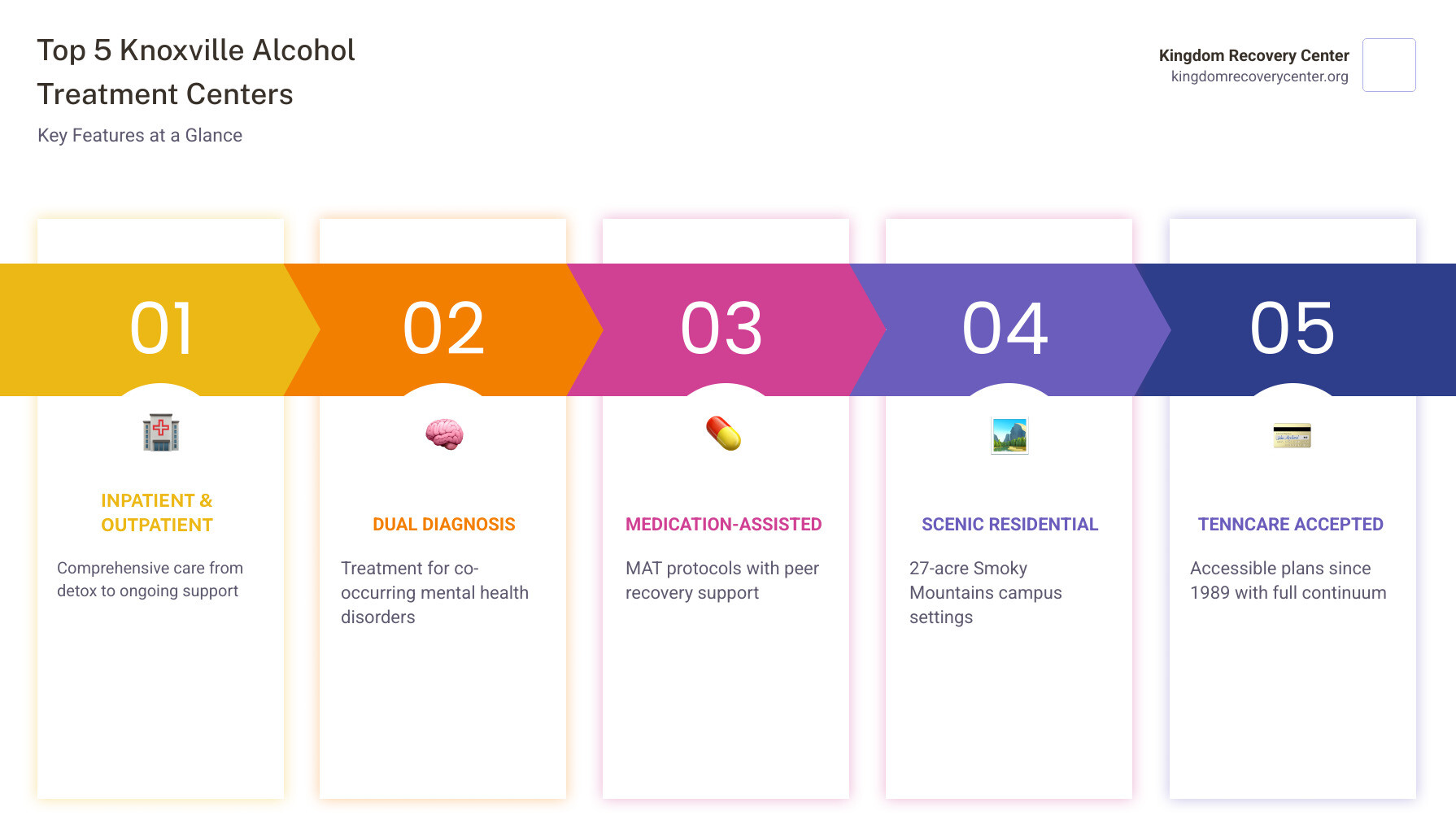
Knoxville alcohol treatment centers offer a range of care options for people ready to break free from alcohol addiction. Here are five of the most recognized facilities in the area:
- JourneyPure Knoxville – Inpatient and outpatient care; dual diagnosis; high sobriety rates
- The McNabb Center – Full continuum of care; co-occurring disorders; MAT and peer support
- English Mountain Recovery – 27-acre Smoky Mountains campus; residential; veterans program
- Stepping Stone to Recovery – Treating addiction since 1989; accepts all TennCare plans
- Cornerstone of Recovery – Near Knoxville; residential, detox, and employee assistance programs
Alcohol addiction is one of the most common and most misunderstood health struggles in the country. In the past year alone, 28.3 million Americans age 12 or older struggled with alcohol addiction. In Tennessee, roughly 1 in 20 residents lives with alcohol use disorder.
It touches every kind of person. It strains families. And it often shows up alongside anxiety, depression, or trauma — making it harder to recognize and harder to treat alone.
The good news? Effective, compassionate help is available right here in East Tennessee.
At Kingdom Recovery Center, based in Morristown, TN, we specialize in addiction recovery and mental health treatment using holistic, evidence-based care tailored to each person’s needs — making us a trusted resource for those exploring Knoxville alcohol treatment centers. Whether you’re just starting to research your options or ready to take the first step, this guide will walk you through everything you need to know.
Understanding Alcohol Use Disorder in East Tennessee

As we move through April 2026, the landscape of addiction in East Tennessee remains a critical concern for our community. Alcohol Use Disorder (AUD) is more than just “drinking too much”; it is a chronic brain disorder that impairs a person’s ability to stop or control alcohol use despite adverse social, occupational, or health consequences.
The statistics are sobering. Beyond the 28.3 million people struggling nationally, there is a profound correlation between mental health and substance use. Research shows that adults with a mental illness (28.5%) are significantly more likely to engage in binge-drinking than those without a mental health diagnosis (22.8%). This “dual diagnosis” is a hallmark of many cases we see in the Tennessee Valley, where alcohol is often used as a way to self-medicate for underlying pain, grief, or trauma.
Withdrawal is often the first and most terrifying hurdle. It isn’t just “the shakes.” It is a physiological process where the brain, which has become accustomed to the presence of alcohol, overcompensates when that substance is removed. Understanding the timeline is vital:
- 6–12 Hours: Early symptoms like anxiety, insomnia, and nausea begin.
- 12–48 Hours: Symptoms intensify; some may experience hallucinations.
- 48–72 Hours: This is the peak risk period for seizures and Delirium Tremens (DTs), which can be life-threatening without medical supervision.
- 5 Days+: Physical symptoms typically begin to fade, though emotional cravings and psychological symptoms can persist for much longer.
5 Essential Qualities of the Best Knoxville Alcohol Treatment Centers
When you are looking for help, you shouldn’t just pick the closest building. The “best” center is the one that meets you where you are. At Kingdom Recovery Center, we believe that high-quality Knoxville alcohol treatment centers must possess five core qualities to ensure long-term success.
- Evidence-Based Care: This means using therapies that are scientifically proven to work, such as Cognitive Behavioral Therapy (CBT) and Dialectical Behavior Therapy (DBT).
- Dual Diagnosis Capability: Since nearly a third of people with AUD also have a mental health condition, treating only the drinking is like putting a bandage on a broken arm. You have to treat the anxiety, depression, or PTSD simultaneously.
- Trauma-Informed Approach: Many people turn to alcohol to numbing the pain of past experiences. A center must provide a safe environment that acknowledges this history without re-traumatizing the individual.
- Staff with Lived Experience: There is a unique power in being treated by someone who has walked in your shoes. Many top centers in the Knoxville area employ staff members who are in long-term recovery themselves, offering a level of empathy and insight that textbooks can’t teach.
- A Full Continuum of Care: Recovery doesn’t end after detox. The best centers offer a clear path from inpatient drug rehab to outpatient support and alumni programs.
For more detailed information, you can check out Your Guide To Alcohol And Drug Rehab In Knoxville Tn or visit Drug & Alcohol Rehabs in Tennessee – Recovery.com.
Specialized Services at Knoxville Alcohol Treatment Centers
The journey to sobriety is rarely a straight line, and specialized services can make all the difference. Top-tier facilities in East Tennessee provide more than just a bed and a meeting; they offer a toolkit for a new life.
- Medical Detox: This is the gold standard for safety. Physicians and nurses monitor your vitals 24/7 to manage withdrawal symptoms and prevent complications.
- Medication-Assisted Treatment (MAT): Medications like Vivitrol or buprenorphine can be used alongside counseling to reduce cravings and block the “high” of alcohol, giving the brain time to heal.
- Holistic Therapies: We often say that recovery involves the mind, body, and spirit. This is why many Knoxville centers incorporate yoga, art therapy, and mindfulness.
- Equine Interaction: Working with horses can help individuals develop trust, set boundaries, and process emotions in a way that traditional “talk therapy” sometimes cannot.
How to Choose Between Knoxville Alcohol Treatment Centers
Choosing a center is one of the most important decisions you will ever make. To narrow down your list, ask these questions:
- Is the facility accredited? Look for the Joint Commission or CARF accreditation.
- What are their success rates? While “success” is defined differently by everyone, some centers report sobriety rates as high as 84% six months post-treatment, which is double the national average.
- Do they offer individualized treatment plans? Avoid “cookie-cutter” programs. Your history with alcohol is unique, and your treatment should be too.
- What does aftercare look like? Relapse prevention is key. Ask about alumni groups, sober living referrals, and ongoing therapy options.
Levels of Care: From Medical Detox to Outpatient Support
Understanding the “levels of care” helps you manage expectations. Most people don’t just “go to rehab” for a weekend and come home cured. It is a stepping-stone process.
- Medical Detox: The first 5–7 days. The focus is purely on physical safety and stabilization. You can learn more about this critical phase at Alcohol Detox Knoxville.
- Residential/Inpatient Rehab: Typically 30 to 90 days. You live at the facility, away from the triggers of your daily life, and participate in intensive therapy. This is often recommended for those with long-term or heavy addictions.
- Partial Hospitalization Program (PHP): You receive treatment for 5–8 hours a day, 5 days a week, but you may return home or to a sober living environment in the evenings.
- Intensive Outpatient Program (IOP): A more flexible option, usually involving 9–12 hours of therapy per week. This allows you to maintain work or school commitments while still receiving high-level support.
| Feature | Partial Hospitalization (PHP) | Intensive Outpatient (IOP) |
|---|---|---|
| Hours per week | 25–40 hours | 9–15 hours |
| Medical Supervision | High | Moderate |
| Typical Duration | 3–4 weeks | 6–8 weeks+ |
| Best For | Early recovery stabilization | Transitioning back to daily life |
For those needing the most intensive support, Knoxville Inpatient Drug Rehab provides a structured environment that is often the safest bet for high-risk individuals.
Navigating Insurance and Costs for Recovery in 2026
One of the biggest barriers to seeking help is the fear of the bill. However, in 2026, there are more ways to pay for treatment than ever before. Most Knoxville alcohol treatment centers are in-network with major insurance providers, which significantly lowers out-of-pocket costs.
- TennCare: Many local centers, such as Stepping Stone to Recovery, accept all TennCare plans, including UnitedHealthcare, Amerigroup, and BlueCare.
- Private Insurance: Cigna, BlueCross BlueShield, and Aetna are commonly accepted. Most facilities offer free insurance verification, which can be done in as little as five minutes over the phone.
- Payment Plans: If you are uninsured or underinsured, don’t give up. Many centers offer sliding scale fees or monthly payment plans to make the cost manageable.
If you are unsure where to start, the National Helpline for Mental Health, Drug, Alcohol Issues – SAMHSA is a free, confidential resource available 24/7. You can also consult the Drug Rehab Knox County Tn Guide for localized financial resources.
Frequently Asked Questions About Alcohol Rehab in Knoxville
What is the typical timeline for alcohol detox and rehab?
While every journey is different, a standard timeline often includes 5–7 days for medical detox, followed by 30 days of residential treatment. Many people then transition into a PHP or IOP for an additional 4–8 weeks to ensure they have a solid foundation before fully reintegrating into their old environment.
Does TennCare cover alcohol treatment in Knoxville?
Yes! Several reputable facilities in the Knoxville and East Tennessee area accept TennCare. This coverage often includes detox, residential treatment, and outpatient services. Always call the facility to verify your specific plan details before admitting.
What are the signs that I need professional alcohol treatment?
If you have tried to cut down and failed, if you experience “shakes” or anxiety when you don’t drink, or if your drinking is causing problems at work or in your relationships, it is time to seek help. Other signs include building a high tolerance, spending a lot of time recovering from hangovers, and giving up activities you once enjoyed in favor of drinking.
Conclusion: Your Journey to Healing
Choosing to enter treatment is not a sign of weakness; it is an act of incredible courage. It is the moment you decide that your life—and the lives of those who love you—is worth fighting for.
At Kingdom Recovery Center, we are proud to be part of the East Tennessee recovery community. Whether you are in Knoxville, Morristown, or Johnson City, we are committed to providing client-centered, evidence-based care that empowers lasting change. From the first day of Alcohol Detox Knoxville to the day you celebrate your first year of sobriety, we are here to walk beside you.
Recovery is possible. The “5 Best” list above is a great place to start your research, but the best center is ultimately the one where you feel seen, heard, and supported. Don’t let another day slip away into the fog of addiction. Reach out, ask for help, and start your journey toward a healthier, substance-free life today.